

Turkana's oil field development plan(FDP) is before parliament. The oil will be transported via trucks(no pipeline) and the first oil will be trucked at the end of the year.
Small thread with useless figures and thoughts.
1/n
Small thread with useless figures and thoughts.
1/n
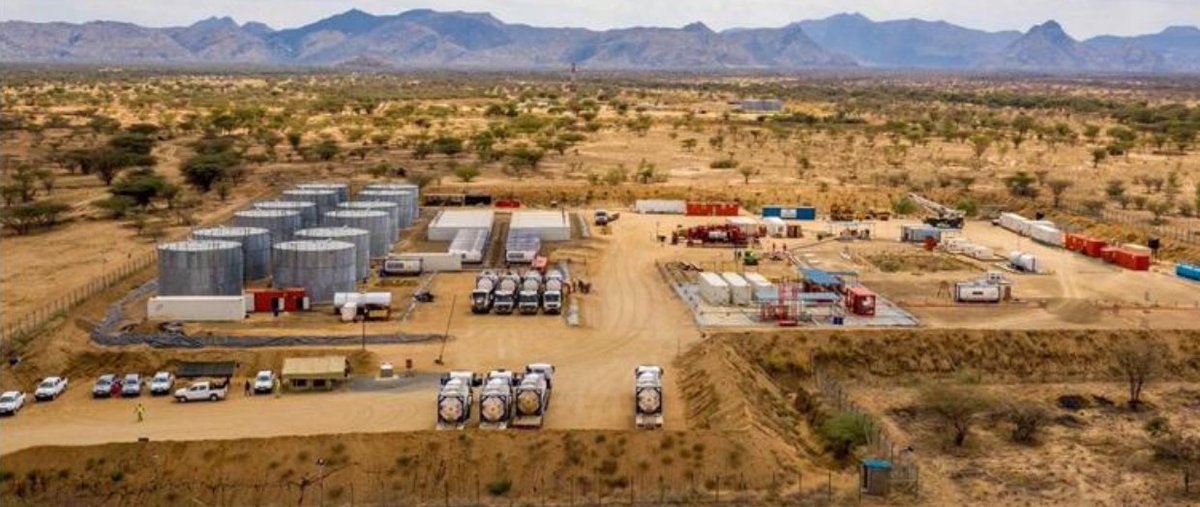
The oil production site will consume 34MW of power which will require 10.8 MMscf/d of gas to produce.
All the gas produced will be used for power. Any power shortfall will be imported from KPLC grid or diesel generators. There wont be any continous gas flaring.
2/n
All the gas produced will be used for power. Any power shortfall will be imported from KPLC grid or diesel generators. There wont be any continous gas flaring.
2/n
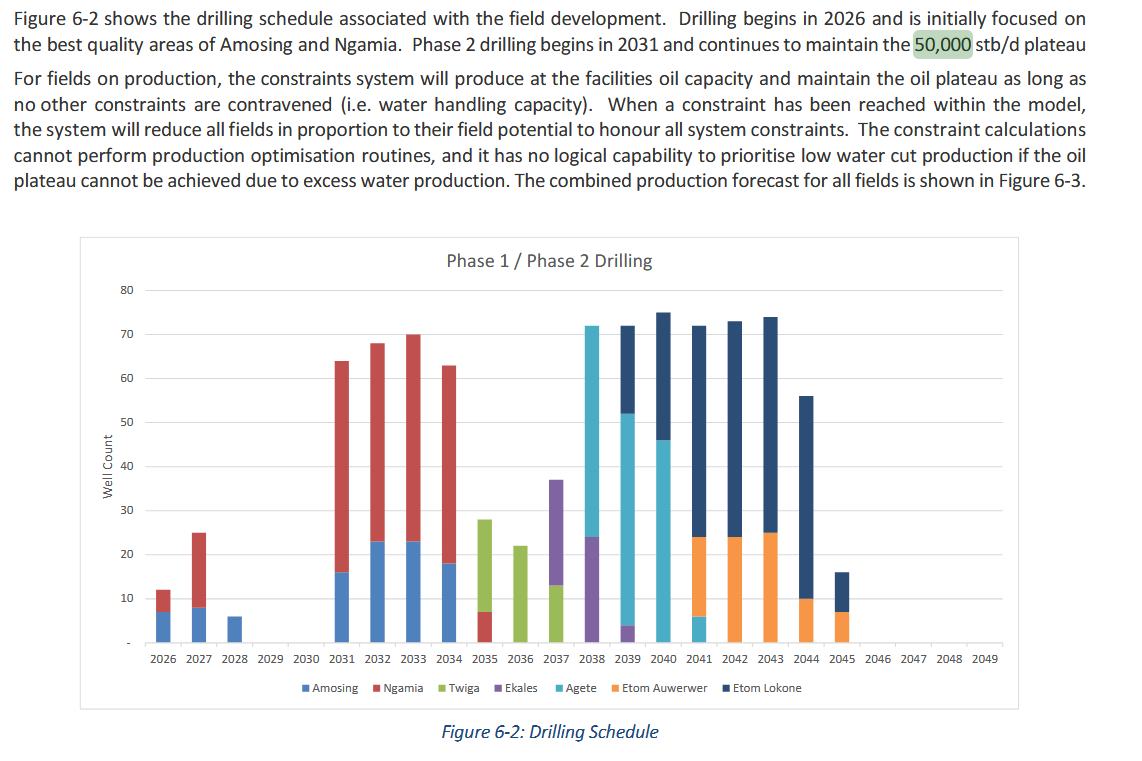
The first phase will involve production of 20,000 barrels per day using 48 wells from Ngamia and Amosing. They'll use rented Early Production Facilities(EPF)
They expect to transport the first oil in December 2026.
3/n
They expect to transport the first oil in December 2026.
3/n

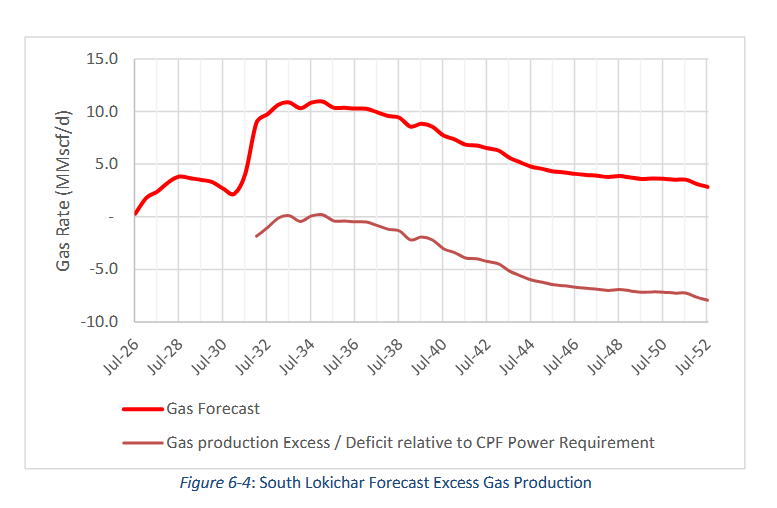
Phase 2 will begin in 2031 and will target 50,000 barrels per day from an additional 862 wells. They'll also construct a central processing facility(CPF) to replace the rented EPF.
4/n
4/n
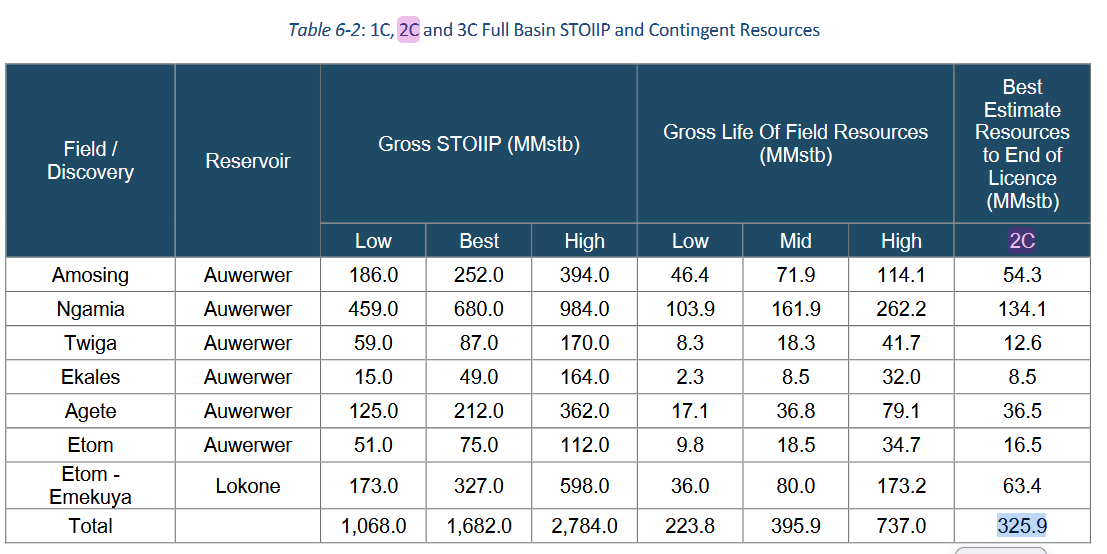
The area has about 3billion barrels of oil out of which 320million are recoverable.
Decommissioning will happen, after the 25 year license period, by permanently plugging the oil wells with cement.
5/n
Decommissioning will happen, after the 25 year license period, by permanently plugging the oil wells with cement.
5/n

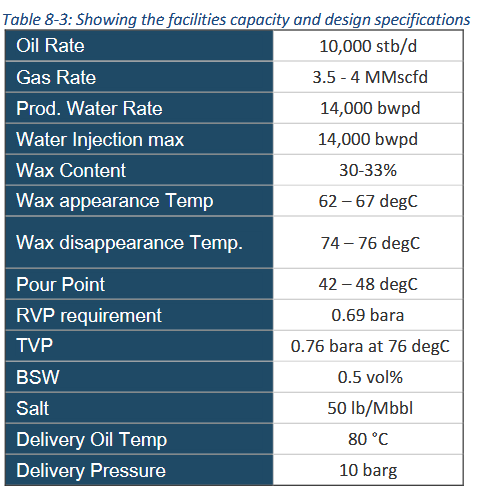
Turkana's oil has a wax appearance temperature(WAT) of 67°C and a pour point of 48°C.
WAT is the temperature below which oil starts forming wax.
Pour point is temp below which oil stops flowing(it becomes 'thick').
This has implications on transportation/storage.
6/n
WAT is the temperature below which oil starts forming wax.
Pour point is temp below which oil stops flowing(it becomes 'thick').
This has implications on transportation/storage.
6/n
This is also the same reason why the Ugandan oil pipeline(going through Tanzania) is heated. Uganda's oil 'stops' flowing at 40°C and therefore the pipeline under construction for UG will be heated at 50°C
7/n
7/n

Due to the waxy nature of Kenya's oil, it will be kept at a temperature above 67°C while in the production facility(epf).
8/n
8/n

Water required at the processing site will come in via a pipeline(which govt is expected to construct) from Turkwel dam. Boreholes will be used in the interim.
They require 26k barrels of water per day. The community will also get water from the pipeline.
9/n
They require 26k barrels of water per day. The community will also get water from the pipeline.
9/n
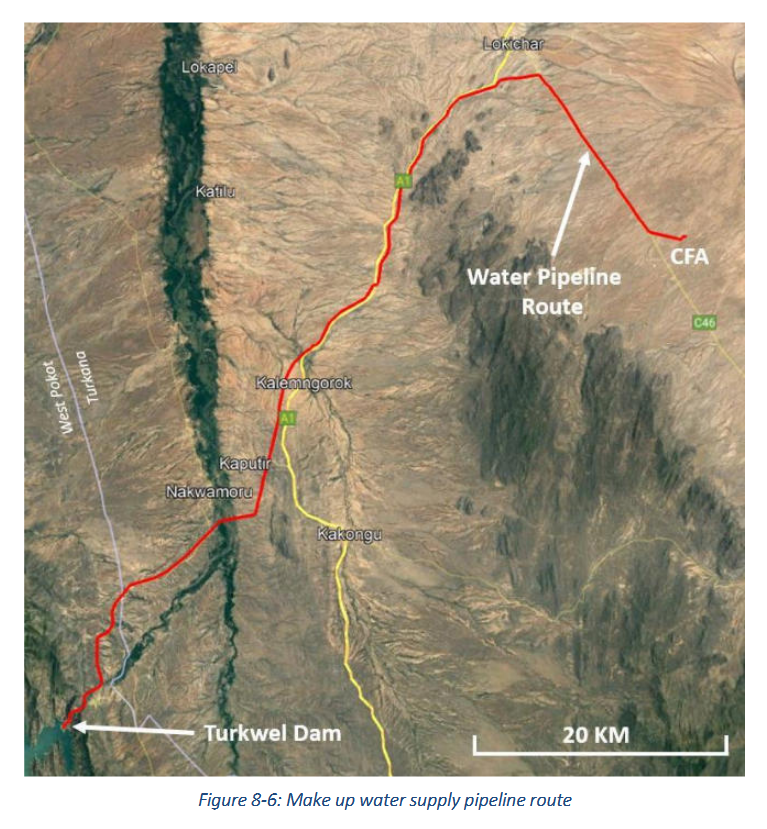
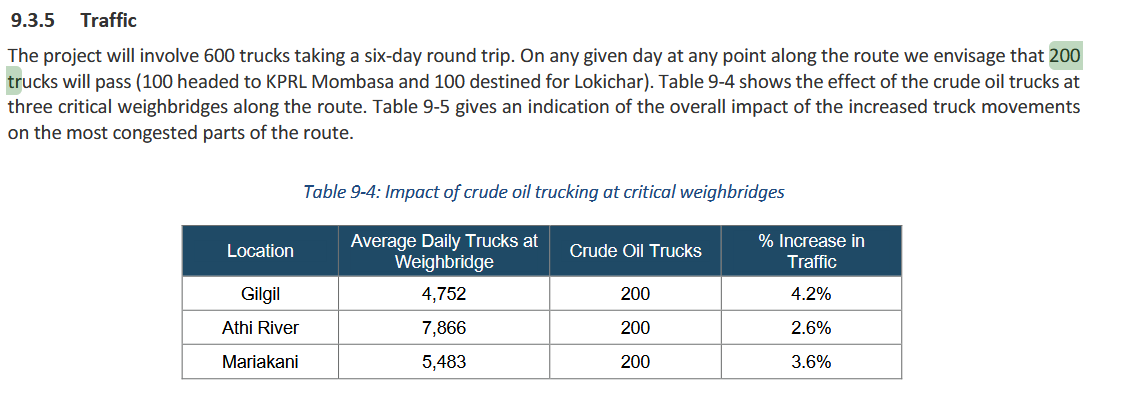
The oil will be transported to Mombasa via road using 100 trucks per day. They'll have a total of 600 trucks. They expect an increase of about 4% in traffic at weigh bridges.
Phase 2 in 2031 may optionally involve transportation via rail.
10/n
Phase 2 in 2031 may optionally involve transportation via rail.
10/n
Why road instead of building a refinery and/or pipeline? It's a cost issue.
Because a refinery would cost 2billion dollars and a pipeline 1.5billion dollars.
11/n
Because a refinery would cost 2billion dollars and a pipeline 1.5billion dollars.
11/n

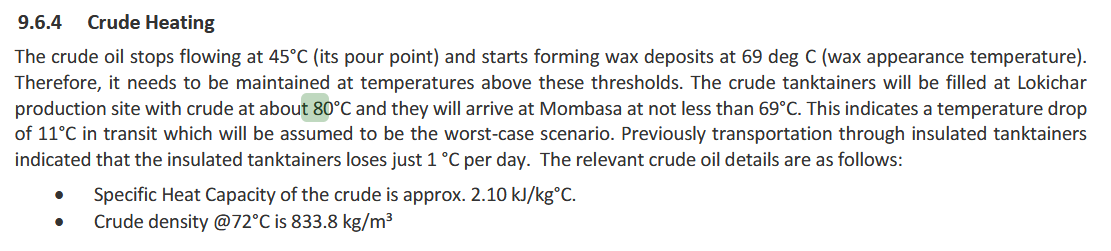
The trucks will be loaded with 'hot' oil at 80°C and they'll be insulated. Expectation is that they'll loose 1°C per day and oil will get to Mombase/KPRL with a temperature above 69°C.
It will be stored at KPRL and exported once per month(600,000 barrels)
12/n
It will be stored at KPRL and exported once per month(600,000 barrels)
12/n
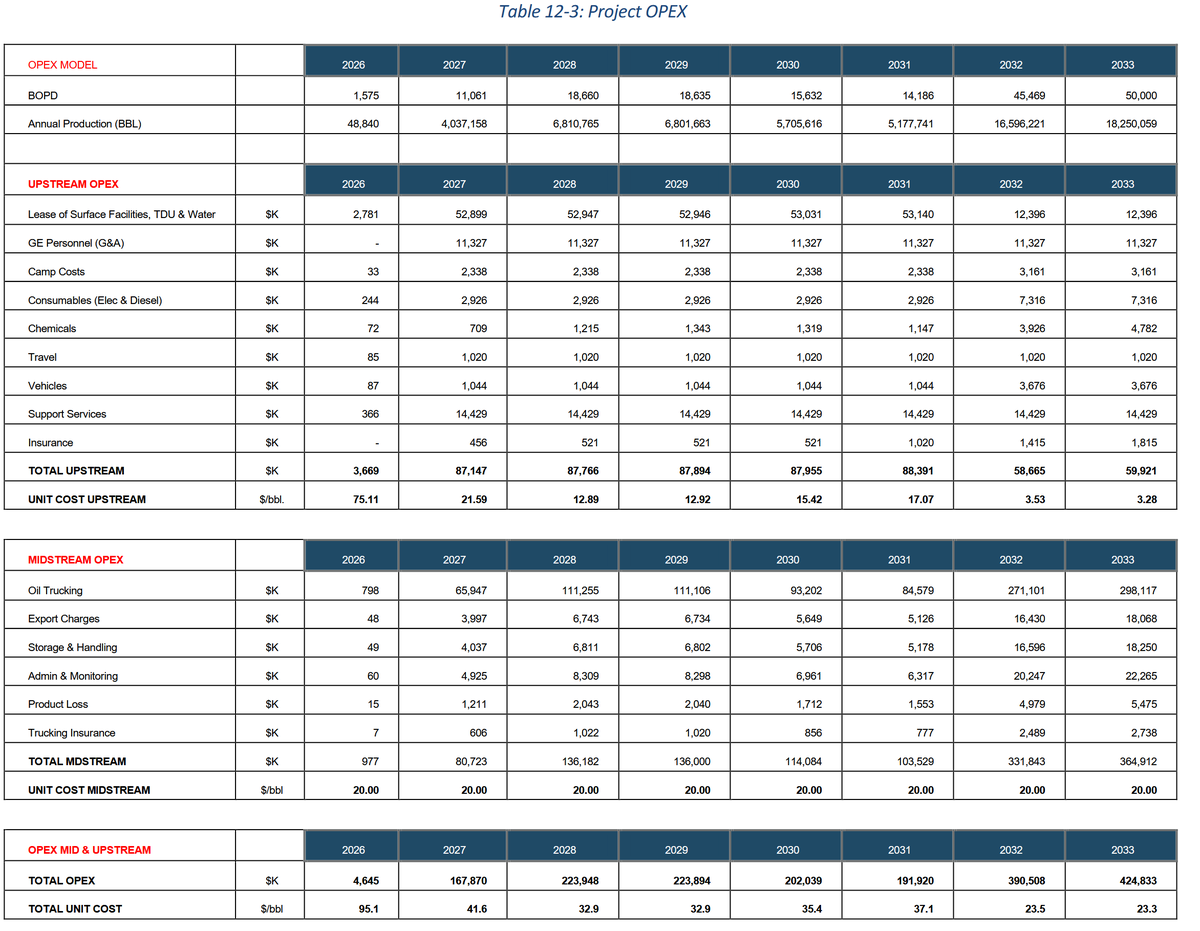
Transport via truck will cost 16.34 dollars per barrel with the whole transportation costing 20 dollar per barrel. This tariff will go through the normal EPRA approval process.
13/n
13/n
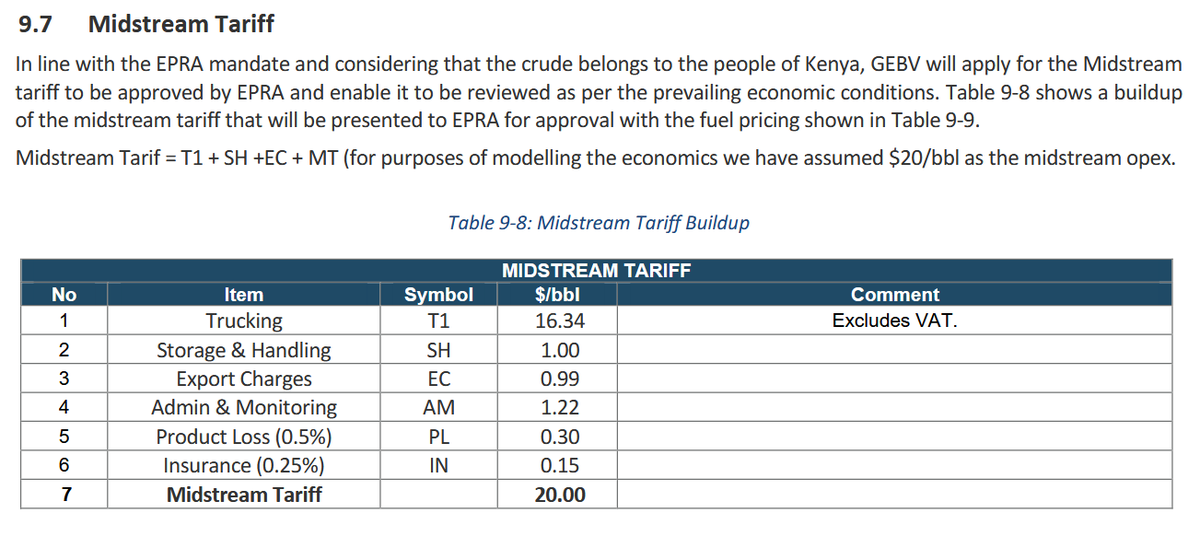
That transport cost is very expensive considering the FDP document is working with the assumption of a crude oil price of 57 dollars per barrel.
Transport will be 35% of the selling price.
14/n
Transport will be 35% of the selling price.
14/n

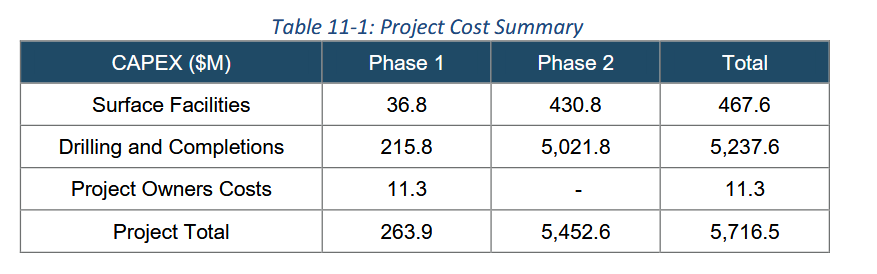
The total project is expected to cost(CAPEX) $5.7billion and operation expenses(OPEX) of $8.2billion
Phase1 is $260 million.
15/n
Phase1 is $260 million.
15/n
They expect a crude(brent) oil price of $60 per barrel. Kenya's oil is expected to fetch a bit lower(~$56) due to it's waxy nature.
I believe this also happens to Sudan's oil(nile blend) which has a ~$4 discount.
16/n
I believe this also happens to Sudan's oil(nile blend) which has a ~$4 discount.
16/n

Gulf energy is requesting for a cost recovery of 85%. The revenue split afterwards betwen it and goverment is 50/50 for the first 20,000 barrels per day.
This 85% goes towards recovering the $5.7billion(CAPEX) that they are investing into the project.
17/n
This 85% goes towards recovering the $5.7billion(CAPEX) that they are investing into the project.
17/n
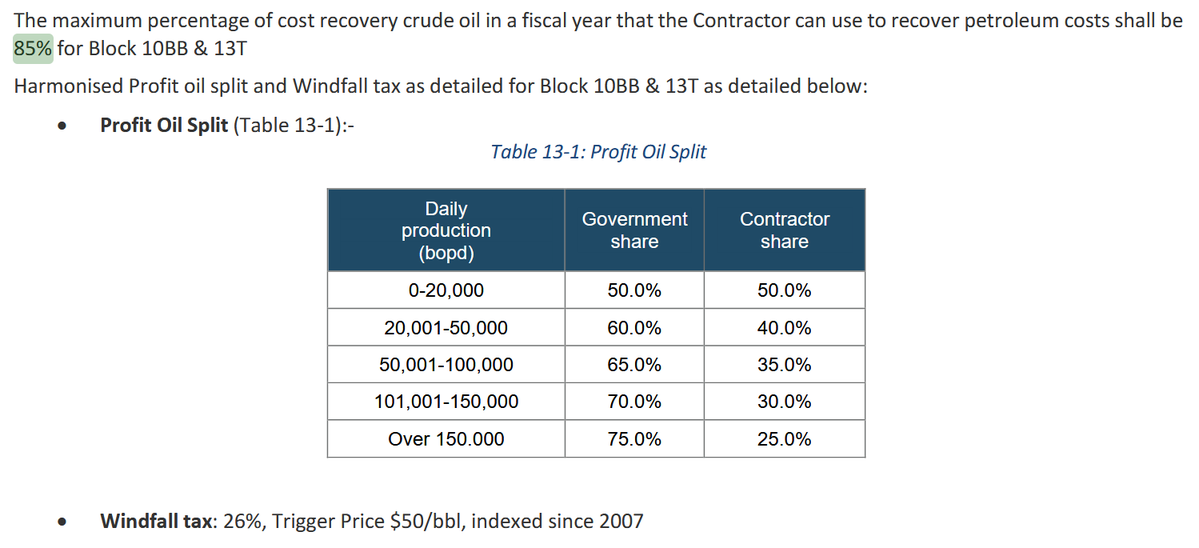
The 85% cost recovery sounds very high considering they are also getting tax waivers. Initially it was 55-65% but the FDP is requesting for 85%.
18/n
18/n
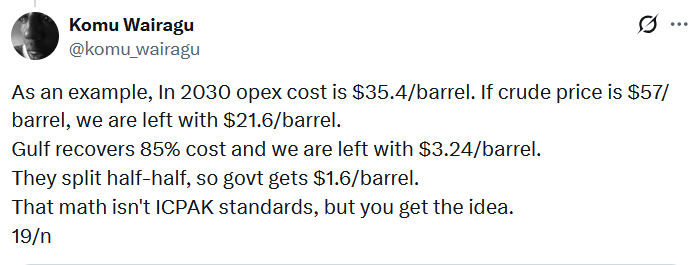
As an example, In 2030 opex cost is $35.4/barrel. If crude price is $57/barrel, we are left with $21.6/barrel.
Gulf recovers 85% cost and we are left with $3.24/barrel.
They split half-half, so govt gets $1.6/barrel.
That math isn't ICPAK standards, but you get the idea.
19/n
Gulf recovers 85% cost and we are left with $3.24/barrel.
They split half-half, so govt gets $1.6/barrel.
That math isn't ICPAK standards, but you get the idea.
19/n
I feel like the FDP does not do a good job justifying the use of trucks over a pipeline.
It says a pipeline would cost $1.5b. This would increase CAPEX from $5.7b to $7.2b
But transport cost would fall from $20 to $12/barrel(Uganda's heated pipeline will cost $12.77/barrel)
20/n
It says a pipeline would cost $1.5b. This would increase CAPEX from $5.7b to $7.2b
But transport cost would fall from $20 to $12/barrel(Uganda's heated pipeline will cost $12.77/barrel)
20/n

Using our earlier example. If the pipeline was in play;
OPEX cost would be $28.17/barrel. If crude price is $57/bbl, we are left with $28.83/bbl.
So Gulf would have $28/bbl to recover costs from compared to the earlier $21/bbl. That's $7/barrel more to recover CAPEX from.
21/n
OPEX cost would be $28.17/barrel. If crude price is $57/bbl, we are left with $28.83/bbl.
So Gulf would have $28/bbl to recover costs from compared to the earlier $21/bbl. That's $7/barrel more to recover CAPEX from.
21/n
It sounds, to my naive mind, like a no brainer to do the pipeline.
85% of $7/barrel multiplied by total number of barrels(325m) over the 25 year period equals = $1.94billion.
$1.94b is greater than the $1.5b required for the pipeline.
22/n
85% of $7/barrel multiplied by total number of barrels(325m) over the 25 year period equals = $1.94billion.
$1.94b is greater than the $1.5b required for the pipeline.
22/n
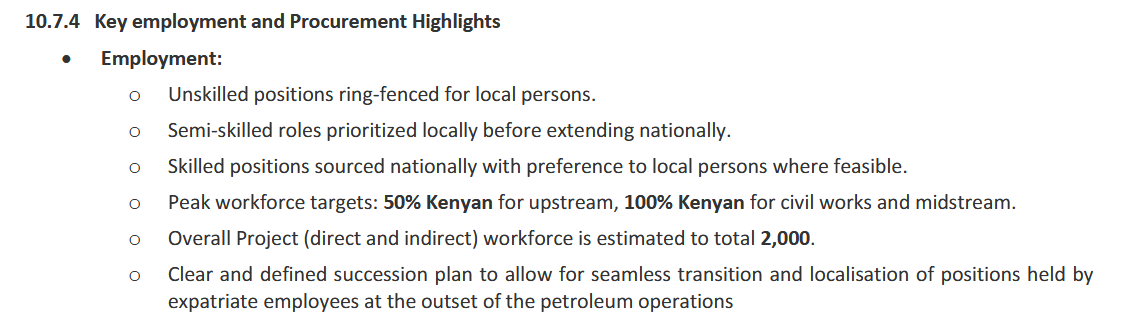
2,000 people will be employed at peak. Upstream work is reserved 50% for Kenyans. Civil works & midstream is reserved 100% for Kenyans. Unskilled positions ring-fenced for locals.
Trucks owned by Kenyans with at least 150 trucks belonging to people from Turkana(via co-ops).
23/n
Trucks owned by Kenyans with at least 150 trucks belonging to people from Turkana(via co-ops).
23/n

جاري تحميل الاقتراحات...