

NO! The Mughals did NOT give us jaalis!
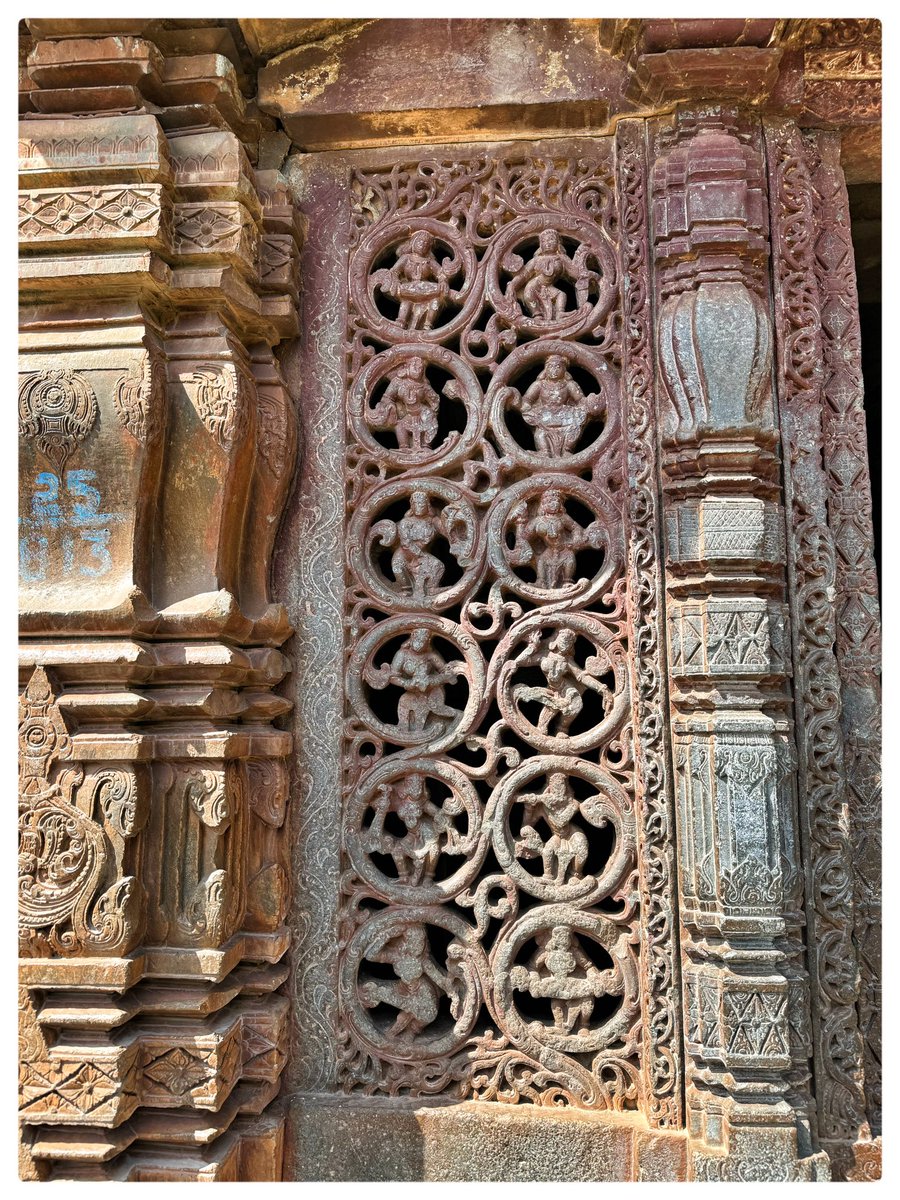
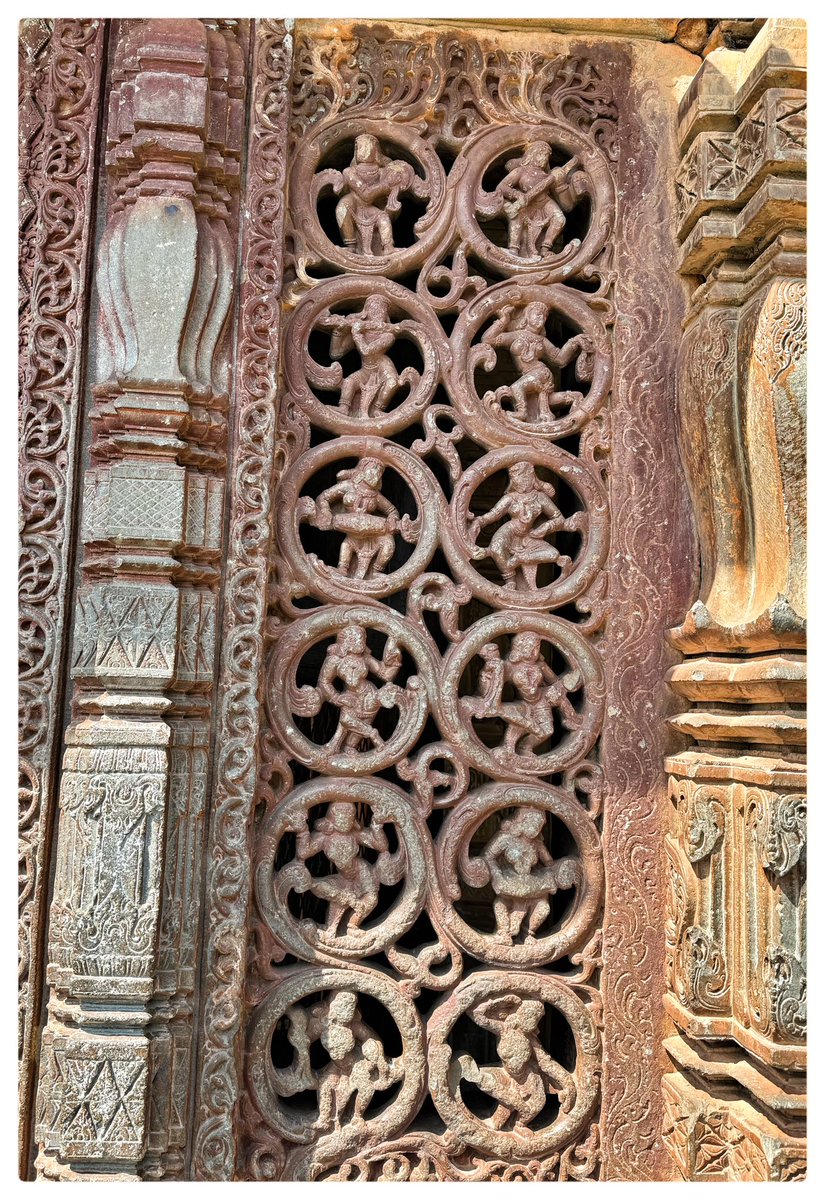
These exquisite, unique jaalis featuring female musicians and dancers in different poses are from the 11th century Chandramoulishwara temple in Hubballi. Carved out of a single stone slab, these jaalis showcase the skill of the sculptors from the Western Chalukya kingdoms.
Such jaalis or जालवातायन as they are known in Sanskrit, not only enhanced the temple’s aesthetic appeal but they also serves functional purposes, such as regulating light and air flow inside the temple. The chiaroscuro effect these jaalis give in the sabhamandapa is stunning.
The concept of जालवातायन, latticed decorative windows carved out of stone predate the arrival of Islam in Bharat. Ancient Indian temple architecture texts mention them. Early examples of latticed windows can be found in structures like the 8th-century Kailasa temple in Ellora and the Pattadakal temple complex in Karnataka.
These early jaalis were primarily geometric, carved directly into stone. Later on, sculptors started carving mythical animals like the Vyala and the Makara into these jaalis, and even human figures as demonstrated in these pictures.
All the Mughals did was to steal this design, turn it into creeper based or geometric designs and use them into their mausoleums like the Taj Mahal, another case of classic cultural appropriation!
Check these jaalis out, and compare them with the jaalis in Islamic monuments, and you will realise the difference! #HinduTemple #TempleArchitecture #IncredibleIndia #DekhoApnaDes #Chalukya #TreasuresOfKarnataka
These exquisite, unique jaalis featuring female musicians and dancers in different poses are from the 11th century Chandramoulishwara temple in Hubballi. Carved out of a single stone slab, these jaalis showcase the skill of the sculptors from the Western Chalukya kingdoms.
Such jaalis or जालवातायन as they are known in Sanskrit, not only enhanced the temple’s aesthetic appeal but they also serves functional purposes, such as regulating light and air flow inside the temple. The chiaroscuro effect these jaalis give in the sabhamandapa is stunning.
The concept of जालवातायन, latticed decorative windows carved out of stone predate the arrival of Islam in Bharat. Ancient Indian temple architecture texts mention them. Early examples of latticed windows can be found in structures like the 8th-century Kailasa temple in Ellora and the Pattadakal temple complex in Karnataka.
These early jaalis were primarily geometric, carved directly into stone. Later on, sculptors started carving mythical animals like the Vyala and the Makara into these jaalis, and even human figures as demonstrated in these pictures.
All the Mughals did was to steal this design, turn it into creeper based or geometric designs and use them into their mausoleums like the Taj Mahal, another case of classic cultural appropriation!
Check these jaalis out, and compare them with the jaalis in Islamic monuments, and you will realise the difference! #HinduTemple #TempleArchitecture #IncredibleIndia #DekhoApnaDes #Chalukya #TreasuresOfKarnataka
cc @amargov
@amargov Your sarcastic reply made me write this :)
جاري تحميل الاقتراحات...