

What is the Shahi Snan? How many Akharas are there? What is Kalpavas? Why do Naga Sadhus hold processions?🧵
Don’t miss the information which given ahead
#MahaKumbh2025 #Mahakumbh x.com
Don’t miss the information which given ahead
#MahaKumbh2025 #Mahakumbh x.com
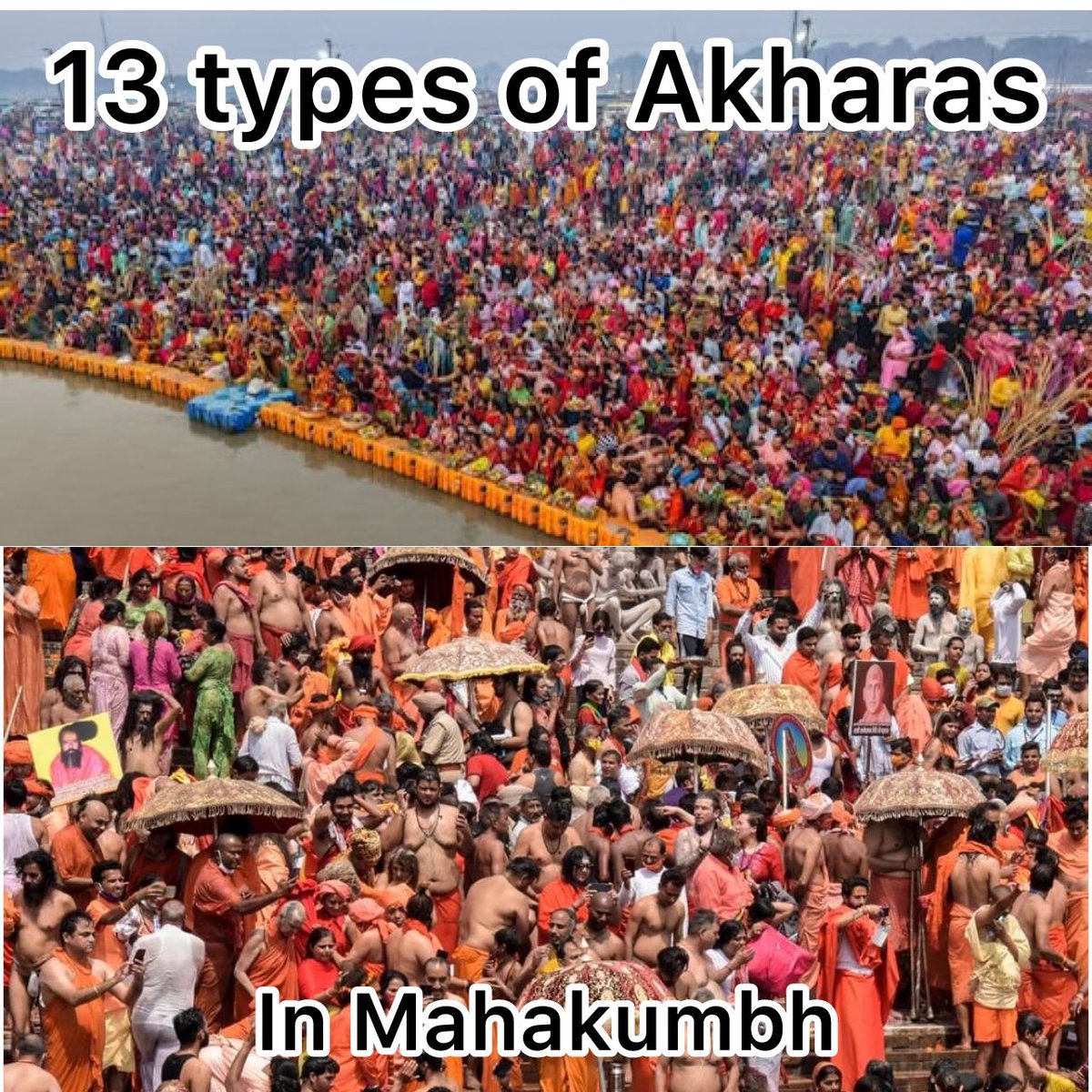
The first Shahi Snan in the पवित्र जल ( holy water) of the Sangam will begin on January 13 with the Paush Purnima Snan and conclude on February 26 with Maha Shivaratri.
This grand event of the Maha Kumbh is the world’s largest public gathering and a collective act of religious faith. Ascetics, saints, sadhus, sadhvis, Kalpavasis, and pilgrims from all walks of life participate in this spiritual and cultural festival. The Maha Kumbh Mela is a grand celebration of the four drops of nectar that fell from a sacred pot. (अमृत कलश)
This grand event of the Maha Kumbh is the world’s largest public gathering and a collective act of religious faith. Ascetics, saints, sadhus, sadhvis, Kalpavasis, and pilgrims from all walks of life participate in this spiritual and cultural festival. The Maha Kumbh Mela is a grand celebration of the four drops of nectar that fell from a sacred pot. (अमृत कलश)
Basic Information About Maha Kumbh to Help You Participate
In Sanatan Dharma, the Maha Kumbh Mela is a grand and massive religious pilgrimage held once every 144 years. Similarly, the Kumbh Mela is organized four times over a span of 12 years. Both the Kumbh and Maha Kumbh are associated with four sacred locations, each linked to a holy river.
▪️▪️The Origin of Akharas
The Akharas were established by Adi Shankaracharya. It is said that he formed organizations of sadhus skilled in weaponry to protect Hinduism. Initially, there were only 4 Akharas, but now their number has grown to 13. Today, Akharas are divided into three categories: Shaiva, Vaishnava, and Udasin.
In Sanatan Dharma, the Maha Kumbh Mela is a grand and massive religious pilgrimage held once every 144 years. Similarly, the Kumbh Mela is organized four times over a span of 12 years. Both the Kumbh and Maha Kumbh are associated with four sacred locations, each linked to a holy river.
▪️▪️The Origin of Akharas
The Akharas were established by Adi Shankaracharya. It is said that he formed organizations of sadhus skilled in weaponry to protect Hinduism. Initially, there were only 4 Akharas, but now their number has grown to 13. Today, Akharas are divided into three categories: Shaiva, Vaishnava, and Udasin.
▪️Locations of Kumbh
Uttarakhand, also known as Devbhoomi (the Land of Gods), is home to the famous district of Haridwar, situated on the banks of the Ganga River. It is considered a symbol of religious faith.
Ujjain, a district in Madhya Pradesh, is known as the city of bhagwan Shiva. Situated on the banks of the sacred Shipra River, it houses one of Bhagwan Shiva’s Jyotirlingas, famously known as Mahakaleshwar across the world.
Nashik, located on the banks of the Godavari River, is one of the most sacred and religious places in Maharashtra. The Kumbh Mela is also held here.
Prayagraj, also known as Triveni Sangam, is one of the most sacred and religious places in Uttar Pradesh. It is the confluence of three holy rivers—Ganga, Yamuna, and the invisible Saraswati—known worldwide as the Triveni Sangam. Both the Kumbh and Maha Kumbh are grandly organized here.
According to religious beliefs, Kumbh and Maha Kumbh are pathways to salvation for humans. Taking a holy dip in the rivers during these auspicious occasions is considered highly sacred. It is believed that during the churning of the ocean (Samudra Manthan), drops of nectar fell on these holy sites on Earth.
Uttarakhand, also known as Devbhoomi (the Land of Gods), is home to the famous district of Haridwar, situated on the banks of the Ganga River. It is considered a symbol of religious faith.
Ujjain, a district in Madhya Pradesh, is known as the city of bhagwan Shiva. Situated on the banks of the sacred Shipra River, it houses one of Bhagwan Shiva’s Jyotirlingas, famously known as Mahakaleshwar across the world.
Nashik, located on the banks of the Godavari River, is one of the most sacred and religious places in Maharashtra. The Kumbh Mela is also held here.
Prayagraj, also known as Triveni Sangam, is one of the most sacred and religious places in Uttar Pradesh. It is the confluence of three holy rivers—Ganga, Yamuna, and the invisible Saraswati—known worldwide as the Triveni Sangam. Both the Kumbh and Maha Kumbh are grandly organized here.
According to religious beliefs, Kumbh and Maha Kumbh are pathways to salvation for humans. Taking a holy dip in the rivers during these auspicious occasions is considered highly sacred. It is believed that during the churning of the ocean (Samudra Manthan), drops of nectar fell on these holy sites on Earth.
Total Akharas of Sadhus
There are a total of 13 recognized Akharas, including one Kinnar Akhara. However, the Kinnar Akhara is not officially recognized by the Akhara Council and is therefore associated with the Juna Akhara.
Primarily, there are three types of Akharas
1.Shaiva Akharas - The sadhus of this Akhara are devotees of Bhagwan Shiva.
2.Vaishnava Akharas - The members of this Akhara worship and meditate upon Bhagwan Vishnu.
3.Udasin Akharas - These Akharas primarily follow the teachings of Guru Nanak.
There are a total of 13 recognized Akharas, including one Kinnar Akhara. However, the Kinnar Akhara is not officially recognized by the Akhara Council and is therefore associated with the Juna Akhara.
Primarily, there are three types of Akharas
1.Shaiva Akharas - The sadhus of this Akhara are devotees of Bhagwan Shiva.
2.Vaishnava Akharas - The members of this Akhara worship and meditate upon Bhagwan Vishnu.
3.Udasin Akharas - These Akharas primarily follow the teachings of Guru Nanak.
Names of Akharas
1.Juna Akhara
2.Nagpanthi Gorakhnath Akhara
3.Niranjani Akhara
4.Nirmohi Akhara
5.Nirmal Panchayati Akhara
6.Mahanirvani Akhara
7.Atal Akhara
8.Ahvan Akhara
9.Anand Akhara
10.Panchagni Akhara
11.Vaishnav Akhara
12.Udasin Panchayati Bada Akhara
13.Udasin Naya Akhara
1.Juna Akhara
2.Nagpanthi Gorakhnath Akhara
3.Niranjani Akhara
4.Nirmohi Akhara
5.Nirmal Panchayati Akhara
6.Mahanirvani Akhara
7.Atal Akhara
8.Ahvan Akhara
9.Anand Akhara
10.Panchagni Akhara
11.Vaishnav Akhara
12.Udasin Panchayati Bada Akhara
13.Udasin Naya Akhara
The Three Highest Positions in Akharas
1.Acharya Mahamandaleshwar: This is the highest position in any Akhara.
2.Mahamandaleshwar: This is considered the second most important position after Acharya Mahamandaleshwar.
3.Shrimahant: This position is responsible for the administrative work of the Akhara. Shrimahants are entrusted with managing the administrative affairs of the Akharas.
1.Acharya Mahamandaleshwar: This is the highest position in any Akhara.
2.Mahamandaleshwar: This is considered the second most important position after Acharya Mahamandaleshwar.
3.Shrimahant: This position is responsible for the administrative work of the Akhara. Shrimahants are entrusted with managing the administrative affairs of the Akharas.
Naga Sadhus
Naga Sadhus renounce all worldly comforts and dedicate their lives to attaining liberation (moksha) and self-realization. They even abandon wearing clothes on their bodies. Naga Sadhus are usually seen only during Kumbh or Maha Kumbh events.
Naga Sadhus renounce all worldly comforts and dedicate their lives to attaining liberation (moksha) and self-realization. They even abandon wearing clothes on their bodies. Naga Sadhus are usually seen only during Kumbh or Maha Kumbh events.
Kalpavas
Kalpavas is a spiritual and religious practice for common people. During Kalpavas, individuals renounce worldly comforts and meditate on Bhagwan Shiva. This practice is undertaken on the banks of the Sangam during the auspicious months of Paush and Magh. According to religious beliefs, Kalpavas is considered a pathway for common people to attain salvation (moksha).
Kalpavas is a spiritual and religious practice for common people. During Kalpavas, individuals renounce worldly comforts and meditate on Bhagwan Shiva. This practice is undertaken on the banks of the Sangam during the auspicious months of Paush and Magh. According to religious beliefs, Kalpavas is considered a pathway for common people to attain salvation (moksha).
1 Mahanirvani Akhara: This Akhara was established in 748 AD. Its presiding deity is Kapil Muni. The headquarters is in Prayagraj (Allahabad).
2. Niranjani Akhara: The Akhara was established in 903 AD. Its headquarters is in Prayag. The presiding deity is Lord Kartikeya. 70% of the sadhus in this Akhara have received higher education.
3. Atal Akhara: Adi Shankaracharya established Atal Akhara in 646 AD. Its headquarters is in Varanasi.
4. Anand Akhara: According to the Vikram Samvat, Anand Akhara was established in 856 AD in Barar. Its main center is in Haridwar. This Akhara does not have the position of Mahamandaleshwar.
5. Agni Akhara: This Akhara was established in the 8th century AD. Its presiding deity is Gayatri, and its headquarters is in Kashi. Its members include the four Peeth Shankaracharyas, Brahmacharis, Sadhus, and Mahamandaleshwars.
6. Juna Akhara: This is the largest Shaiva Akhara. It was established in 1145 AD in Karnaprayag, Uttarakhand. The presiding deity is Rudravatara Dattatreya. The headquarters is in Varanasi.
7. Ahvan Akhara: This Akhara was established in 547 AD by Adi Shankaracharya. Gajanan Dattatreya is its presiding deity. The headquarters of this Akhara is in Varanasi.
2. Niranjani Akhara: The Akhara was established in 903 AD. Its headquarters is in Prayag. The presiding deity is Lord Kartikeya. 70% of the sadhus in this Akhara have received higher education.
3. Atal Akhara: Adi Shankaracharya established Atal Akhara in 646 AD. Its headquarters is in Varanasi.
4. Anand Akhara: According to the Vikram Samvat, Anand Akhara was established in 856 AD in Barar. Its main center is in Haridwar. This Akhara does not have the position of Mahamandaleshwar.
5. Agni Akhara: This Akhara was established in the 8th century AD. Its presiding deity is Gayatri, and its headquarters is in Kashi. Its members include the four Peeth Shankaracharyas, Brahmacharis, Sadhus, and Mahamandaleshwars.
6. Juna Akhara: This is the largest Shaiva Akhara. It was established in 1145 AD in Karnaprayag, Uttarakhand. The presiding deity is Rudravatara Dattatreya. The headquarters is in Varanasi.
7. Ahvan Akhara: This Akhara was established in 547 AD by Adi Shankaracharya. Gajanan Dattatreya is its presiding deity. The headquarters of this Akhara is in Varanasi.
8 . Udasin Akharas: The followers of this Akhara worship ‘Om’. There are three Akharas under the Udasin tradition. Udasin Panchayati Bada Akhara: This Akhara was established in 1825 AD on Basant Panchami at Har Ki Pauri in Haridwar. Its main ashram is in Prayagraj. Udasin Panchayati Naya Akhara: This Akhara was established in 1846 AD after ideological differences with the saints of the Bada Udasin Akhara. Its main center is in Kankhal, Haridwar.
9. Nirmal Akhara: The foundation of this Akhara was laid in 1862 by Baba Mehtab Singh Maharaj. It is believed to be associated with Guru Nanak Dev Ji.
10. Vaishnav Akharas: The followers of this tradition worship Lord Vishnu and his incarnations. There are three Akharas under the Vaishnav tradition.
11. Digambar Akhara: It is believed that this Akhara was established 500 years ago in Ayodhya. Its headquarters is in Sabarkantha, Gujarat. The Akhara has over 450 monasteries and temples.
12. Nirmohi Akhara: This Akhara was established in the 14th century by Ramanujacharya. It is located in Varanasi. The presiding deity of this Akhara is Lord Hanuman.
13. Nirvani Akhara: Nirvani Akhara was established in 748 AD. Their presiding deity is Lord Vishnu. The headquarters is in Hanuman Garhi, Ayodhya.
9. Nirmal Akhara: The foundation of this Akhara was laid in 1862 by Baba Mehtab Singh Maharaj. It is believed to be associated with Guru Nanak Dev Ji.
10. Vaishnav Akharas: The followers of this tradition worship Lord Vishnu and his incarnations. There are three Akharas under the Vaishnav tradition.
11. Digambar Akhara: It is believed that this Akhara was established 500 years ago in Ayodhya. Its headquarters is in Sabarkantha, Gujarat. The Akhara has over 450 monasteries and temples.
12. Nirmohi Akhara: This Akhara was established in the 14th century by Ramanujacharya. It is located in Varanasi. The presiding deity of this Akhara is Lord Hanuman.
13. Nirvani Akhara: Nirvani Akhara was established in 748 AD. Their presiding deity is Lord Vishnu. The headquarters is in Hanuman Garhi, Ayodhya.
In the Maha Kumbh Mela, the sadhus and saints of the Akharas go for a royal bath in the holy river. While the word “Akhara” typically refers to a place for wrestlers to fight, the group of sadhus and saints in the Maha Kumbh is known by the name of Akharas. Akharas are considered symbols of religiosity and spiritual practice in Hinduism.
جاري تحميل الاقتراحات...