

1/7) New Mechanism (Published Yesterday) on How Ketones Clean a Messy Brain in Alzheimer's Disease
🧐From the paper: "Ketone bodies are janitors of damaged proteins, chaperoning away molecular waste so organisms can operate at peak molecular fitness."
I'm going to break it down in this thread, or skip to the end for the easy-to-read🔗Newsletter version🔗
🧠Background: Protein Misfolding and Alzheimer’s🧠
Alzheimer’s is one of many different horrifying neurodegenerative diseases. Most are related to aging and characterized by the misfolding of proteins.
This is Biology 101: Proteins are the micro-machines that govern how the body works. And a proteins structure (how it folds) determines its function. If it misfolds, disease can ensue – especially neurodegenerative diseases like Alzheimer’s.
In fact, you may have heard of the products of some of these misfolded proteins, like amyloid plaques and tau neurofibrillary tangles...
🧐From the paper: "Ketone bodies are janitors of damaged proteins, chaperoning away molecular waste so organisms can operate at peak molecular fitness."
I'm going to break it down in this thread, or skip to the end for the easy-to-read🔗Newsletter version🔗
🧠Background: Protein Misfolding and Alzheimer’s🧠
Alzheimer’s is one of many different horrifying neurodegenerative diseases. Most are related to aging and characterized by the misfolding of proteins.
This is Biology 101: Proteins are the micro-machines that govern how the body works. And a proteins structure (how it folds) determines its function. If it misfolds, disease can ensue – especially neurodegenerative diseases like Alzheimer’s.
In fact, you may have heard of the products of some of these misfolded proteins, like amyloid plaques and tau neurofibrillary tangles...

2/7) Okay, now some more background on ketogenic diets and Alzheimer’s disease.
There is a body of literature supporting the use of ketogenic diets for Alzheimer’s disease, including mouse models where ketogenic diets extend cognitive longevity, data showing the ketones can protect against amyloid toxicity and reduce amyloid plaque burden, and even human randomized trials showing the benefits of ketogenic diets in persons already exhibiting signs and symptoms of dementia.
Also, on first principles, ketones could help in Alzheimer’s disease, by providing an energy substrate when brain glucose metabolism is impaired, reducing neuroinflammation, and rewiring metabolism through changing how genes are expressed via HDAC inhibition, or altering protein function through post translational modification.
This is all very cool and exciting and provides a framework for what I’m about to share.
But this research goes a step further...
There is a body of literature supporting the use of ketogenic diets for Alzheimer’s disease, including mouse models where ketogenic diets extend cognitive longevity, data showing the ketones can protect against amyloid toxicity and reduce amyloid plaque burden, and even human randomized trials showing the benefits of ketogenic diets in persons already exhibiting signs and symptoms of dementia.
Also, on first principles, ketones could help in Alzheimer’s disease, by providing an energy substrate when brain glucose metabolism is impaired, reducing neuroinflammation, and rewiring metabolism through changing how genes are expressed via HDAC inhibition, or altering protein function through post translational modification.
This is all very cool and exciting and provides a framework for what I’m about to share.
But this research goes a step further...
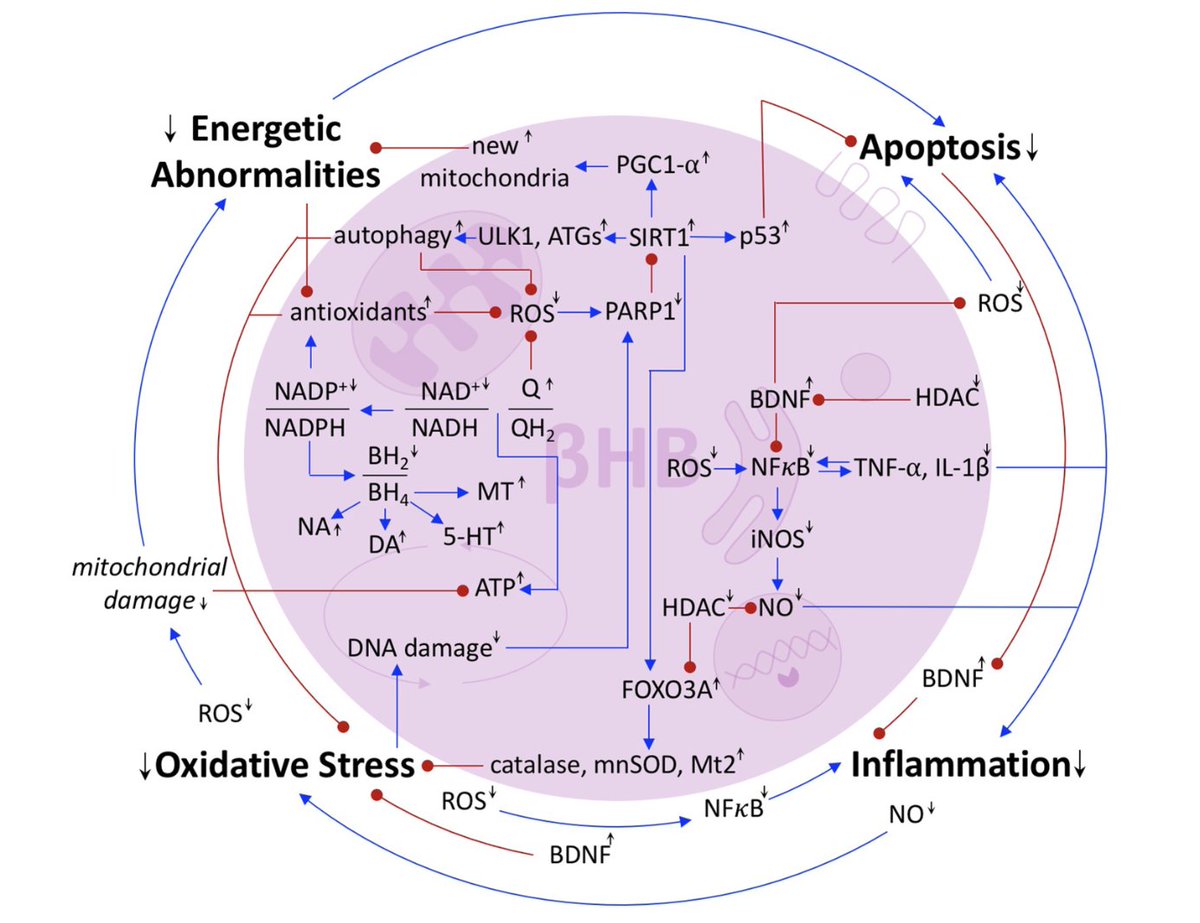
3/7) In brief, they find that ketones can target specific pathological misfolded proteins, help them transition from a "soluble to insoluble" state – we will elaborate on that in a moment - and ultimately help clear them out and clean up the brain.
In the authors words:
“ketone bodies are janitors of damaged proteins, chaperoning away molecular waste so organisms can operate at peak molecular fitness.”
But let’s unpack that a little bit more because it’s complicated.
You see, when proteins misfold they can be soluble - meaning dissolved in the fluid in and around out cells – or insoluble – meaning that are clustered up discretely. Transitioning from soluble to insoluble is almost as if you could reverse dissolve salt from salt water into fresh water and a salt cube.
In the authors words:
“ketone bodies are janitors of damaged proteins, chaperoning away molecular waste so organisms can operate at peak molecular fitness.”
But let’s unpack that a little bit more because it’s complicated.
You see, when proteins misfold they can be soluble - meaning dissolved in the fluid in and around out cells – or insoluble – meaning that are clustered up discretely. Transitioning from soluble to insoluble is almost as if you could reverse dissolve salt from salt water into fresh water and a salt cube.
4/70 But is this good and, if so, why?
Well, when certain misfolded proteins are in their soluble form they can more easily spread and “seed” disease from cell-to-cell to progress disease. That ketones help transition misfolded proteins from soluble to insoluble could be thought of as a defense mechanism. However, if the insoluble accumulates that’s also a problem.
Luckily, they also show in this study that ketones help with the clearance of the “insolubilized” proteins.
It’s like if you had a huge misfolded protein mess all over your apartment. The ketones not only target the trash and bring it to the trash bin, but then they kindly take out the trash bin and dump it down the garbage chute.
Well, when certain misfolded proteins are in their soluble form they can more easily spread and “seed” disease from cell-to-cell to progress disease. That ketones help transition misfolded proteins from soluble to insoluble could be thought of as a defense mechanism. However, if the insoluble accumulates that’s also a problem.
Luckily, they also show in this study that ketones help with the clearance of the “insolubilized” proteins.
It’s like if you had a huge misfolded protein mess all over your apartment. The ketones not only target the trash and bring it to the trash bin, but then they kindly take out the trash bin and dump it down the garbage chute.

5/7) In terms of what they actually did in this study. They did – well - a lot! Among their experiments they:
Took brain tissue from Alzheimer’s mice and older monkeys, specifically Rhesus Macaques, and confirmed treatment with ketones increased the insolubilization (think: picking up the trash and putting it in the bin).
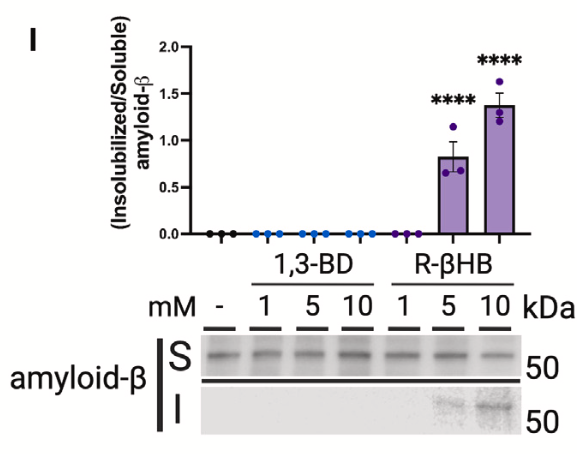
They also looked specifically at the amyloid protein in Alzheimer’s and found that physiological levels of ketones increased the insoluble fraction (purple bars)
They also showed that ketones protected against cellular toxicity of the misfolded amyloid Alzheimer’s protein.
And present data that suggests the most insolublized aggregates get cleared (think: taking out the trash and throwing it down the garbage chute).
Took brain tissue from Alzheimer’s mice and older monkeys, specifically Rhesus Macaques, and confirmed treatment with ketones increased the insolubilization (think: picking up the trash and putting it in the bin).
They also looked specifically at the amyloid protein in Alzheimer’s and found that physiological levels of ketones increased the insoluble fraction (purple bars)
They also showed that ketones protected against cellular toxicity of the misfolded amyloid Alzheimer’s protein.
And present data that suggests the most insolublized aggregates get cleared (think: taking out the trash and throwing it down the garbage chute).
6/7) Okay, now pause.
Because I’m guessing only a small percentage of you are really appreciating what stuns me about this paper and the physiology to which it speaks. Think about this: How do ketones “know” how to target specifically misfolded proteins?
Why wouldn’t they just insolubilize proteins willy nilly? Somehow, the simple molecule that is a ketone body can select the bad apples out of the bushel.
How?
Well, proper folding of proteins requires careful, specific conditions. When this occurs, the protein takes a particular shape. However, when conditions are suboptimal, so-called “unstable folding conditions,” proteins misfold and get damaged and this misfolded structure opens up particular binding areas that ketones can target.
Ketosis then promotes the clearance of highly insolubilized proteins depends on different clean up mechanisms, including the proteosome and autophagy.
If these terms are novel to you, they are just different cellular clean up and recycling systems.
And from an evolutionarily perspective, this all also makes sense, since ketosis is historically associated with fasting and nutrient deprivation, which would be an ideal time to clear damaged and misfolded proteins to enhance cellular and organismal health.
Because I’m guessing only a small percentage of you are really appreciating what stuns me about this paper and the physiology to which it speaks. Think about this: How do ketones “know” how to target specifically misfolded proteins?
Why wouldn’t they just insolubilize proteins willy nilly? Somehow, the simple molecule that is a ketone body can select the bad apples out of the bushel.
How?
Well, proper folding of proteins requires careful, specific conditions. When this occurs, the protein takes a particular shape. However, when conditions are suboptimal, so-called “unstable folding conditions,” proteins misfold and get damaged and this misfolded structure opens up particular binding areas that ketones can target.
Ketosis then promotes the clearance of highly insolubilized proteins depends on different clean up mechanisms, including the proteosome and autophagy.
If these terms are novel to you, they are just different cellular clean up and recycling systems.
And from an evolutionarily perspective, this all also makes sense, since ketosis is historically associated with fasting and nutrient deprivation, which would be an ideal time to clear damaged and misfolded proteins to enhance cellular and organismal health.
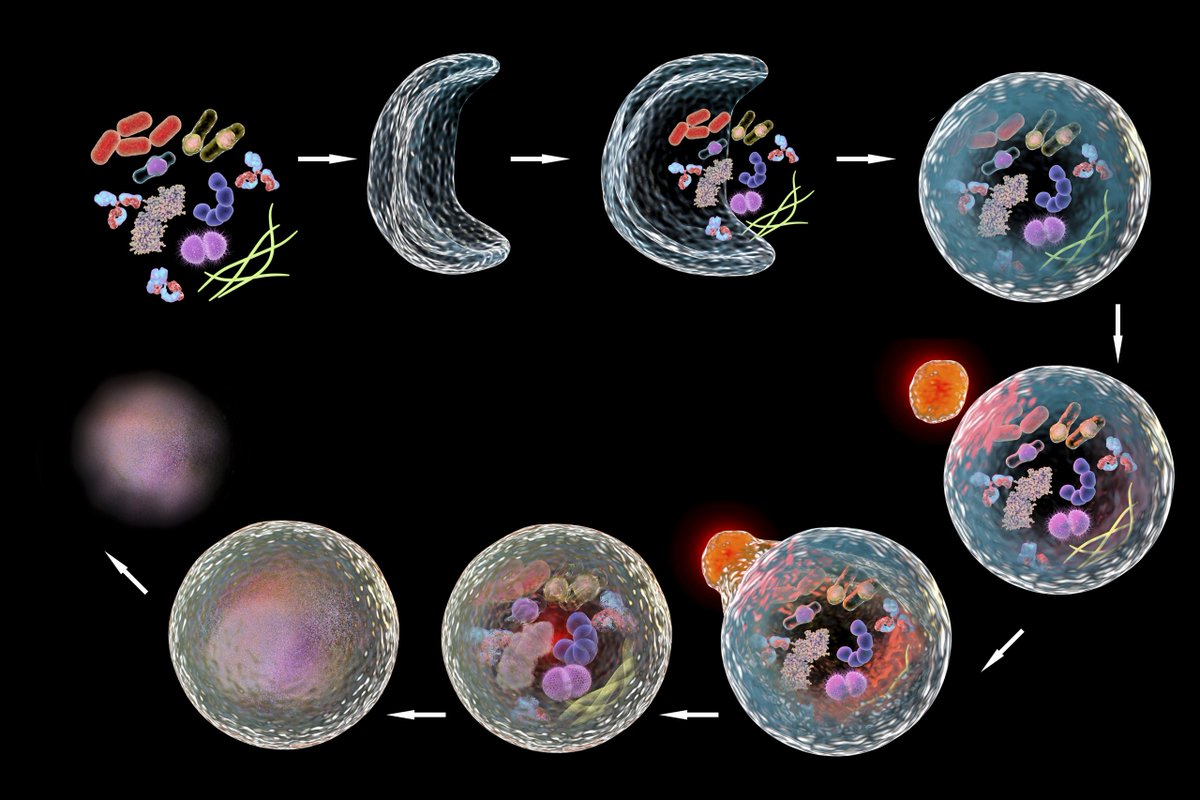
7/7) It's all very interesting and – in fact – represents a whole new frontier of cellular biology insofar as this effect, whereby ketones shift “protein balance,” is likely generalizable to other simple molecules.
For the easy read version and to stay up to date on the latest metabolic health science, check out and subscribe to my Newsletter. There, you'll get first access to the stories I cover elsewhere, including YouTube.
Newsletter: staycuriousmetabolism.substack.com
#StayCurious
For the easy read version and to stay up to date on the latest metabolic health science, check out and subscribe to my Newsletter. There, you'll get first access to the stories I cover elsewhere, including YouTube.
Newsletter: staycuriousmetabolism.substack.com
#StayCurious
جاري تحميل الاقتراحات...