

Medicine System of Rig Veda
World's Oldest and most advanced natural medicine system🧵
Do you know that our Vedic ancestors had developed plants based natural medicine system with proper classification system for medicinal plants and diseases they could cure?
Let's bust the slander and lies of the modern allopathic sales and marketing Turks masquerading as doctors in our society....
Part 1 ✅
World's Oldest and most advanced natural medicine system🧵
Do you know that our Vedic ancestors had developed plants based natural medicine system with proper classification system for medicinal plants and diseases they could cure?
Let's bust the slander and lies of the modern allopathic sales and marketing Turks masquerading as doctors in our society....
Part 1 ✅
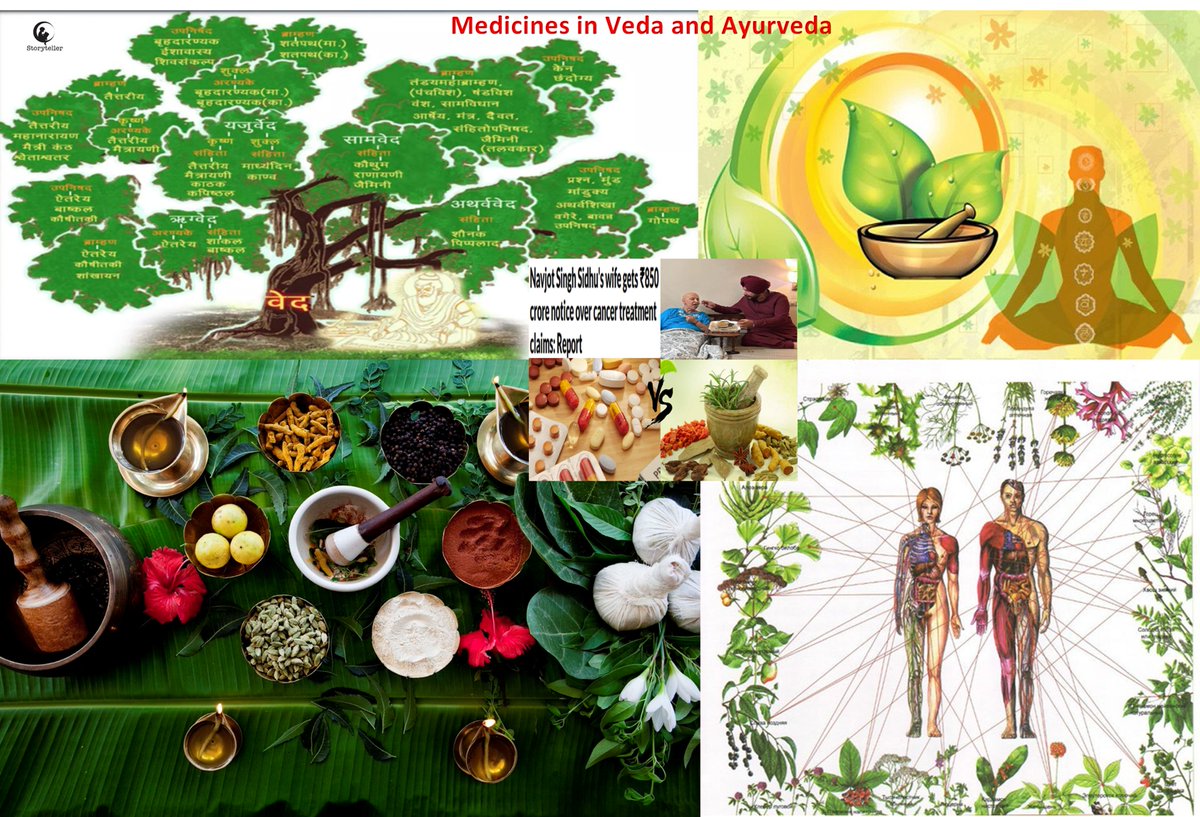
1. The Ashavmara - The Nerium oleander (Kaner)
Navjot Singh Sidhu's wife Dr. Navjot Kaur was suffering from Breast cancer.
How many of us know that our Vedic ancestors had described Breast cancer cure in Rig Veda Mandla 1 Sukta 162, 163, 164.
Surprised??
That is how vast and scientific our Vedic knowledge system and Vedic medicine system is which later developed into Ayurveda.
The Biggest challenge with Vedic text is the context and symbology Vedic Sanskrit words represent.
If you do not get the right context and meaning, you will be lost like a rain drop in an ocean.
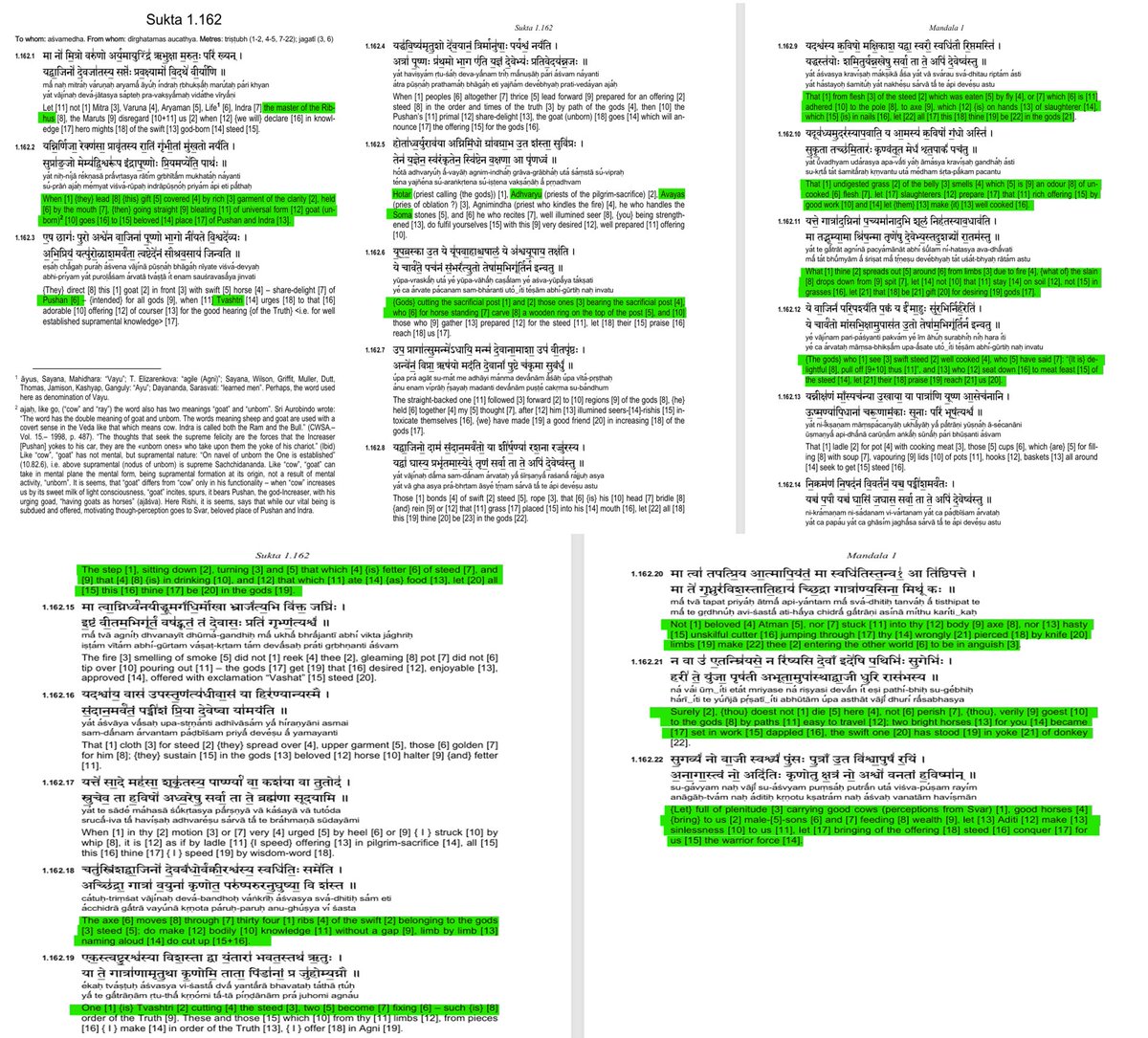
Below is a screenshot of Rig Veda Mandla1, Sukta 162 translation.
On page 1 word "Ribhus" is mentioned in shloka 1.
Ribhus were representatives of cellular life and they have been described as microcosmic in nature and function in Vedas.
Wherever you come across the word "Ashwa" representing a White Horse in context, it symbolises the calcium ladden malignat cells.
(Calcium and calcium-regulating proteins contribute to many of the processes key to cancer cells, including proliferation, invasion and cell death. Several oncogenes and tumour suppressors have effects on calcium homeostasis.)
Wherever you come across word "Tvashthari", it symbolizes D.N.A. of human cells.
So in short in Sukta 162, 163, 164 you will find shlokas mentioning about Ribhus and slaughter of White Horses by cutting the Twasthr or destroying the chords of Twasthr by "Ashwamarak".
These white horses represent cancer laden malignant cells.
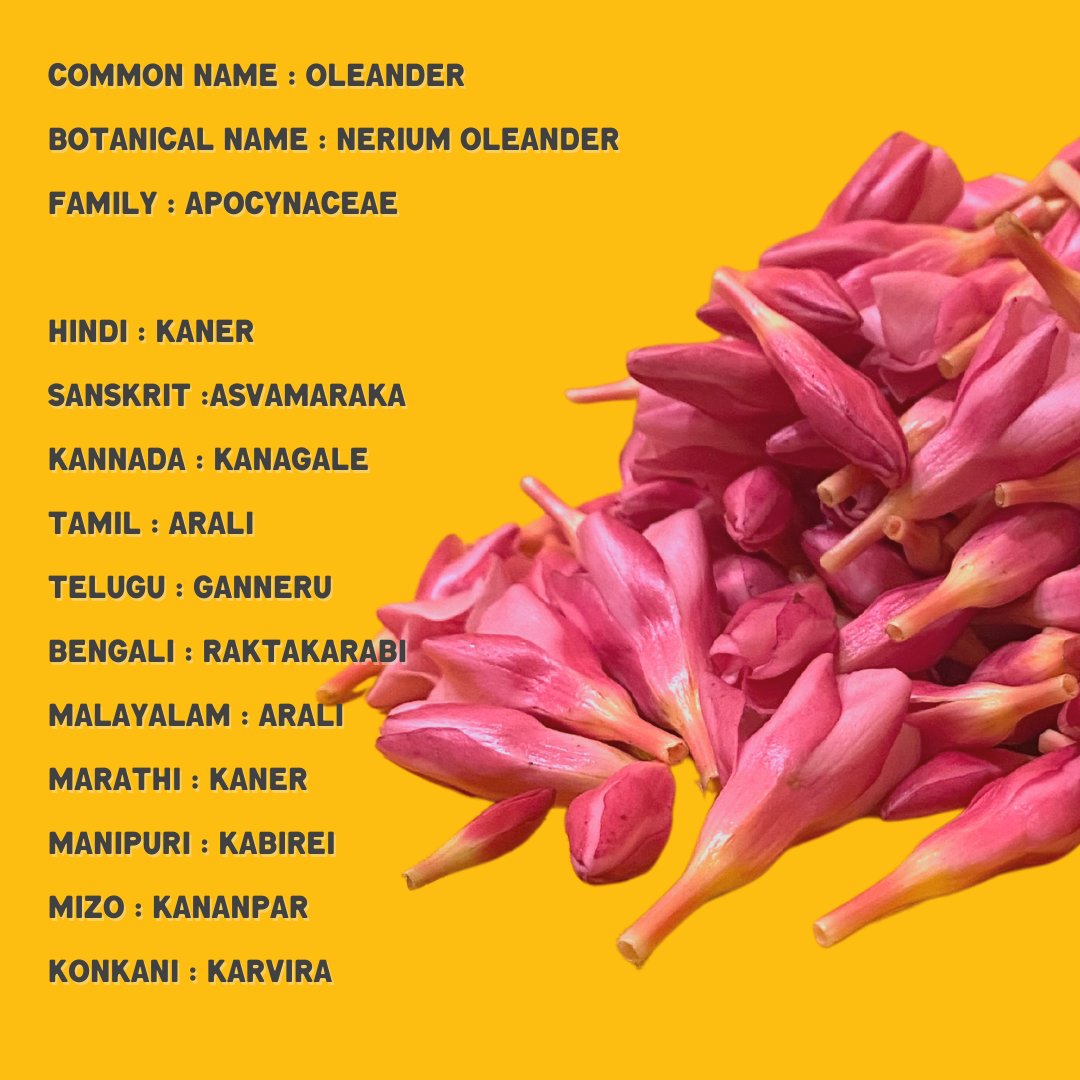
Ashwamark is sanskrit name of "Nerium oleander" which we call "KANER KE PHOOL" in hindi.
So our Vedic ancestors were aware that we can use "Nerium oleander" which we call "KANER KE PHOOL" in hindi, to kill cancer cells (White Horses related to Ribhus (Human body cells) and cancer can be cured.
Though in Vedic medicine system Cancer has not been defined as a separate disease but a group of diseases represented by word "ANUBADA" which we find in Sushrut Sanhita and Charak Sanhita also.
Explaining the context and symbolgy associated with the words of Rig Vedic sanskrit text is beyong the scope of this thread but i will surely come up with a separate thread on Vedic biology to explain it all in coming days.
Note:
After evaluating all safety and toxicity data, the U.S. Food and Drug Administration determined that a defined Nerium oleander extract is safe enough to be administered to humans by mouth, and a defined Nerium oleander extract is now being used to treat cancer patients under an FDA-approved Investigational New Drug application.
(pmc.ncbi.nlm.nih.gov)
(sciencedirect.com)
Navjot Singh Sidhu's wife Dr. Navjot Kaur was suffering from Breast cancer.
How many of us know that our Vedic ancestors had described Breast cancer cure in Rig Veda Mandla 1 Sukta 162, 163, 164.
Surprised??
That is how vast and scientific our Vedic knowledge system and Vedic medicine system is which later developed into Ayurveda.
The Biggest challenge with Vedic text is the context and symbology Vedic Sanskrit words represent.
If you do not get the right context and meaning, you will be lost like a rain drop in an ocean.
Below is a screenshot of Rig Veda Mandla1, Sukta 162 translation.
On page 1 word "Ribhus" is mentioned in shloka 1.
Ribhus were representatives of cellular life and they have been described as microcosmic in nature and function in Vedas.
Wherever you come across the word "Ashwa" representing a White Horse in context, it symbolises the calcium ladden malignat cells.
(Calcium and calcium-regulating proteins contribute to many of the processes key to cancer cells, including proliferation, invasion and cell death. Several oncogenes and tumour suppressors have effects on calcium homeostasis.)
Wherever you come across word "Tvashthari", it symbolizes D.N.A. of human cells.
So in short in Sukta 162, 163, 164 you will find shlokas mentioning about Ribhus and slaughter of White Horses by cutting the Twasthr or destroying the chords of Twasthr by "Ashwamarak".
These white horses represent cancer laden malignant cells.
Ashwamark is sanskrit name of "Nerium oleander" which we call "KANER KE PHOOL" in hindi.
So our Vedic ancestors were aware that we can use "Nerium oleander" which we call "KANER KE PHOOL" in hindi, to kill cancer cells (White Horses related to Ribhus (Human body cells) and cancer can be cured.
Though in Vedic medicine system Cancer has not been defined as a separate disease but a group of diseases represented by word "ANUBADA" which we find in Sushrut Sanhita and Charak Sanhita also.
Explaining the context and symbolgy associated with the words of Rig Vedic sanskrit text is beyong the scope of this thread but i will surely come up with a separate thread on Vedic biology to explain it all in coming days.
Note:
After evaluating all safety and toxicity data, the U.S. Food and Drug Administration determined that a defined Nerium oleander extract is safe enough to be administered to humans by mouth, and a defined Nerium oleander extract is now being used to treat cancer patients under an FDA-approved Investigational New Drug application.
(pmc.ncbi.nlm.nih.gov)
(sciencedirect.com)
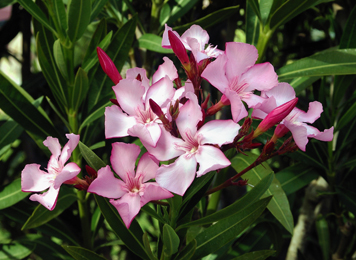
2. Ashwmara
The rasa of Kaner has been mentioned as a potent remedy for the cancerous cells in Rig Veda Mandla 1 Sukta 162, 163, 164.
The term ‘Ayurveda’ is formed with two words Ayus and Veda. The word "ayus" means life, oblation giving long life, longevity, duration of life, life principle; and Veda means knowledge. Ayurveda means knowledge of long life.
The word "Bhesajam" means healing, curing and medicine also. The root is ji which means victory and the victory over diseases is Bhesaja. There are a very large number of references in the Vedic literature about Bhesaja
If you read the translation of Rigveda Sukta with correct translation, you will understand how deep and scientific our Vedic ancestors were.
The rasa of Kaner has been mentioned as a potent remedy for the cancerous cells in Rig Veda Mandla 1 Sukta 162, 163, 164.
The term ‘Ayurveda’ is formed with two words Ayus and Veda. The word "ayus" means life, oblation giving long life, longevity, duration of life, life principle; and Veda means knowledge. Ayurveda means knowledge of long life.
The word "Bhesajam" means healing, curing and medicine also. The root is ji which means victory and the victory over diseases is Bhesaja. There are a very large number of references in the Vedic literature about Bhesaja
If you read the translation of Rigveda Sukta with correct translation, you will understand how deep and scientific our Vedic ancestors were.
3. The Eight limbs of healing
The earliest classical Sanskrit works on Ayurveda describe medicine as being divided into eight components.
This is characterization of the physicians' art, "the medicine that has eight components".
Chikitsayam aṣṭangayaṃ , is first found in the Sanskrit epic the Mahabharata.
The components are:
Kayachikitsa: general medicine, medicine of the body.
Kaumara-bhṛtya (Pediatrics): Discussions about prenatal and postnatal care of baby and mother,
methods of conception; choosing the child's gender, intelligence, and constitution; and childhood diseases
and midwifery.
Shalyatantra: surgical techniques and the extraction of foreign objects
Shalakyatantra: treatment of ailments affecting ears, eyes, nose, mouth, etc. ("ENT")
Bhutavidya: pacification of possessing spirits, and the people whose minds are affected by such
possession
Agadatantra/Vishagara-vairodh Tantra (Toxicology): It includes subjects about epidemics, toxins in
animals, vegetables and minerals. It as well as contains keys for recognizing those anomalies and their antidotes.
Rasayantantra: rejuvenation and tonics for increasing lifespan, intellect and strength
Vajikaraṇatantra: aphrodisiacs and treatments for increasing the volume and viability of semen and
sexual pleasure. It also deals with infertility problems (for those hoping to conceive) and spiritual
development (transmutation of sexual energy into spiritual energy).
The earliest classical Sanskrit works on Ayurveda describe medicine as being divided into eight components.
This is characterization of the physicians' art, "the medicine that has eight components".
Chikitsayam aṣṭangayaṃ , is first found in the Sanskrit epic the Mahabharata.
The components are:
Kayachikitsa: general medicine, medicine of the body.
Kaumara-bhṛtya (Pediatrics): Discussions about prenatal and postnatal care of baby and mother,
methods of conception; choosing the child's gender, intelligence, and constitution; and childhood diseases
and midwifery.
Shalyatantra: surgical techniques and the extraction of foreign objects
Shalakyatantra: treatment of ailments affecting ears, eyes, nose, mouth, etc. ("ENT")
Bhutavidya: pacification of possessing spirits, and the people whose minds are affected by such
possession
Agadatantra/Vishagara-vairodh Tantra (Toxicology): It includes subjects about epidemics, toxins in
animals, vegetables and minerals. It as well as contains keys for recognizing those anomalies and their antidotes.
Rasayantantra: rejuvenation and tonics for increasing lifespan, intellect and strength
Vajikaraṇatantra: aphrodisiacs and treatments for increasing the volume and viability of semen and
sexual pleasure. It also deals with infertility problems (for those hoping to conceive) and spiritual
development (transmutation of sexual energy into spiritual energy).
4. The Healer
Rig Veda defines a healer or Physician as:
औषधवनस्पतयः समागताः, यथा सभायां राजानः; स ब्राह्मणः राक्षसामीवहन् वैद्य उच्यते
The medicinal plants have assembled, as do the kings in an assembly; that Brahmaṇa is called the physician who kills Rakṣasa and Amiva.
The physician is a scholar who has a thorough knowledge of the herbs and cures the germs of diseases.
The duties of the physician are to protect the universe and protect our bodies. The Ashvin-gods the physicians of Devas are invoked to cure diseases.
यात्रौषधीः समग्मता राजनः समिताविव |
विप्रः स उच्यते भिषग रक्षोहामीवाचतानः
The herbs of the journey were gathered together, O king, as if they were gathered together
He is called a brahmin, a physician, and he speaks like a demon (Bitter Truth Speaker like a Physician).
the Ṛgveda mentions toxic germs and the method of their liquidation, the removal of varied and different Yakṣmās, the curing of cardiac maladies by the rays of the Sun; water and herbs are propounded as medicines. Diseases such as Yakṣma, Ajñātayakṣma, Rajayakṣma, Grahi, Harima, Pṛṣṭyamaya, Hṛdroga etc are mentioned.
Again, to cure disease some Vedic Gods are invoked, like restoring Jahuṣa and restoring youth to ageing Cyavana.
The hymn 161 refers to the diseases like phthisis, tuberculosis etc, as curable diseases. It is further said that the life span suffer could be extended to any limit in a normal way. It is called Rejuvenating or Punaryauvana.
Hymn 162 refers to the cure of embryonic and uterine diseases in the case of uterine and vaginal illness.
The hymn 163 talks about the enumeration of different diseases of different organs and parts of the body. The anatomical division of the body is discussed in the hymn which tends to be affected by pathological surgical or bacteriological derangements.
The 164 hymns refer to the cure of the psychological diseases by affecting the rational functioning of the mind. The following chant is for the removal of the effect of poison. The hymn is for the killing of visible and invisible germs with Sun-rays. The God Indra will kill the infectious germs
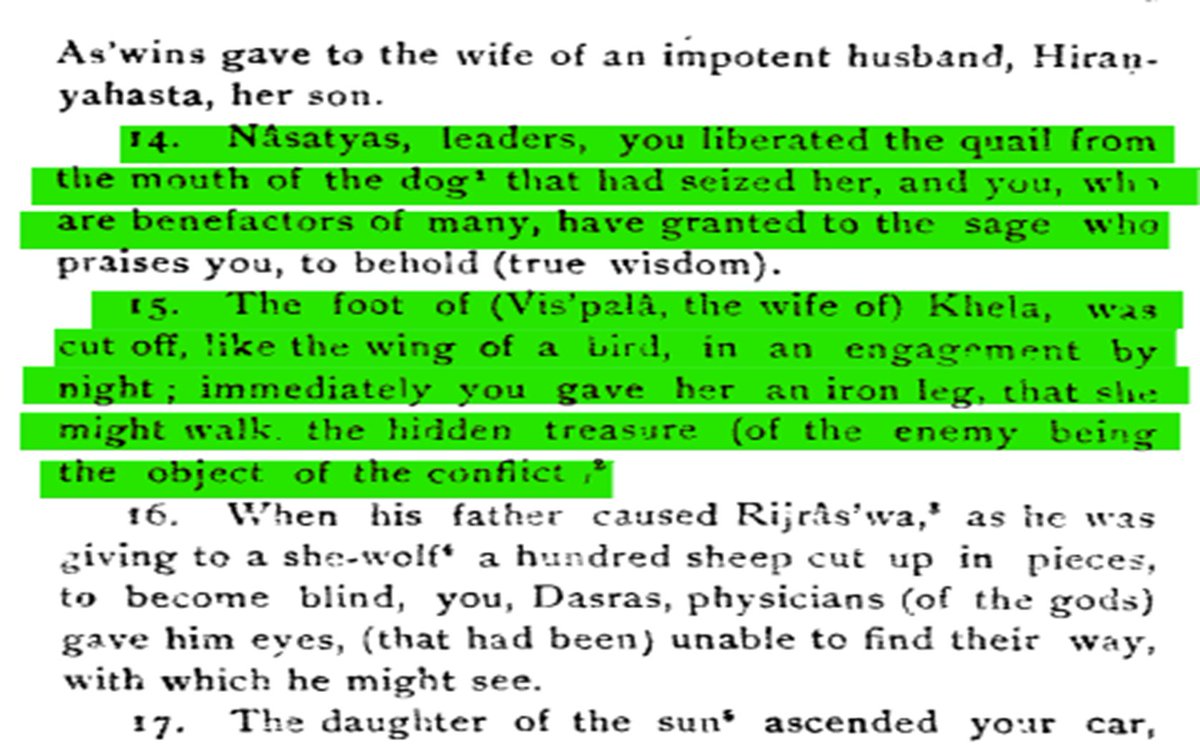
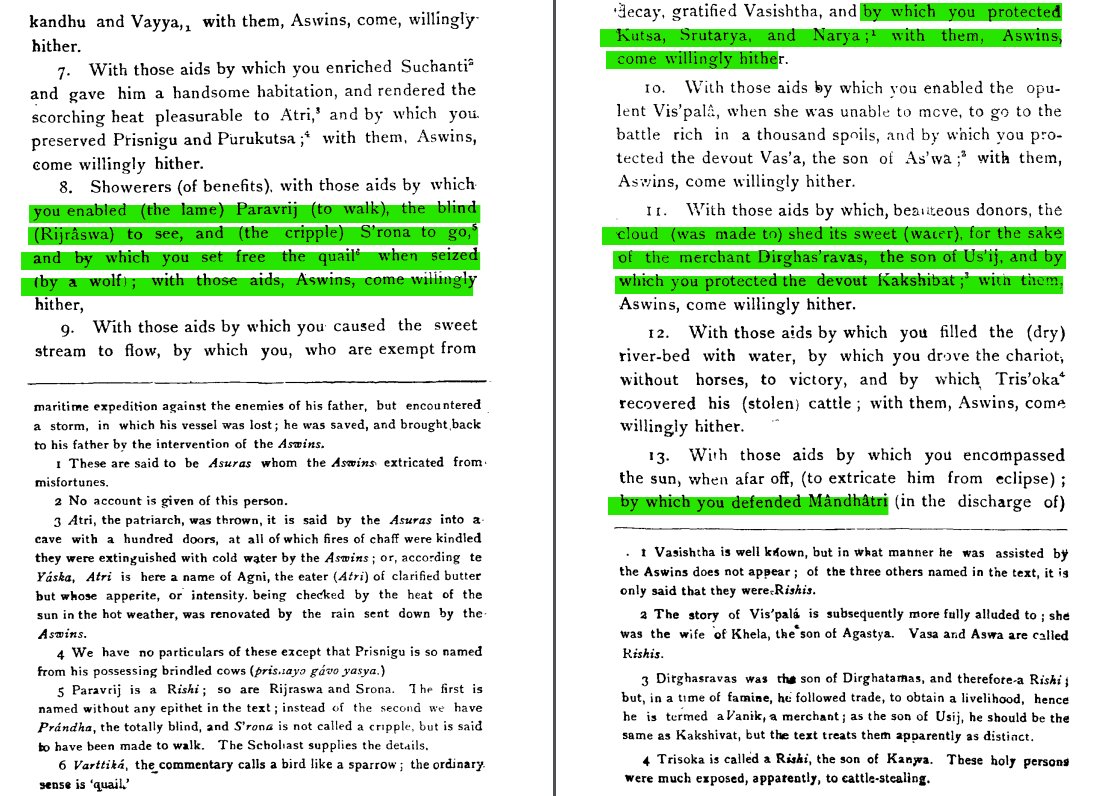
Ṛigveda has ample reference to surgical treatment. The Ashvin Gods are celestial physicians. Their accomplishments in the field of surgery and medicine are multifarious and wide-ranging. They restored life to Vandana and Chyavana with a prescription of Rasayana.(Usage of Chemical substances).
They prolonged the life of Dirghatamas even though he was geriatric and had been beheaded by the Dasas; they affixed an iron leg to Queen Vishpala, after she lost her leg in a war.
They attached the severed limbs of Atri and others; they revived Śyavasva who was dismembered by his enemies; they joined the head of a horse to a decapitated Dadhīci.
They restored eyesight to Ṛjrasva, and Kaṇva and auditory abilities to Narṣada. It is because of them that Parāvṛja and Śroṇa could walk again.
They bestowed robust virility to the impotent husband of Vadhrimati and healed Ghoṣha and Shyava of leprosy. The surgery of eye-sight to cure blindness is referred in 1/117/17 hymns.
Rig Veda defines a healer or Physician as:
औषधवनस्पतयः समागताः, यथा सभायां राजानः; स ब्राह्मणः राक्षसामीवहन् वैद्य उच्यते
The medicinal plants have assembled, as do the kings in an assembly; that Brahmaṇa is called the physician who kills Rakṣasa and Amiva.
The physician is a scholar who has a thorough knowledge of the herbs and cures the germs of diseases.
The duties of the physician are to protect the universe and protect our bodies. The Ashvin-gods the physicians of Devas are invoked to cure diseases.
यात्रौषधीः समग्मता राजनः समिताविव |
विप्रः स उच्यते भिषग रक्षोहामीवाचतानः
The herbs of the journey were gathered together, O king, as if they were gathered together
He is called a brahmin, a physician, and he speaks like a demon (Bitter Truth Speaker like a Physician).
the Ṛgveda mentions toxic germs and the method of their liquidation, the removal of varied and different Yakṣmās, the curing of cardiac maladies by the rays of the Sun; water and herbs are propounded as medicines. Diseases such as Yakṣma, Ajñātayakṣma, Rajayakṣma, Grahi, Harima, Pṛṣṭyamaya, Hṛdroga etc are mentioned.
Again, to cure disease some Vedic Gods are invoked, like restoring Jahuṣa and restoring youth to ageing Cyavana.
The hymn 161 refers to the diseases like phthisis, tuberculosis etc, as curable diseases. It is further said that the life span suffer could be extended to any limit in a normal way. It is called Rejuvenating or Punaryauvana.
Hymn 162 refers to the cure of embryonic and uterine diseases in the case of uterine and vaginal illness.
The hymn 163 talks about the enumeration of different diseases of different organs and parts of the body. The anatomical division of the body is discussed in the hymn which tends to be affected by pathological surgical or bacteriological derangements.
The 164 hymns refer to the cure of the psychological diseases by affecting the rational functioning of the mind. The following chant is for the removal of the effect of poison. The hymn is for the killing of visible and invisible germs with Sun-rays. The God Indra will kill the infectious germs
Ṛigveda has ample reference to surgical treatment. The Ashvin Gods are celestial physicians. Their accomplishments in the field of surgery and medicine are multifarious and wide-ranging. They restored life to Vandana and Chyavana with a prescription of Rasayana.(Usage of Chemical substances).
They prolonged the life of Dirghatamas even though he was geriatric and had been beheaded by the Dasas; they affixed an iron leg to Queen Vishpala, after she lost her leg in a war.
They attached the severed limbs of Atri and others; they revived Śyavasva who was dismembered by his enemies; they joined the head of a horse to a decapitated Dadhīci.
They restored eyesight to Ṛjrasva, and Kaṇva and auditory abilities to Narṣada. It is because of them that Parāvṛja and Śroṇa could walk again.
They bestowed robust virility to the impotent husband of Vadhrimati and healed Ghoṣha and Shyava of leprosy. The surgery of eye-sight to cure blindness is referred in 1/117/17 hymns.
5. The Botany
Vedas mention various plants of medicinal value in their text:
Rigveda 67
Yajurveda 81
Samaveda 290
Atharvaveda 293
Though Ayurveda is an Upaveda of Atharvaveda,several principles of Ayurveda can be inferred from Rigveda also.
Many facts of life,culture,education ,economy,custom and tradition have their roots in Rigveda.
Rigveda explains the usage of natural therapies like sunrays, fire, air, water for the prevention of diseases.
Vedas mention various plants of medicinal value in their text:
Rigveda 67
Yajurveda 81
Samaveda 290
Atharvaveda 293
Though Ayurveda is an Upaveda of Atharvaveda,several principles of Ayurveda can be inferred from Rigveda also.
Many facts of life,culture,education ,economy,custom and tradition have their roots in Rigveda.
Rigveda explains the usage of natural therapies like sunrays, fire, air, water for the prevention of diseases.
6. The Physiology
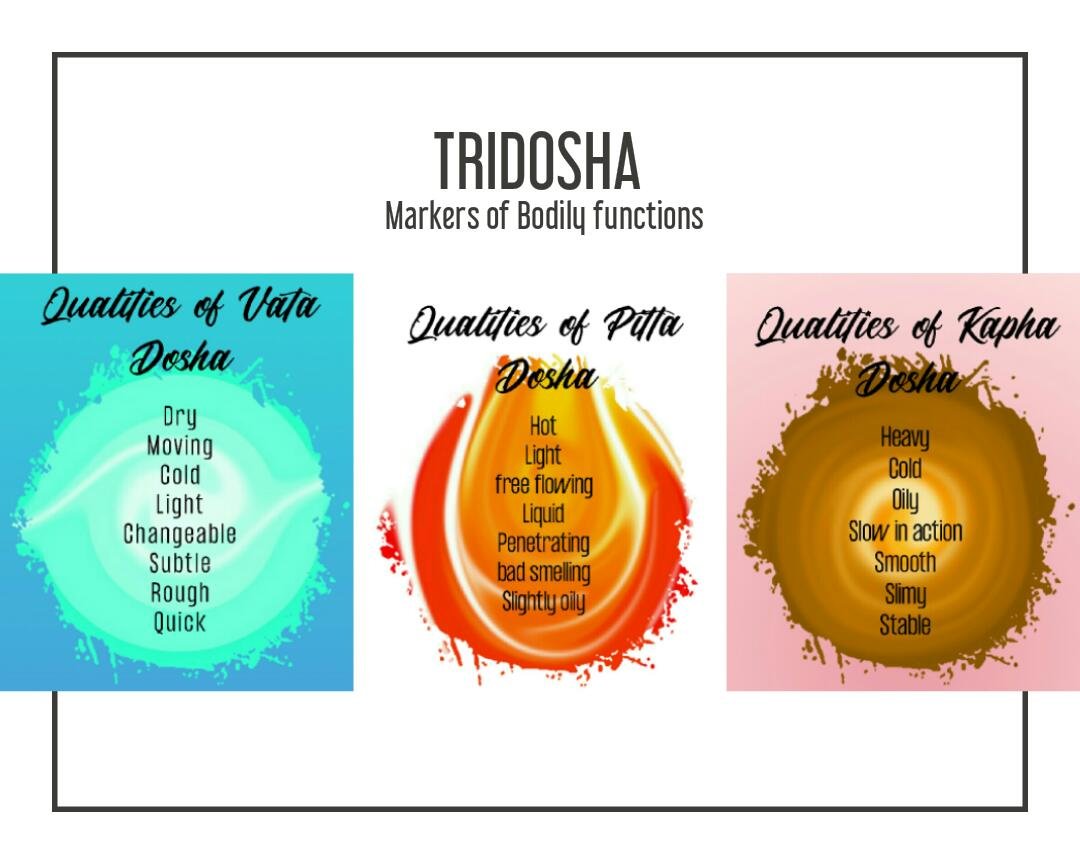
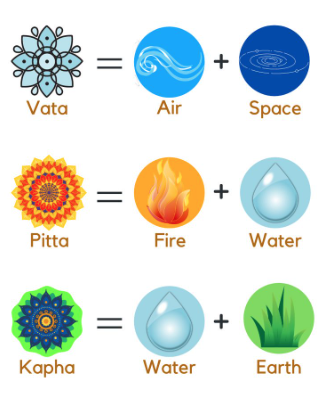
In Rig Veda human body physiology has been divided into three parts which was later on expanded in Atharv Veda:
Vata
This governs all movement and deals with the nervous system. People who predominantly have Vata constitution will have qualities of air and space, which is why these people are quick, thin, and swift. An imbalance in Vata may lead to anxiety and fear. Qualities of Vata are airy, mobility, clarity, lightness.
Pitta
It combines the qualities of the sun, and takes care of digestion, body temperature, and metabolism. These people are intelligent, sharp-witted, and athletic. When out of balance, they become moody and ill-tempered.
Kapha
Controlling the balance of bodily fluids, muscles, and growth of cells, Kapha reflects the elements of water and earth. Anything dense in our bodies comes under Kapha. It is concerned with the seven tissues of our body, weight, and lubrication for joints. People with predominant Kapha usually have a calm temperament.
This concept based on Panchbhuta later on became basis of Atharvavedic medicine system which led to the foundation of the Ayurveda.
Rig Veda starts with its first Shloka paying homage to one of the Panchbhuta i.e. Agni.
You can explore Rig vedic shlokas dedicated to Panchbhuta at the below link:
(shlokam.org)
In Rig Veda human body physiology has been divided into three parts which was later on expanded in Atharv Veda:
Vata
This governs all movement and deals with the nervous system. People who predominantly have Vata constitution will have qualities of air and space, which is why these people are quick, thin, and swift. An imbalance in Vata may lead to anxiety and fear. Qualities of Vata are airy, mobility, clarity, lightness.
Pitta
It combines the qualities of the sun, and takes care of digestion, body temperature, and metabolism. These people are intelligent, sharp-witted, and athletic. When out of balance, they become moody and ill-tempered.
Kapha
Controlling the balance of bodily fluids, muscles, and growth of cells, Kapha reflects the elements of water and earth. Anything dense in our bodies comes under Kapha. It is concerned with the seven tissues of our body, weight, and lubrication for joints. People with predominant Kapha usually have a calm temperament.
This concept based on Panchbhuta later on became basis of Atharvavedic medicine system which led to the foundation of the Ayurveda.
Rig Veda starts with its first Shloka paying homage to one of the Panchbhuta i.e. Agni.
You can explore Rig vedic shlokas dedicated to Panchbhuta at the below link:
(shlokam.org)
7. The Taxonomy
The first ever classification of plants was mentioned in Rigveda.
1. They are of 4 types -
• Vanaspati (Refers to plants that bear fruits but no visible flowering)
• Vanaspatya( Refers to plants that bear fruits and flowers)
• Oshadhi (यव, गोधूम,शाली )
• Virudh (Weak plants – Creepers,Climbers,Shrubs)
2. Classification based on flowering
They are of 2 types-
• Pushpini ( Flowering plants)
• Apushpa ( Flower less plants)
3. Classification based on fruits
They are of 2 types -
• Phalini (Plants that bear fruits)
• Aphala ( Plants that do not bear fruits)
Both classifications are found in Atharvaveda also. Hence they are connected to each other.
Modern classification is based on this classification to a great extent.
4. Based on Properties of the plants
They are of 5 types -
• Jivalama( That which gives life)
• Pushpama ( Bears flowers)
• Madhumatima ( Contains Sweet juice)
• Unnayatima ( Semen producing properties)
• Aushadhima ( Medicinal plants )
Oshadhi is further classified into 3 types ;
Divya ( From god )
Parthiva ( From Earth )
Jaliya (Aquatic )
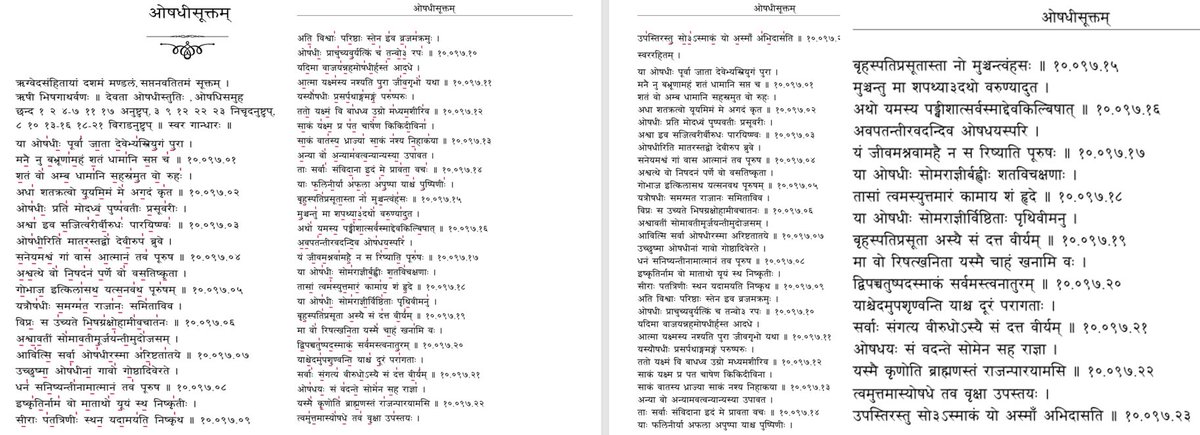
Oushadhay Sukta of 10th Mandla of Rigveda mentions brief guidelines about the medicinal usage of the plants.
The first ever classification of plants was mentioned in Rigveda.
1. They are of 4 types -
• Vanaspati (Refers to plants that bear fruits but no visible flowering)
• Vanaspatya( Refers to plants that bear fruits and flowers)
• Oshadhi (यव, गोधूम,शाली )
• Virudh (Weak plants – Creepers,Climbers,Shrubs)
2. Classification based on flowering
They are of 2 types-
• Pushpini ( Flowering plants)
• Apushpa ( Flower less plants)
3. Classification based on fruits
They are of 2 types -
• Phalini (Plants that bear fruits)
• Aphala ( Plants that do not bear fruits)
Both classifications are found in Atharvaveda also. Hence they are connected to each other.
Modern classification is based on this classification to a great extent.
4. Based on Properties of the plants
They are of 5 types -
• Jivalama( That which gives life)
• Pushpama ( Bears flowers)
• Madhumatima ( Contains Sweet juice)
• Unnayatima ( Semen producing properties)
• Aushadhima ( Medicinal plants )
Oshadhi is further classified into 3 types ;
Divya ( From god )
Parthiva ( From Earth )
Jaliya (Aquatic )
Oushadhay Sukta of 10th Mandla of Rigveda mentions brief guidelines about the medicinal usage of the plants.
8. The List
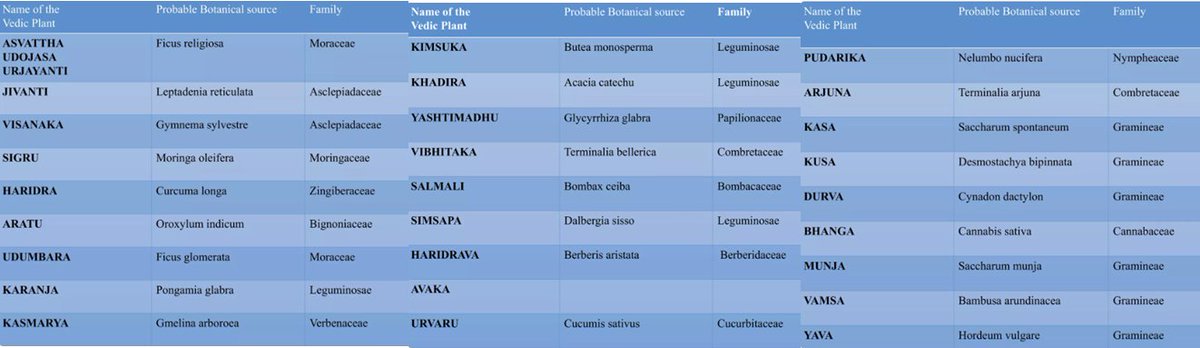
Here is a list of plants mentioned in the Rig Veda with their probable match in modern botany.
The most celebrated plant that finds frequent mention in the Rigveda and later Samhitas is the Soma plant. The Vedic Indians hail Soma as the Lord of the forest (Vanaraja). The botanical identity of Soma plant, however, has not been decided till today. The probable candidates are Ephedra (a Gymnosperm); Sarcostemma (flowering plant) and mushroom (a fungus commonly known as Agaricus). The second most mentioned plant was Peepal or the Asvattha (Ficus religiosa L.) during the Vedic period. The Rigveda refers to utensils and vessels fashioned out of the wood of the Asvattha tree (Peepal Tree).
Here is a list of plants mentioned in the Rig Veda with their probable match in modern botany.
The most celebrated plant that finds frequent mention in the Rigveda and later Samhitas is the Soma plant. The Vedic Indians hail Soma as the Lord of the forest (Vanaraja). The botanical identity of Soma plant, however, has not been decided till today. The probable candidates are Ephedra (a Gymnosperm); Sarcostemma (flowering plant) and mushroom (a fungus commonly known as Agaricus). The second most mentioned plant was Peepal or the Asvattha (Ficus religiosa L.) during the Vedic period. The Rigveda refers to utensils and vessels fashioned out of the wood of the Asvattha tree (Peepal Tree).
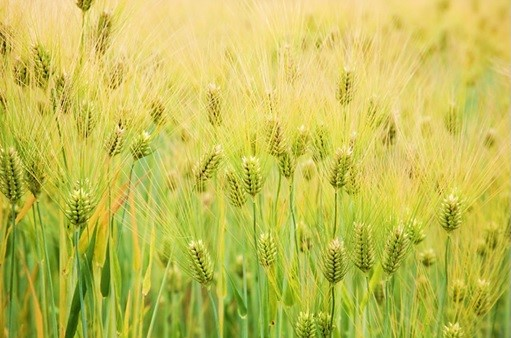
9. YAVA (Barley)
Botanical Name: Hordeum vulgare Linn
Family : Poaceae
Vedic Reference :
तमर्दरं न पृणतायवेनेन्द्रं सोमेभिस्तदपो वो अस्तु । अस्मभ्यं तद्ब्रूसो दानाय राधः समर्थयस्व बहु तें वसव्यम्॥ RV; 1.23.15
Yava can be considered as universal remedy Medicinal properties as per Nighantu :
यवः कषायो मधुरः शीतलो लेखनो मृदुः । व्रणेषु तिलवत्पथ्यो रूक्षो मेधाग्निवर्द्धनः ||२५|| कटुपाकोऽनभिष्यन्दी स्वर्यो बलकरो गुरुः । बहूवातमलो वर्णस्थैर्यकारी च पिच्छिलः ||२६|| कण्ठत्वगामयश्लेष्मपित्तमेदः प्रणाशनः । पीनसश्वासकासोरुस्तम्भलोहिततृट्प्रणुत्। अस्मादतियवो न्यूनस्तोक्यो न्यूनतरस्ततः ||२७|| -
Used for curing Diseases of the throat, Ulcer, Skin diseases, Obesity, Rhinitis,Asthma,Cough, Blood diseases, Excessive thirst.
Botanical Name: Hordeum vulgare Linn
Family : Poaceae
Vedic Reference :
तमर्दरं न पृणतायवेनेन्द्रं सोमेभिस्तदपो वो अस्तु । अस्मभ्यं तद्ब्रूसो दानाय राधः समर्थयस्व बहु तें वसव्यम्॥ RV; 1.23.15
Yava can be considered as universal remedy Medicinal properties as per Nighantu :
यवः कषायो मधुरः शीतलो लेखनो मृदुः । व्रणेषु तिलवत्पथ्यो रूक्षो मेधाग्निवर्द्धनः ||२५|| कटुपाकोऽनभिष्यन्दी स्वर्यो बलकरो गुरुः । बहूवातमलो वर्णस्थैर्यकारी च पिच्छिलः ||२६|| कण्ठत्वगामयश्लेष्मपित्तमेदः प्रणाशनः । पीनसश्वासकासोरुस्तम्भलोहिततृट्प्रणुत्। अस्मादतियवो न्यूनस्तोक्यो न्यूनतरस्ततः ||२७|| -
Used for curing Diseases of the throat, Ulcer, Skin diseases, Obesity, Rhinitis,Asthma,Cough, Blood diseases, Excessive thirst.
10. HARIDRAVA
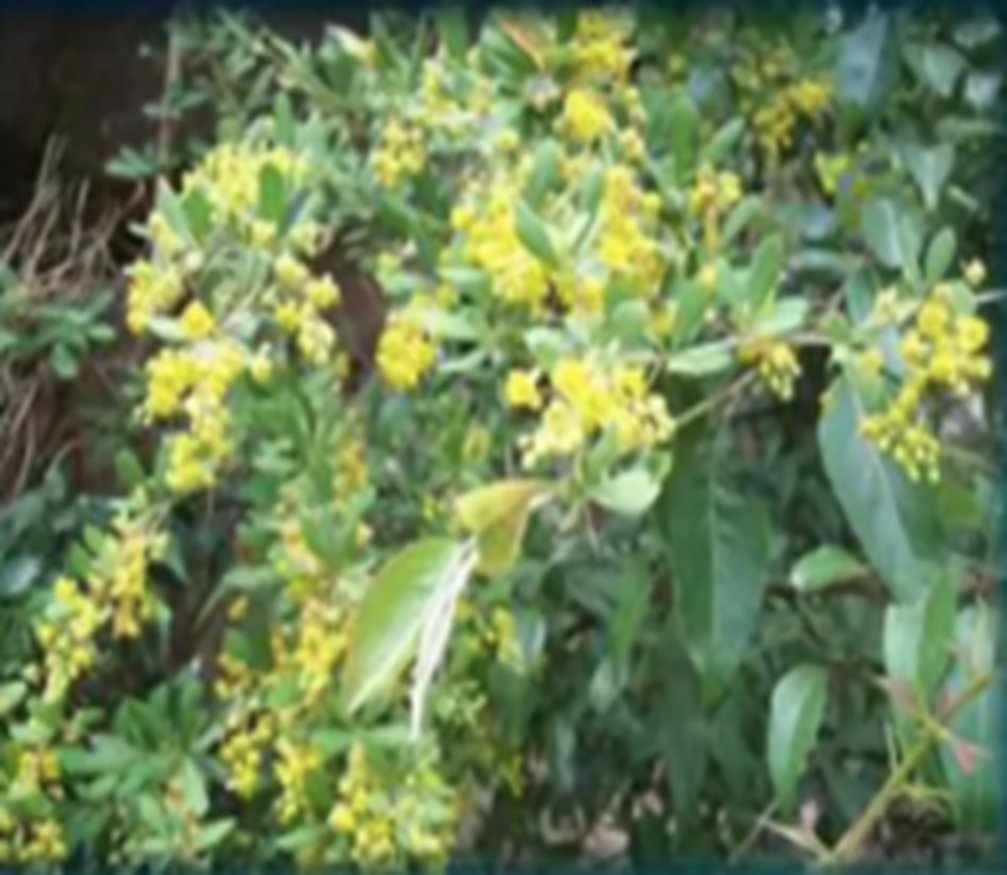
Botanical Name: Berberis aristata De
Family : Berberidaceae
Vedic Reference :
शुकेषु मे हरिमनम रोपणाकासु दध्मसि ।
अथो हरिद्रवेषु मे हरिमाणं नि दध्मसि || RV; 1.50.12
Medicinal properties as per Nighantu :
दार्वी दारुहरिद्रा च पर्जन्या पर्जनीति च | कटङ्कटेरी पीता च भवेत्सैव पचम्पचा || १७५|| सैव कालीयकः प्रोक्तस्तथा कालेयकोऽपि च | पीतद्रुश्च हरिद्रुश्च पीतदारु च पीतकम् ||१७६|| दार्वी निशागुणा किन्तु नेत्रकर्णास्यरोगनुत् ||१७७||
Used for curing Diseases of the throat, eye and ear
Botanical Name: Berberis aristata De
Family : Berberidaceae
Vedic Reference :
शुकेषु मे हरिमनम रोपणाकासु दध्मसि ।
अथो हरिद्रवेषु मे हरिमाणं नि दध्मसि || RV; 1.50.12
Medicinal properties as per Nighantu :
दार्वी दारुहरिद्रा च पर्जन्या पर्जनीति च | कटङ्कटेरी पीता च भवेत्सैव पचम्पचा || १७५|| सैव कालीयकः प्रोक्तस्तथा कालेयकोऽपि च | पीतद्रुश्च हरिद्रुश्च पीतदारु च पीतकम् ||१७६|| दार्वी निशागुणा किन्तु नेत्रकर्णास्यरोगनुत् ||१७७||
Used for curing Diseases of the throat, eye and ear
11. ASVATTHA (Peepal)
Ref : RV ; 10.97.7
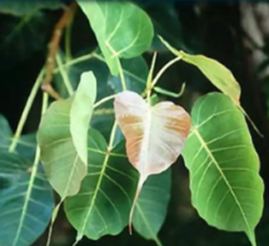
Botanical Name: Ficus religiosa Linn
Family: Moraceae
Vedic Reference:
अश्वत्थे वो निषदनं पर्णे वो वसतिष्कृता । गोभाज इत्किलासथयत्सनवथ पूरुषम ॥
Considered as Vruksharaja
Medicinal properties as per Nighantu :
बोधिद्रुः पिप्पलोऽश्वत्थश्चलपत्रो गजाशनः । पिप्पलो दुर्जरः शीतः पित्तश्लेष्मव्रणास्रजित्। गुरुस्तुवरको रूक्षो वर्ण्यो योनिविशोधनः ||३|| Has the property to cure all diseases
Used for curing Ulcer and Diseases of blood and vagina
Ref : RV ; 10.97.7
Botanical Name: Ficus religiosa Linn
Family: Moraceae
Vedic Reference:
अश्वत्थे वो निषदनं पर्णे वो वसतिष्कृता । गोभाज इत्किलासथयत्सनवथ पूरुषम ॥
Considered as Vruksharaja
Medicinal properties as per Nighantu :
बोधिद्रुः पिप्पलोऽश्वत्थश्चलपत्रो गजाशनः । पिप्पलो दुर्जरः शीतः पित्तश्लेष्मव्रणास्रजित्। गुरुस्तुवरको रूक्षो वर्ण्यो योनिविशोधनः ||३|| Has the property to cure all diseases
Used for curing Ulcer and Diseases of blood and vagina
12. DURVA
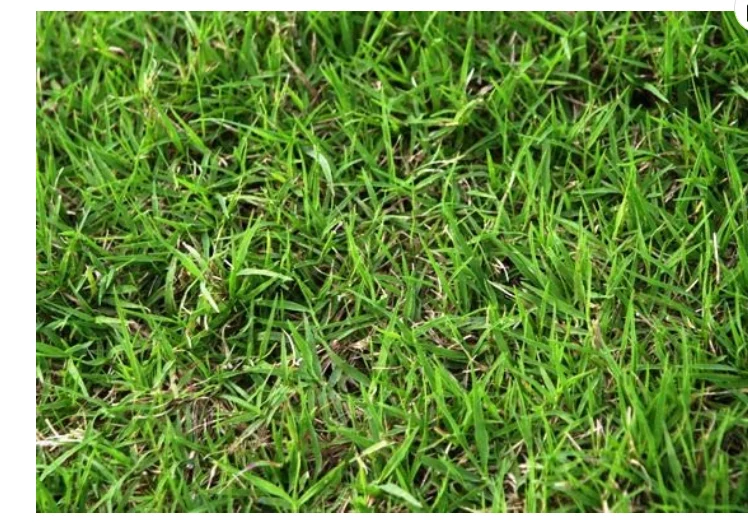
Botanical Name : Cynadon dactylon (L) Pers.
Family: Poaceae
Vedic Reference :
यं त्वमग्रे समद्रहतस्तमु निर्वापया चमत बमदज । कियास्व्वात्र रोहतु पाकदूर्वा व्यल्का ॥
Medicinal properties as per Nighantu :
नीलदूर्वा नीलदूर्वा रुहाऽनन्ता भार्गवी शतपर्विका । शष्पं सहस्रवीर्या च शतवल्ली च कीर्तिता || १४९|| दूर्वा हिमा तिक्ता मधुरा तुवरा हरेत् । कफपित्तास्रवीसर्पतृष्णादाहत्वगामयान् ||१५०|| श्वेतदूर्वा, गण्डदूर्वा दूर्वा शुक्ला तु गोलोमी शतवीर्या च कथ्यते । श्वेता दूर्वा कषाया स्यात्स्वावी व्रण्या च जीवनी | तिक्ता हिमा विसर्पास्रतृपित्तकफदाहहृत् ||१५१||
Cures Epistaxis.Erysipelas, Thirst,Burning sensation Skin diseases Erysipelas,Thirst,Blood diseases and Burning sensation
Botanical Name : Cynadon dactylon (L) Pers.
Family: Poaceae
Vedic Reference :
यं त्वमग्रे समद्रहतस्तमु निर्वापया चमत बमदज । कियास्व्वात्र रोहतु पाकदूर्वा व्यल्का ॥
Medicinal properties as per Nighantu :
नीलदूर्वा नीलदूर्वा रुहाऽनन्ता भार्गवी शतपर्विका । शष्पं सहस्रवीर्या च शतवल्ली च कीर्तिता || १४९|| दूर्वा हिमा तिक्ता मधुरा तुवरा हरेत् । कफपित्तास्रवीसर्पतृष्णादाहत्वगामयान् ||१५०|| श्वेतदूर्वा, गण्डदूर्वा दूर्वा शुक्ला तु गोलोमी शतवीर्या च कथ्यते । श्वेता दूर्वा कषाया स्यात्स्वावी व्रण्या च जीवनी | तिक्ता हिमा विसर्पास्रतृपित्तकफदाहहृत् ||१५१||
Cures Epistaxis.Erysipelas, Thirst,Burning sensation Skin diseases Erysipelas,Thirst,Blood diseases and Burning sensation
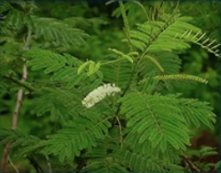
13. KHADIRA
Ref: RV ; 3.18.19
Botanical Name: Acacia catechu Willd
Family : Mimosaceae
Vedic Reference:
अभि व्ययस्व खदिरस्य सारमोजोघेहि स्पन्दने शिपायाम । अक्ष वीठ्ठो वीट्ठयस्व मायामादस्मादव जीहिपो न चमत बमदज ||
RV; Refers to it's Strength
Medicinal properties as per Nighantu:
खदिरो रक्तसारश्च गायत्री दन्तधावनः । कण्टकी बालपत्रश्च बहुशल्यश्च यज्ञियः । खदिरः शीतलो दन्त्यः कण्डूकासारुचिप्रणुत्। तिक्तः कषायो मेदोघ्नः कृमिमेहज्वरव्रणान् । श्वित्रशोथामपित्तास्रपाण्डुकुष्ठकफान् हरेत् ||२७||
Cures Pruritis, Cough, Anorexia, Obesity Worm infestation, Polyuria, Fever
Ref: RV ; 3.18.19
Botanical Name: Acacia catechu Willd
Family : Mimosaceae
Vedic Reference:
अभि व्ययस्व खदिरस्य सारमोजोघेहि स्पन्दने शिपायाम । अक्ष वीठ्ठो वीट्ठयस्व मायामादस्मादव जीहिपो न चमत बमदज ||
RV; Refers to it's Strength
Medicinal properties as per Nighantu:
खदिरो रक्तसारश्च गायत्री दन्तधावनः । कण्टकी बालपत्रश्च बहुशल्यश्च यज्ञियः । खदिरः शीतलो दन्त्यः कण्डूकासारुचिप्रणुत्। तिक्तः कषायो मेदोघ्नः कृमिमेहज्वरव्रणान् । श्वित्रशोथामपित्तास्रपाण्डुकुष्ठकफान् हरेत् ||२७||
Cures Pruritis, Cough, Anorexia, Obesity Worm infestation, Polyuria, Fever
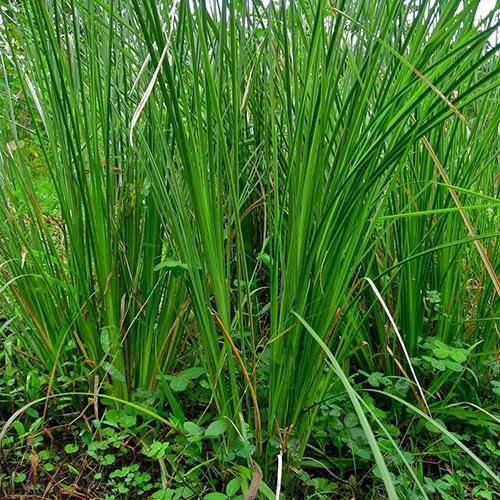
14. KUSHA
Ref: RV 1.191.3
Botanical Name : Desmostachya bipinnata Stapf.
Family : Poaceae
Vedic Reference:
शरास चमत बमद्रज कुशरासो दर्भास चमत बमदज सैर्या उत । मौज अहष्टा बैरिणा चमत बमदज साकं न्यलिप्सत ॥
Has poison absorption power
Medicinal properties as per Nighantu :
कुशो दर्भस्तथा बर्हिः सूच्यग्रो यज्ञभूषणः । ततोऽन्यो दीर्घपत्रः स्यात्क्षुरपत्रस्तथैव च || १४३ || दर्भद्वयं त्रिदोषघ्नं मधुरं तुवरं हिमम् । मूत्रकृच्छ्राश्मरीतृष्णाबॅस्तिरु प्रदरास्रजित् || १४४||
Cures Dysuria, Calculus, Uterine bleeding Diseases of the Urinary bladder Blood diseases
Ref: RV 1.191.3
Botanical Name : Desmostachya bipinnata Stapf.
Family : Poaceae
Vedic Reference:
शरास चमत बमद्रज कुशरासो दर्भास चमत बमदज सैर्या उत । मौज अहष्टा बैरिणा चमत बमदज साकं न्यलिप्सत ॥
Has poison absorption power
Medicinal properties as per Nighantu :
कुशो दर्भस्तथा बर्हिः सूच्यग्रो यज्ञभूषणः । ततोऽन्यो दीर्घपत्रः स्यात्क्षुरपत्रस्तथैव च || १४३ || दर्भद्वयं त्रिदोषघ्नं मधुरं तुवरं हिमम् । मूत्रकृच्छ्राश्मरीतृष्णाबॅस्तिरु प्रदरास्रजित् || १४४||
Cures Dysuria, Calculus, Uterine bleeding Diseases of the Urinary bladder Blood diseases
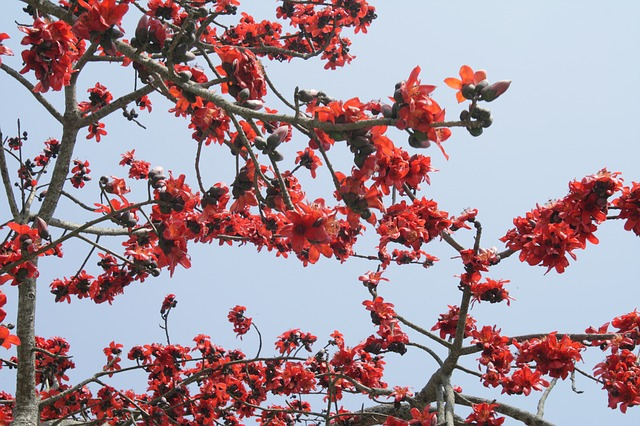
15. SALMALI (Silk Cotton Tree)
Ref: RV ; 10.85.20
Botanical Name: Salmalia malabarica De
Family: Bombacaceae
Vedic Reference :
यच्छल्मलौ भवति यन्न्दीषु यदोषधीभ्य चमत बमदज परि जयते विषम । विदेवा निरितस्तत्सुवन्तु मा मां पघेन रपसा विद्त्त्सरुः ॥
Anti-toxic properties
Medicinal properties as per Nighantu :
शाल्मलिस्तु भवेन्मोचा पिच्छिला पूरणीति च ।
वटादिवर्ग रक्तपुष्पा स्थिरायुश्च कण्टकाद्या च तूलिनी || ४५ || शाल्मली शीतला स्वाद्वी रसे पाके रसायनी ।
Cures Blood diseases, Gout,Epistaxis
श्लेष्मला पित्तवातास्रहारिणी रक्तपित्तजित् ||४६||
Ref: RV ; 10.85.20
Botanical Name: Salmalia malabarica De
Family: Bombacaceae
Vedic Reference :
यच्छल्मलौ भवति यन्न्दीषु यदोषधीभ्य चमत बमदज परि जयते विषम । विदेवा निरितस्तत्सुवन्तु मा मां पघेन रपसा विद्त्त्सरुः ॥
Anti-toxic properties
Medicinal properties as per Nighantu :
शाल्मलिस्तु भवेन्मोचा पिच्छिला पूरणीति च ।
वटादिवर्ग रक्तपुष्पा स्थिरायुश्च कण्टकाद्या च तूलिनी || ४५ || शाल्मली शीतला स्वाद्वी रसे पाके रसायनी ।
Cures Blood diseases, Gout,Epistaxis
श्लेष्मला पित्तवातास्रहारिणी रक्तपित्तजित् ||४६||
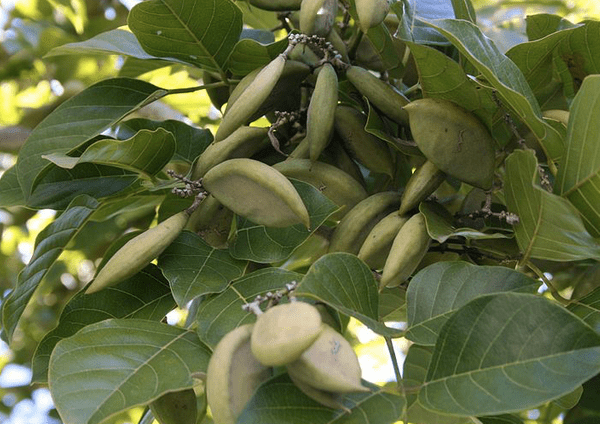
16. KARANJA
Ref : RV ; 1.53.8, 10.48.8
Botanical Name: Pongamia pinnata Pierre
Family : papilionaceae
Vedic Reference:
त्वं करजत्रमुत पर्णयं वधीस्तेजि ठ्यातिथिग्वस्य वर्तनी त्वं शता वृंदसयाभिनत्पुरोऽनानुद चमत बमदज परिषूता ऋजिना ॥
Used in skin disorders
Medicinal properties as per Nighantu :
करञ्जः कटुकस्तीक्ष्णो वीर्योष्णो योनिदोषहृत् । Ref: भावप्रकाश पूर्वखण्ड-मिश्रप्रकरण ४. गुडूच्यादिवर्ग कुष्ठोदावर्तगुल्मार्शोव्रणक्रिमिकफापहः ||१०४||
तत्पत्रं कफवातार्शःकृमिशोथहरं परम् । भेदनं कटुकं पाके वीर्योष्णं पित्तलं लघु ॥१०५॥
Cures Vaginal diseases, Skin disorders Flatulence, Abdominal tumor Hemorrhoids, Ulcer, Worm infestation
Ref : RV ; 1.53.8, 10.48.8
Botanical Name: Pongamia pinnata Pierre
Family : papilionaceae
Vedic Reference:
त्वं करजत्रमुत पर्णयं वधीस्तेजि ठ्यातिथिग्वस्य वर्तनी त्वं शता वृंदसयाभिनत्पुरोऽनानुद चमत बमदज परिषूता ऋजिना ॥
Used in skin disorders
Medicinal properties as per Nighantu :
करञ्जः कटुकस्तीक्ष्णो वीर्योष्णो योनिदोषहृत् । Ref: भावप्रकाश पूर्वखण्ड-मिश्रप्रकरण ४. गुडूच्यादिवर्ग कुष्ठोदावर्तगुल्मार्शोव्रणक्रिमिकफापहः ||१०४||
तत्पत्रं कफवातार्शःकृमिशोथहरं परम् । भेदनं कटुकं पाके वीर्योष्णं पित्तलं लघु ॥१०५॥
Cures Vaginal diseases, Skin disorders Flatulence, Abdominal tumor Hemorrhoids, Ulcer, Worm infestation
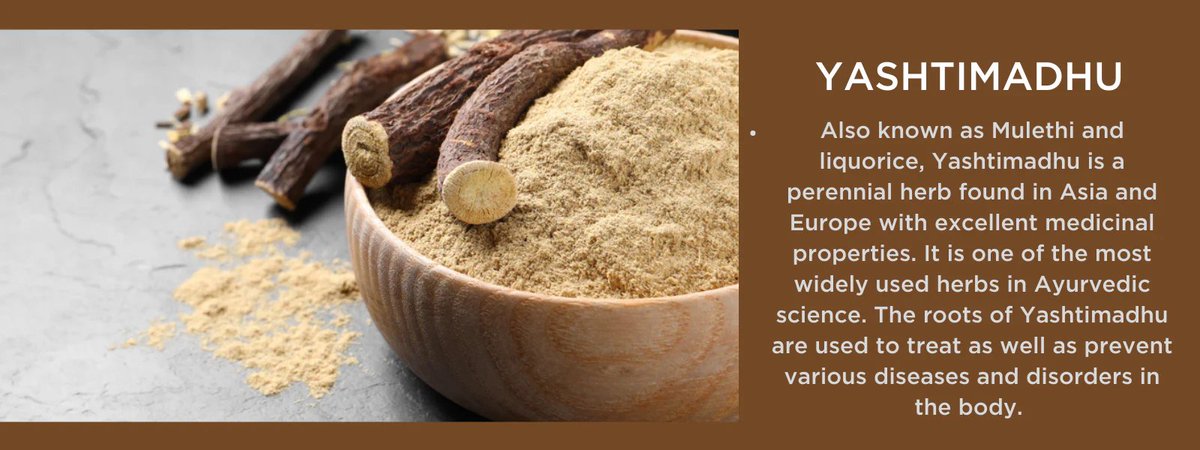
17. YASHTIMADHU (Mulethi)
Ref : RV ; 1.191.10-13
Botanical Name: Glycyrrhiza glabra Linn
Family : Papilionaceae
Vedic Reference:
चंकार ॥ सूर्ये विषमा सजामि तं सुरावतो गृहे । सो चित्रु न मराति नो वयं मरामरे अस्ययोजनं हरिष्ठा मधु त्वा मधुला
Anti-toxic properties
Medicinal properties as per Nighantu :
यष्टीमधु तथा यष्टीमधुकं क्लीतकं तथा । हरीतक्यादिवर्ग अन्यत्क्लीतनकं तत्तु भवेत्तोये मधूलिका || १२८|| यष्टी हिमा गुरुः स्वाद्द्वी चक्षुष्या बलवर्णकृत्। सुस्निग्धा शुकला केश्या स्वर्या पित्तानिलास्रजित् |
Cures Vomiting, Abscess, Phthisis Diseases caused by vitiation of blood Good for Eye diseases
Ref : RV ; 1.191.10-13
Botanical Name: Glycyrrhiza glabra Linn
Family : Papilionaceae
Vedic Reference:
चंकार ॥ सूर्ये विषमा सजामि तं सुरावतो गृहे । सो चित्रु न मराति नो वयं मरामरे अस्ययोजनं हरिष्ठा मधु त्वा मधुला
Anti-toxic properties
Medicinal properties as per Nighantu :
यष्टीमधु तथा यष्टीमधुकं क्लीतकं तथा । हरीतक्यादिवर्ग अन्यत्क्लीतनकं तत्तु भवेत्तोये मधूलिका || १२८|| यष्टी हिमा गुरुः स्वाद्द्वी चक्षुष्या बलवर्णकृत्। सुस्निग्धा शुकला केश्या स्वर्या पित्तानिलास्रजित् |
Cures Vomiting, Abscess, Phthisis Diseases caused by vitiation of blood Good for Eye diseases
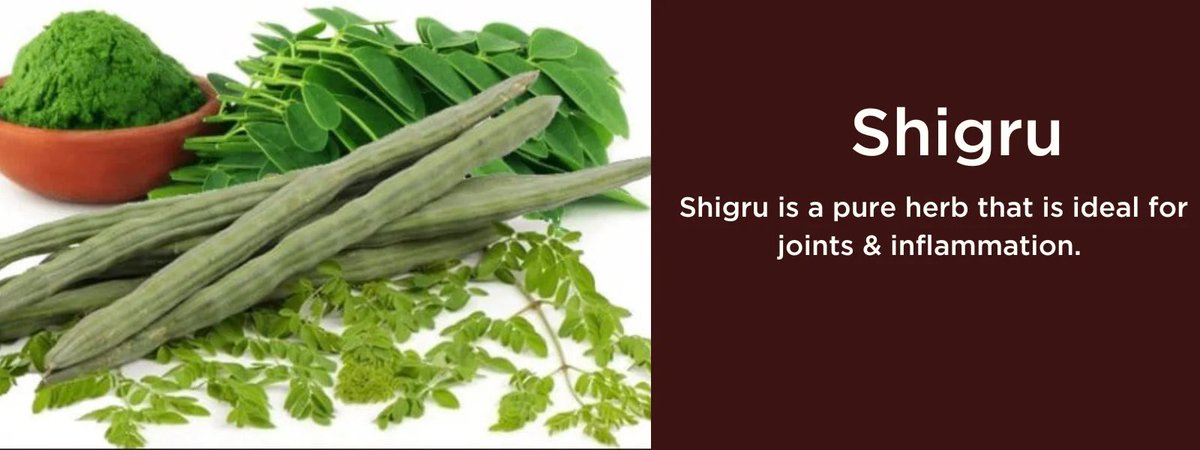
18. SIGRU
Ref : RV ; 7.18.19
Botanical Name :Moringa oleifera Linn
Family: Moringaceae
Vedic Reference :
आवदिन्द्रं यमुना नृत्यवसक्ष्व पात्र भेदं सर्वताता मुषायत । आजासाष्व शिग्रवो यक्षवष्व बलिं शीर्षाणि जभ्रुरानि ॥
Has poison absorption power
Medicinal properties as per Nighantu :
शोभाञ्जनः शिग्रुतीक्ष्णगन्धकाक्षीवमोचकाः | Ref: भावप्रकाश-पूर्वखण्ड-मिश्रप्रकरण - ४.
गुडूच्यादिवर्ग तद्बीजं श्वेतमरिचं मधुशिग्रुः सलोहितः ||११||
शिग्रुः कटुः कटुः पाके तीक्ष्णौष्णो मधुरो लघुः | दीपनो राँचनो रूक्षः क्षारस्तिक्तो विदाहकृत् | संग्राही शुक्रलो हृद्यः पित्तरक्तप्रकोपणः ||९२||
चक्षुष्यः कफवातघ्नो विद्रधिश्वयथुक्रिमीन् | मेर्दोऽपचीविषप्लीहगुल्मगण्डव्रणान्हरेत्
||९३||
Cures Eye diseases,Abscess, Edema, Worm infestation, Obesity Lymphadenitis,Spleen diseases Abdominal tumor, Goiter, Ulcer
Ref : RV ; 7.18.19
Botanical Name :Moringa oleifera Linn
Family: Moringaceae
Vedic Reference :
आवदिन्द्रं यमुना नृत्यवसक्ष्व पात्र भेदं सर्वताता मुषायत । आजासाष्व शिग्रवो यक्षवष्व बलिं शीर्षाणि जभ्रुरानि ॥
Has poison absorption power
Medicinal properties as per Nighantu :
शोभाञ्जनः शिग्रुतीक्ष्णगन्धकाक्षीवमोचकाः | Ref: भावप्रकाश-पूर्वखण्ड-मिश्रप्रकरण - ४.
गुडूच्यादिवर्ग तद्बीजं श्वेतमरिचं मधुशिग्रुः सलोहितः ||११||
शिग्रुः कटुः कटुः पाके तीक्ष्णौष्णो मधुरो लघुः | दीपनो राँचनो रूक्षः क्षारस्तिक्तो विदाहकृत् | संग्राही शुक्रलो हृद्यः पित्तरक्तप्रकोपणः ||९२||
चक्षुष्यः कफवातघ्नो विद्रधिश्वयथुक्रिमीन् | मेर्दोऽपचीविषप्लीहगुल्मगण्डव्रणान्हरेत्
||९३||
Cures Eye diseases,Abscess, Edema, Worm infestation, Obesity Lymphadenitis,Spleen diseases Abdominal tumor, Goiter, Ulcer
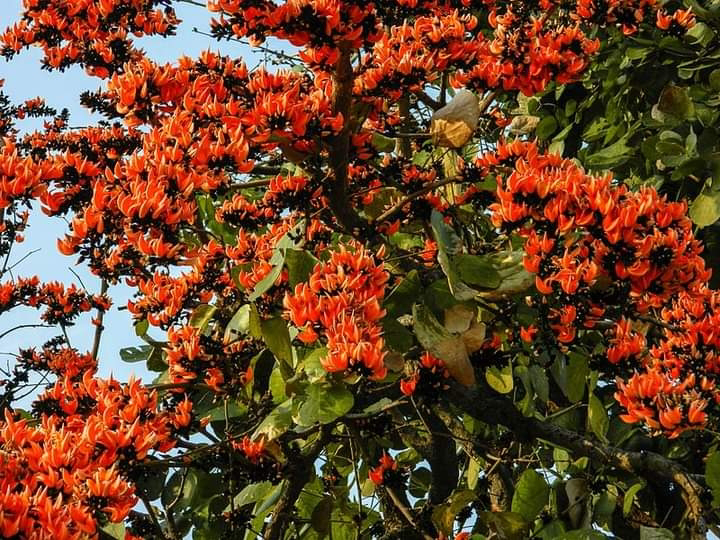
19. KIMSHUKA (Palash)
Ref: RV ; 1.85.20
Botanical Name: Butea monosperma Lan-Kutze
Family : Papilionaceae
Vedic Reference:
सूकिशुकं शल्मलिं विरुपं हिरणंवर्ग सुवृतं सुचम । आ रोह सुर्ये अमृतस्य लोकं स्योनं पत्ये वहुतुं कृशृष्व ॥
Ritual & funeral purposes
Medicinal properties as per Nighantu:
पलाशः किंशुकः पर्णो यज्ञियो रक्तपुष्पकः |
क्षारश्रेष्ठो वाँतहरो ब्रह्मवृक्षः समिद्वरः ||४०||
पलाशो दीपनो वृष्यः सरोष्णो व्रणगुल्मजित् | कषायः कटुकस्तिक्तः स्निग्धो गुदजरोगजित् ||४१||
भग्नसन्धानकृद्दोषग्रहण्यर्शःकृमीन्हरेत्। तत्पुष्पं स्वादु पाके तु कटु तिक्तं कषायकम् ||४२||
वातलं कफपित्तास्रकृच्छ्रजिद्ग्राहि शीतलम् | तृड्दाहशमकं वातरक्तकुष्ठहरं परम् ||४३||
फलं लघूष्णं मेहार्शःकृर्मिवातकफापहम्। विपाके कटुकं रूक्षं कुष्ठं गुल्मोदरप्रणुत् ||४४||
Cures Ulcer, Abdominal tumors, Malabsorption Haemorrhoids, Worm infestation, Rectal diseases
Ref: RV ; 1.85.20
Botanical Name: Butea monosperma Lan-Kutze
Family : Papilionaceae
Vedic Reference:
सूकिशुकं शल्मलिं विरुपं हिरणंवर्ग सुवृतं सुचम । आ रोह सुर्ये अमृतस्य लोकं स्योनं पत्ये वहुतुं कृशृष्व ॥
Ritual & funeral purposes
Medicinal properties as per Nighantu:
पलाशः किंशुकः पर्णो यज्ञियो रक्तपुष्पकः |
क्षारश्रेष्ठो वाँतहरो ब्रह्मवृक्षः समिद्वरः ||४०||
पलाशो दीपनो वृष्यः सरोष्णो व्रणगुल्मजित् | कषायः कटुकस्तिक्तः स्निग्धो गुदजरोगजित् ||४१||
भग्नसन्धानकृद्दोषग्रहण्यर्शःकृमीन्हरेत्। तत्पुष्पं स्वादु पाके तु कटु तिक्तं कषायकम् ||४२||
वातलं कफपित्तास्रकृच्छ्रजिद्ग्राहि शीतलम् | तृड्दाहशमकं वातरक्तकुष्ठहरं परम् ||४३||
फलं लघूष्णं मेहार्शःकृर्मिवातकफापहम्। विपाके कटुकं रूक्षं कुष्ठं गुल्मोदरप्रणुत् ||४४||
Cures Ulcer, Abdominal tumors, Malabsorption Haemorrhoids, Worm infestation, Rectal diseases
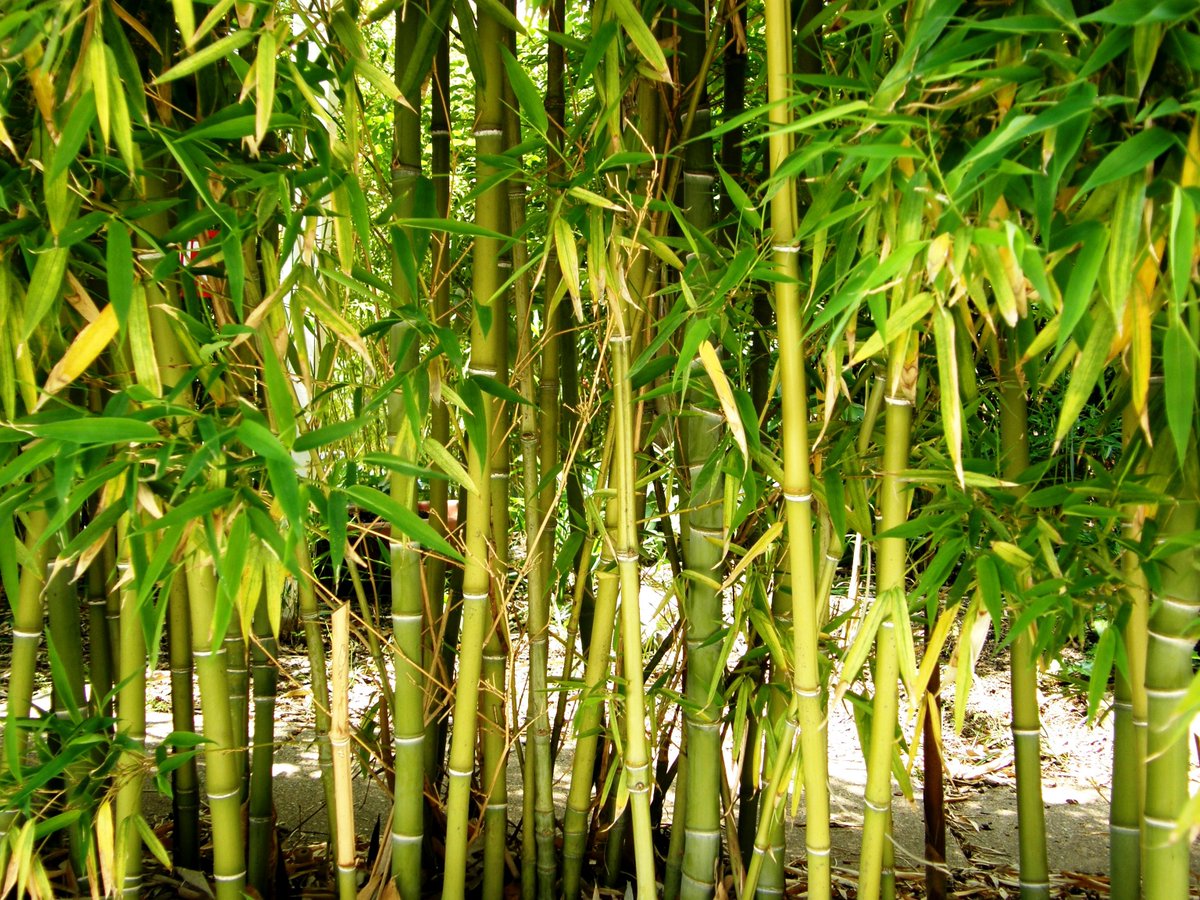
20. VAMSA (Bamboo)
Botanical Name :Bambusa arundinacea Retz
Family : Poaceae
Vedic Reference:
ओचित्सरवयं सरव्या वंश त्यां तिर चमत बमदज पुरु चिदर्णवं जगन्वान । थ्पतुर्नपातमा दधीत वेघा अघि क्षमि प्रतरं दीघ्यान चमत बमदज ॥
Can store water
Medicinal properties as per Nighantu :
वंशः सरो हिमः स्वादुः कषायो बस्तिशोधनः | छेदनः कफपित्तघ्नः कुष्ठास्रव्रणशोथजित् || १३३|| तत्करीरः कटुः पाके रँसे रूक्षो गुरुः सरः । | कषायः कफकृत्स्वादुर्विदाही वातपित्तलः ||१३४||
तद्यवास्तु सरा रूक्षाः कषायाः कटुपाकिनः | वातपित्तकरा उष्णा बद्धमूत्राः कफापहाः || १३५||
Cures Diseases of the Urinary bladder Skin diseases, Diseases of the blood Ulcer, Edema
Botanical Name :Bambusa arundinacea Retz
Family : Poaceae
Vedic Reference:
ओचित्सरवयं सरव्या वंश त्यां तिर चमत बमदज पुरु चिदर्णवं जगन्वान । थ्पतुर्नपातमा दधीत वेघा अघि क्षमि प्रतरं दीघ्यान चमत बमदज ॥
Can store water
Medicinal properties as per Nighantu :
वंशः सरो हिमः स्वादुः कषायो बस्तिशोधनः | छेदनः कफपित्तघ्नः कुष्ठास्रव्रणशोथजित् || १३३|| तत्करीरः कटुः पाके रँसे रूक्षो गुरुः सरः । | कषायः कफकृत्स्वादुर्विदाही वातपित्तलः ||१३४||
तद्यवास्तु सरा रूक्षाः कषायाः कटुपाकिनः | वातपित्तकरा उष्णा बद्धमूत्राः कफापहाः || १३५||
Cures Diseases of the Urinary bladder Skin diseases, Diseases of the blood Ulcer, Edema
21. SOMA
Ref: 8th & 9th Mandalas of Rigveda
अपाम सोमममृता अभूमागन्म ज्योतिरविदाम देवान |
किं नूनमस्मान्कृणवदरातिः किमु धूर्तिरमृत मर्त्यस्य || RV 8.48
We drink the soma, may we become immortal; we have attained the light of Heaven; we have known the gods; what now could the enemy do to us"
Somarasa is the first ever swarasa extracted in swarasa kalpana. Soma is an extract of the 'Soma plant', which is said to have been brought to earth by the eagle from the heaven.
Soma is the 'Lord of all plants'
The colour of the plant, and also of the juice extracted from it,is said to be sort of brown or brownish green (Ref: RV; 9.21.61 )
Rigveda contains nearly 114 hymns or mantra's on the devotional praise of Soma.
The soma juice had medicinal powers also, it said to have healed the sick, made blind see and lame walk. ( Ref :RV; 9.4.68)
It bestowed long life and increased fertility.
Ref: 8th & 9th Mandalas of Rigveda
अपाम सोमममृता अभूमागन्म ज्योतिरविदाम देवान |
किं नूनमस्मान्कृणवदरातिः किमु धूर्तिरमृत मर्त्यस्य || RV 8.48
We drink the soma, may we become immortal; we have attained the light of Heaven; we have known the gods; what now could the enemy do to us"
Somarasa is the first ever swarasa extracted in swarasa kalpana. Soma is an extract of the 'Soma plant', which is said to have been brought to earth by the eagle from the heaven.
Soma is the 'Lord of all plants'
The colour of the plant, and also of the juice extracted from it,is said to be sort of brown or brownish green (Ref: RV; 9.21.61 )
Rigveda contains nearly 114 hymns or mantra's on the devotional praise of Soma.
The soma juice had medicinal powers also, it said to have healed the sick, made blind see and lame walk. ( Ref :RV; 9.4.68)
It bestowed long life and increased fertility.
22. To be continued in Part 2
Part 2 will explore Vedic Medicine system in Yajurveda and Atharva Veda and how it lead to the foundation of Ayurveda along with Vedic medicines for curing cancer. x.com
Part 2 will explore Vedic Medicine system in Yajurveda and Atharva Veda and how it lead to the foundation of Ayurveda along with Vedic medicines for curing cancer. x.com
جاري تحميل الاقتراحات...