

Decoding the proposed changes in The Waqf (Amendment) Bill, 2024.
The Waqf Act, 1995, is set to undergo significant transformations with the introduction of the Waqf (Amendment) Bill, 2024. The proposed amendments aim to enhance governance, boost transparency, and potentially redefine property ownership regulations.
The proposed provisions have the potential to bring much-needed reforms to the Waqf irregularities and meticulous consideration of all associated aspects has been made.
We invite stakeholders, experts, and citizens to share their suggestions and feedback on the Waqf (Amendment) Bill, 2024.
Your inputs will help shape the final amendments and ensure they effectively address the needs of the Waqf.
Please submit your suggestions to jpcwaqf-lss@sansad.nic.in, and together, let's work towards creating a more transparent and accountable system.
The Waqf Act, 1995, is set to undergo significant transformations with the introduction of the Waqf (Amendment) Bill, 2024. The proposed amendments aim to enhance governance, boost transparency, and potentially redefine property ownership regulations.
The proposed provisions have the potential to bring much-needed reforms to the Waqf irregularities and meticulous consideration of all associated aspects has been made.
We invite stakeholders, experts, and citizens to share their suggestions and feedback on the Waqf (Amendment) Bill, 2024.
Your inputs will help shape the final amendments and ensure they effectively address the needs of the Waqf.
Please submit your suggestions to jpcwaqf-lss@sansad.nic.in, and together, let's work towards creating a more transparent and accountable system.

𝐒𝐞𝐜 𝟑 (𝐫)
In the opening portion, for the words “any person, of any movable or immovable property” the words “any person practising Islam for at least five years, of any movable or immovable property, having ownership of such property” shall be substituted.
This will help in the removal of doubts and bring more clarity on the subject.
In the opening portion, for the words “any person, of any movable or immovable property” the words “any person practising Islam for at least five years, of any movable or immovable property, having ownership of such property” shall be substituted.
This will help in the removal of doubts and bring more clarity on the subject.

Sec 3(r)(i) shall be omitted.
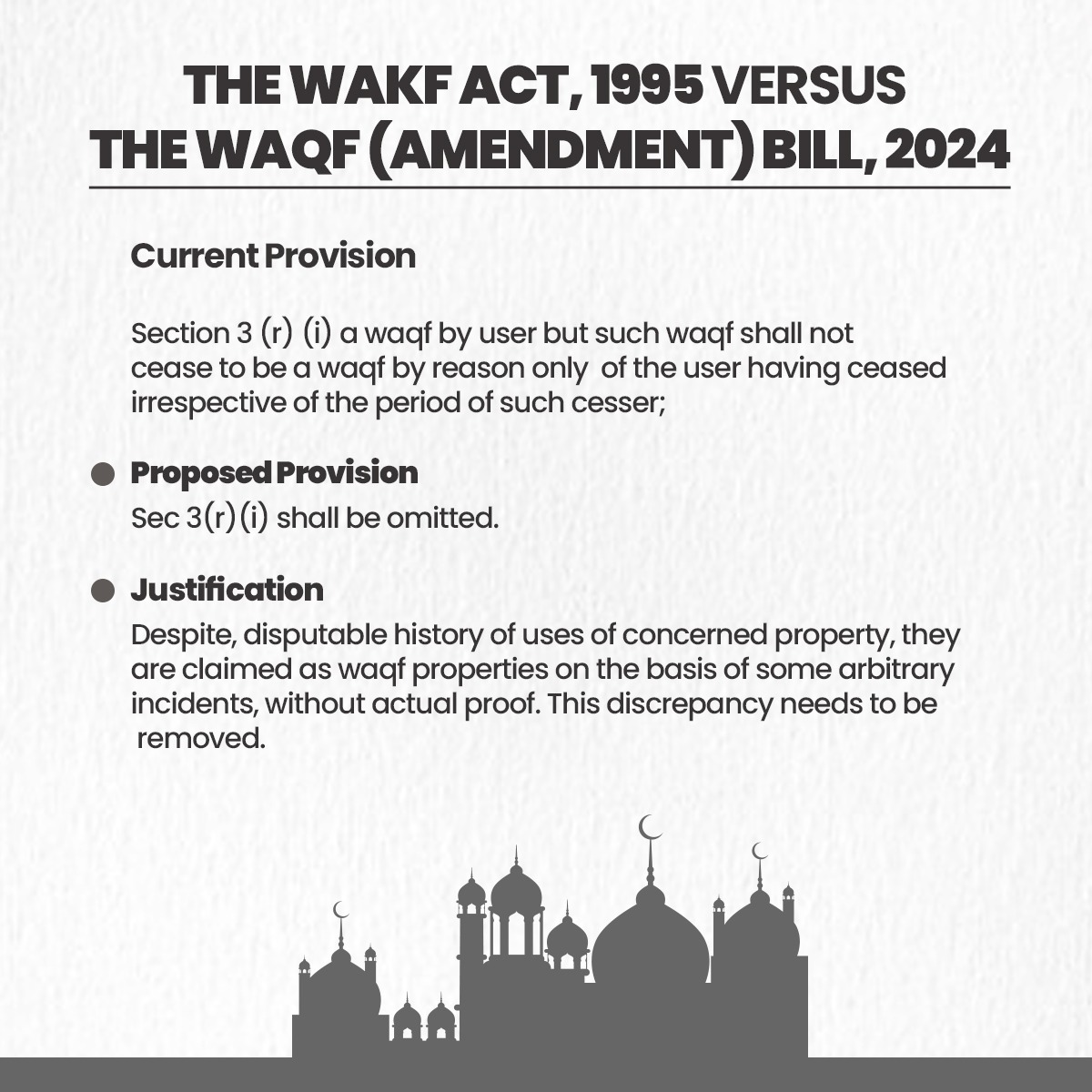
Waqf-alal-aulad is a private Waqf, and thus, inheritance rights of heirs, including women heirs may be kept in mind in consonance with the provisions of Muslim Women (Protection of Rights on Marriage) Act 2019.
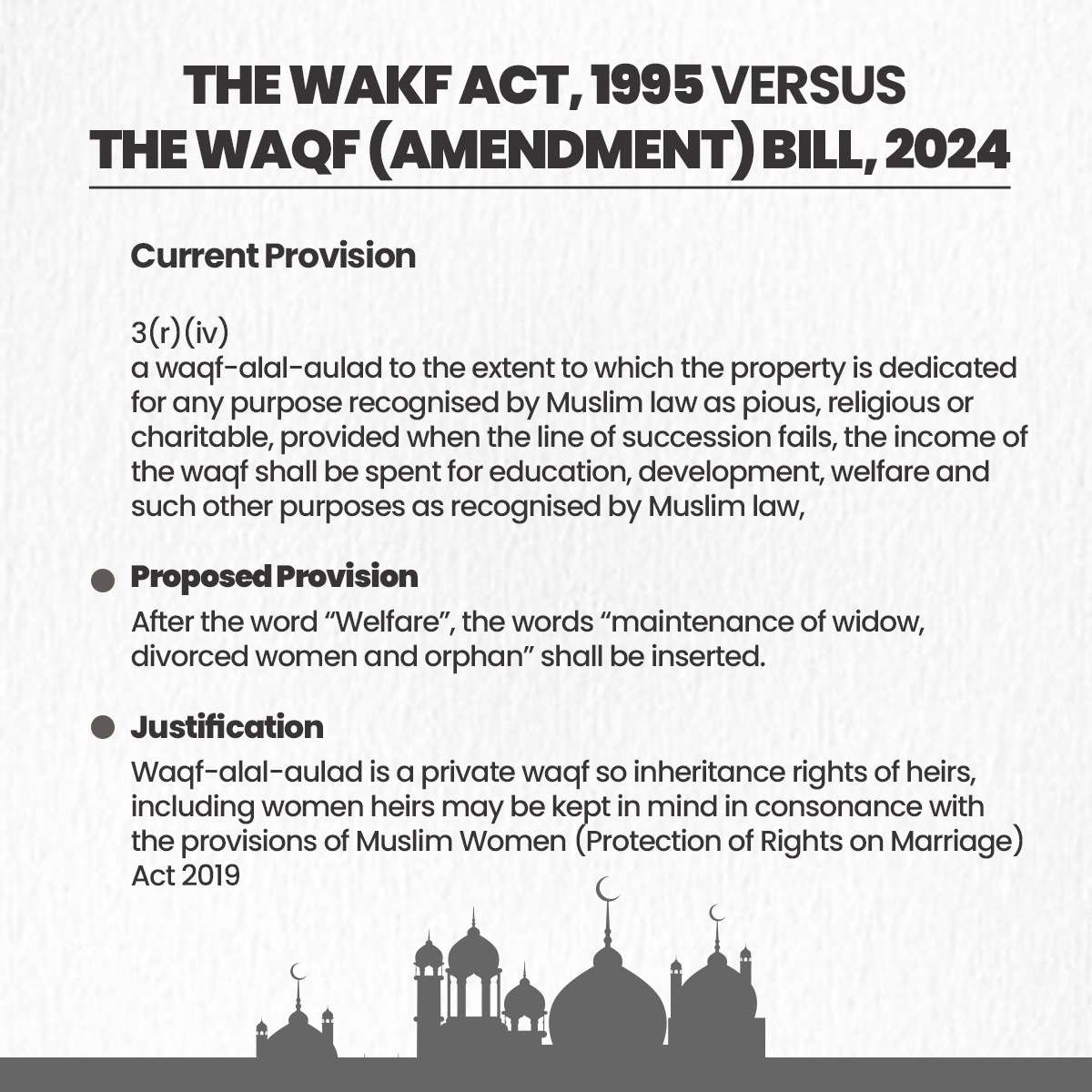
The creation of a waqf-alal-aulad shall not result in the denial of inheritance rights of heirs, including women heirs, of the waqif.
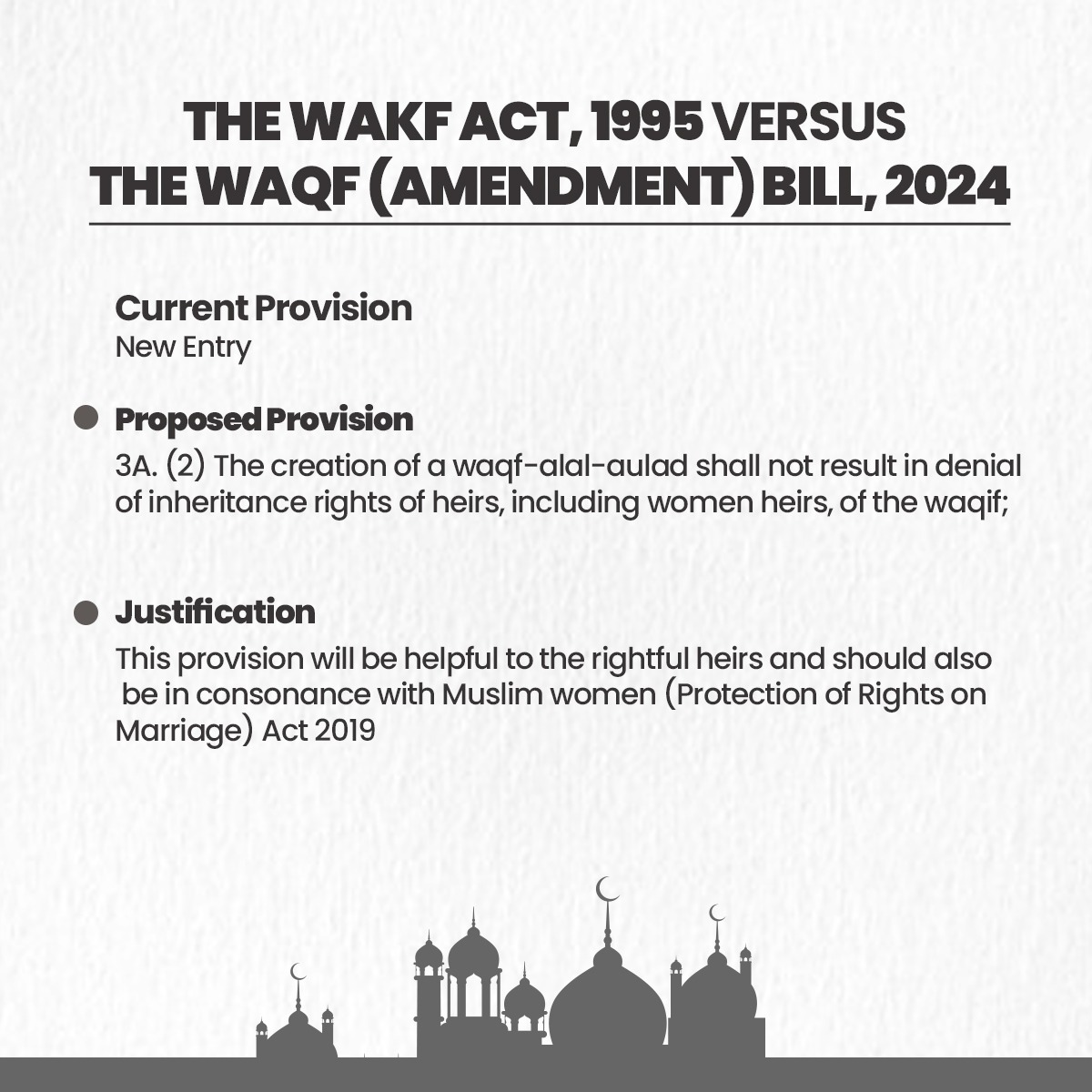
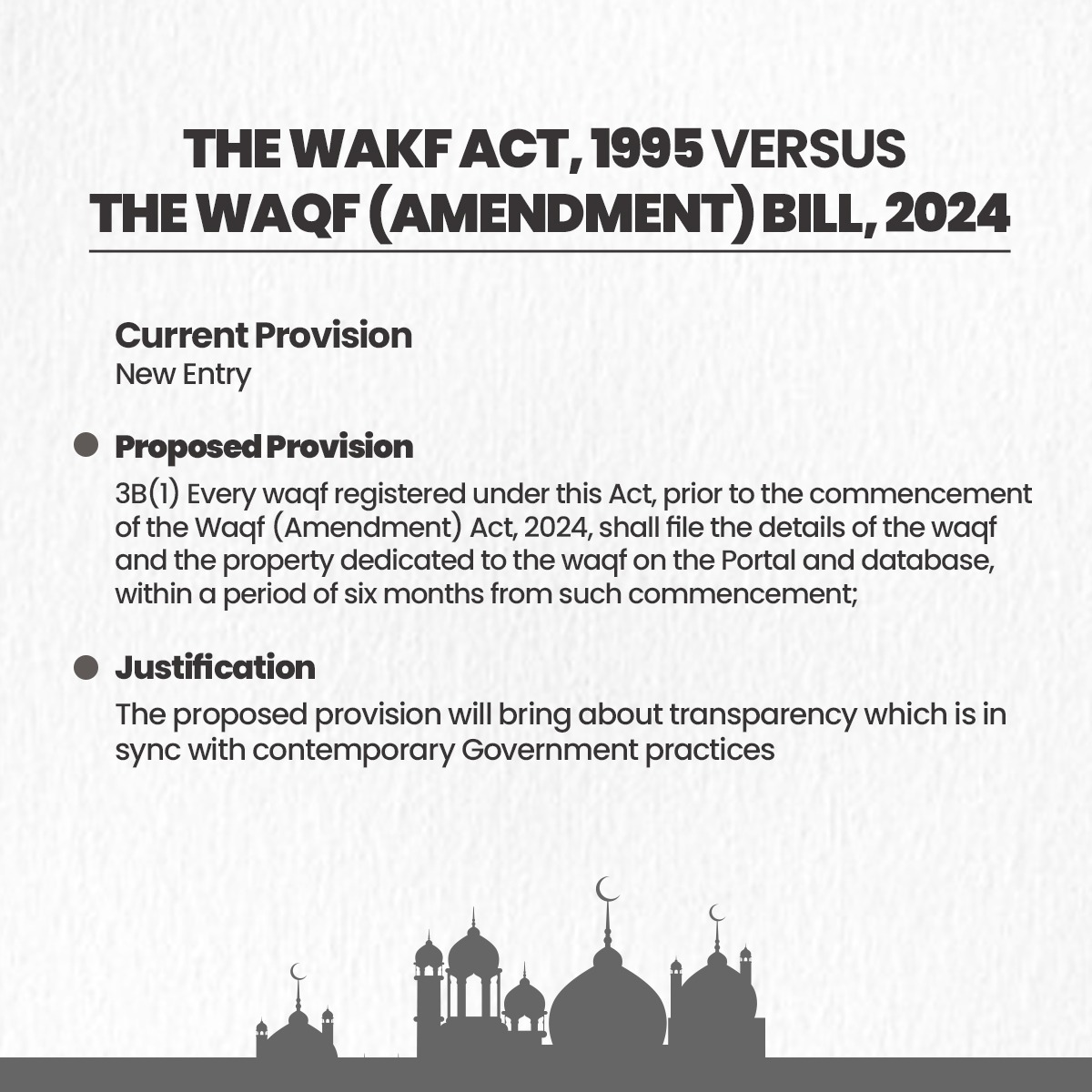
3B(1)
The proposed provision will bring about transparency which is in sync with contemporary Government practices.
The proposed provision will bring about transparency which is in sync with contemporary Government practices.
Proposed Provision:
Provided that two of the members appointed under clause (c) shall be women:
Provided further that two members appointed under this sub-section shall be non-Muslim.
Here's why:
This will make the Central Waqf Council more broad-based where non-Muslim communities as well as women will be represented.
Provided that two of the members appointed under clause (c) shall be women:
Provided further that two members appointed under this sub-section shall be non-Muslim.
Here's why:
This will make the Central Waqf Council more broad-based where non-Muslim communities as well as women will be represented.

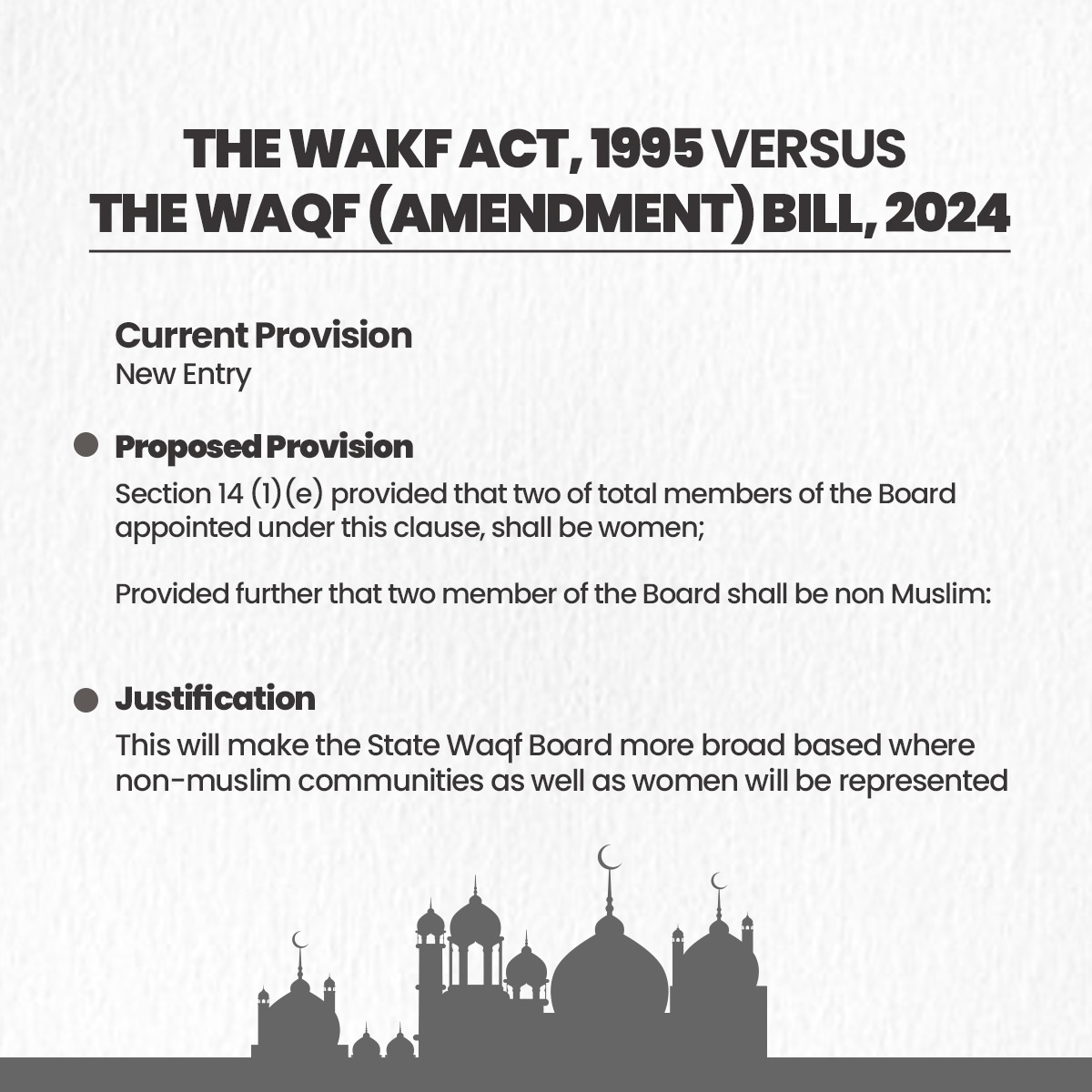
Section 14(1)(e) provided that two of total members of the Board appointed under this clause, shall be women;
Provided further that two member of the Board shall be non-Muslim:
This is important because it will make the State Waqf Board more broad based where non-Muslim communities as well as women will be represented.
Provided further that two member of the Board shall be non-Muslim:
This is important because it will make the State Waqf Board more broad based where non-Muslim communities as well as women will be represented.
Proposed Provision:
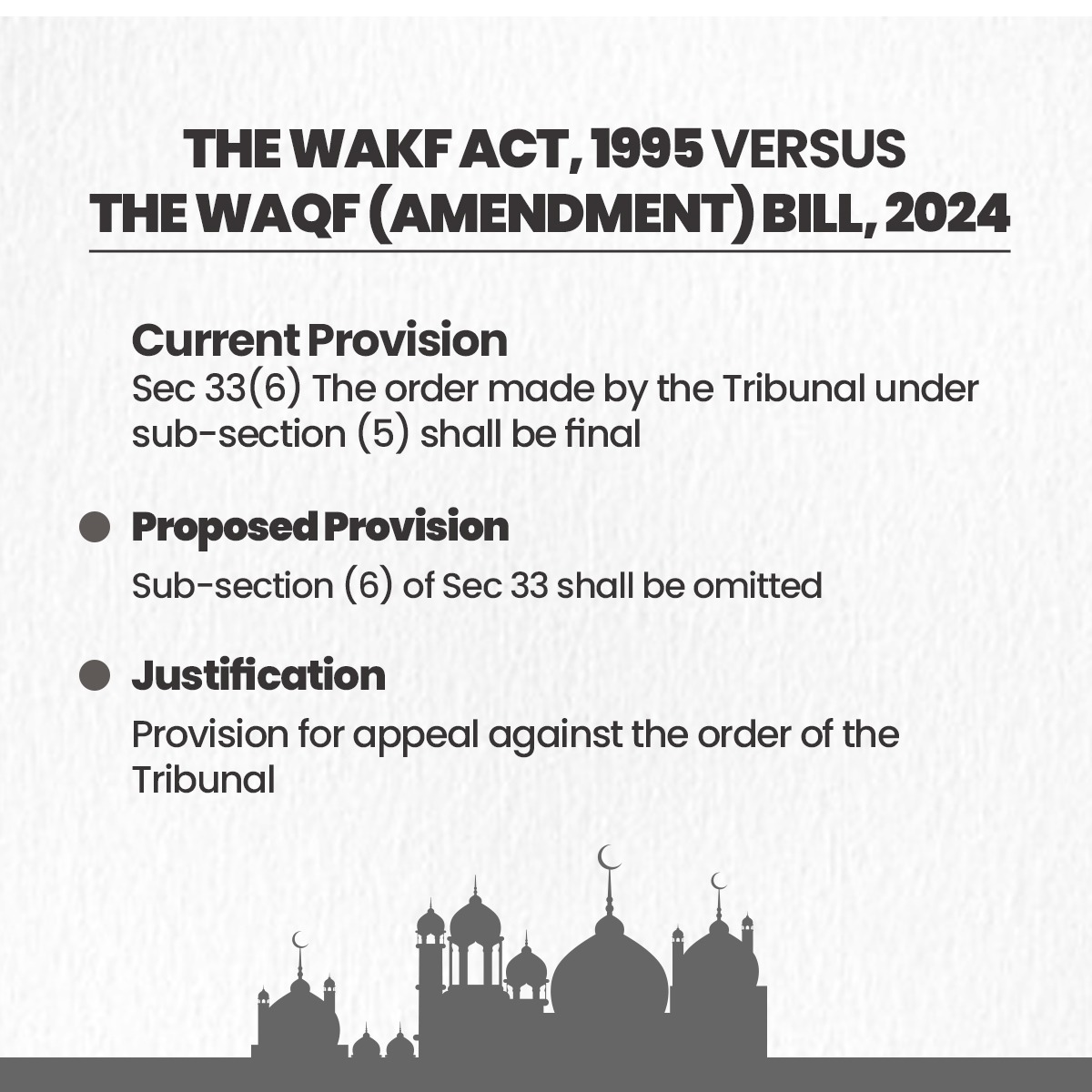
Sub-section (6) of Sec 33 shall be omitted
Justification:
Provision for appeal against the order of the Tribunal
Sub-section (6) of Sec 33 shall be omitted
Justification:
Provision for appeal against the order of the Tribunal
This pertains to 𝐒𝐞𝐜 𝟑(𝐢)
Verbal appointment of "mutawalli" is to be removed.
Verbal appointment of "mutawalli" is to be removed.

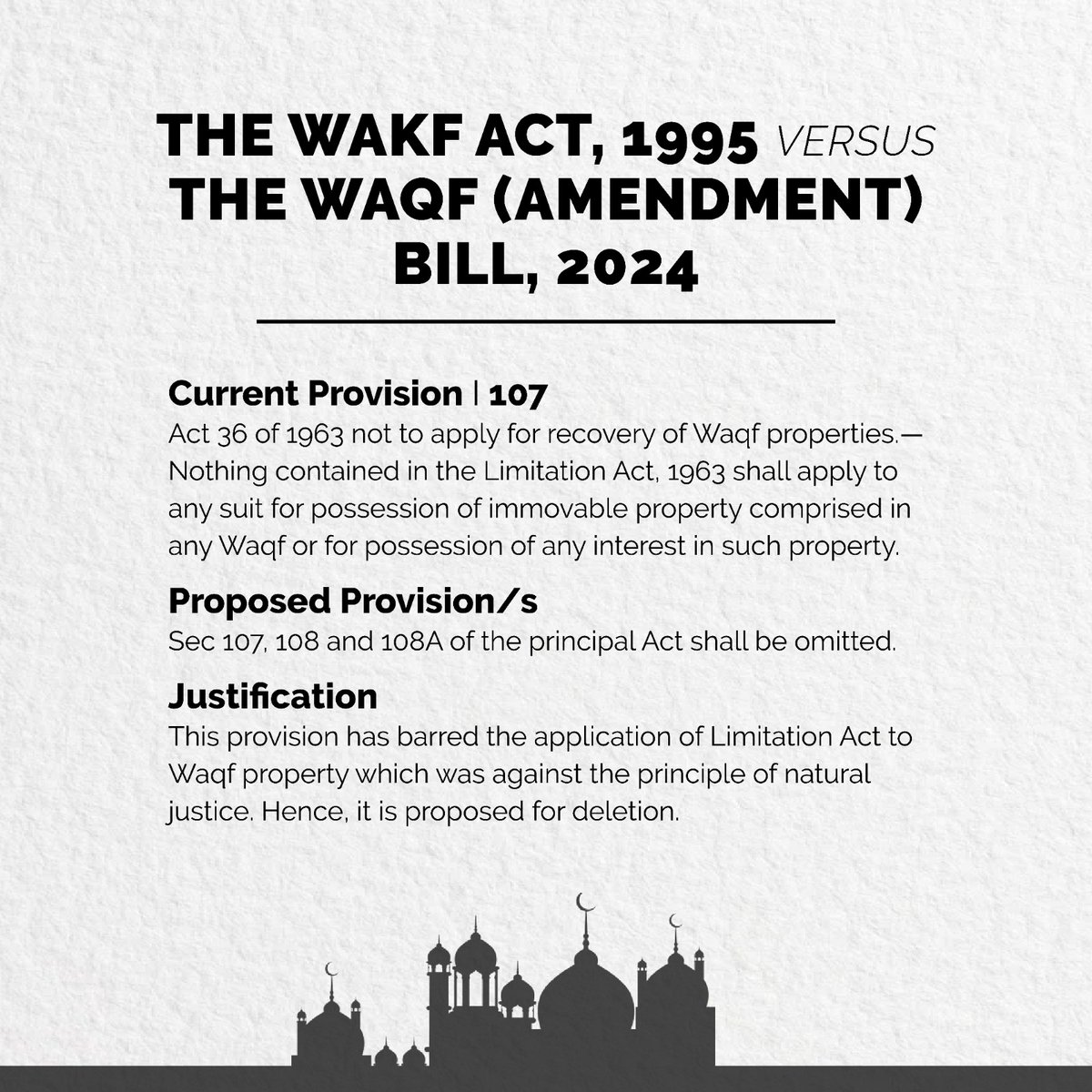
Sec 107, 108 and 108A of the principal Act shall be omitted.
Justification:
This provision ensured that the Waqf Act overrides other laws. This was against the principle of equity. Deletion of this section will ensure parity with other laws.
Justification:
This provision ensured that the Waqf Act overrides other laws. This was against the principle of equity. Deletion of this section will ensure parity with other laws.

Sec 107, 108 and 108A of the principal Act shall be omitted.
Justification:
This provision has barred the application of the Limitation Act to Waqf property which was against the principle of natural justice. Hence, it is proposed for deletion.
Justification:
This provision has barred the application of the Limitation Act to Waqf property which was against the principle of natural justice. Hence, it is proposed for deletion.
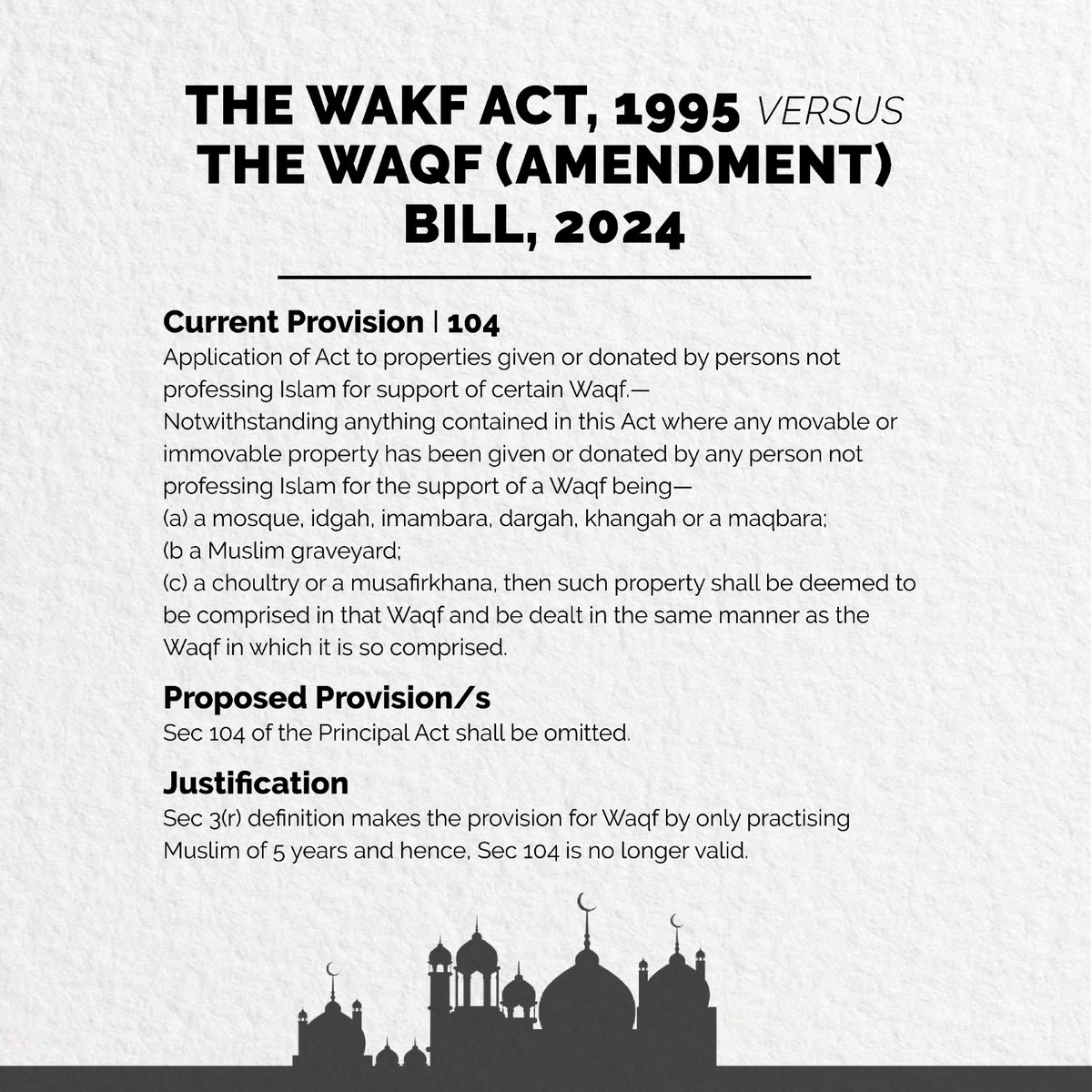
Sec 104 of the Principal Act shall be omitted.
Justification:
Sec 3(r) definition makes the provision for waqf by only practising Muslims of 5 years. Hence, Sec 104 is no longer valid.
Justification:
Sec 3(r) definition makes the provision for waqf by only practising Muslims of 5 years. Hence, Sec 104 is no longer valid.
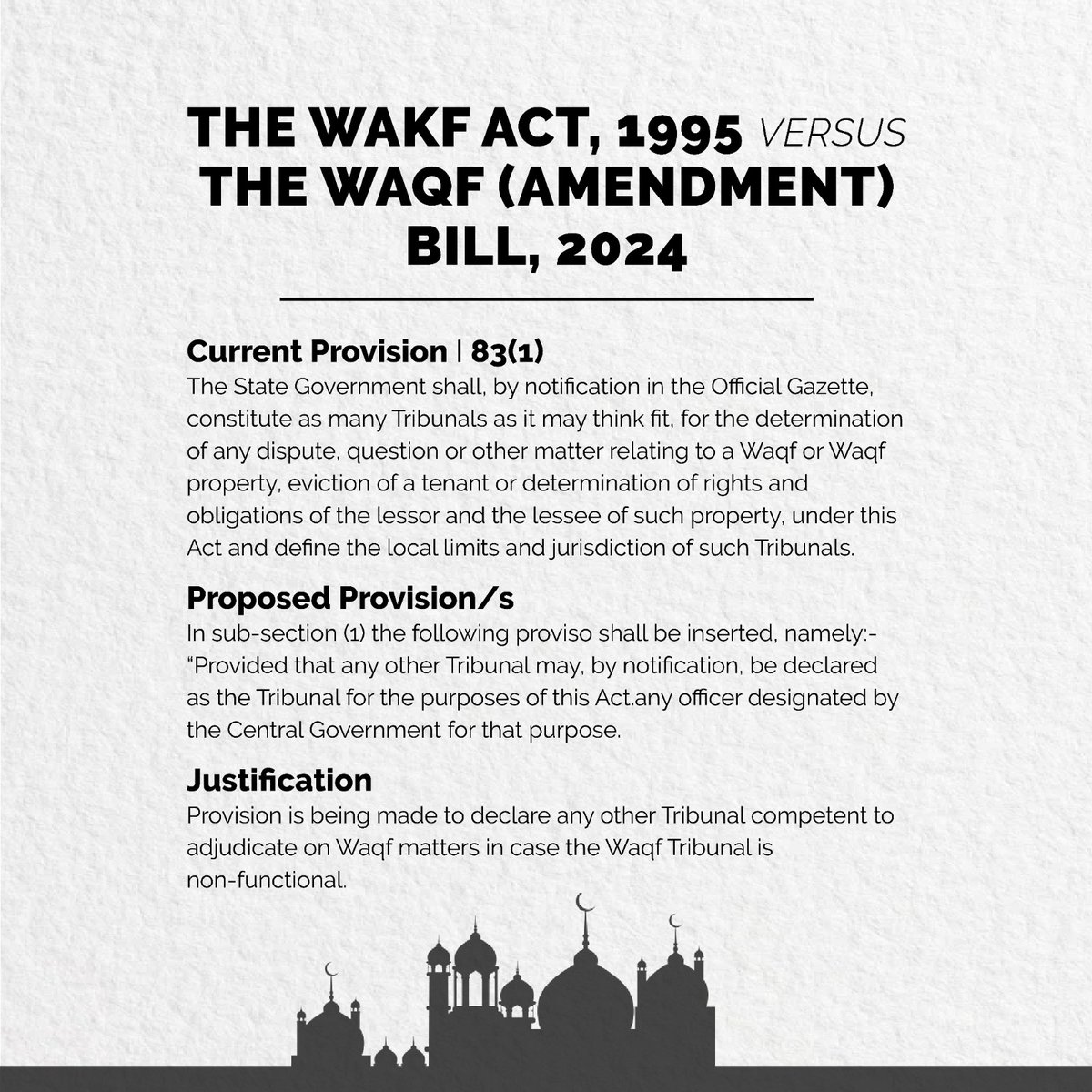
Provision is being made to declare any other Tribunal competent to adjudicate on Waqf matters in case the Waqf Tribunal is non-functional.
This is a New Entry.
Proposed provision:
47(1)(c) proviso
Provided that the Central Government may, by order, direct the audit of any Waqf at any time by an auditor appointed by the Comptroller and Auditor General of India, or by any officer designated by the Central Government for that purpose.
Proposed provision:
47(1)(c) proviso
Provided that the Central Government may, by order, direct the audit of any Waqf at any time by an auditor appointed by the Comptroller and Auditor General of India, or by any officer designated by the Central Government for that purpose.

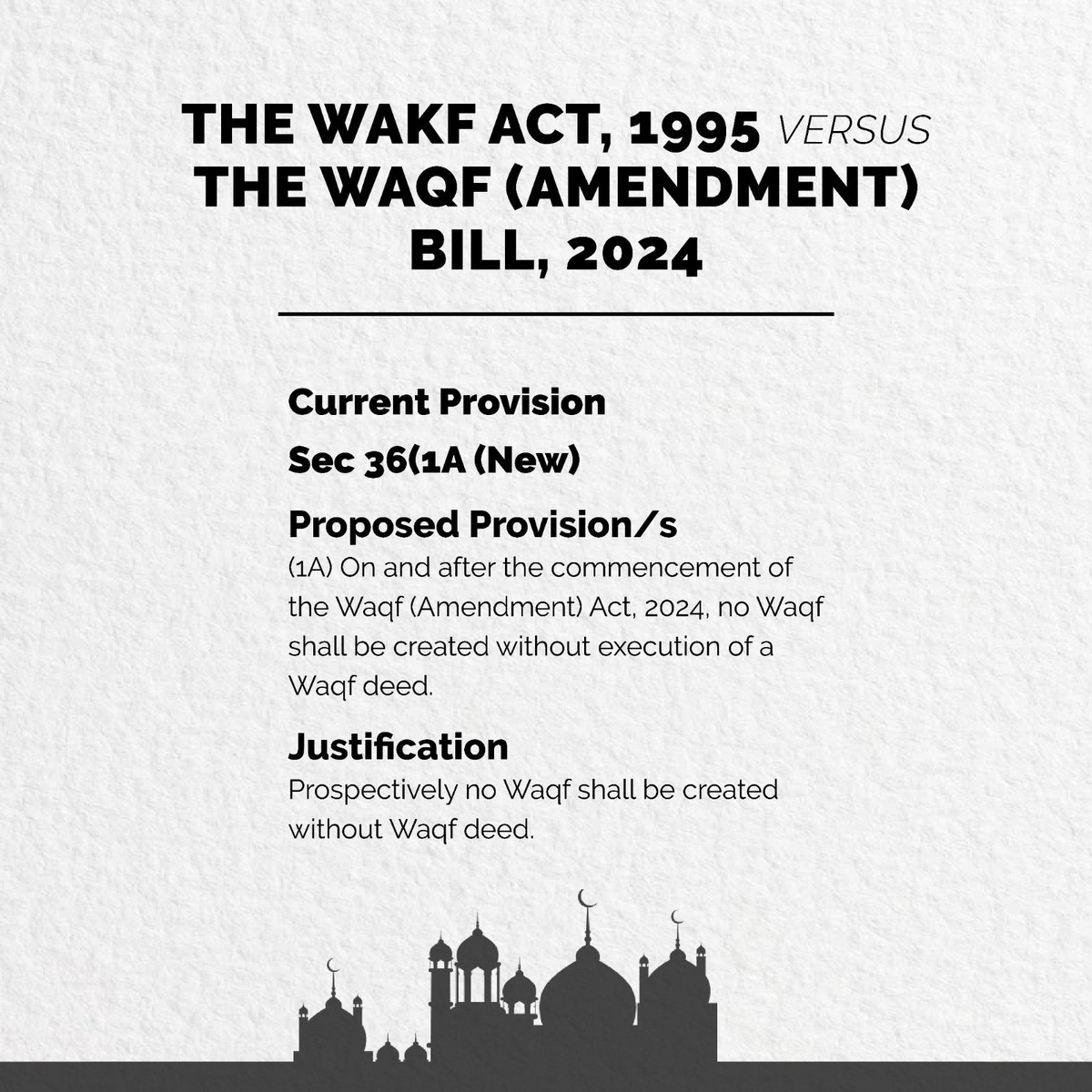
Prospectively no Waqf shall be created without a Waqf deed.
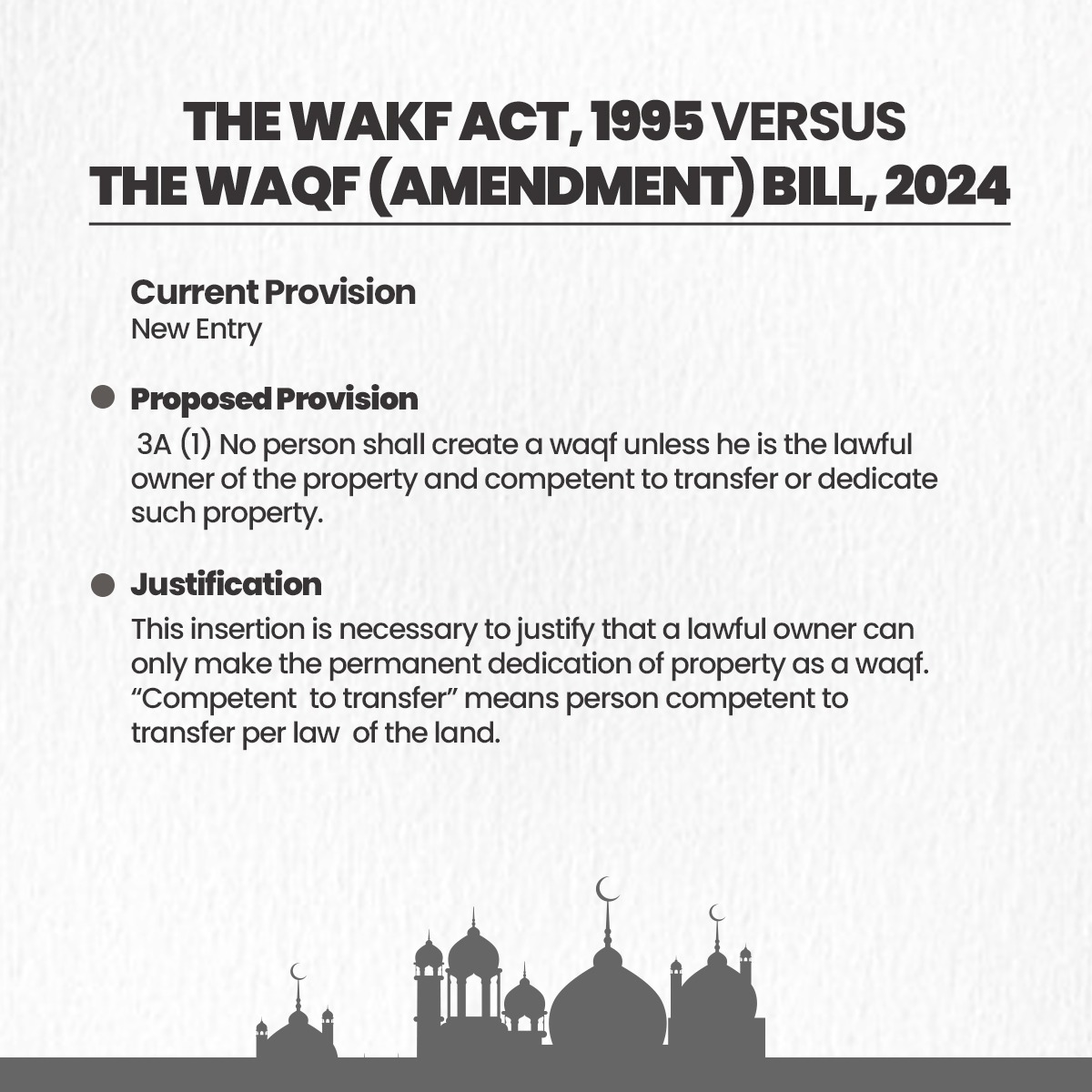
No person shall create a waqf unless he is the lawful owner of the property and competent to transfer or dedicate such property.
جاري تحميل الاقتراحات...