

Enzo Maresca’s Chelsea vs Manchester City
“The Positives and Negatives In His Debut Game”
thread🔻
“The Positives and Negatives In His Debut Game”
thread🔻

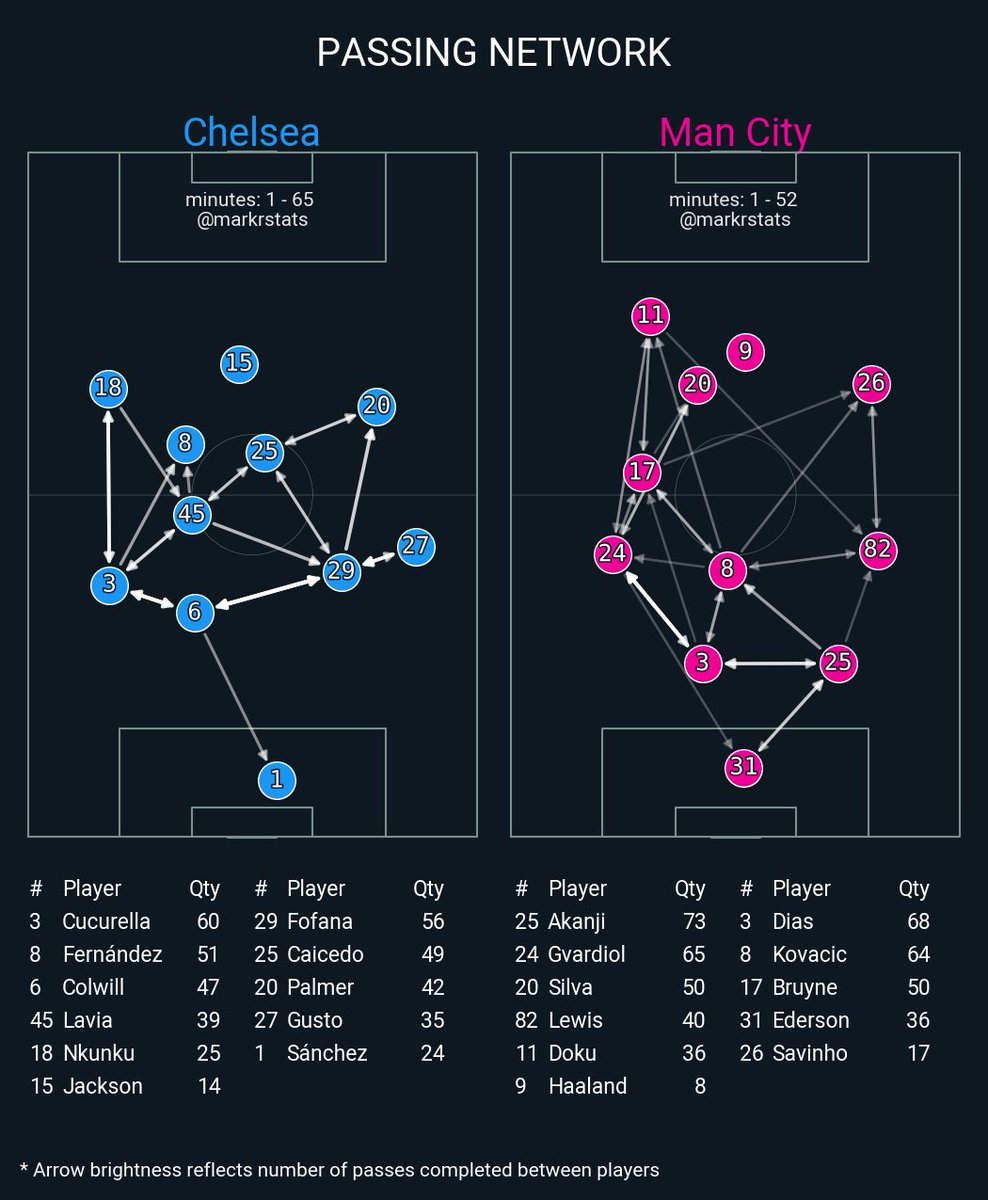
Like in pre-season, Chelsea forms a 4-2 shape that transitions into a 3-2-2-3/3-2-5 shape against Man City's 4-1-4-1
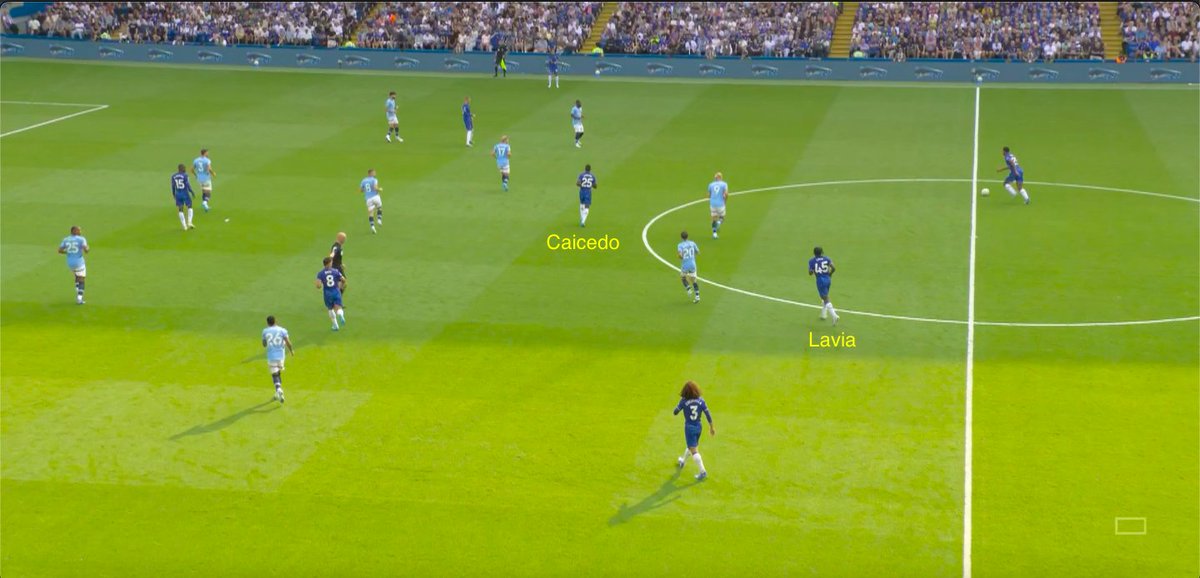
Maresca opts not to invert his FBs to create a double pivot — instead, he uses Caicedo and Lavia as the base from the start
(@Effmatch)
Maresca opts not to invert his FBs to create a double pivot — instead, he uses Caicedo and Lavia as the base from the start
(@Effmatch)

Gusto as the right-back, primarily advances to the wide areas — allowing Palmer to move inside and operate in the half-space where he can exert more influence on the attack.
Cucurella joins Colwill and Fofana to form a back three.
x.com
Cucurella joins Colwill and Fofana to form a back three.
x.com
In the structure, Chelsea have the central overloads vs Kovacic — with both Palmer and Enzo looking to receive in the pockets/between the lines and connect the play.
x.com
x.com
Lavia had a great game vs Manchester City — providing retention under pressure while also contributing to Chelsea’s progression.
97 % pass completion.
x.com
97 % pass completion.
x.com
This is a great example of the build-up that connects what I've explained in previous tweets.
Lavia receives under pressure ➡️ Finds Palmer between the lines ➡️ Connects play to Gusto wide ➡️ Cutback to Enzo.
x.com
Lavia receives under pressure ➡️ Finds Palmer between the lines ➡️ Connects play to Gusto wide ➡️ Cutback to Enzo.
x.com
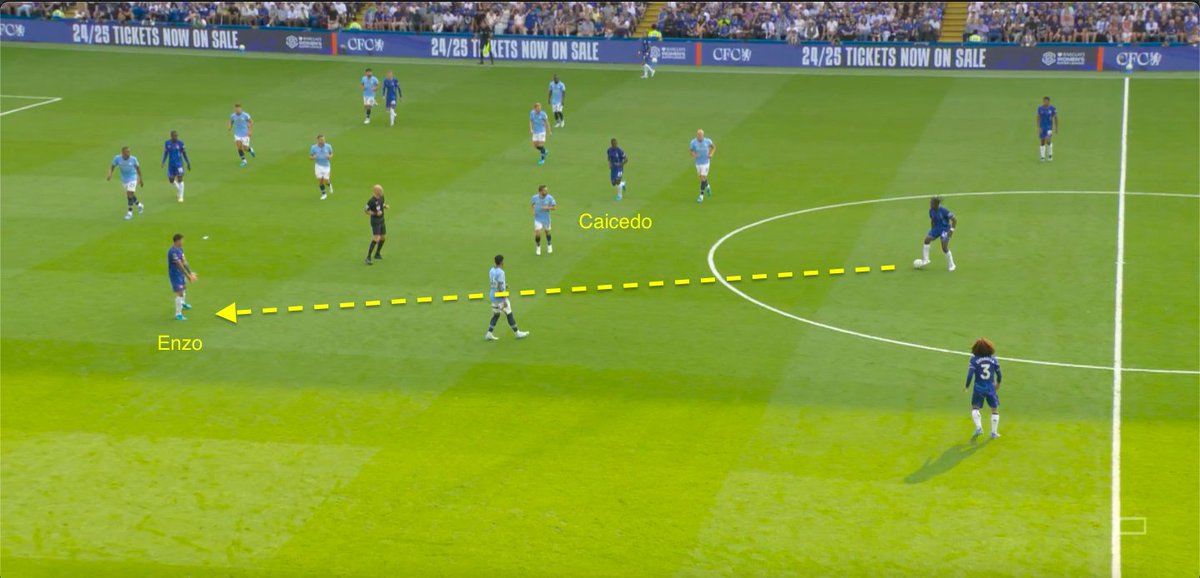
Due to Enzo's high positioning, he often finds himself in great attacking positions.
However, his execution in these situations is an area that requires further improvement.
x.com
However, his execution in these situations is an area that requires further improvement.
x.com
Caicedo also takes up more advanced positions than Lavia, which can look like a midfield three with Enzo.
This might be one of Maresca's intentions for tactical flexibility — however, he looks to more just occupying rather than receiving there.
(@markrstats)
This might be one of Maresca's intentions for tactical flexibility — however, he looks to more just occupying rather than receiving there.
(@markrstats)
Palmer primarily operates on the right-hand side, but there are instances where he roams to the opposite flank — particularly when entering the final third.
I'll take this as a positive.
x.com
I'll take this as a positive.
x.com
An interesting tactical choice in this game was Maresca's decision to position Nkunku as a winger — a player who excels more in central areas, just like Palmer.
He may not pose a significant threat in wide areas but can retain possession and operate effectively in tight spaces.
He may not pose a significant threat in wide areas but can retain possession and operate effectively in tight spaces.
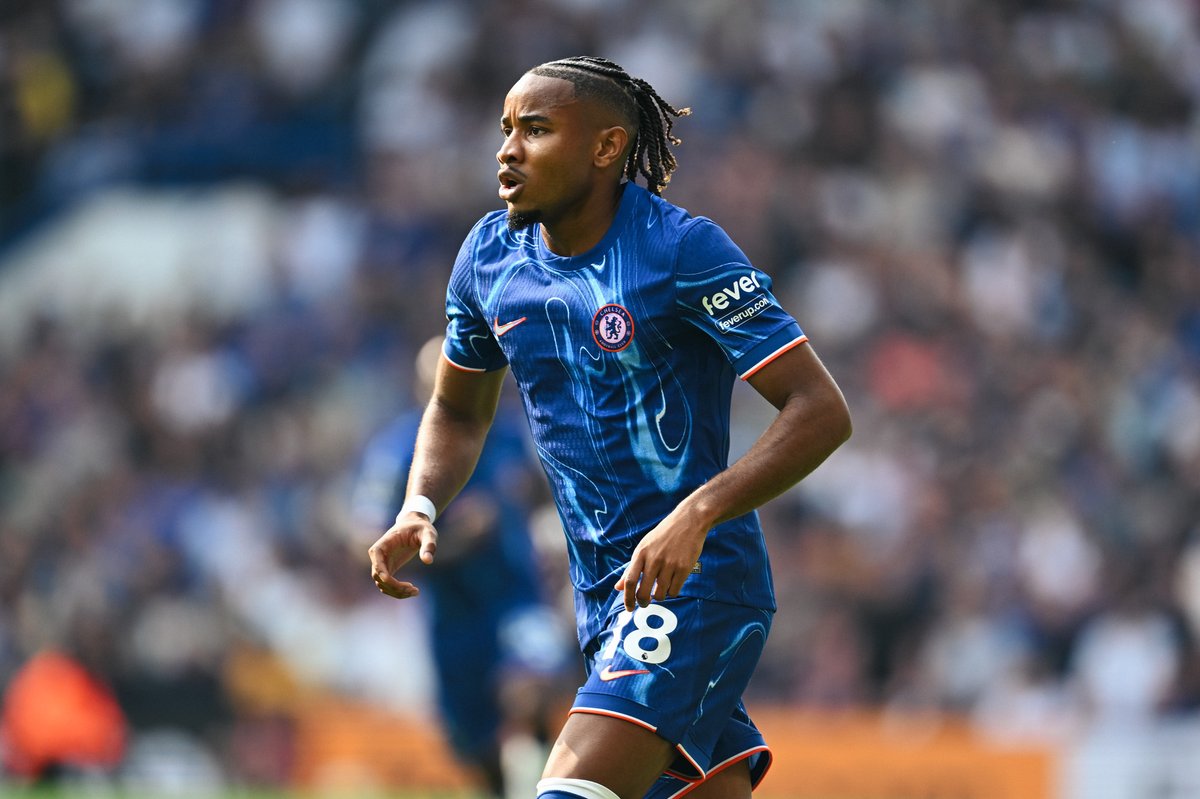
His profile as a winger is more valuable when Chelsea faces teams employing a low block, as it aids in sustaining pressure.
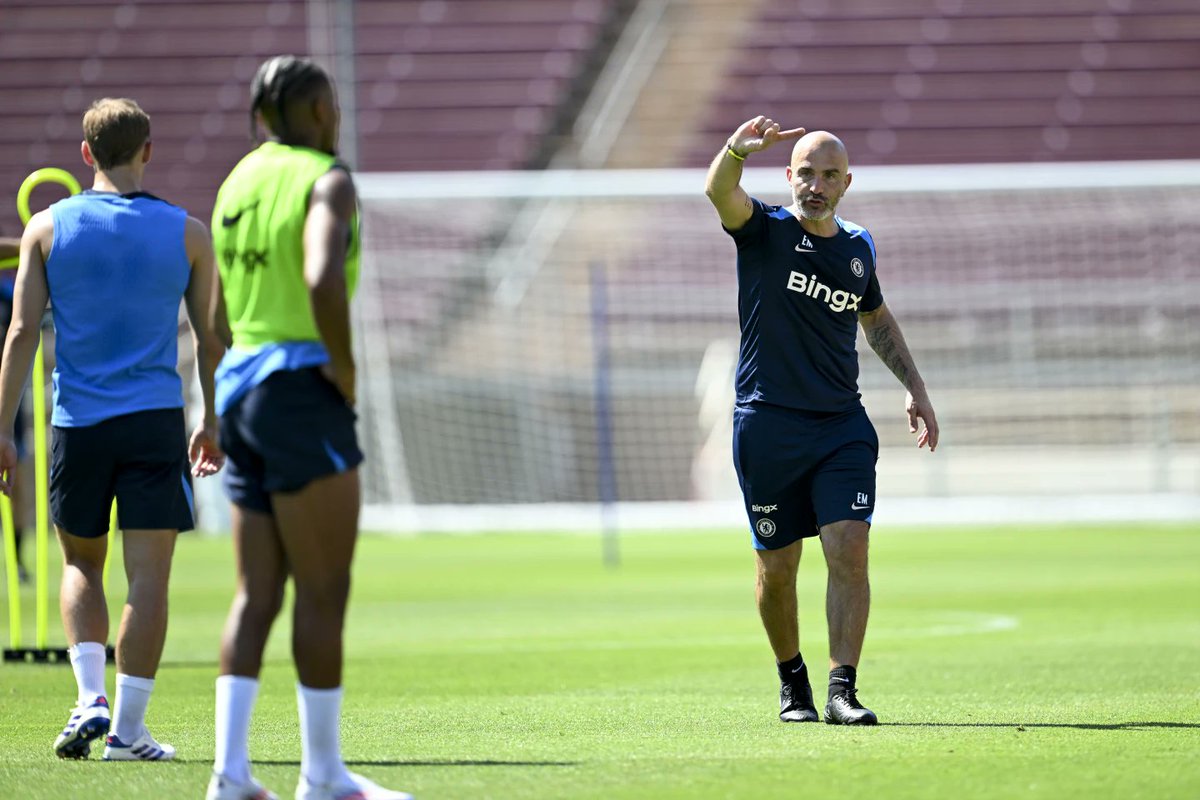
Combination play is also one of his strengths, and this is a great example to showcase it.
Enzo pins Akanji high — allowing Nkunku to combine with Jackson and attack central areas.
x.com
Enzo pins Akanji high — allowing Nkunku to combine with Jackson and attack central areas.
x.com
In the second half, Neto replaces Nkunku as the LW.
This change allows for more one-on-one situations, although it remains limited as he only played for around 30 minutes.
This change allows for more one-on-one situations, although it remains limited as he only played for around 30 minutes.
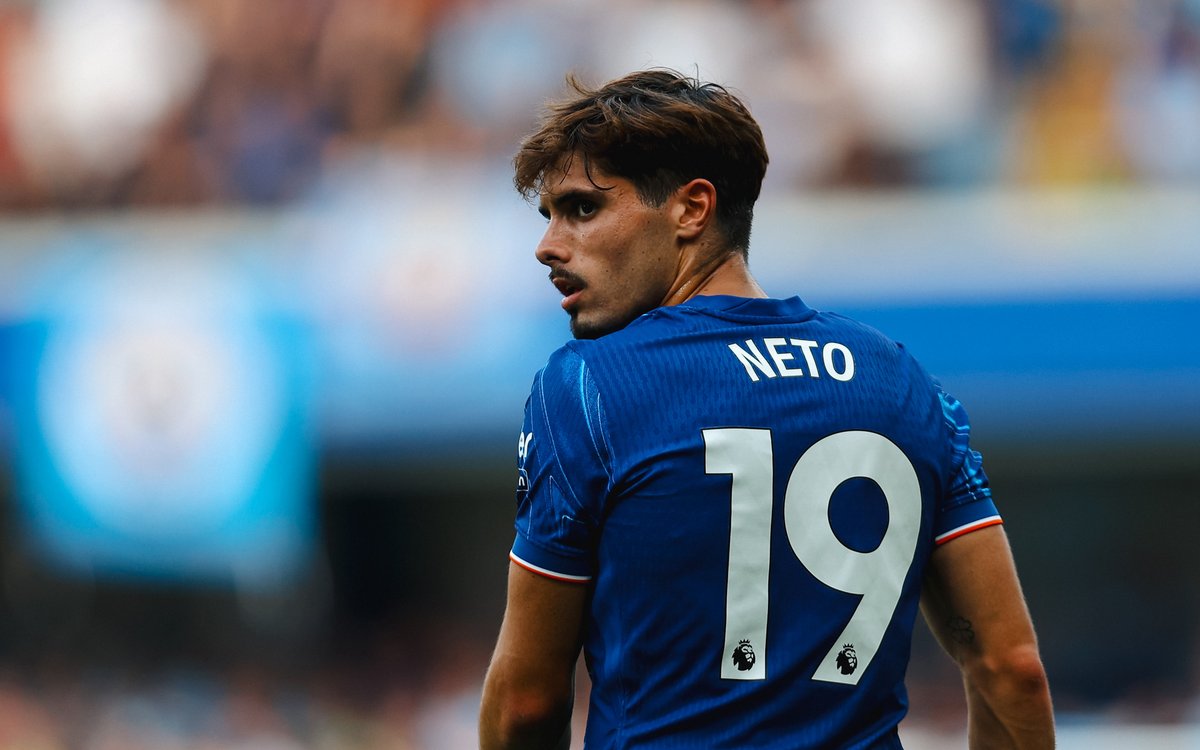
Maresca also adjusts Enzo's role, positioning him deeper to form a double pivot with Caicedo — while Dewsbury-Hall moves into the left half-space.
(Lavia subbed off)
x.com
(Lavia subbed off)
x.com
Chelsea create a similar number of chances with more xG — there are also many examples where they receive in great positions but are unable to create anything from there.
(@OptaAnalyst)
(@OptaAnalyst)
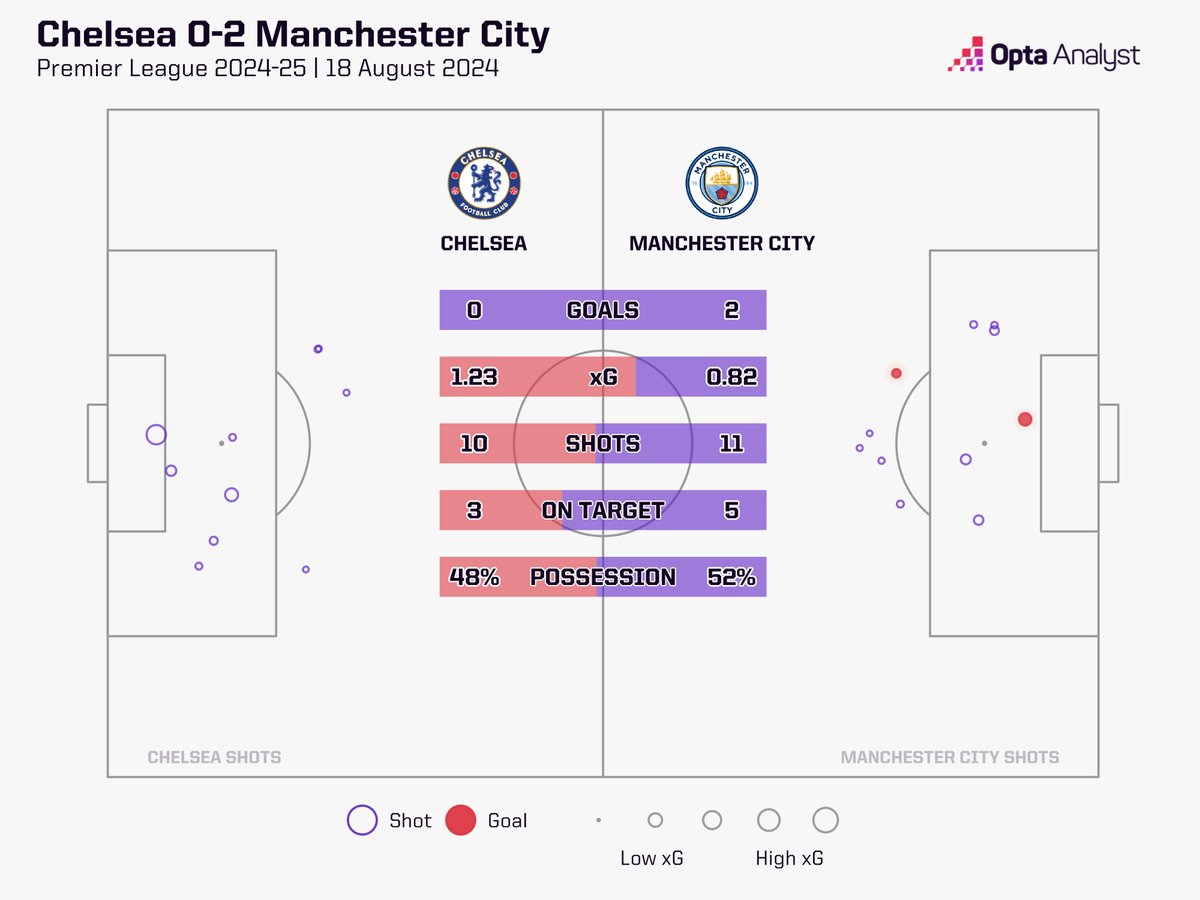
Now let’s talk about Cheksea’s out-of-possession where they look to form a 4-2-4/4-4-2 shape against Chelsea’s 3-3-4/3-4-3 to 3-1-6.
(@Effmatch)
(@Effmatch)

First and foremost — to make 4-2-4 to 4-4-2 block work, it requires the front line to block the central access, and the wingers to have the defensive work-rate to recover.
If not, the double pivot would be exposed and stretched.
If not, the double pivot would be exposed and stretched.
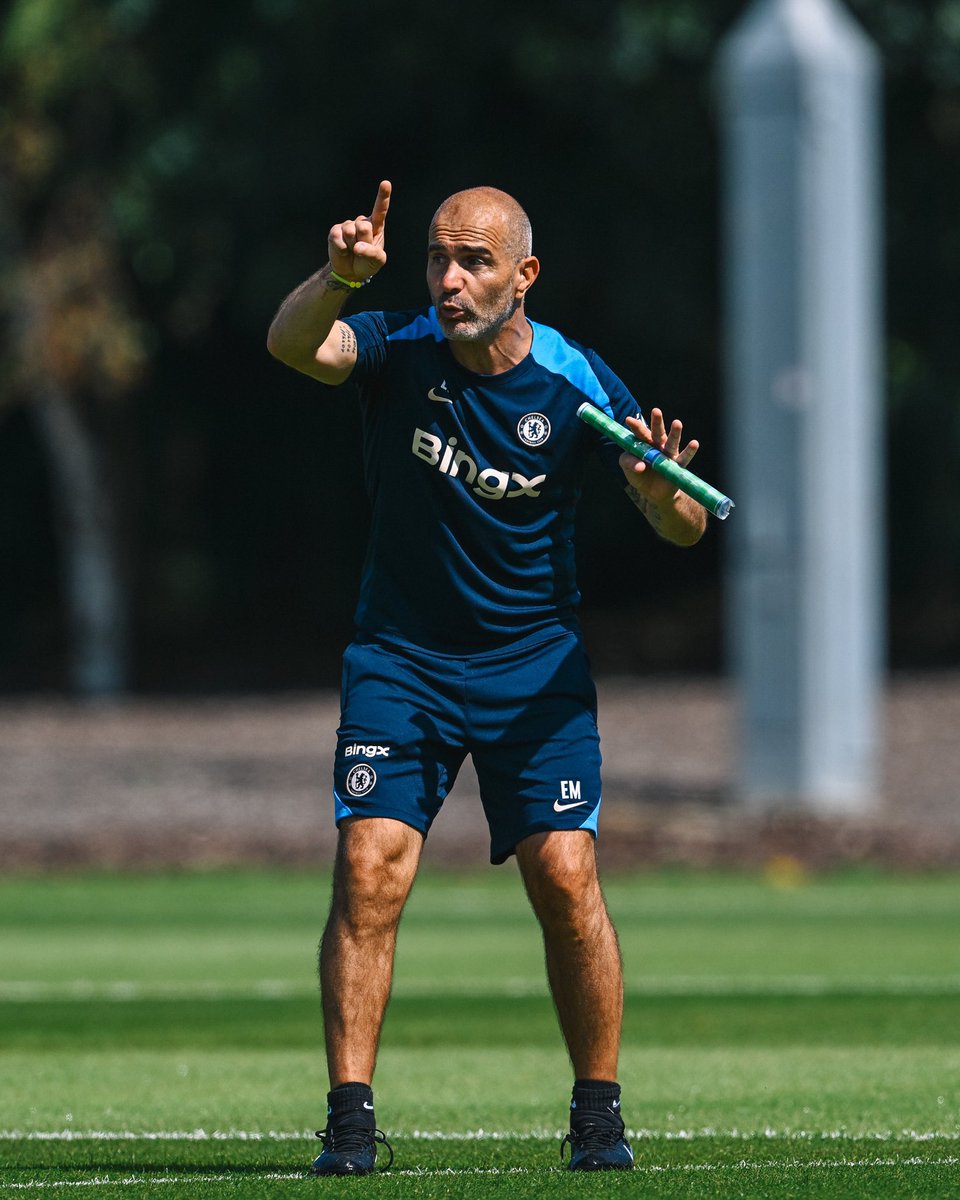
Example 1.
The front 4 doesn’t completely block the central access — forcing Caicedo to step up and leave gaps/central access in the pockets/between the lines.
x.com
The front 4 doesn’t completely block the central access — forcing Caicedo to step up and leave gaps/central access in the pockets/between the lines.
x.com
Example 2.
Man City have 6 players in the attacking line which overloaded Chelsea’s double pivot.
Once they find access, they can directly attack the gaps.
x.com
Man City have 6 players in the attacking line which overloaded Chelsea’s double pivot.
Once they find access, they can directly attack the gaps.
x.com
Example 3.
The front 4 are able to block the central access so Man City decides to attack the wide areas.
If the winger (ex: Nkunku) tracks back, it allows Lavia to defend the central areas and help the defensive block to be more compact.
x.com
The front 4 are able to block the central access so Man City decides to attack the wide areas.
If the winger (ex: Nkunku) tracks back, it allows Lavia to defend the central areas and help the defensive block to be more compact.
x.com
Example 4.
If Nkunku doesn’t, Lavia is forced to defend wide areas which can stretch the double pivot or leave central access for the opponent to attack.
x.com
If Nkunku doesn’t, Lavia is forced to defend wide areas which can stretch the double pivot or leave central access for the opponent to attack.
x.com
Man City's 1st goal:
— Gvardiol baits Palmer ➡️ Creating space for Doku
— Gusto hesitates ➡️ Leading Caicedo to defend wide areas
— Double pivot stretched ➡️ Allowing Doku to cut inside
— Bernardo attacks gaps between the CBs (Fofana and Colwill)
x.com
— Gvardiol baits Palmer ➡️ Creating space for Doku
— Gusto hesitates ➡️ Leading Caicedo to defend wide areas
— Double pivot stretched ➡️ Allowing Doku to cut inside
— Bernardo attacks gaps between the CBs (Fofana and Colwill)
x.com
The second goal resulted from Kovačić exploiting central gaps of the double pivot with his ball-carrying ability.
However, this example differs slightly as it stems from a build-up situation but you can see how he attacks the double pivot.
However, this example differs slightly as it stems from a build-up situation but you can see how he attacks the double pivot.

Still so many things to be worked on Chelsea’s out-of-possession, it’s crucial to be compact as a unit in the Premier League.
Defending starts from the front.
Defending starts from the front.
جاري تحميل الاقتراحات...