

NEW: Scores of doctors are now registering their patients to vote—including suicidal and psychotic patients at a PA mental hospital.
Helping them is Vot-ER, a nonprofit founded by a Kamala Harris staffer that is targeting traditional Dem voting blocs.🧵
freebeacon.com
Helping them is Vot-ER, a nonprofit founded by a Kamala Harris staffer that is targeting traditional Dem voting blocs.🧵
freebeacon.com

Many patients at the Pennsylvania Psychiatric Institute's inpatient clinic cannot complete "the activities of daily living" or are "suicidal, aggressive, or dangerous to themselves or others."
Since 2020, the hospital has been helping those patients vote.
Since 2020, the hospital has been helping those patients vote.
Located in a swing state that could decide the 2024 election, the hospital asks psychiatric inpatients, regardless of diagnosis, if they would be interested in "voter registration tools" that let them check their nearest polling station and register to vote online.
Patients can also request a mail-in ballot with "assistance" from hospital staff, according to a pair of papers about the project, which began in 2020.
Since then, the hospital has continued registering patients—even those who are not near discharge and have not yet been stabilized—on the grounds that voting, as the institute puts it, is a "therapeutic tool" that "helps empower patients and makes them feel good."
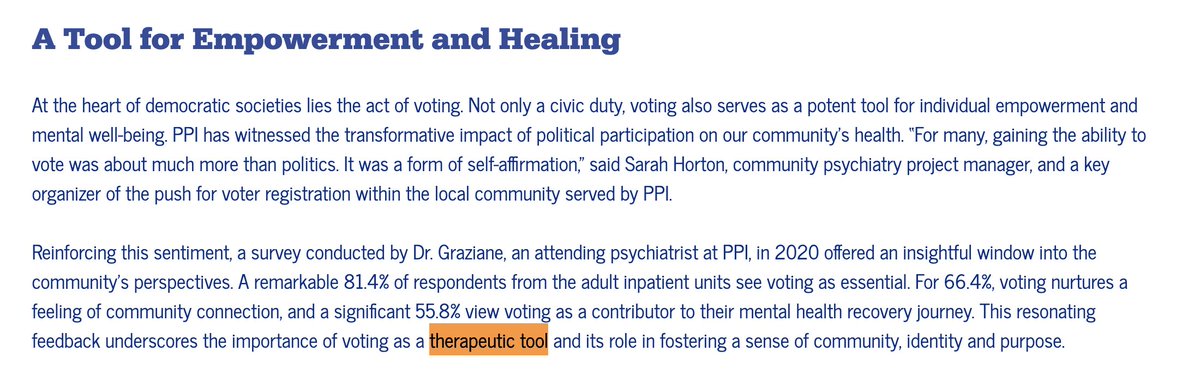
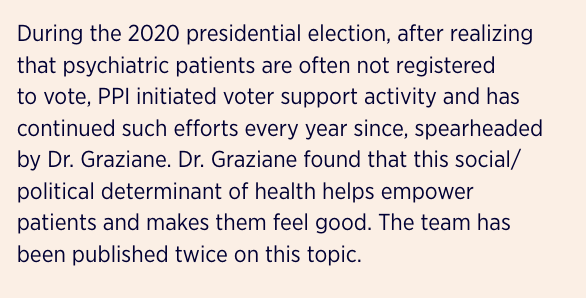
"Voting is an important part of the recovery process," Julie Graziane, a geriatric psychiatrist who leads the hospital’s civic engagement efforts, said in a press release.


Initially, the Pennsylvania-based institute was relying on "voter support" materials created by its own staff. In more recent years, however, it has turned to the nonprofit Vot-ER, which develops "nonpartisan civic engagement tools" for "every corner of the healthcare system."
Founded by an emergency room physician at Harvard Medical School, Alister Martin, who served as an adviser to Vice President Kamala Harris, Vot-ER has helped more than 50,000 doctors register their patients to vote.
Its signature product is a badge—with a QR code that pulls up an online voter registration platform—that health care workers can wear around their necks. Doctors ask patients whether they’ve registered to vote and, if the answer is no, encourage them to scan the badge.
Though Vot-ER claims to be nonpartisan, it is staffed by progressive operatives, funded by progressive foundations, and run by an umbrella nonprofit, A Healthier Democracy, that has referred to DEI as "the bedrock of fair healthcare." x.com
And ahead of the 2024 election, Vot-ER is leading a movement—backed by top medical groups and an executive order from the Biden-Harris administration—that is turning health care centers into political battlegrounds.
Doctors have used Vot-ER’s tools to register patients in cancer hospitals, emergency rooms, substance abuse clinics, and palliative care departments. Some have even registered the parents of newborns in the neonatal intensive care unit.
The American Academy of Pediatrics, the American Nurses Association, and the Association of American Medical Colleges suggest that clinicians ask patients whether they plan to vote.
So does HHS, which encourages federally funded health centers to provide "voter registration activities" to "underserved populations."
The HHS guidance is the result of a 2021 executive order instructing all federal agencies to promote "access to voting."
The HHS guidance is the result of a 2021 executive order instructing all federal agencies to promote "access to voting."
Vot-ER has advised the Biden-Harris administration on how to implement that order, according to documents obtained by the Washington Examiner, and, amid a tightening presidential race, appears to be targeting traditional Democratic voting blocs.
Applications for the group’s resources ask whether the "majority of your patients" are "24 years old or younger," "Black/African-American," or "LGBTQIA+."
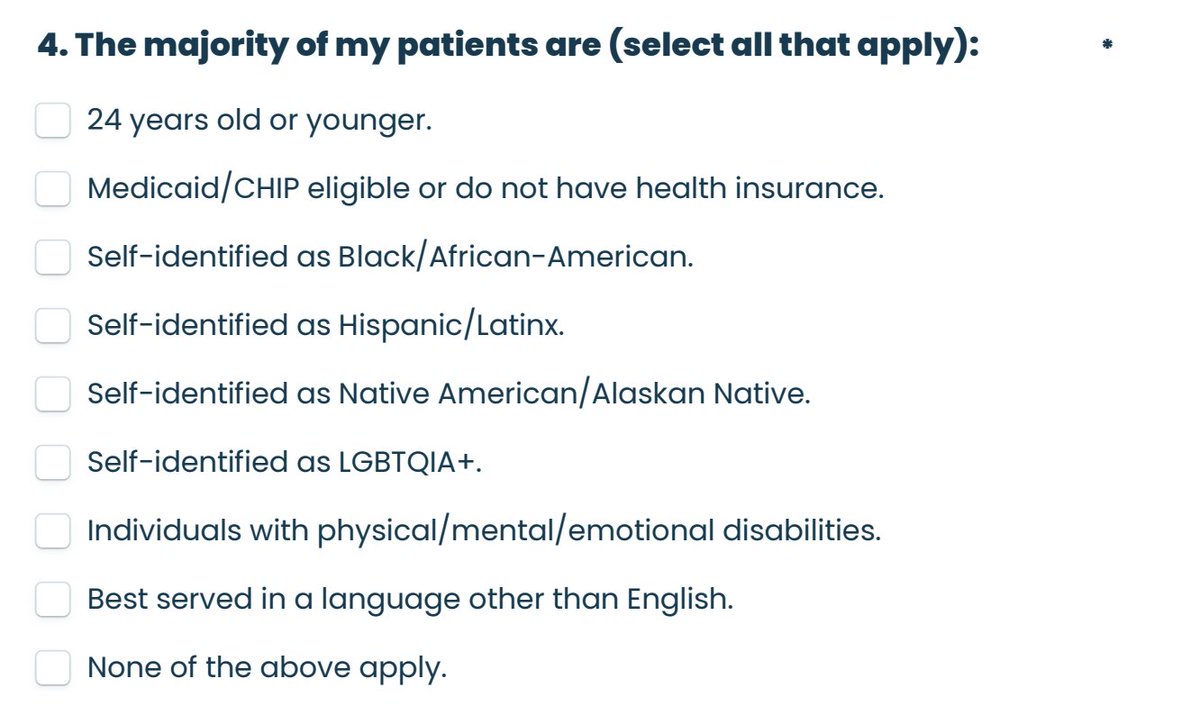
64 percent of the clinics that use Vot-ER's badges "predominantly serve" African Americans and Hispanics, who lean 83 and 61 percent Democrat respectively, while 29 percent of the clinics serve patients primarily under the age of 24, where Ds outnumber Rs two to one.
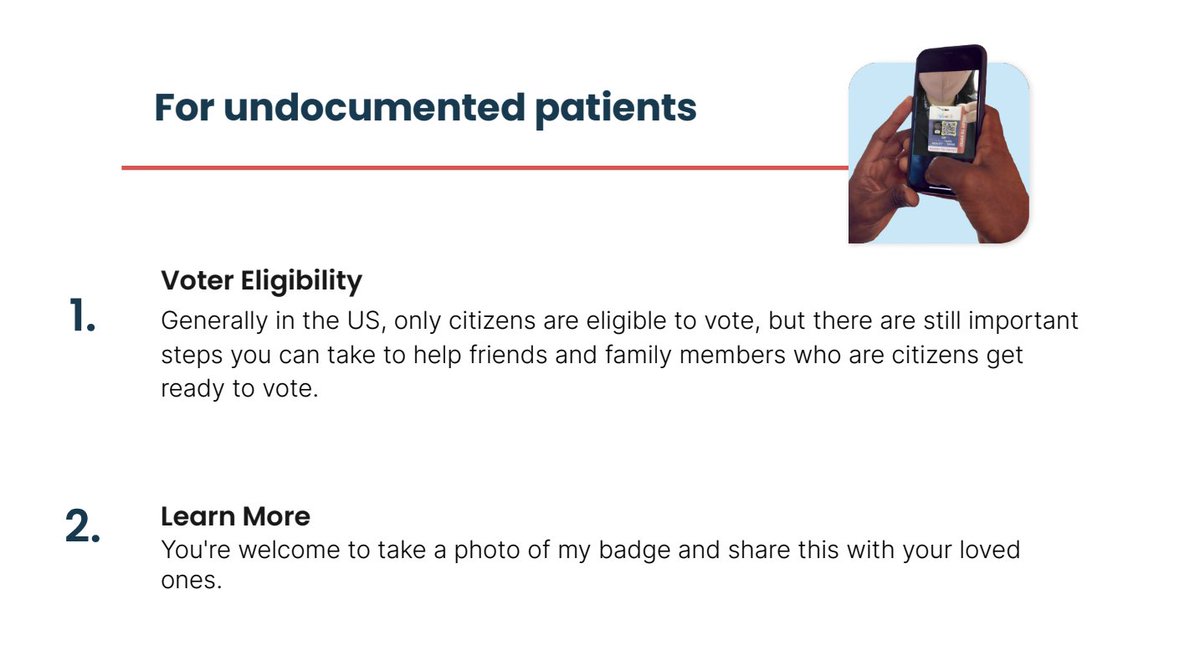
The group even has scripts doctors can use to encourage "undocumented patients" to register their "friends and family members who are citizens" to vote.
At stake, critics say, is not just the outcome of an election but the integrity of the patient/doctor relationship, at a time when trust in medicine—worn down by the COVID-19 pandemic and the ideological capture of medical organizations—has reached a nadir.
"I can’t even begin to tell you how inappropriate this is," said Sally Satel, a lecturer in psychiatry at Yale Medical School. "It’s such a contamination of a physician’s role."
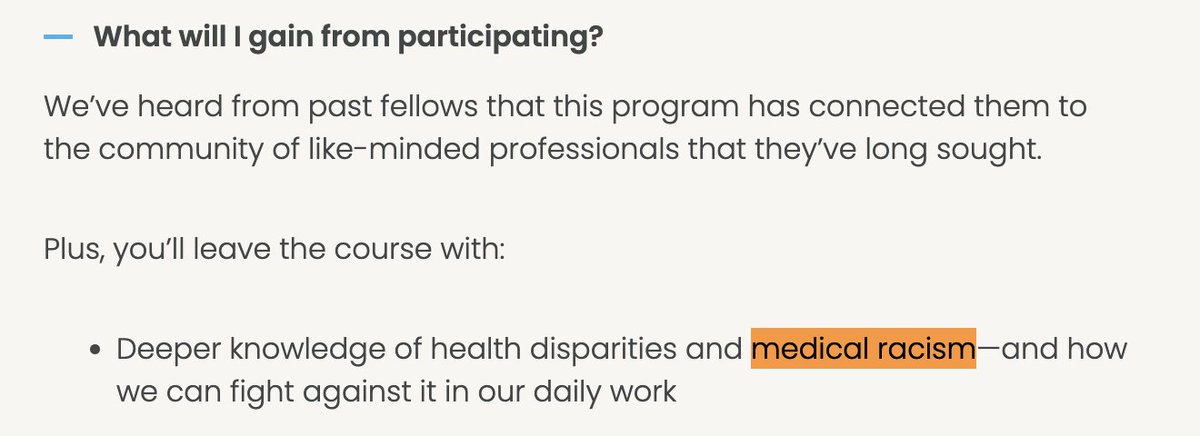
Critics say that Vot-ER, which hosts trainings on "medical racism" and partners with the Climate Psychiatry Alliance, is turning doctors into political activists and patients into political capital.
The transformation has raised ethical questions about the power dynamic between patient and provider, the capacity of institutionalized people to give consent, and the potential for partisan pushiness in the exam room, where political chit-chat was long seen as off-limits.
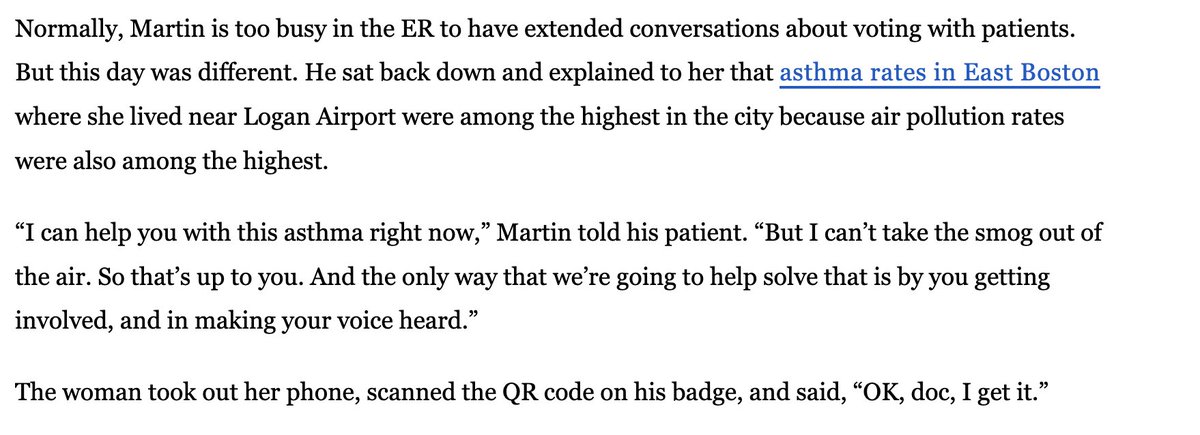
Martin, Vot-ER’s founder, who is affiliated with Mass General’s Center for Social Justice and Health Equity, has said that he once told a patient recovering from an asthma attack to vote, since that was the "only way" to "take the smog out of the air."
"It’s very easy to insert politically coded speech into these interactions," said Kristen Walsh, a pediatrician in New Jersey. "You are effectively signaling to the patient how you want them to vote. And then you’ve really muddled the patient/doctor relationship."
Vot-ER was launched in 2019, a few months before the coronavirus pandemic, at Massachusetts General Hospital. Since then, it has partnered with over 700 health centers, been profiled by the New York Times, and helped more than 89,000 patients vote.
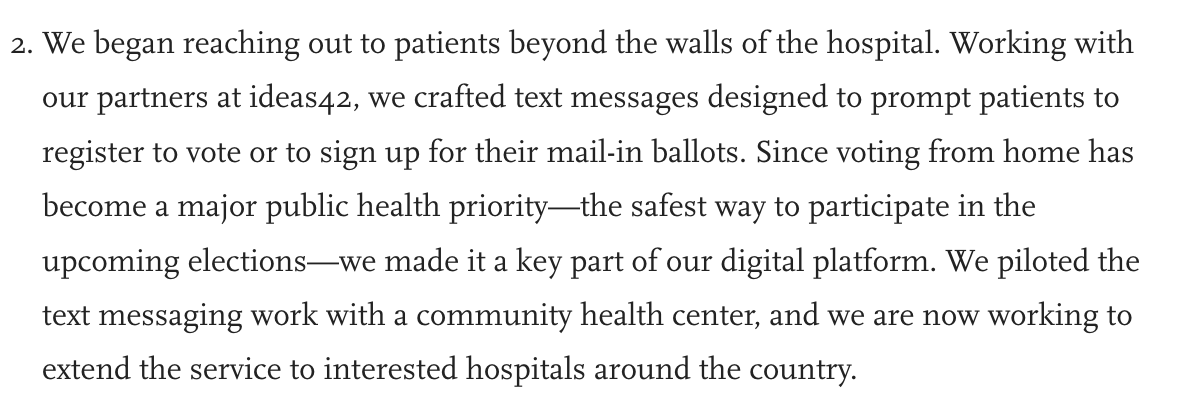
It has also worked with Ideas42, a group of "behavioral scientists" who design "equitable" interventions through a "race- and gender-conscious lens," to craft get-out-the-vote text blasts.

These efforts have been underwritten by Democratic dark money, including the Tides Foundation and the Windward Fund, and overseen by an executive director, Aliya Bhatia, who says in her bio that she "prioritizes diversity and inclusion in all her endeavors."
Records from the Federal Election Commissions show that Bhatia cut $500 checks to Hillary Clinton, Joe Biden, and Georgia senator Raphael Warnock (D.).
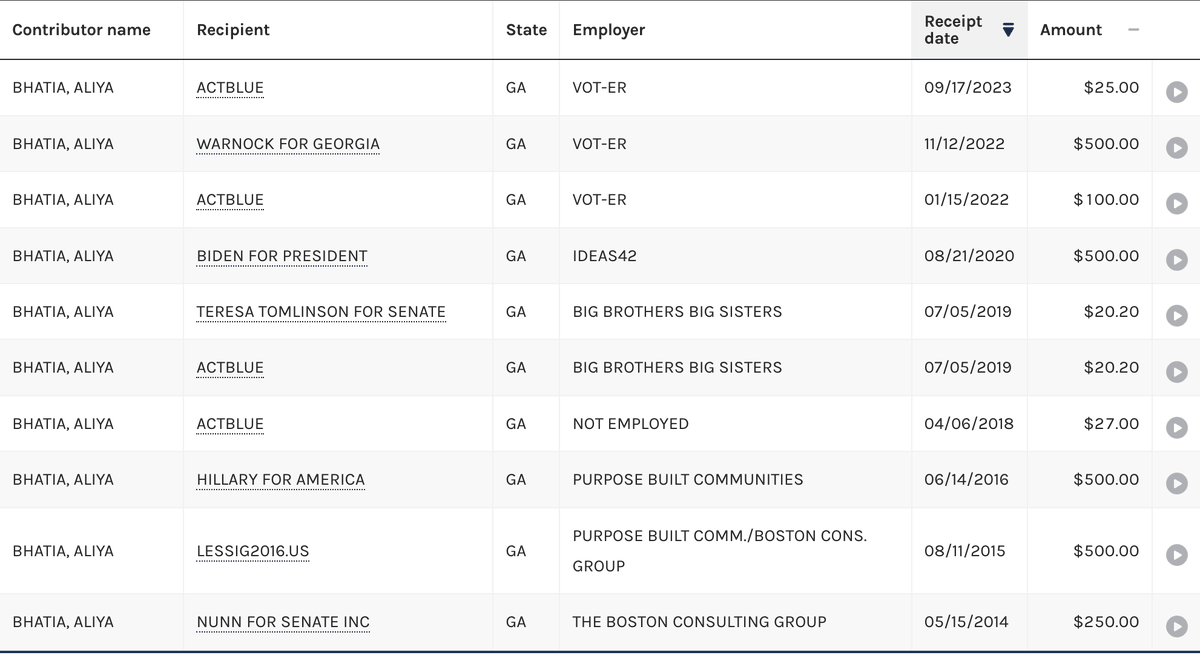
At least five other Vot-ER officials, including chief of staff Leah Ford—a former Planned Parenthood "volunteer of the year"—have made donations through ActBlue, the Democratic Party’s online fundraising platform.
Flush with cash and emboldened by President Joe Biden’s executive order, Vot-ER has developed ties to nearly every layer of America’s public health bureaucracy.
Those layers include the Department of Health and Human Services, where Martin, also a Democratic donor, sits on an advisory panel, and medical schools, where Vot-ER hosts competitions to see whose students can register the most voters
They also include Epic, the primary health records software in the US, which now lets doctors record a patient’s "voter status" in their medical chart; and the American Medical Association, which in 2022 passed a resolution that declared voting a "social determinant of health."
Vot-ER "worked with the AMA" to get the resolution passed, Martin told the Aspen Ideas festival last year. He did not respond to a request for comment about what that work entailed.
Vot-ER argues that since voting affects public policy, which affects public health, a patient’s voter registration status is a physician's business. Health care, the group says, is "an ideal arena for civic engagement" given the "trusted role" doctors play in their communities.
But for Vot-ER's critics, it is precisely that trust that health care-based voter drives threaten to undermine. Physicians, they say, are guardians of physical, not civic, health.
When voting is brought up by a doctor—perhaps one sporting a pro-Palestinian pin on his white coat, as some at UCSF have done—patients may suspect an ulterior motive and worry that their care, or that of their dependents, will be impacted unless they do what the doctor wants.
"If you’re a patient, you want your doctor to like you," Satel said "In a real sense, your doctor has the power."
That’s especially true in the NICU, where parents have been asked to vote by the very doctors caring for their sick newborns.
That’s especially true in the NICU, where parents have been asked to vote by the very doctors caring for their sick newborns.
Lisa Patel, a pediatric hospitalist at Stanford and the head of a climate advocacy group, said in April that she'd spoken to "every family I saw in the newborn nursery about voting because their health and the health of their newborn depended on it." x.com
Adam Bauer, a neonatologist at the University of Wisconsin School of Medicine, said in May that he had used Vot-ER’s tools to register the parents of infants "in the inpatient setting." x.com
"I worry about the power imbalance there," said Walsh, adding that her own children had spent time in the NICU. "As a parent in that situation, you’re on edge a lot of the time. There are a lot of medical decisions to be made, and you are hanging on the doctor’s every word."
Given those fraught dynamics, she added, "it’s important to be very careful not to exploit the doctor/parent relationship for political ends."
Both Bauer and Patel are active on social media and, between the two of them, have posted in support of Joe Biden, Kamala Harris, Pete Buttigieg, Stacey Abrams, and the Green New Deal.
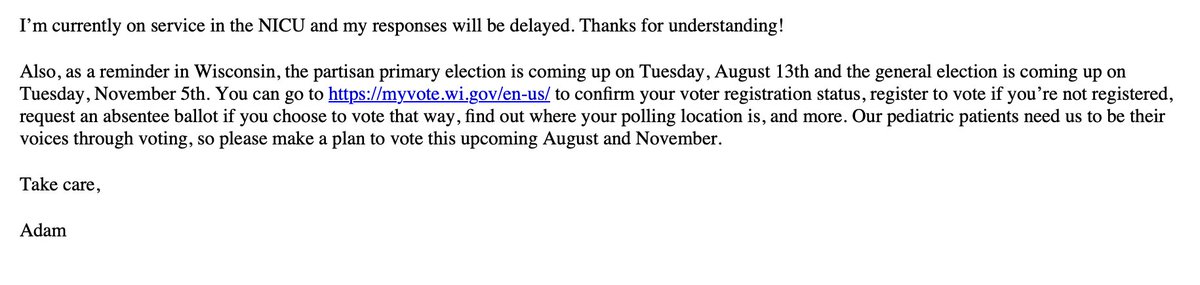
Neither physician responded to requests for comment, though the Washington Free Beacon did receive an automated reply from Bauer saying that he was "currently on service in the NICU" and reminding the sender of upcoming election deadlines.
"Our pediatric patients," the message read, "need us to be their voices through voting."
Led by Debra Koss, a professor of clinical psychiatry at Rutgers Medical School, one team of psychiatrists described a patient who, depressed by the poor conditions in her Section 8 apartment building, gained an "internal locus of control" by registering to vote.
Led by Debra Koss, a professor of clinical psychiatry at Rutgers Medical School, one team of psychiatrists described a patient who, depressed by the poor conditions in her Section 8 apartment building, gained an "internal locus of control" by registering to vote.
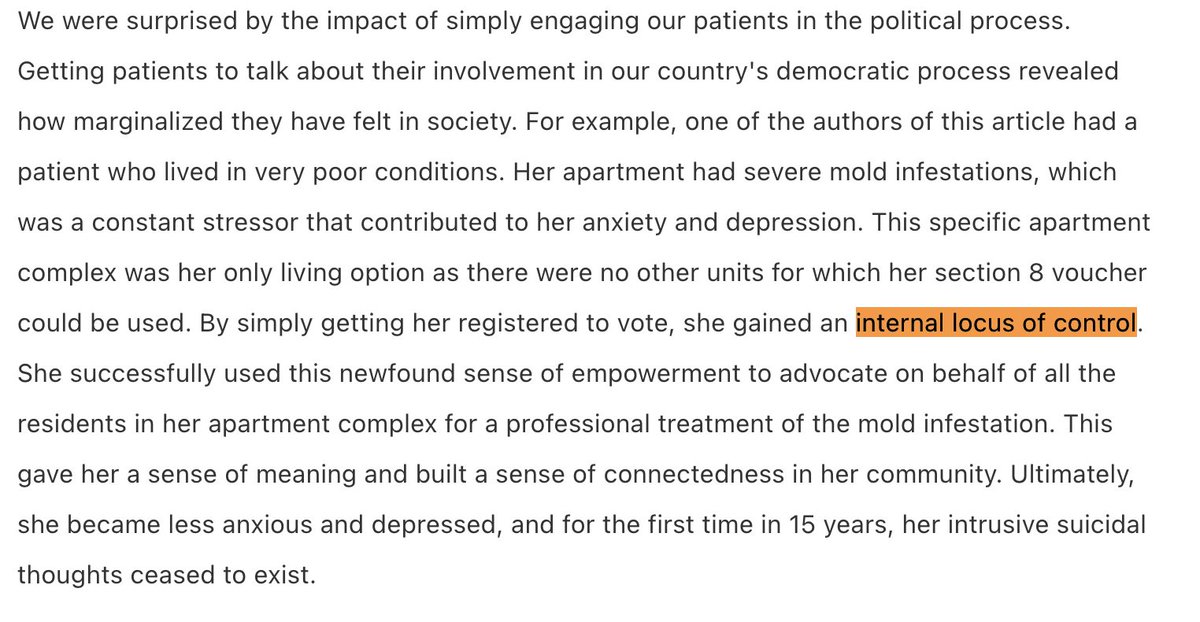
"Ultimately, she became less anxious and depressed," the doctors wrote, "and for the first time in 15 years, her intrusive suicidal thoughts ceased to exist."
Elliot Kaminetzky, a psychologist in New York who specializes in anxiety disorders, was skeptical.
Elliot Kaminetzky, a psychologist in New York who specializes in anxiety disorders, was skeptical.
"The claim that voter registration is a form of psychiatric treatment in a general sense is absurd," he said. It’s "misappropriating mental health terminology to further a blatantly political agenda."
At the Pennsylvania Psychiatric Institute, Graziane, the geriatric psychiatrist, has argued that voting can "increase life satisfaction, decrease risky behaviors and increase mental wellbeing."
The institute has sought to democratize those benefits by taking advantage of Pennsylvania’s lax voting laws, which, unlike most states, do not impose competency requirements on voters in mental hospitals.
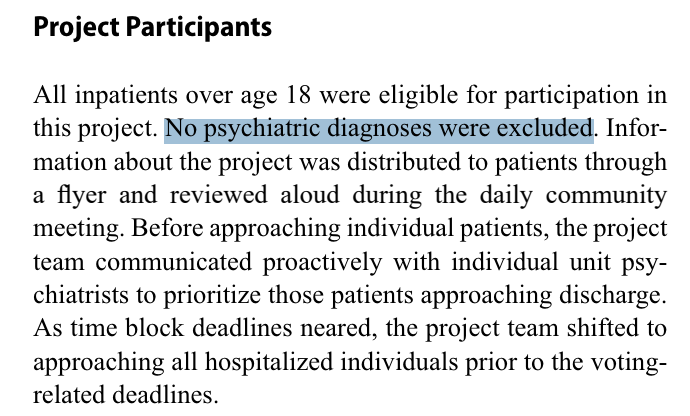
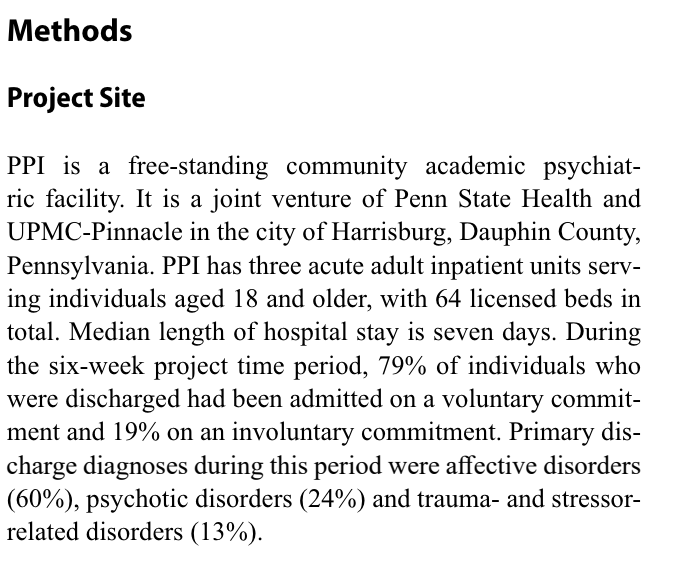
One paper indicates that "no psychiatric diagnoses were excluded" from the institute’s voter registration drive when it began 6 weeks before the 2020 election, during which time nearly a 5th of patients had been involuntarily committed and nearly a 4th had psychotic disorders.
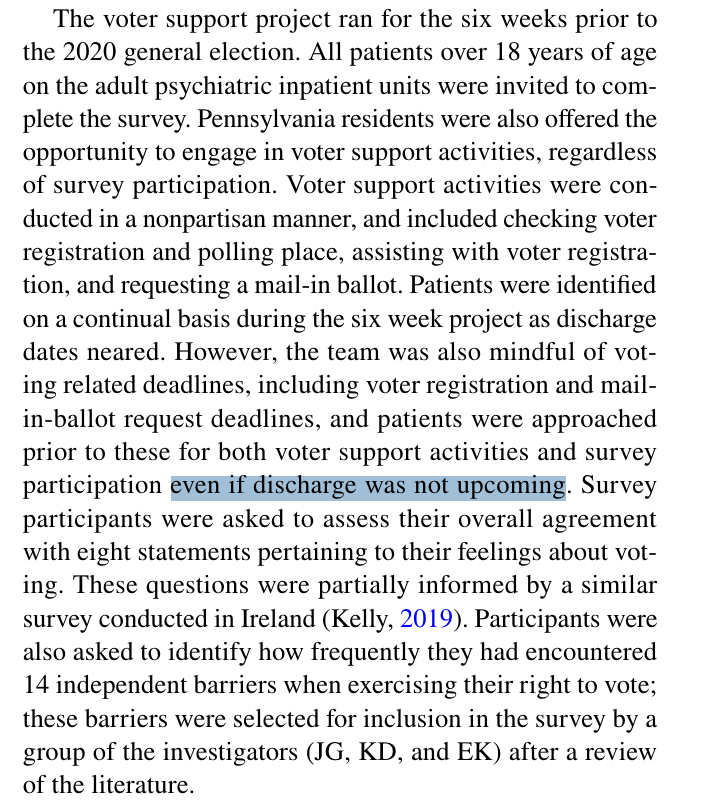
Another paper indicates that patients were approached with voter registration tools "even if discharge was not upcoming."
Jane Rosnethal, a psychiatrist and medical ethicist at NYU’s Tisch Hospital, where she chaired the hospital's ethics committee for three years, said the lack of restrictions raised serious questions about the exploitation of vulnerable patients and their ability to give consent.
"Oftentimes these patients do not have the capacity to make a decision early on in an acute hospitalization," Rosenthal said. "What are we doing ethically posing this kind of question to people who are so vulnerable?"
Questions about voting can carry a whiff of extortion in psych wards, Kaminetzky noted, since some patients are involuntarily committed and there against their will: "They may fear that not registering to vote will be seen as non-compliant, necessitating a longer stay."
The potential for coercion went unmentioned in a 2023 paper by Graziane and her colleagues, in which they argued that psychiatrists had an "ethical obligation" to register their patients to vote.

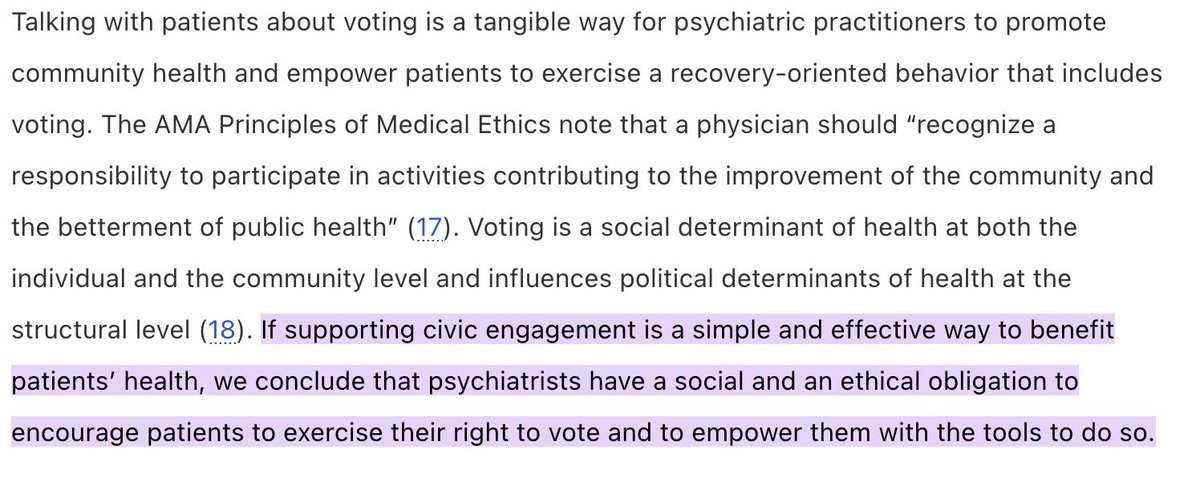
"Psychiatrists might be apprehensive … about being perceived as pushing a political or moral agenda," they wrote. "We argue that social and political engagements naturally complement our expertise."
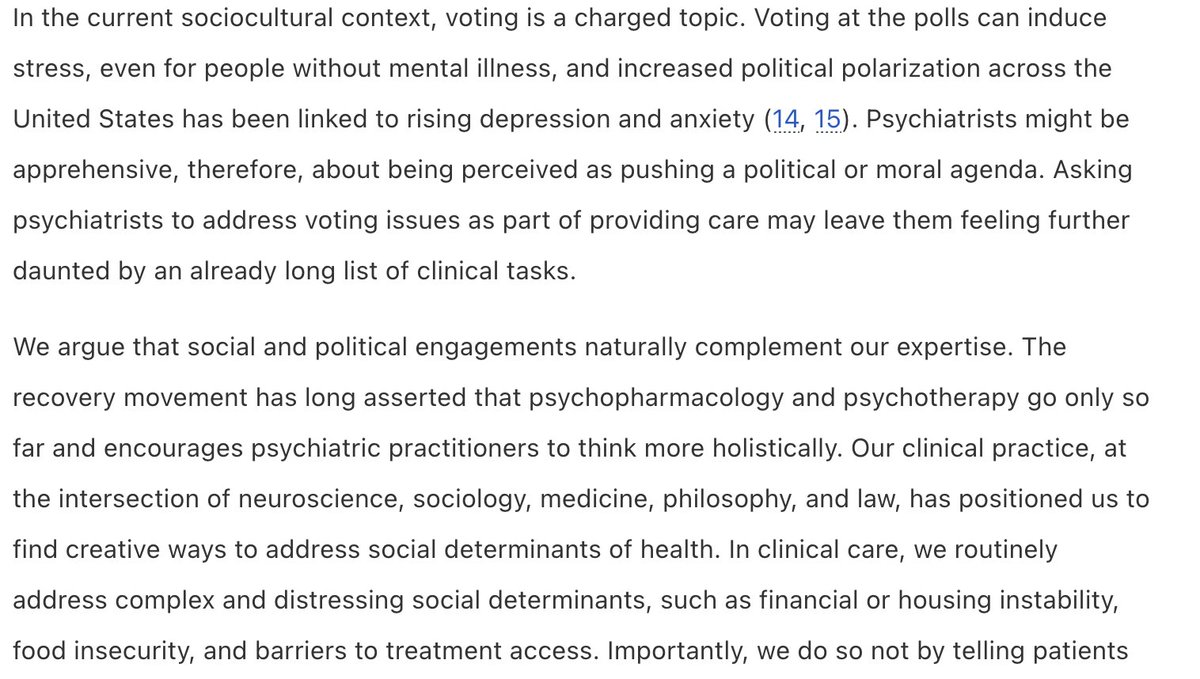
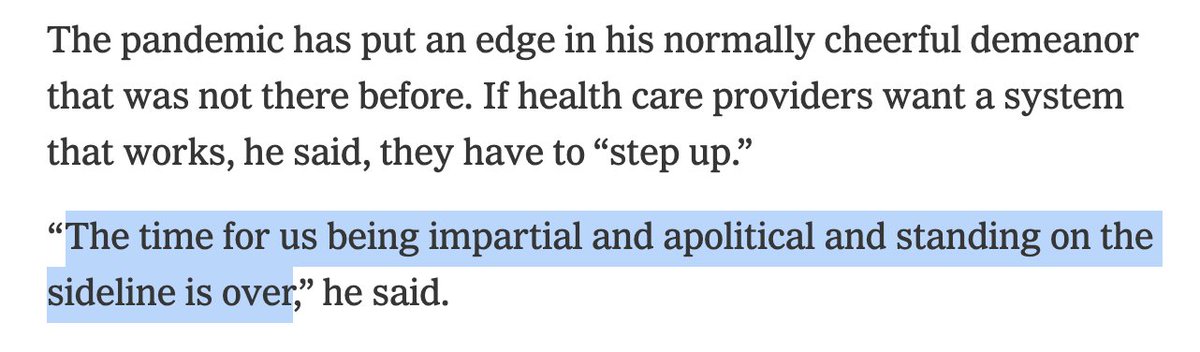
Their argument echoed what Martin told the New York Times in a 2020 interview about Vot-ER’s efforts: The time for doctors "being impartial and apolitical," he said, "is over."
جاري تحميل الاقتراحات...