

1/2) "Sweet Surprise: The Science of Sucralose will leave your head Spinning" 🤯
Full Video (~6m), Released here on @X and YouTube.
🚨Highlights🚨
👉Zero-Calorie Sweetener Sucralose (in Splenda) can induce insulin resistance... in particular in the context of mixed macronutrient intake
👉The Real-Life Application: These data suggests Sucralose could be more metabolically harmful when consumed with carbs, and less harmful when consumed on it's own/zero-carb feeding.
🍽️As an example, these data are consistent with the notion that Splenda in a Sweetened Yogurt is worse than Splenda in black coffee (any coffee lovers going,,, "phew!?"
👉The negative impact on insulin resistance is paralleled by changes in #dopamine reward circuitry (mesolimbic areas) in the brain.
(Cc neuro people @hubermanlab @R_Mohr, @neuranne, @ChrisPalmerMD)
There effects in adults and teenagers, and the effects on teenagers were so large the sub-trial in teens (13-17) was prematurely terminated for safety.
Question: While the precise mechanism is unknown, were this a top-down process 🧠, could it be that Sucralose consumption (in carb-containing foods and/or mixed meal contexts) could alter neurodevelopment during a critical period, setting up young persons using certain sweeteners for metabolic dysfunction later in adulthood.
Possible... Scary...
Learn more in the video, just released, and in the thread below...
Full Video (~6m), Released here on @X and YouTube.
🚨Highlights🚨
👉Zero-Calorie Sweetener Sucralose (in Splenda) can induce insulin resistance... in particular in the context of mixed macronutrient intake
👉The Real-Life Application: These data suggests Sucralose could be more metabolically harmful when consumed with carbs, and less harmful when consumed on it's own/zero-carb feeding.
🍽️As an example, these data are consistent with the notion that Splenda in a Sweetened Yogurt is worse than Splenda in black coffee (any coffee lovers going,,, "phew!?"
👉The negative impact on insulin resistance is paralleled by changes in #dopamine reward circuitry (mesolimbic areas) in the brain.
(Cc neuro people @hubermanlab @R_Mohr, @neuranne, @ChrisPalmerMD)
There effects in adults and teenagers, and the effects on teenagers were so large the sub-trial in teens (13-17) was prematurely terminated for safety.
Question: While the precise mechanism is unknown, were this a top-down process 🧠, could it be that Sucralose consumption (in carb-containing foods and/or mixed meal contexts) could alter neurodevelopment during a critical period, setting up young persons using certain sweeteners for metabolic dysfunction later in adulthood.
Possible... Scary...
Learn more in the video, just released, and in the thread below...

2/2) Broadly, on sweeteners, I feel people like to lean into heuristics like:
👉"No such thing as a free lunch" vs "Zero calories and therefore benign.
Or
👉Natural means 'okay' vs Artificial means 'bad'
In truth, sweeteners are a heterogenous group of molecules with unique metabolic properties that deserve to be interrogated with nuance appropriate to their metabolic complexity. I think the data from this study highlight that beautifully!
Here are 2 starter links if you want to go down the Rabbit Hole on this topic! Appreciate questions in the YouTube comments, as well as suggestions for further topics if you find these videos interesting.
🍩Sweet Surprise: The Science of Sucralose will leave your head Spinning
youtu.be
🧠Gut Sense Can't be FOOLED by Sweeteners! Or Can It?
youtu.be
- Ft @gutbrains @hubermanlab
P.S. I have fun with these thumbnails, but am considering a re-branding. If you would like to give me feedback on the "packaging" of my content, check out my last Newsletter where I bear my soul... a bit...
open.substack.com
👉"No such thing as a free lunch" vs "Zero calories and therefore benign.
Or
👉Natural means 'okay' vs Artificial means 'bad'
In truth, sweeteners are a heterogenous group of molecules with unique metabolic properties that deserve to be interrogated with nuance appropriate to their metabolic complexity. I think the data from this study highlight that beautifully!
Here are 2 starter links if you want to go down the Rabbit Hole on this topic! Appreciate questions in the YouTube comments, as well as suggestions for further topics if you find these videos interesting.
🍩Sweet Surprise: The Science of Sucralose will leave your head Spinning
youtu.be
🧠Gut Sense Can't be FOOLED by Sweeteners! Or Can It?
youtu.be
- Ft @gutbrains @hubermanlab
P.S. I have fun with these thumbnails, but am considering a re-branding. If you would like to give me feedback on the "packaging" of my content, check out my last Newsletter where I bear my soul... a bit...
open.substack.com

Comment on dosing...
Dose used in the primary expt in adults was 7 beverages over ~2 weeks each containing:
0.06 g sucralose (0 Kcal) vs
30.38 g sucrose (120 Kcal) vs
0.06 g (sucralose and 31.83 g of the non-sweet carbohydrate maltodextrin (120Kcal)
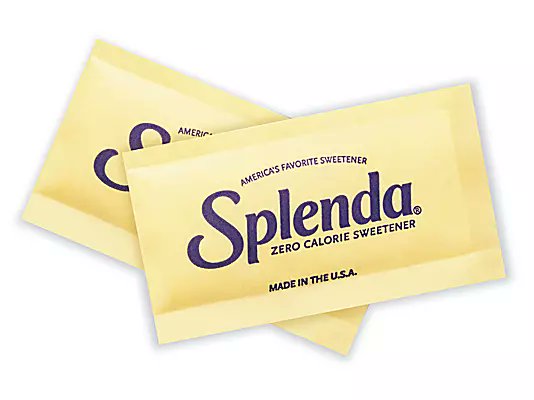
If there are 12 mg sucralose in a single packet of Splenda, then it's equivalent to ~2.5 Splenda packs per day (or 5 packs [5 * 0.012 = 0.06], every other day) for 2 weeks.
Dose used in the primary expt in adults was 7 beverages over ~2 weeks each containing:
0.06 g sucralose (0 Kcal) vs
30.38 g sucrose (120 Kcal) vs
0.06 g (sucralose and 31.83 g of the non-sweet carbohydrate maltodextrin (120Kcal)
If there are 12 mg sucralose in a single packet of Splenda, then it's equivalent to ~2.5 Splenda packs per day (or 5 packs [5 * 0.012 = 0.06], every other day) for 2 weeks.
جاري تحميل الاقتراحات...