
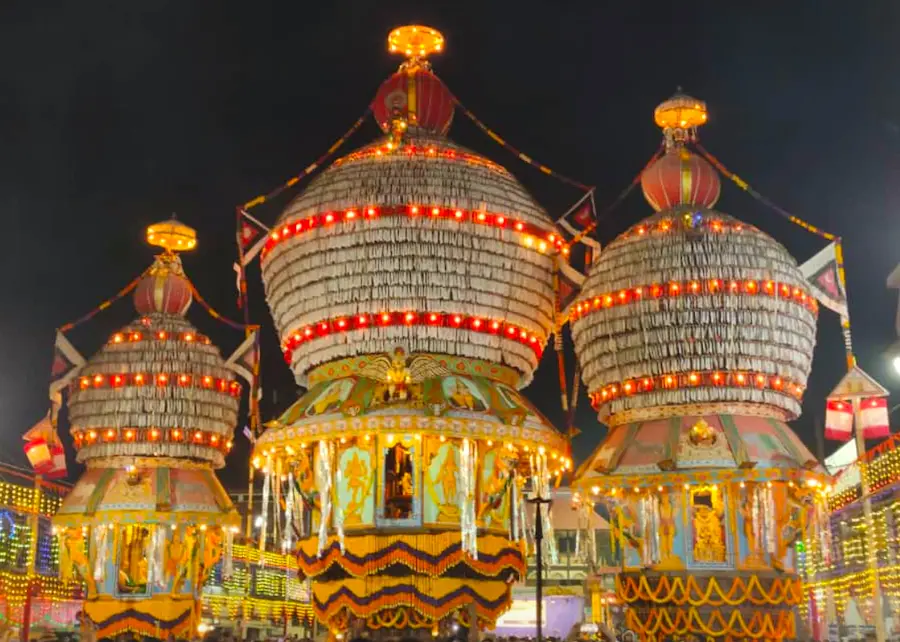
#UdupiSriKrishnaTemple
The significance of Udupi Krishna Temple is that it is one of the 7 Mukti Sthalas of Karnataka. The other 6 are Kollur, Subramanya, Kumbhashi, Kodeshwara, Sankaranarayana, and Gokarna. These places are together the Parashurama Kshetras. These Temples were
The significance of Udupi Krishna Temple is that it is one of the 7 Mukti Sthalas of Karnataka. The other 6 are Kollur, Subramanya, Kumbhashi, Kodeshwara, Sankaranarayana, and Gokarna. These places are together the Parashurama Kshetras. These Temples were
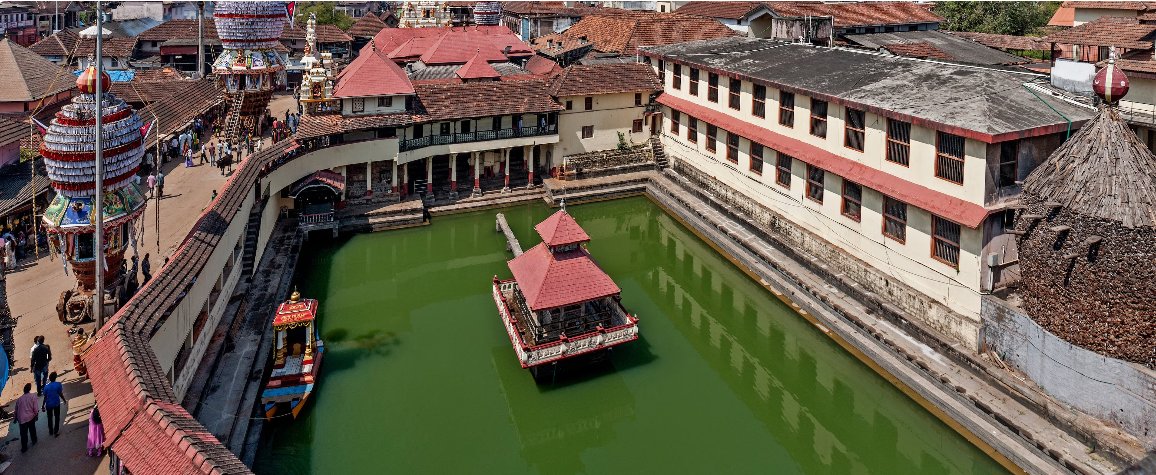
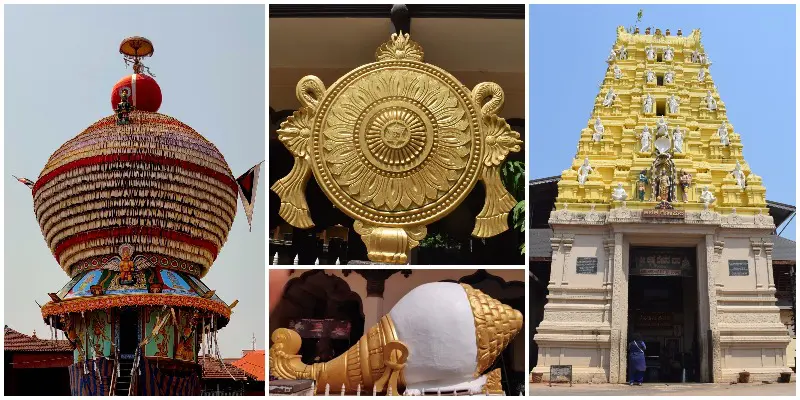
built on land of Parashurama from the sea. The temple complex is also a Matha where the priests live and perform their daily duties. Vaishnavite Saint Sri Madhwacharya, during the 13th century, constructed the temple. The actual darshan of the Lord is through a grilled window

known as the Navagraha Kitiki or as the #Kanakana_Kindi (Kanaka’s window). The window has nine squares, each dedicated to the nine planets. Also, the window is covered on all sides with silver plating with carvings depicting the ten avatars of Lord Vishnu. The main idol of Lord
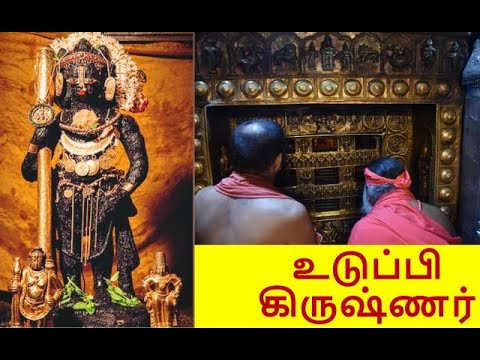
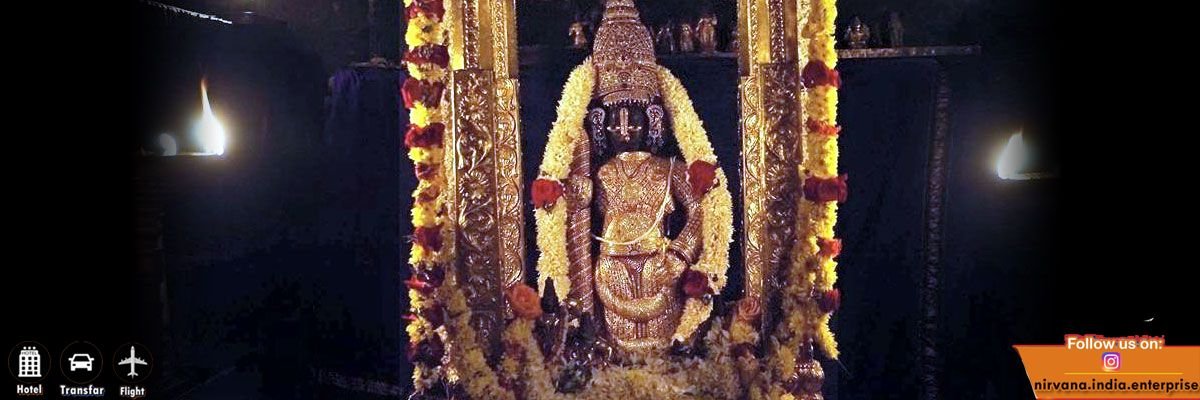
Krishna shows him as a small boy holding a churning rod on the right hand and rope on the left hand. This representation of Lord Krishna can be seen nowhere in India but Udupi. The murti of Lord Krishna is unique and vibrant. The lamps that are kept near the main idol of Lord
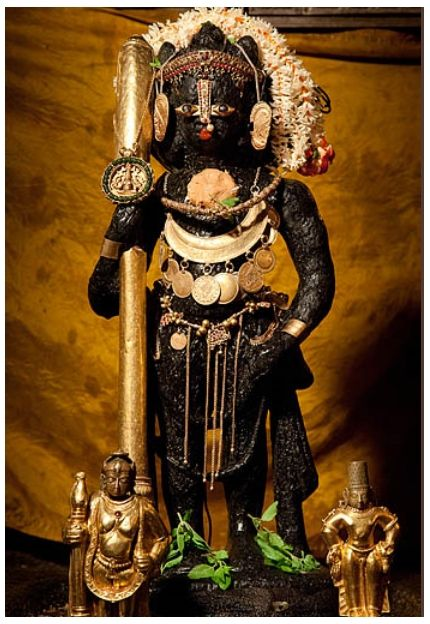
Krishna were first lighted by Sri Madhawacharya in the 13th century and are still kept burning. The idols of Lord Mukhyapradana (Anjaneya or Hanuman) and Garuda kept in the Udupi Krishna Temple in their respective shrines were brought here from Ayodhya and installed. It is
believed that Chandra did penance in Udupi to release him from the curse of Daksha Prajapati. Lord Shiva was impressed by his devotion and relieved him of the curse of Daksha. A small shrine for Goddess Bhagirathi (Ganga) is in the southwest corner of the Madhava Sarovar. When
the young Madhwacharya could not visit Badrinath, River Ganga herself flowed south to the Temple and gave him a darshan. A white stream of water emerged from the South West corner. Therefore a shrine of River Ganga was eventually built. It is not closed in the afternoon. The
holy trip to Udupi Krishna Temple is complete after visiting the Anatheshwara Temple and the Chandramouleeshwara temple before visiting the Udupi Krishna Temple. Aarti and Archana items are available in shops near the main entrance. Devotees worship the idol of Lord Krishna in
the form of a small boy. They believe that Saint Madhwacharya anointed his eight disciples to take care of the functioning of the Temple and to propagate his philosophy and studies. These 8 disciples created their own Mathams and presently rotate their responsibilities every 2
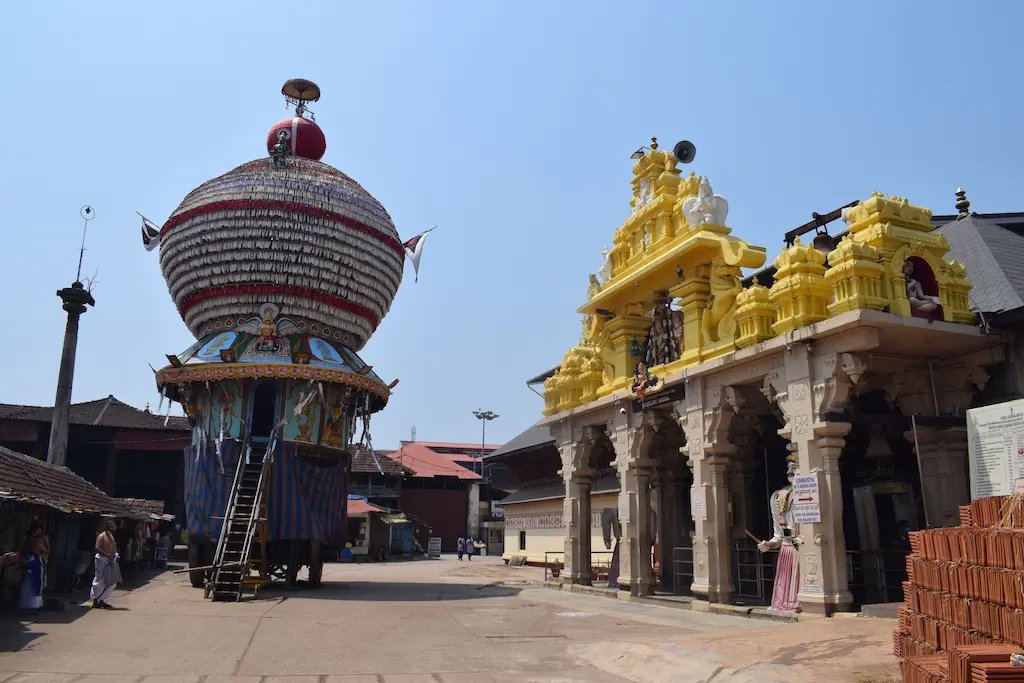
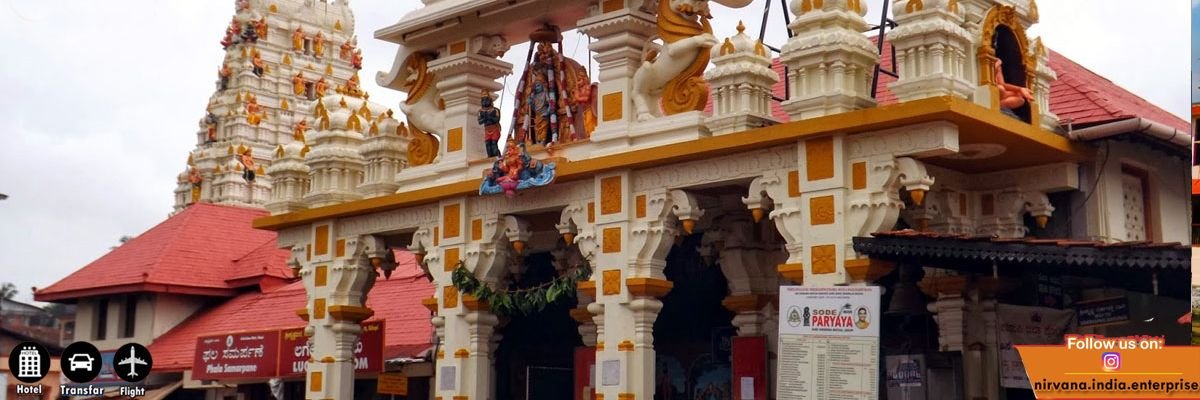
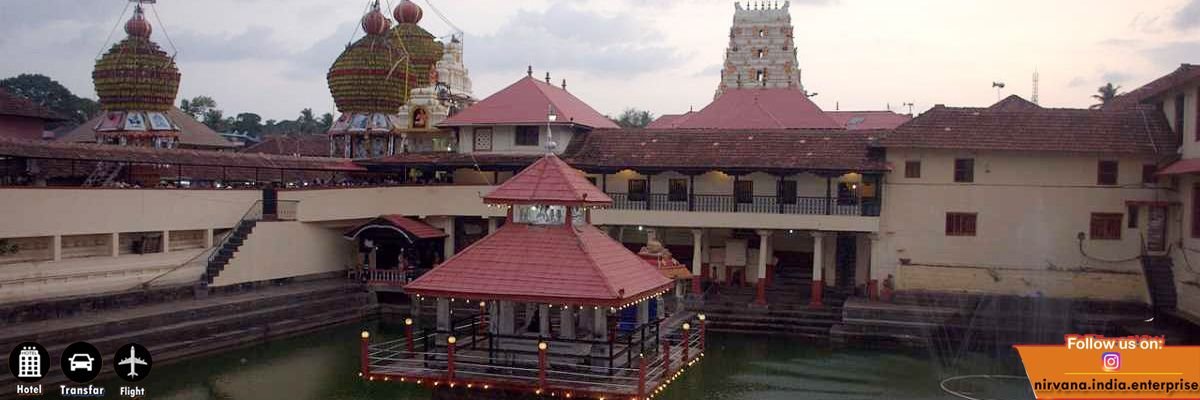
years. The 8 Mathas that run the Temple Administration are Palimar Mutt, Krishna Mutt, Kaniyour Mutt, Sode Mutt, Puttige Mutt, Admar Mutt, Shirur Mutt, and Pejawar Mutt. The Udupi Krishna Temple complex resembles an Ashram with a huge Tank or Sarovar popular as the Madhav
Sarovar. The main temple has a Mandap and the Garbhagriha. The main door of the sanctum is not open and visitors can view God only trough a meshed window that contains figures of Avatars of Lord Vishnu known as the Navagraha Kindi and the outer window known as the Kanakana Kindi
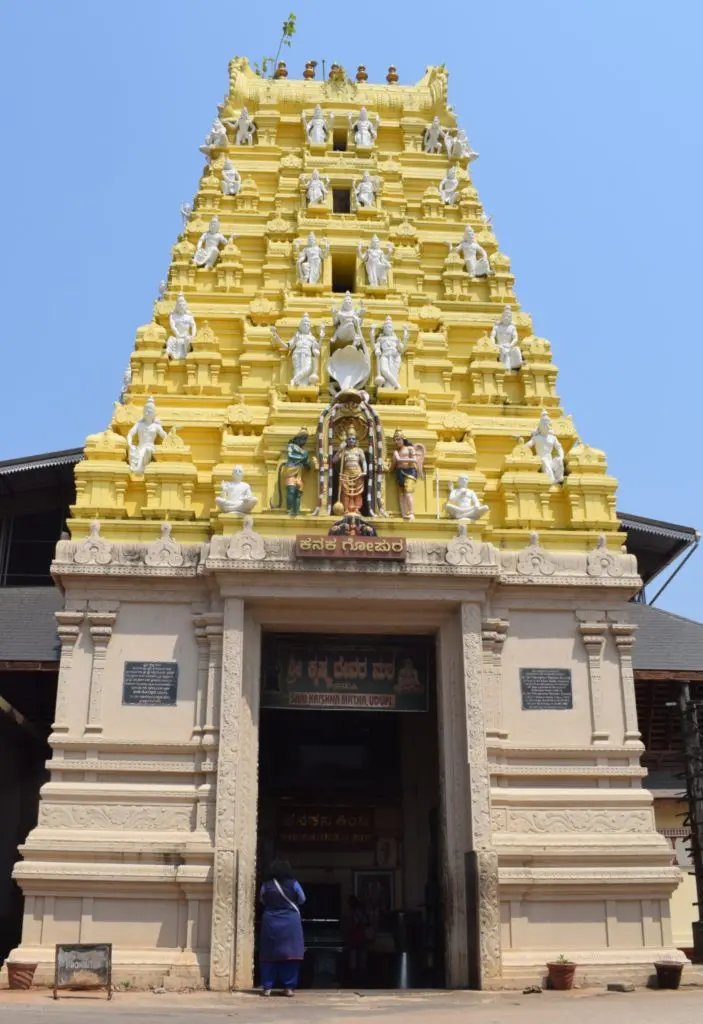
which is decorated by an arch named after the saint Kanakadasa. Smaller shrines for Lord Hanuman famous here as Lord Mukhyaprana, Garuda and to Saint Madhwacharya are also there. As per ancient scriptures, Udupi was popular as Sivalli or as Rajathapeetapuram. The place was pious
even before the construction of the Krishna Temple due to the existence of the Anantheshwara Temple and the Chandramouleeshwara Temple. As per Sri Raghuvarya Thirtha, Lord Krishna’s birth mother Devaki often complained to the Lord about being unable to witness the childhood of
her beloved son Krishna. She wished that Lord make her happy and fortunate like mother Yashoda. Lord Krishna assumed the form of a small boy and played with Devaki. When churning butter, Krishna broke the churn and ate the lumps of butter. He also snatched the churning rope from
Devaki and started playing with it. Rukmini Devi, Wife of Krishna wanted to preserve the memory and had an idol made depicting Lord Krishna holding a churning rod and rope. She worshiped the idol regularly. After Lord Krishna departed to heaven, Arjuna moved the idol to
Rukminivana and worshiped it with Chandana. With passage of time, a thick layer of clay deposited on the idol until the merchants boarded it into a vessel mistaking it for a ballast. The ship was caught in a terrible storm while sailing in the western coast of Malpe. When the
meditating Sri Madhvacharya sensed this by his 'aparoksha' or divine jnana (knowledge), he got the ship safely to the shore by waving the end of his saffron robe and quietening the storm. The pleased captain of the ship offered Sri Madhvacharya anything in the ship in return.
Sri Madhvacharya asked for the sandlewood peice containing the statue of Sri Krishna. Later as the story goes, Sri Madhvacharya took it to the lake, purified it and installed it in the matham. In the 16th century, during Sri Vaadiraja 's rule, Kanakadasa, an ardent believer of
God, came to Udupi to worship Lord Krishna. He was not allowed inside the temple since he was from a lower caste. Sri Krishna, pleased by the worship of Kanakadasa created a small hole in the back wall of the temple and turned to face the hole so that Kanakadasa could see him.
This hole came to be known as KanakanaKindi. The sight of the beautiful Muddu Krishna is available to everybody through the Kanakanakindi.
A sequence of fourteen Poojas is performed for the deity every day. They are:
Nirmalya Visarjana
Ushakala Pooja
Akshaya Patra and go Pooja
A sequence of fourteen Poojas is performed for the deity every day. They are:
Nirmalya Visarjana
Ushakala Pooja
Akshaya Patra and go Pooja
Panchamrita Pooja
Udvartana Pooja
Kalasha Pooja
Theertha Pooja
Alankara Pooja
Avasara Pooja
Maha Pooja
This Pooja is the most important Pooja of the day and the head of the Matha himself performs it at 11 AM. He offers rice, Tulasi, and sandal paste to the God amidst the
Udvartana Pooja
Kalasha Pooja
Theertha Pooja
Alankara Pooja
Avasara Pooja
Maha Pooja
This Pooja is the most important Pooja of the day and the head of the Matha himself performs it at 11 AM. He offers rice, Tulasi, and sandal paste to the God amidst the
chantings of Vishnu Ssahasranama, Krishna Stotra, and Brahma Stotra. The Naivedya articles such as pots of cooked rice, sweets, and eatables, payasam, panchakajjaya, coconuts, plantains, betel leaves etc. are placed before the God. The priest comes out of the Sanctum and closes
the door. Devotees believe that Madhwacharya himself makes the offerings to the God. After some time, the priests return and perform Aartis. Finally after firing two country Guns, signaling the occurrence of the Pooja, the people of the Town begin eating their meal.
Sri Mukhyaprana Pooja
Sri Madhwacharya Pooja
Simhasana Pooja
Pradakshina Namaskara
Ratri Pooja
Ranga Pooja
Ekantha Seva
This Pooja happens at 8:50 PM. The Utsava murti is laid down on a golden cradle. Aarti is raised and lullabies are sung. The blowing of a Conch indicates the end of rituals for the day.
Sri Madhwacharya Pooja
Simhasana Pooja
Pradakshina Namaskara
Ratri Pooja
Ranga Pooja
Ekantha Seva
This Pooja happens at 8:50 PM. The Utsava murti is laid down on a golden cradle. Aarti is raised and lullabies are sung. The blowing of a Conch indicates the end of rituals for the day.
Besides these daily rituals, as a devotee, a number of Sevas can be offered to the God.
Here’s how to reach:
Air – Nearest airport is Mangalore International Airport 59 km away from the town.
Train – Udupi is an important railway station in the Konkan Railway route. Trains are available from cities like Mumbai, Jaipur, Bengaluru, Gokarna, Murudeshwar, Kohlapur, Trivandrum and Madgaon.
Road – KSRTC operated regular buses from Bengaluru, Mangalore, and Mysore.
Sarvam Sri Krishnarpanam🙏
Here’s how to reach:
Air – Nearest airport is Mangalore International Airport 59 km away from the town.
Train – Udupi is an important railway station in the Konkan Railway route. Trains are available from cities like Mumbai, Jaipur, Bengaluru, Gokarna, Murudeshwar, Kohlapur, Trivandrum and Madgaon.
Road – KSRTC operated regular buses from Bengaluru, Mangalore, and Mysore.
Sarvam Sri Krishnarpanam🙏
جاري تحميل الاقتراحات...