
In case you want to learn Sanskrit along with some nice Subhāṣitas, bookmark this thread
1/n
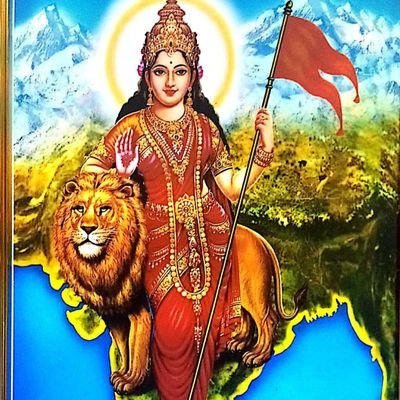
The original saying is in the picture and the word by word dissection with explanation is in the tweet
हंसः श्वेतः बकः श्वेतः , कः भेदः बक-हंसयोः? नीर-क्षीर-विवेके तु हंसः हंसः बकः बकः
Words:
हंसः = swan
श्वेतः = white
बकः = stork
कः = what?
भेदः = difference
नीरः = water
क्षीरः = milk
विवेकः = sense of rational discrimination
तु = indeed (emphatic) = Hindi तो
कः भेदः बक-हंसयोः = what (is) the difference between बक (and) हंस?
योः = between, of, among, in, on, at FOR A DUAL SET OF OBJECTS ONLY
Other examples:
1. शुभः सीता-रामयोः विवाहः
Auspicious is the wedding of Sita and Rama
2. दृढं दुर्योधन-कर्णयोः मित्रत्वं
Firm is is the friendship between Duryodhana and Karna
For singular nouns ending with अः or अम् like विवेकः , the ending ए as in विवेके signifies a locative function
विवेकः = intelligence
विवेके = in intelligence
वनं = forest
वने = in the forest
मध्यं = middle
मध्ये = in the middle
Example: Bhagavad gita 1.21
सेनयोः उभयोः मध्ये.... (उभय = both)
योः in सेनयोः and उभयोः signifies "OF" here and मध्ये signifies "in the middle"
Translation: In the middle of the two armies....
हंसः श्वेतः बकः श्वेतः = A swan is white, a stork is white
कः भेदः बक-हंसयोः = what is the difference between swan and stork?
नीर-क्षीर-विवेके तु = indeed in water-milk-discrimination
हंसः हंसः बकः बकः = a swan is a swan and a stork is a stork
Complete translation: A swan is white, a stork is white; what is the difference between swan and stork?
Indeed in water-milk-discrimination, a swan is a swan and a stork is a stork
Sentences:
1. कः भेदः काक-हंसयोः?
What is the difference between a crow and a swan?
2. दर्शने हंसः श्वेतः परन्तु काकः कृष्णः
In appearance, a swan is white but a crow is black
3. कः भेदः अर्जुन-दुर्योधनयोः ?
What is the difference between Arjuna and Duryodhana?
4. पार्वती-शिवयोः कृपा
Blessing of Shiva and Parvati
5. भगवद्-भक्तयोः सम्बन्धः
Relationship between bhagavan and Bhakta
6. धर्मक्षेत्रे कुरुक्षेत्रे....किम् अकुर्वत सञ्जय?
(Gita 1.1)
In the dharmic kurukshetra, what did they [Pandavas & Kauravas] do, Sanjaya?
7. धार्तराष्ट्राः रणे हन्युः (रणम् = battlefield) Gita 1.46
The Dhartarashtras (sons of Drtarashtra) shall kill (हन्युः) on the battlefield
रणम् = battlefield, रणे = on the battlefield
1/n
The original saying is in the picture and the word by word dissection with explanation is in the tweet
हंसः श्वेतः बकः श्वेतः , कः भेदः बक-हंसयोः? नीर-क्षीर-विवेके तु हंसः हंसः बकः बकः
Words:
हंसः = swan
श्वेतः = white
बकः = stork
कः = what?
भेदः = difference
नीरः = water
क्षीरः = milk
विवेकः = sense of rational discrimination
तु = indeed (emphatic) = Hindi तो
कः भेदः बक-हंसयोः = what (is) the difference between बक (and) हंस?
योः = between, of, among, in, on, at FOR A DUAL SET OF OBJECTS ONLY
Other examples:
1. शुभः सीता-रामयोः विवाहः
Auspicious is the wedding of Sita and Rama
2. दृढं दुर्योधन-कर्णयोः मित्रत्वं
Firm is is the friendship between Duryodhana and Karna
For singular nouns ending with अः or अम् like विवेकः , the ending ए as in विवेके signifies a locative function
विवेकः = intelligence
विवेके = in intelligence
वनं = forest
वने = in the forest
मध्यं = middle
मध्ये = in the middle
Example: Bhagavad gita 1.21
सेनयोः उभयोः मध्ये.... (उभय = both)
योः in सेनयोः and उभयोः signifies "OF" here and मध्ये signifies "in the middle"
Translation: In the middle of the two armies....
हंसः श्वेतः बकः श्वेतः = A swan is white, a stork is white
कः भेदः बक-हंसयोः = what is the difference between swan and stork?
नीर-क्षीर-विवेके तु = indeed in water-milk-discrimination
हंसः हंसः बकः बकः = a swan is a swan and a stork is a stork
Complete translation: A swan is white, a stork is white; what is the difference between swan and stork?
Indeed in water-milk-discrimination, a swan is a swan and a stork is a stork
Sentences:
1. कः भेदः काक-हंसयोः?
What is the difference between a crow and a swan?
2. दर्शने हंसः श्वेतः परन्तु काकः कृष्णः
In appearance, a swan is white but a crow is black
3. कः भेदः अर्जुन-दुर्योधनयोः ?
What is the difference between Arjuna and Duryodhana?
4. पार्वती-शिवयोः कृपा
Blessing of Shiva and Parvati
5. भगवद्-भक्तयोः सम्बन्धः
Relationship between bhagavan and Bhakta
6. धर्मक्षेत्रे कुरुक्षेत्रे....किम् अकुर्वत सञ्जय?
(Gita 1.1)
In the dharmic kurukshetra, what did they [Pandavas & Kauravas] do, Sanjaya?
7. धार्तराष्ट्राः रणे हन्युः (रणम् = battlefield) Gita 1.46
The Dhartarashtras (sons of Drtarashtra) shall kill (हन्युः) on the battlefield
रणम् = battlefield, रणे = on the battlefield

In case you want to learn Sanskrit along with some nice Subhāṣitas, bookmark this thread
2/n
The original saying is in the picture and the word by word dissection with explanation is in the tweet
Note: this is a conversation between Rama and Lakshmana but not actually there in Valmiki Ramayana, but just a shubashita to convey patriotism. Rama here says to Lakshmana why he can't stay back in Lanka
Rama to Lakshmana:
अपि स्वर्ण-मयी लङ्का न मे लक्ष्मण रोचते । जननी जन्मभूमिः च स्वर्गात् अपि गरीयसी
VOCABULARY:
अपि = even/too/also/eventhough
स्वर्णः = gold
मयी = full of
लङ्का = Lanka
न = not/is not
मे = to me (also: my)
रोचते = is attractive /causes to like
जननी = mother
जन्मभूमिः = motherland
स्वर्गः = heaven
गरीयसी = Noble, Superior
For singular nouns ending with अः or अम्, the ending आत् (e.g. स्वर्गः => स्वर्गात्) signifies meaning "FROM, THAN" , like Hindi से
स्वर्गः = heaven
स्वर्गात् = from heaven/ than heaven
Phrase by phrase translation:
अपि स्वर्ण-मयी लङ्का = However this Lanka, full of gold
न मे लक्ष्मण रोचते = doesn't look attractive to me, O Lakshmana
जननी जन्मभूमिः च = mother and motherland
स्वर्गात् अपि गरीयसी = are superior even than heaven
Translation: However Lanka is, full of gold, doesn't attract to me, O Lakshmana. Mother and motherland are superior than even heaven
Eg. GITA 2.40
....स्वल्पम् अपि अस्य धर्मस्य त्रायते महतो भयात्
Of even a little of this dharma rescues from great danger
भयः = danger, भयात् = from danger
अपि = even
स्वल्पम् = little
Eg. Mahamrityunjay mantra
उर्वारुकमिव बन्धनात्
मृत्योर्मुक्षीय मा अमृतात्
बन्धनात् = from बन्धनम् (stem)
अमृतात् = from अमृतम्
मा = not
मृत्योः = from मृतयु
मुक्षीय = free
Like a cucumber from its stem, free (me) from death (mrtyu), NOT from amrtam (deathlesness)
Examples:
1. मधुरं मे रोचते
Sweet attracts me (I like sweet)
2. फलं मे न रोचते
Fruit doesn't attract me (I don't like fruit)
3. क्षीरमयं मधुरं = sweet full of milk
4. शोभमयः विवाहः = wedding full of auspiciouness
5. स्वर्णमयी शृङ्खला = chain full of gold (golden chain)
Depending on ending of the qualified noun, it is either मया , मयी or मयं
2/n
The original saying is in the picture and the word by word dissection with explanation is in the tweet
Note: this is a conversation between Rama and Lakshmana but not actually there in Valmiki Ramayana, but just a shubashita to convey patriotism. Rama here says to Lakshmana why he can't stay back in Lanka
Rama to Lakshmana:
अपि स्वर्ण-मयी लङ्का न मे लक्ष्मण रोचते । जननी जन्मभूमिः च स्वर्गात् अपि गरीयसी
VOCABULARY:
अपि = even/too/also/eventhough
स्वर्णः = gold
मयी = full of
लङ्का = Lanka
न = not/is not
मे = to me (also: my)
रोचते = is attractive /causes to like
जननी = mother
जन्मभूमिः = motherland
स्वर्गः = heaven
गरीयसी = Noble, Superior
For singular nouns ending with अः or अम्, the ending आत् (e.g. स्वर्गः => स्वर्गात्) signifies meaning "FROM, THAN" , like Hindi से
स्वर्गः = heaven
स्वर्गात् = from heaven/ than heaven
Phrase by phrase translation:
अपि स्वर्ण-मयी लङ्का = However this Lanka, full of gold
न मे लक्ष्मण रोचते = doesn't look attractive to me, O Lakshmana
जननी जन्मभूमिः च = mother and motherland
स्वर्गात् अपि गरीयसी = are superior even than heaven
Translation: However Lanka is, full of gold, doesn't attract to me, O Lakshmana. Mother and motherland are superior than even heaven
Eg. GITA 2.40
....स्वल्पम् अपि अस्य धर्मस्य त्रायते महतो भयात्
Of even a little of this dharma rescues from great danger
भयः = danger, भयात् = from danger
अपि = even
स्वल्पम् = little
Eg. Mahamrityunjay mantra
उर्वारुकमिव बन्धनात्
मृत्योर्मुक्षीय मा अमृतात्
बन्धनात् = from बन्धनम् (stem)
अमृतात् = from अमृतम्
मा = not
मृत्योः = from मृतयु
मुक्षीय = free
Like a cucumber from its stem, free (me) from death (mrtyu), NOT from amrtam (deathlesness)
Examples:
1. मधुरं मे रोचते
Sweet attracts me (I like sweet)
2. फलं मे न रोचते
Fruit doesn't attract me (I don't like fruit)
3. क्षीरमयं मधुरं = sweet full of milk
4. शोभमयः विवाहः = wedding full of auspiciouness
5. स्वर्णमयी शृङ्खला = chain full of gold (golden chain)
Depending on ending of the qualified noun, it is either मया , मयी or मयं

In case you want to learn Sanskrit along with some nice Subhāṣitas, bookmark this thread
3/n
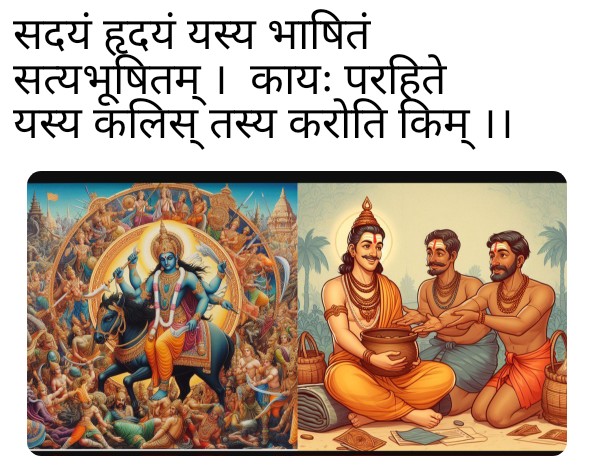
The original saying is in the picture and the word by word dissection with explanation is in the tweet.
सदयं हृदयं यस्य भाषितं सत्य-भूषितं , कायः पर-हिते , कलिः तस्य किं करोति?
सदयं = with kindness (दय)
हृदयं = heart
यस्य = of whoever
सत्य-भूषितं = truth-adorned
कायः = body
पर = others
हितः = welfare, helping, benefiting
तस्य = of him
कलिः = god of war and strife (kaliyuga is the age of war and strife)
किम् = what
करोति = does
Lessons:
1. The prefix स attached to a word as in सदयं means "with". सदयं = with दयं
2. The suffix अस्य is attached to nouns ending in अः or अम् to convey possession ('s) or to convey the sense of "OF"
Eg.
रामस्य पत्नी = Rama's wife = wife of Rama
शिवस्य पुत्रः = son of Shiva
फलस्य बीजम् = seed of the fruit
तस्य = his/of him
यस्य = of whomever/whosever
Eg. यस्य धनम् इति, तस्मै प्रत्यर्पणीयम्
Whosever money this, it should be returned to him
3. The ending तः , ता or तम् is the past participle ending in English.
Eg.
भाषितं वचनं = spoken word
पतितः नरः = fallen man
पठितः ग्रन्थः = re(a)d book
दत्तं धनं = given money
अपहृता सीता = kidnapped Sita
बद्धः सवर्करः = imprisoned Savarkar
(बध्+तः=बद्धः)
बुद्धः सिद्धार्थः = enlightened Siddhartha
(बुध्+त: = बुद्धः)
Phrase by phrase translation of Shubashita:
सदयं हृदयं = [a person whose] heart with kindness
यस्य भाषितं सत्य-भूषितं = of whom spoken [things] are truth-adorned
कायः पर-हिते = [one whose] body in other-help [helping others]
कलिः तस्य किं करोति? = of whom, what does Kali do?
Full translation:
One whose heart is with kindness, whose spoken speech is adorned with truth, whose body is [always dedicated] in helping others, what does Kali do to him? (Rhetorical Qn)
Grammar from previous lessons recapped:
हितः = welfare/help
हिते = in help / in welfare
हितात् = from help/welfare
हितयोः = of/among/on two helps
Practice from previous lessons to current lesson:
तस्य नाम किम्? What is his name?
किं करोति? What does he/she/it do?
मे किम् रोचते? What do I like?
कस्य पुस्तकम्? Whose book?
बालकः किं पठति? What does boy study?
बालकः किं करोति?What does boy do?
Note: the verb endings ति or ते (करोति, रोचते) are used for present tense verbs which are done by singular nouns.
3/n
The original saying is in the picture and the word by word dissection with explanation is in the tweet.
सदयं हृदयं यस्य भाषितं सत्य-भूषितं , कायः पर-हिते , कलिः तस्य किं करोति?
सदयं = with kindness (दय)
हृदयं = heart
यस्य = of whoever
सत्य-भूषितं = truth-adorned
कायः = body
पर = others
हितः = welfare, helping, benefiting
तस्य = of him
कलिः = god of war and strife (kaliyuga is the age of war and strife)
किम् = what
करोति = does
Lessons:
1. The prefix स attached to a word as in सदयं means "with". सदयं = with दयं
2. The suffix अस्य is attached to nouns ending in अः or अम् to convey possession ('s) or to convey the sense of "OF"
Eg.
रामस्य पत्नी = Rama's wife = wife of Rama
शिवस्य पुत्रः = son of Shiva
फलस्य बीजम् = seed of the fruit
तस्य = his/of him
यस्य = of whomever/whosever
Eg. यस्य धनम् इति, तस्मै प्रत्यर्पणीयम्
Whosever money this, it should be returned to him
3. The ending तः , ता or तम् is the past participle ending in English.
Eg.
भाषितं वचनं = spoken word
पतितः नरः = fallen man
पठितः ग्रन्थः = re(a)d book
दत्तं धनं = given money
अपहृता सीता = kidnapped Sita
बद्धः सवर्करः = imprisoned Savarkar
(बध्+तः=बद्धः)
बुद्धः सिद्धार्थः = enlightened Siddhartha
(बुध्+त: = बुद्धः)
Phrase by phrase translation of Shubashita:
सदयं हृदयं = [a person whose] heart with kindness
यस्य भाषितं सत्य-भूषितं = of whom spoken [things] are truth-adorned
कायः पर-हिते = [one whose] body in other-help [helping others]
कलिः तस्य किं करोति? = of whom, what does Kali do?
Full translation:
One whose heart is with kindness, whose spoken speech is adorned with truth, whose body is [always dedicated] in helping others, what does Kali do to him? (Rhetorical Qn)
Grammar from previous lessons recapped:
हितः = welfare/help
हिते = in help / in welfare
हितात् = from help/welfare
हितयोः = of/among/on two helps
Practice from previous lessons to current lesson:
तस्य नाम किम्? What is his name?
किं करोति? What does he/she/it do?
मे किम् रोचते? What do I like?
कस्य पुस्तकम्? Whose book?
बालकः किं पठति? What does boy study?
बालकः किं करोति?What does boy do?
Note: the verb endings ति or ते (करोति, रोचते) are used for present tense verbs which are done by singular nouns.
In case you want to learn Sanskrit along with some nice Subhāṣitas, bookmark this thread
4/n
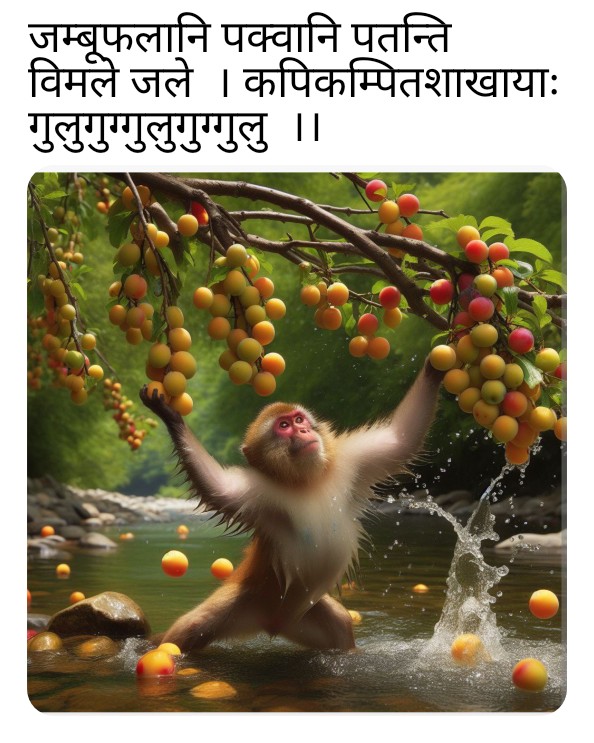
The original saying is in the picture and the word by word dissection with explanation is in the tweet.
Not all subhashitas are serious - after all, they are primarily meant for children! So some are funny too!
जम्बू-फलानि पक्वानि पतन्ति विमले जले कपि-कम्पित-शाखायाः गुलुगुग्गुलुग्गुलु!!!
Vocabulary:
जम्बू-फलम् = plum fruit
पक्वम् = ripe
पतन्ति = fall
विमलम् = without मलम् dirt = clear
जलम् = water
कपिः = monkey
कम्पितः/ता:/तं = shaken
शाखा = branch
गुलुगुग्गुलुग्गुलु = sound made when plums fall into the water (onomatopeia!!)
Lessons:
1. Plural of nouns
Singular => Plural
फलम् फलानि
जलम् जलानि
बालकः बालकाः
महिला महिलाः
This is the pattern for plurals for nouns ending in अः,आ,अं
2. The verb changes when the subject changes from singular to Plural
Eg.
फलम् पतति (fruit falls)
फलानि पतन्ति (fruits fall)
मधुरं रोचते मे (sweet attracts me = I like sweet)
मधुराणि रोचन्ते मे (sweets attract me = I like sweets)
बालकः पठति (boy reads)
बालकाः पठन्ति (boys read)
किं करोति? (What does he or she do?)
किं कुर्वन्ति? (What do they do?)
Note: some verbs like करोति alone change internally also in Plural to कुर्वन्ति
3. For nouns ending in आ, the suffix याः indicated either "from" or "of".
Eg.
सीतायाः पति: = husband of Sita
शाखायाः पतितं फलम् = fallen leaf from branch
लङ्कायाः रावणः = Ravana from/of Lanka
अयोध्यायाः रामः = Rama of/from Ayodhya
But for nouns ending in अः or अ, as we saw in previous lessons, it is अस्य that indicates "of" and आत् that indicates "from".
रामस्य पत्नी = Wife of Rama
बन्धनात् मोक्षः = relief from bondage
Recap of previous lessons:
1. तः /ता /तं = past participle
कम्प + (इ)तः = कम्पितः = shaken
Eg. भूकम्पः is literally earth-shaking and means earthquake
2. Location suffix for singular nouns ending in अः,अं
जलं = water, जले = in water
Phrase by phrase translation:
जम्बू-फलानि पक्वानि = ripe plum-fruits
पतन्ति = fall
विमले जले = in clear water
कपि-कम्पित-शाखायाः = from monkey-shaken-branch
Full translation:
Ripe plum fruits fall from a branch shaken by a monkey into a clear water- gulugulugulugulu!!!!!
4/n
The original saying is in the picture and the word by word dissection with explanation is in the tweet.
Not all subhashitas are serious - after all, they are primarily meant for children! So some are funny too!
जम्बू-फलानि पक्वानि पतन्ति विमले जले कपि-कम्पित-शाखायाः गुलुगुग्गुलुग्गुलु!!!
Vocabulary:
जम्बू-फलम् = plum fruit
पक्वम् = ripe
पतन्ति = fall
विमलम् = without मलम् dirt = clear
जलम् = water
कपिः = monkey
कम्पितः/ता:/तं = shaken
शाखा = branch
गुलुगुग्गुलुग्गुलु = sound made when plums fall into the water (onomatopeia!!)
Lessons:
1. Plural of nouns
Singular => Plural
फलम् फलानि
जलम् जलानि
बालकः बालकाः
महिला महिलाः
This is the pattern for plurals for nouns ending in अः,आ,अं
2. The verb changes when the subject changes from singular to Plural
Eg.
फलम् पतति (fruit falls)
फलानि पतन्ति (fruits fall)
मधुरं रोचते मे (sweet attracts me = I like sweet)
मधुराणि रोचन्ते मे (sweets attract me = I like sweets)
बालकः पठति (boy reads)
बालकाः पठन्ति (boys read)
किं करोति? (What does he or she do?)
किं कुर्वन्ति? (What do they do?)
Note: some verbs like करोति alone change internally also in Plural to कुर्वन्ति
3. For nouns ending in आ, the suffix याः indicated either "from" or "of".
Eg.
सीतायाः पति: = husband of Sita
शाखायाः पतितं फलम् = fallen leaf from branch
लङ्कायाः रावणः = Ravana from/of Lanka
अयोध्यायाः रामः = Rama of/from Ayodhya
But for nouns ending in अः or अ, as we saw in previous lessons, it is अस्य that indicates "of" and आत् that indicates "from".
रामस्य पत्नी = Wife of Rama
बन्धनात् मोक्षः = relief from bondage
Recap of previous lessons:
1. तः /ता /तं = past participle
कम्प + (इ)तः = कम्पितः = shaken
Eg. भूकम्पः is literally earth-shaking and means earthquake
2. Location suffix for singular nouns ending in अः,अं
जलं = water, जले = in water
Phrase by phrase translation:
जम्बू-फलानि पक्वानि = ripe plum-fruits
पतन्ति = fall
विमले जले = in clear water
कपि-कम्पित-शाखायाः = from monkey-shaken-branch
Full translation:
Ripe plum fruits fall from a branch shaken by a monkey into a clear water- gulugulugulugulu!!!!!
In case you want to learn Sanskrit along with some nice Subhāṣitas, bookmark this thread
5/n
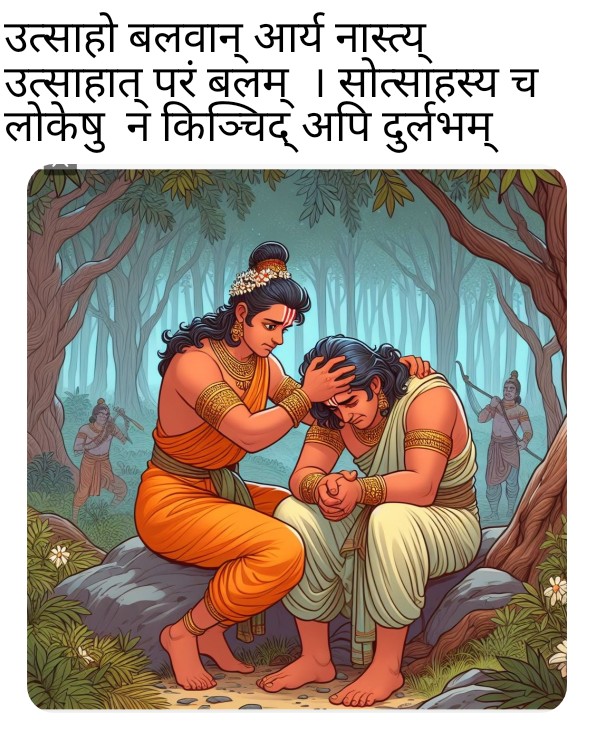
The original saying is in the picture and the word by word dissection with explanation is in the tweet.
This is from the Valmiki Ramayana as it is. Lakshmana is cheering up Rama who is dejected with the loss of his wife Sita.
उत्साहः , बलवान् आर्य , नास्ति उत्साहात् परं बलम् ; सोत्साहस्य च लोकेषु न किञ्चित् अपि दुर्लभम्.
Vocabulary: (??? denotes that the word has already been encountered in the previous lessons)
उत्साहः = courage or enthusiasm
बलवान् = powerful man
आर्य = oh, virtuous noble man
नास्ति = (there) is not
परं = above
बलं = strength
स+उत्साहः = सोत्साहः ?????
च = and, also ?????
लोकः = world
न किञ्चित् अपि = nothing at all
दुर्लभम् = hard to get / rare
Lessons:
1. We saw the singular locative suffix for अः,अं ending nouns
लोकः = world, लोके = in the world
Now in Plural, the same
लोकाः = worlds, लोकेषु = in the worlds
Example from a shloka for Devi:
या देवी सर्व-भूतेषु = she who is Devi in all living beings
भूतः = creature , भूतेषु = in creatures
2. अस्ति = is/there is
नास्ति = is not/ there isn't
Recap of previous lessons:
1. उत्साहः = enthusiasm
उत्साहात् = from/than enthusiasm
2. स prefix indicates "with"
सोत्साहः = स + उत्साहः = with enthusiasm
Phrase by phrase translation:
उत्साहः , बलवान् आर्य = Enthusiasm, O Mighty Arya
नास्ति उत्साहात् परं बलम् = there isn't above than enthusiasm
सोत्साहस्य = of a person with enthusiasm
लोकेषु = in the world
न किञ्चित् अपि दुर्लभम् = nothing at all is hard to get
Full translation:
Enthusiasm, O Arya, there isn't anything higher than enthusiasm. Of person with enthusiasm, nothing at all in this world is difficult to get
5/n
The original saying is in the picture and the word by word dissection with explanation is in the tweet.
This is from the Valmiki Ramayana as it is. Lakshmana is cheering up Rama who is dejected with the loss of his wife Sita.
उत्साहः , बलवान् आर्य , नास्ति उत्साहात् परं बलम् ; सोत्साहस्य च लोकेषु न किञ्चित् अपि दुर्लभम्.
Vocabulary: (??? denotes that the word has already been encountered in the previous lessons)
उत्साहः = courage or enthusiasm
बलवान् = powerful man
आर्य = oh, virtuous noble man
नास्ति = (there) is not
परं = above
बलं = strength
स+उत्साहः = सोत्साहः ?????
च = and, also ?????
लोकः = world
न किञ्चित् अपि = nothing at all
दुर्लभम् = hard to get / rare
Lessons:
1. We saw the singular locative suffix for अः,अं ending nouns
लोकः = world, लोके = in the world
Now in Plural, the same
लोकाः = worlds, लोकेषु = in the worlds
Example from a shloka for Devi:
या देवी सर्व-भूतेषु = she who is Devi in all living beings
भूतः = creature , भूतेषु = in creatures
2. अस्ति = is/there is
नास्ति = is not/ there isn't
Recap of previous lessons:
1. उत्साहः = enthusiasm
उत्साहात् = from/than enthusiasm
2. स prefix indicates "with"
सोत्साहः = स + उत्साहः = with enthusiasm
Phrase by phrase translation:
उत्साहः , बलवान् आर्य = Enthusiasm, O Mighty Arya
नास्ति उत्साहात् परं बलम् = there isn't above than enthusiasm
सोत्साहस्य = of a person with enthusiasm
लोकेषु = in the world
न किञ्चित् अपि दुर्लभम् = nothing at all is hard to get
Full translation:
Enthusiasm, O Arya, there isn't anything higher than enthusiasm. Of person with enthusiasm, nothing at all in this world is difficult to get
جاري تحميل الاقتراحات...