
Regarding the Safed strike, which was not officially claimed despite being the harshest on Israel in the north since the war began. This strike brings to mind the drone attack on a school in Eilat in November 2023. At that time, Israel initially announced that the origin of the attack was undetermined, later stating it was launched from Syria without specifying the responsible party.
It was notable that the Secretary-General of Hezbollah did not mention the Safed strike at all, similar to the Eilat school case. Likewise, Israel has not yet commented on the attack or its origin in detail, beyond announcing the number of casualties and the location of the attack.
Another noteworthy aspect was that Hezbollah's military media did not announce any attacks throughout the day, only publishing a video at night showing the control of an Israeli drone.
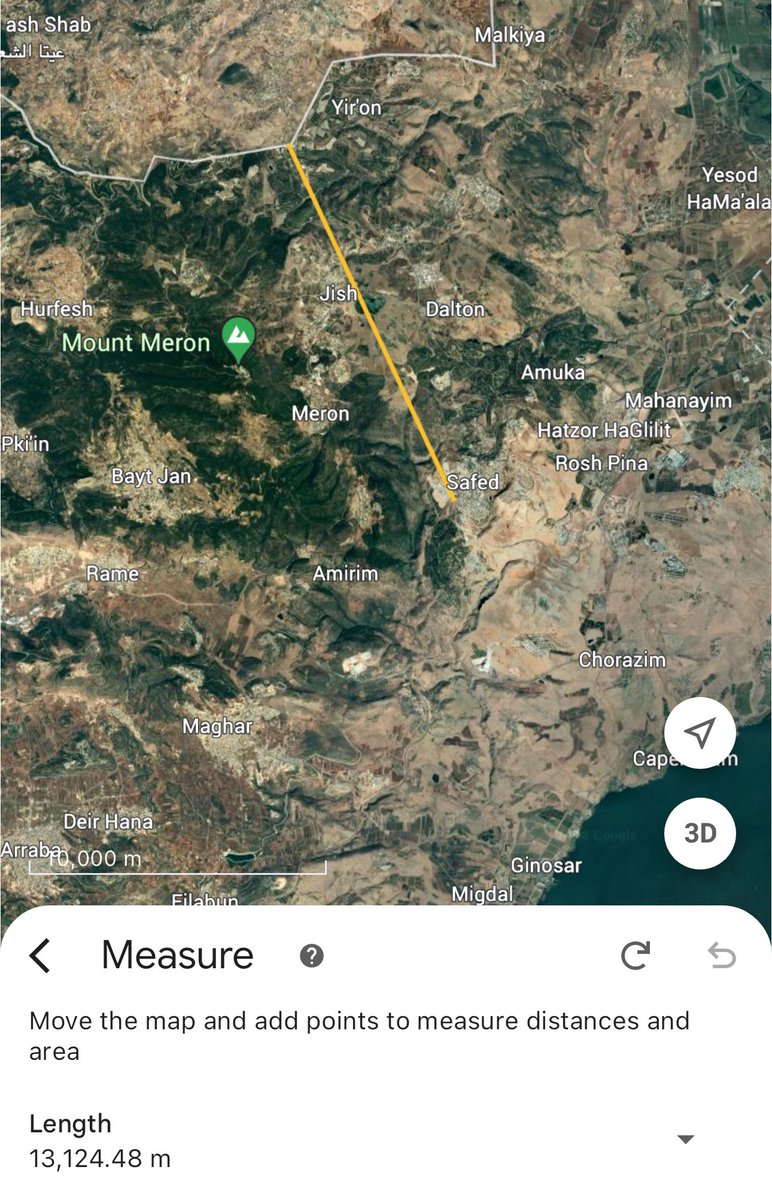
By measuring the distance, the depth of the target from the Lebanese border was approximately fifteen kilometers or slightly less, coinciding with the launch of several Katyusha rockets to distract the Iron Dome, and from the Syrian border about 40 kilometers. In both cases, targeting was feasible.
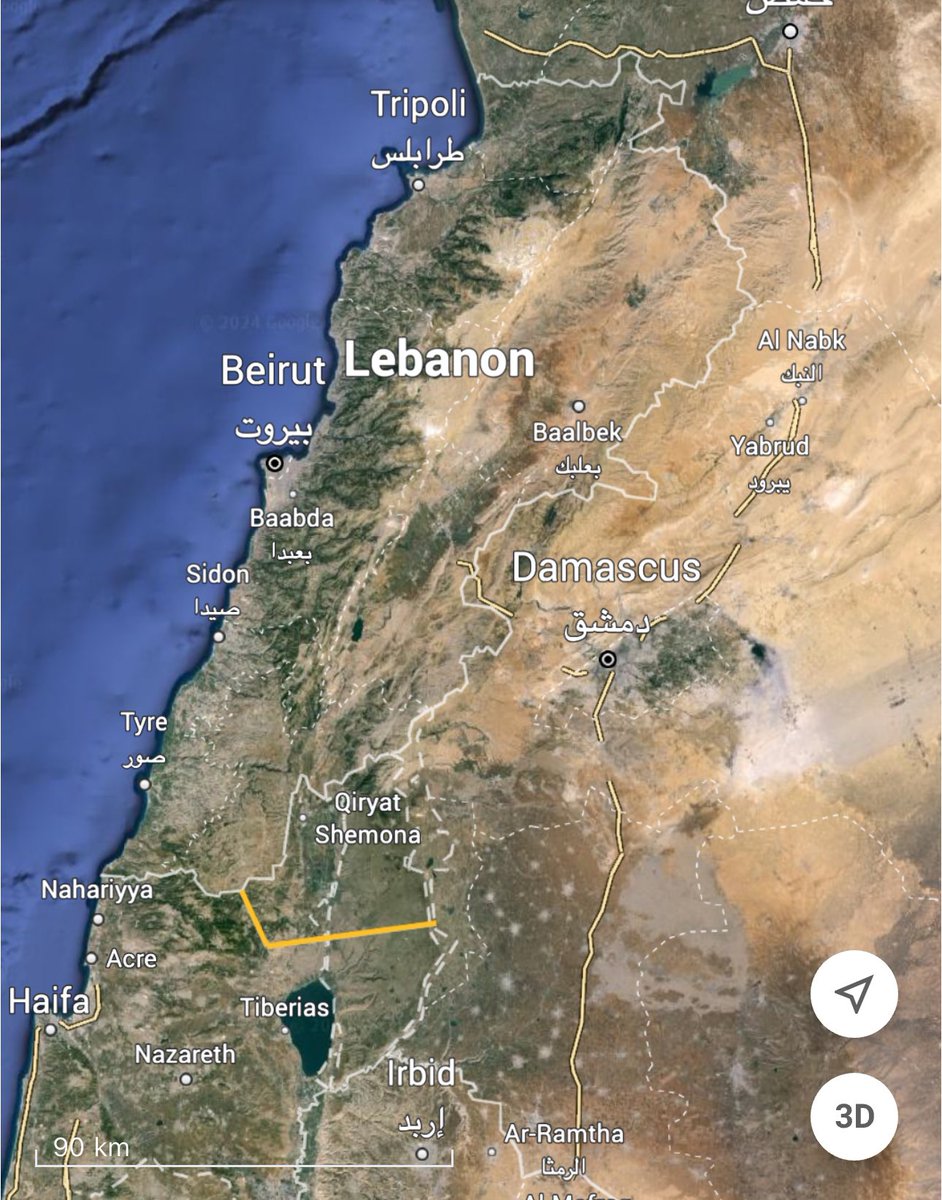
We come to the ambiguity in claiming responsibility amidst the open battle from the Lebanese border and the repeated rocket launches from the Syrian front, which Nasrallah mentioned today in his speech while listing the support fronts, potentially signaling (personal analysis). But why the ambiguity here?
The reason for this ambiguity might be Hezbollah's desire to keep the Syrian front in a grey area of pressure, first, to avoid embarrassing Damascus, or because the party responsible for the launch from the Syrian front does not wish to disclose its operation.
Excluding the Iraq hypothesis primarily due to geographic distance and the range of Katyusha rockets, which do not match. Also, coordinating simultaneous launches from Iraq and other fronts to distract the Iron Dome would be challenging.
Weeks ago, Israel announced the assassination of a Hamas official in Syria, Hassan Akasheh, accused of being behind rocket launches towards Israel from Syria. Hamas had not previously claimed responsibility for any such launches from there.
Israel also assassinated two Revolutionary Guard officers in Syria, Mohammad Ali Attaei Shorcheh and Baneh Taghi Zadeh, and later, a senior Quds Force commander, Razi Mousavi, followed by the Quds Force intelligence official in Syria, Hojatollah Omidvar, along with Ali Agazadeh, Hussein Mohammadi, and Saeed Karimi. In the case of Mohammad Ali Attaei Shorcheh and Baneh Taghi Zadeh, sources pointed to their role in providing technical and operational support.
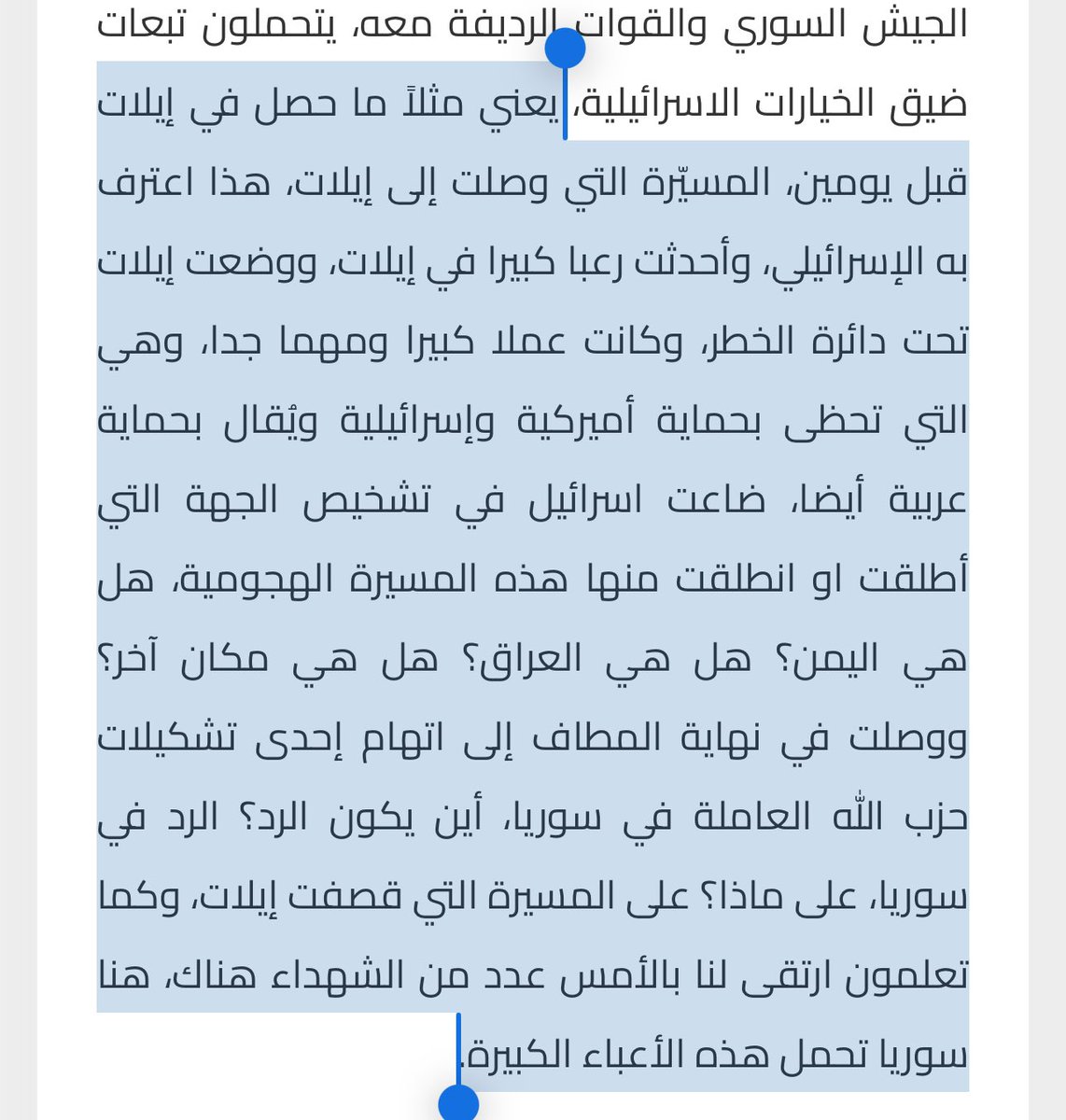
Returning to the Eilat strike, referencing a speech by Nasrallah on 11/11/2023, "Israel was lost in identifying who launched or where this offensive drone originated from, was it Yemen? Iraq? Somewhere else? Eventually, accusing one of Hezbollah's formations operating in Syria. Where should the response be? In Syria, for what? For the drone that bombed Eilat, and as you know, we had several martyrs there yesterday."
This scene can be summarized as a highly complex confrontation with hidden elements from other fronts. On one side, Israel conducts operations without announcement, and the opposing side sometimes chooses to keep its response ambiguous, understanding that the battle is long and requires a wide margin for maneuver.
جاري تحميل الاقتراحات...