

RWA is definitely destined to become one of the biggest narratives in the market's history.
But to achieve 100x success, must realize the power of Ecosystem.
Mega thread about important sectors, projects and catalysts for 2024.
0/50 🧵⬇️
But to achieve 100x success, must realize the power of Ecosystem.
Mega thread about important sectors, projects and catalysts for 2024.
0/50 🧵⬇️

Before we start, I'd like to ask you a favor.
I've spent a significant amount of time into this research and sincerely appreciate any engagement you've had with this thread!
Add to your bookmarks, replie or just put a like if you can.
I've spent a significant amount of time into this research and sincerely appreciate any engagement you've had with this thread!
Add to your bookmarks, replie or just put a like if you can.
Real World Asset Tokenization is set to revolutionize the financing, trading, and management of assets.
Conservative estimates indicate that by 2030, the total market value of tokenized assets will surpass $10 trillion.
Conservative estimates indicate that by 2030, the total market value of tokenized assets will surpass $10 trillion.
Tokenization is not a concept of the future, it's happening now.
It's creating a financial ecosystem where digital tokens represent tangible assets.
➜ Assets are more accessible than ever
➜ Accessibility extends to the public, not just privileged or institutional investors
It's creating a financial ecosystem where digital tokens represent tangible assets.
➜ Assets are more accessible than ever
➜ Accessibility extends to the public, not just privileged or institutional investors
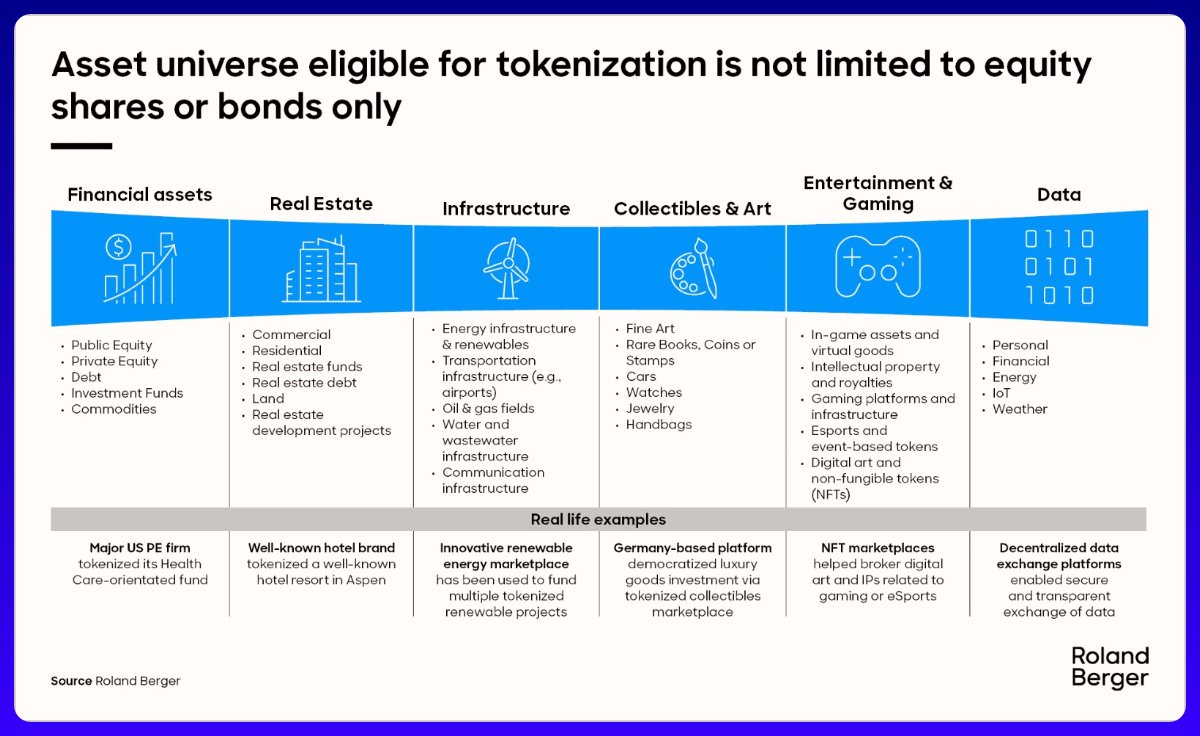
Today, I will explore the main RWA sector's categories, discuss why RWA is expected to be in high demand, and highlight key projects within each category:
◦ Private Credit
◦ Treasuries
◦ Real Estate
◦ L1 Chains
◦ Commodities
◦ Stablecoins
◦ Insurance
◦ Carbon Credit
◦ Private Credit
◦ Treasuries
◦ Real Estate
◦ L1 Chains
◦ Commodities
◦ Stablecoins
◦ Insurance
◦ Carbon Credit
◢ Private Credits/Markets
Private credit loans, which are offered by non-bank institutions, offer borrowers flexibility and provide lenders with interest rate protection.
As of November 2023, the global private credit loan market is valued at $1.5 trillion.
Private credit loans, which are offered by non-bank institutions, offer borrowers flexibility and provide lenders with interest rate protection.
As of November 2023, the global private credit loan market is valued at $1.5 trillion.

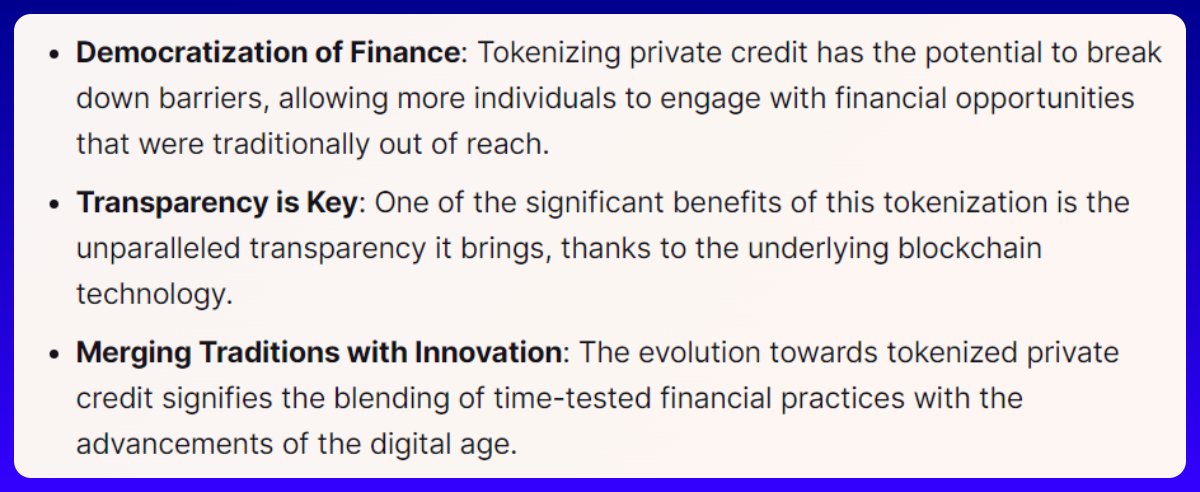
Key takeaways of Private Credits tokenizations are very simple:
• Democratization of finance
• Transparency is key
• Merging traditions with innovation
• Democratization of finance
• Transparency is key
• Merging traditions with innovation
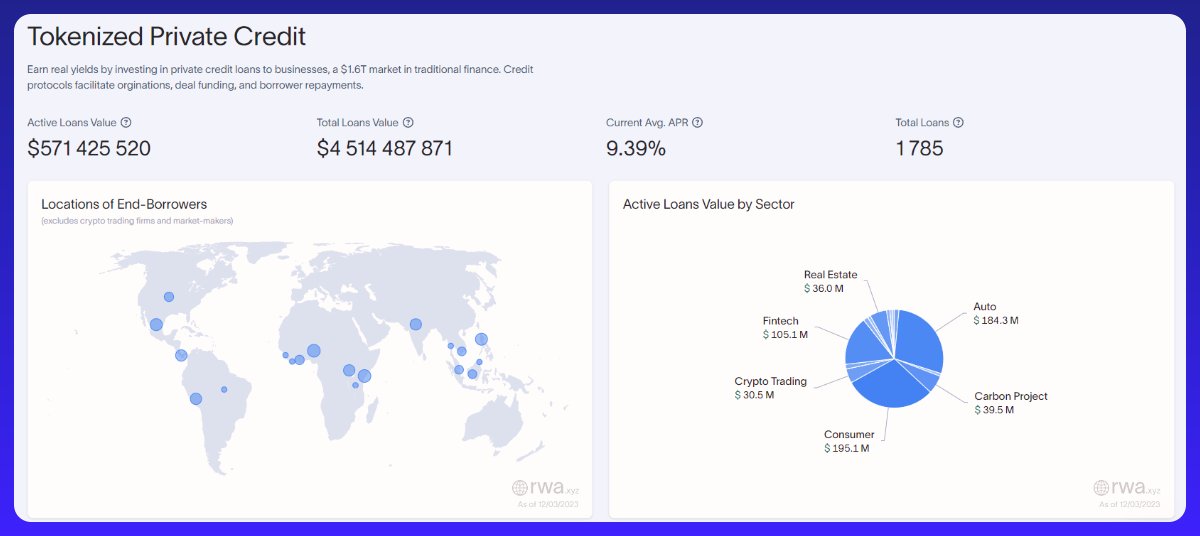
Total loans value currently stands at $4.5 billion, with $571 million issued in loans.
Since November 2021, the loan amount has increased by over 6,700%, starting from $8.5 million.
Since November 2021, the loan amount has increased by over 6,700%, starting from $8.5 million.
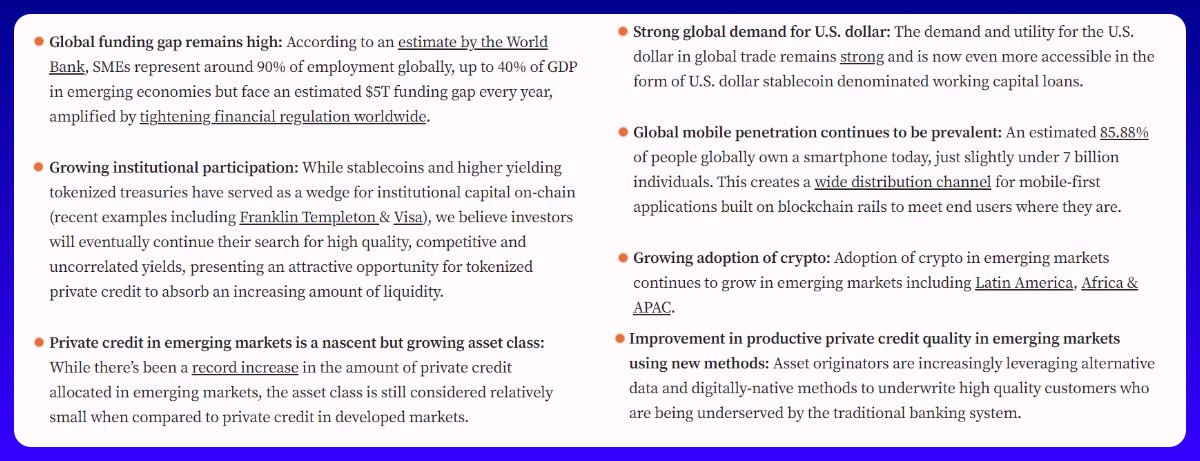
The global catalysts driving the growth of the Tokenized Private Credit sector are becoming increasingly evident with each passing month.
➜ Here is a list highlighting just a few of these catalysts:
➜ Here is a list highlighting just a few of these catalysts:
Now, I would like to highlight the projects that I believe are crucial in this category.
However, it is worth noting that some of these projects also have a significant impact in other RWA categories, which makes them even more intriguing ⇩
However, it is worth noting that some of these projects also have a significant impact in other RWA categories, which makes them even more intriguing ⇩
➜ $CFG - @centrifuge - On-chain credit ecosystem designed to provide a venue for SME owners to stake their assets on chain in exchange for liquidity.
➜ $CPOOL - @ClearpoolFin - DeFi lending protocol that provides pure credit loans to institutions.
➜ $CPOOL - @ClearpoolFin - DeFi lending protocol that provides pure credit loans to institutions.
➜ $MPL - @maplefinance - Corporate credit market built on ETH and SOL. Users can lend tokens to institutions, which repay with interest.
➜ $TRADE - @Polytrade_fin - Trading finance platform designed to provide seamless lending to businesses across multiple industries.
➜ $TRADE - @Polytrade_fin - Trading finance platform designed to provide seamless lending to businesses across multiple industries.
◢ Tokenized Treasuries/ETF
U.S. Treasuries are debt securities backed by the government.
The market for tokenized U.S. Treasuries has grown almost 700% to reach $784M, reflecting the intensifying race of RWA.
U.S. Treasuries are debt securities backed by the government.
The market for tokenized U.S. Treasuries has grown almost 700% to reach $784M, reflecting the intensifying race of RWA.

The tokenization of Treasuries has spearheaded the effort to bring real-world assets onto blockchain rails.
Investors are seeking these offerings to capture higher returns, especially as global interest rates rise while decentralized finance yields decline.
Investors are seeking these offerings to capture higher returns, especially as global interest rates rise while decentralized finance yields decline.
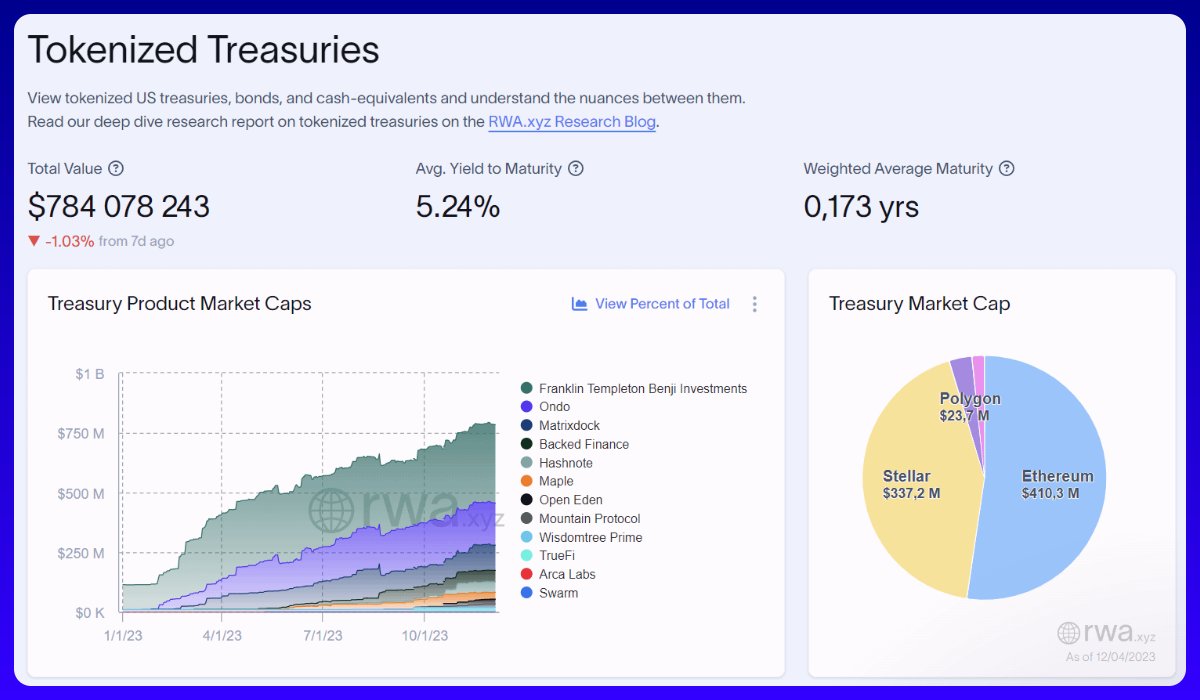
US government bonds are considered a risk-free rate. If you can earn 5% instead of 0%, why not?
Stables can be unstable, so tokenized Treasuries are a good hedge against de-peg risk.
Also, @jpmorgan tokenize US Treasury and include it in its strategy, which is a good driver.
Stables can be unstable, so tokenized Treasuries are a good hedge against de-peg risk.
Also, @jpmorgan tokenize US Treasury and include it in its strategy, which is a good driver.

These projects cover various categories, but their wide range of applications amplifies their advantages.
➜ $DEXTF - @DomaniProtocol - asset management protocol for minting, trading, redeeming, and providing liquidity on non-custodial oracle-less tokenized portfolios.
➜ $DEXTF - @DomaniProtocol - asset management protocol for minting, trading, redeeming, and providing liquidity on non-custodial oracle-less tokenized portfolios.
➜ $SMT - @SwarmMarkets - DeFi infrastructure that provides relevant compliance services for RWA token issuance, liquidity provision and trading
➜ $IXS - @IxSwap - Platform where users can trade and invest in SEC-registered security tokens.
➜ $IXS - @IxSwap - Platform where users can trade and invest in SEC-registered security tokens.
➜ $NXRA - @allianceblock - Building infrastructure for decentralized tokenized markets.
➜ $RVST - @RevestFinance - Protocol for the packaging, transfer, and storage of fungible ERC-20 tokens as non-fungible tokenized financial instruments.
➜ $RVST - @RevestFinance - Protocol for the packaging, transfer, and storage of fungible ERC-20 tokens as non-fungible tokenized financial instruments.
➜ $ACQ - @Acquire_Fi - M&A marketplace, that produces income from fractional equity of cryptocurrency companies, traditional businesses, and real-world assets.
➜ $BOSON - @BosonProtocol - Platform where users can transfer and trade of any physical thing as a redeemable NFT.
➜ $BOSON - @BosonProtocol - Platform where users can transfer and trade of any physical thing as a redeemable NFT.
◢ Real Estate
Tokenizing properties allows people to invest in real estate globally through fractional ownership of assets like housing units or commercial buildings.
Real Estate is the largest asset class globally valued at $613 trillion in 2023.
Tokenizing properties allows people to invest in real estate globally through fractional ownership of assets like housing units or commercial buildings.
Real Estate is the largest asset class globally valued at $613 trillion in 2023.

Key advantage: increased accessibility for small investors.
Tokenization improves liquidity in real estate by enabling small investors to easily trade fractional shares of properties, addressing the traditionally illiquid nature of the market.
Tokenization improves liquidity in real estate by enabling small investors to easily trade fractional shares of properties, addressing the traditionally illiquid nature of the market.
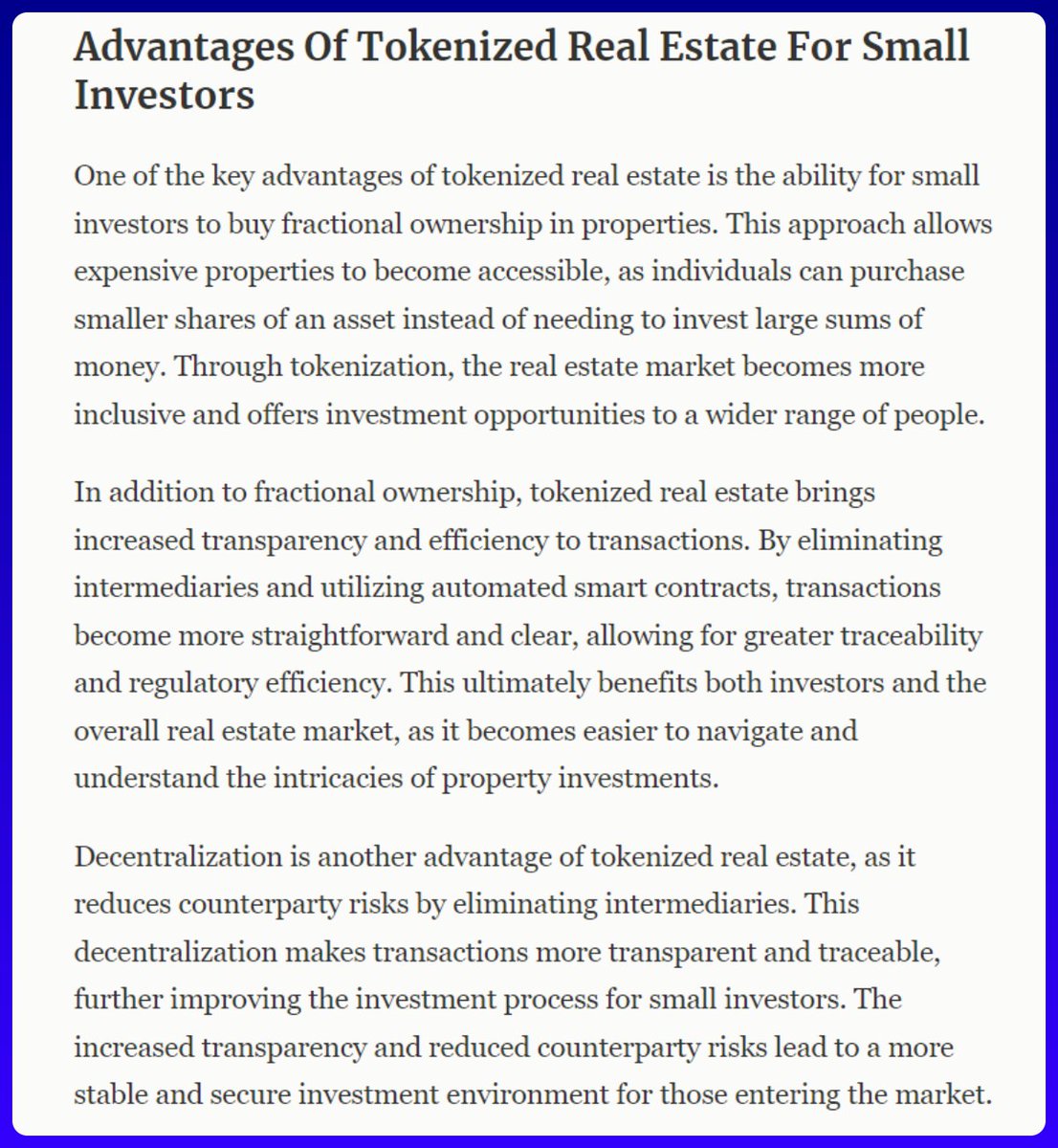
However, it's important to note that the tokenized real estate faces obstacles like an uncertain regulatory framework, security concerns and centralized reporting needs.
This makes it a higher-risk sector due to infrastructure requirements, but it's likely just a matter of time.
This makes it a higher-risk sector due to infrastructure requirements, but it's likely just a matter of time.
➜ $PROPC - @PropChainGlobal - All-inclusive blockchain powered real estate investing marketplace.
➜ $BST - @blocksquare_io - Digitizes real estate value, launches investment platforms, and connects people to online tokenized real estate deals.
➜ $BST - @blocksquare_io - Digitizes real estate value, launches investment platforms, and connects people to online tokenized real estate deals.
➜ $PROPS - @PropbaseApp - Real estate tokenization platform that utilizes the power of the Aptos blockchain
➜ @BinaryxPlatform - Marketplace of tokenized real estate that provides property owners with a system of oracles that allows them to tokenize and retail their property.
➜ @BinaryxPlatform - Marketplace of tokenized real estate that provides property owners with a system of oracles that allows them to tokenize and retail their property.
◢ Layer1 Blockchains
There are multiple blockchains designed specifically for regulated assets. These chains streamline outdated processes and address challenges related to governance, identity, compliance, confidentiality, and settlement.
There are multiple blockchains designed specifically for regulated assets. These chains streamline outdated processes and address challenges related to governance, identity, compliance, confidentiality, and settlement.

Moreover, RWA tokenization-oriented chains offer the most comprehensive and advanced tools for this specific purpose.
Consequently, institutional investors can utilize these chains for any tokenization objective.
Here are some of them:
Consequently, institutional investors can utilize these chains for any tokenization objective.
Here are some of them:
➜ $RIO @realio_network - an end-to-end digital asset issuance and P2P trading platform focused on real estate private equity investments.
➜ $POLYX - @PolymeshNetwork - Institutional-grade L1 tailored for regulated assets, such as security-based tokens.
➜ $POLYX - @PolymeshNetwork - Institutional-grade L1 tailored for regulated assets, such as security-based tokens.
◢ Commodities and RWA backed stablecoins
Projects in this area of the RWA market are issuers of stablecoins backed by physical precious metals.
Projects in this area of the RWA market are issuers of stablecoins backed by physical precious metals.

In simple terms, what we are already using is stablecoins or digital gold.
This sector enables the use of blockchain technology to store and invest in real-world assets. This is a significant advantage for institutions, banks, and large investors.
This sector enables the use of blockchain technology to store and invest in real-world assets. This is a significant advantage for institutions, banks, and large investors.

➜ @Paxos - Regulated blockchain infrastructure company building transparent and transformative financial solutions.
➜ @tethergold - Emitent of $XAUt - a digital token backed by physical gold.
➜ @cache_gold - Provides unparalleled infrastructure to digitalize physical assets.
➜ @tethergold - Emitent of $XAUt - a digital token backed by physical gold.
➜ @cache_gold - Provides unparalleled infrastructure to digitalize physical assets.
You're about to encounter a thread interruption due to features on X.
To continue reading and discover a few more sectors and projects with great potential, click the "𝐒𝐡𝐨𝐰 𝐫𝐞𝐩𝐥𝐢𝐞𝐬" button.
To continue reading and discover a few more sectors and projects with great potential, click the "𝐒𝐡𝐨𝐰 𝐫𝐞𝐩𝐥𝐢𝐞𝐬" button.

➜ @VROstablecoin - Gold-backed ERC20 stablecoin. Each $VRO is backed by one gram of gold.
➜ @KinesisMonetary - Monetary system making physical gold and silver globally accessible as $KAU and $KAG.
➜ @KinesisMonetary - Monetary system making physical gold and silver globally accessible as $KAU and $KAG.
➜ $agEUR - @angleprotocol -a decentralized protocol developed EUR stablecoin.
➜ $FRAX - @fraxfinance - decentralized stablecoins and DeFi infrastructure. Frax ecosystem is a self-sufficient DeFi economy.
➜ $FRAX - @fraxfinance - decentralized stablecoins and DeFi infrastructure. Frax ecosystem is a self-sufficient DeFi economy.
◢ Carbon Credits
Carbon credits refer to the amount of carbon dioxide emissions reduced or neutralized by a company through the organization’s Verified Carbon Standard (VCS).
Carbon credits refer to the amount of carbon dioxide emissions reduced or neutralized by a company through the organization’s Verified Carbon Standard (VCS).

Tokenization of carbon credits transfers their information and functionality onto a blockchain, represented as tokens.
Alternatively, carbon credits can be issued directly on the blockchain, with all attributes visible. Each carbon credit corresponds to one carbon token.
Alternatively, carbon credits can be issued directly on the blockchain, with all attributes visible. Each carbon credit corresponds to one carbon token.
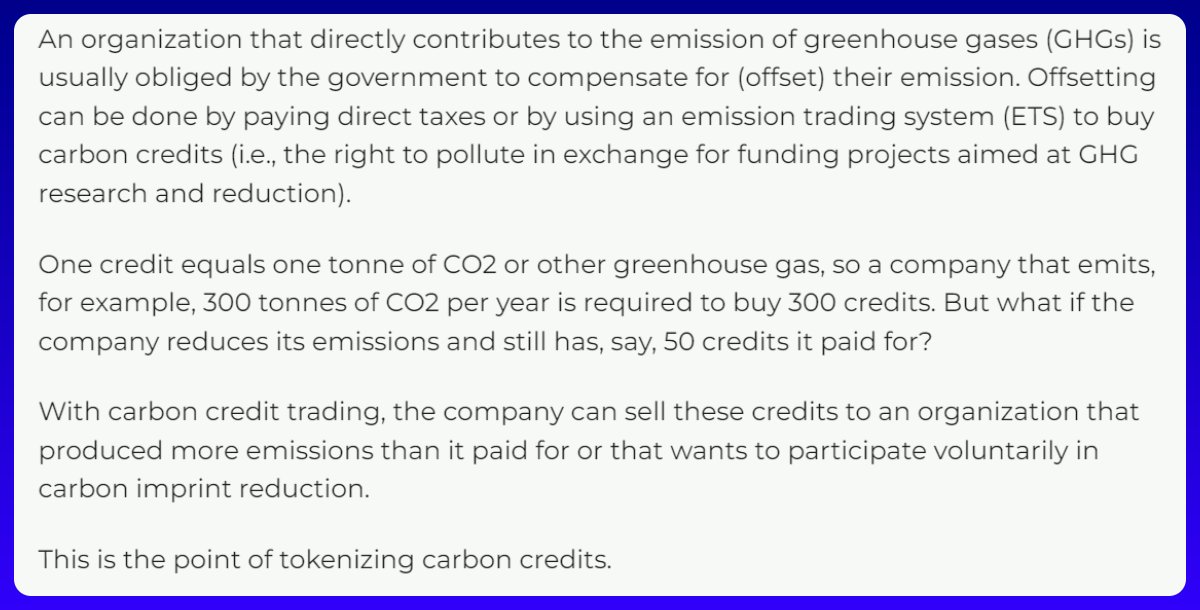
Carbon credits as tokenized assets in crypto trading bring liquidity to carbon markets, accelerating net-zero goals.
Blockchains are ideal for supporting the carbon credit market by linking information to a blockchain.
Advantages of blockchain ledger over traditional trading:
Blockchains are ideal for supporting the carbon credit market by linking information to a blockchain.
Advantages of blockchain ledger over traditional trading:
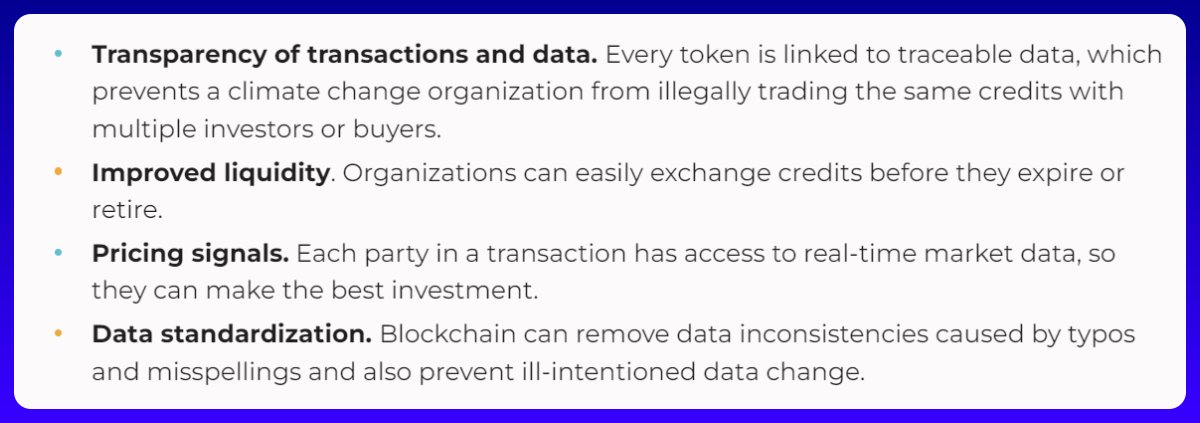
As you may have already guessed, this is one of the most promising sectors due to the increasing attention being given to the environment each year.
Blockchain technology, in turn, has the potential to enhance the transparency of all data.
Some projects ⇩
Blockchain technology, in turn, has the potential to enhance the transparency of all data.
Some projects ⇩
➜ $BCT - @ToucanProtocol: Converts carbon credits into tokens for decentralized trading, promoting carbon neutrality.
➜ @weareflowcarbon: Integrates the carbon credit lifecycle, offering strategies from origination to portfolio management.
➜ @weareflowcarbon: Integrates the carbon credit lifecycle, offering strategies from origination to portfolio management.
◢ Insurance
Tokenization of insurance policies allowing policyholders to transfer ownership of and manage their policies more quickly.
It enhances security, transparency, and trust between policyholders and insurers by reducing fraud in insurance transactions.
Tokenization of insurance policies allowing policyholders to transfer ownership of and manage their policies more quickly.
It enhances security, transparency, and trust between policyholders and insurers by reducing fraud in insurance transactions.

Insurance tokenization has yet to gain widespread popularity, but security is a crucial aspect to consider.
To illustrate the benefits of insurance tokenization, here's a straightforward example of the risks it can help mitigate:
To illustrate the benefits of insurance tokenization, here's a straightforward example of the risks it can help mitigate:
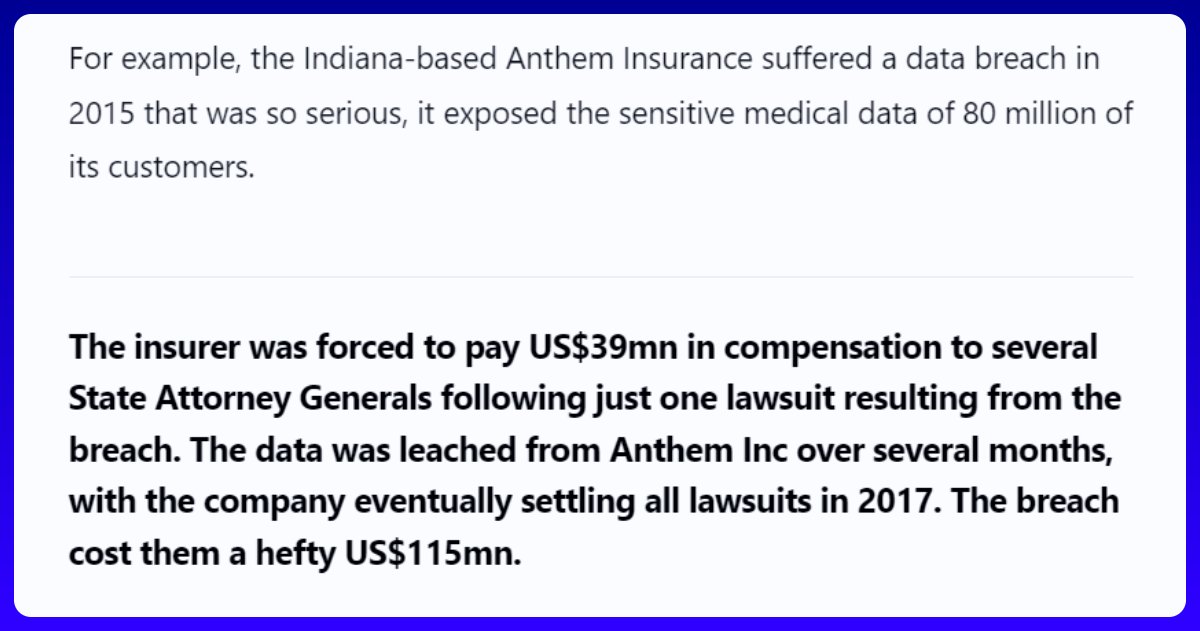
Although blockchain is not completely hack-proof, blockchain is currently the most secure method of storing information.
Blockchain registries are secure and time-stamped, allowing transparent tracking of actions. Possible tampering can be proven.
Blockchain registries are secure and time-stamped, allowing transparent tracking of actions. Possible tampering can be proven.
Here are some projects:
➜ $KLIMA - @KlimaDAO - Built Digital Carbon Market, which enables transparent and efficient climate markets of the future.
➜ $CBY - @Carbify_io - By bringing carbon credits on-chain, they leverage gamification to motivate and inspire eco-living.
➜ $KLIMA - @KlimaDAO - Built Digital Carbon Market, which enables transparent and efficient climate markets of the future.
➜ $CBY - @Carbify_io - By bringing carbon credits on-chain, they leverage gamification to motivate and inspire eco-living.
◢ @chainlink - $LINK
Chainlink deserves special recognition as one of the most crucial components of RWA infrastructure.
After all, tokenized RWAs require more than just an issued token to properly represent the underlying asset.
Chainlink deserves special recognition as one of the most crucial components of RWA infrastructure.
After all, tokenized RWAs require more than just an issued token to properly represent the underlying asset.
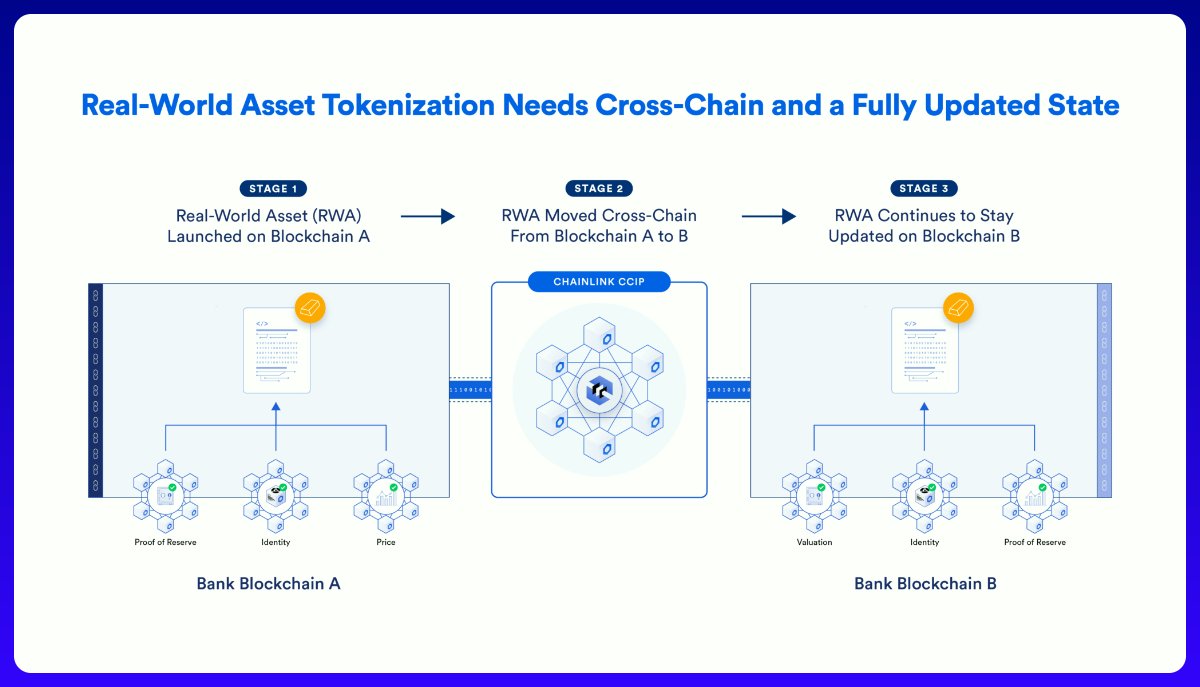
One of the main advantages of digital assets is that they are programmable containers of information that can be augmented with all the information and logic that banks, protocols, and customers need to interact with the asset.
Chainlink services are the industry standard for enriching RWAs with offchain data.
➜ Services include:
➜ Services include:
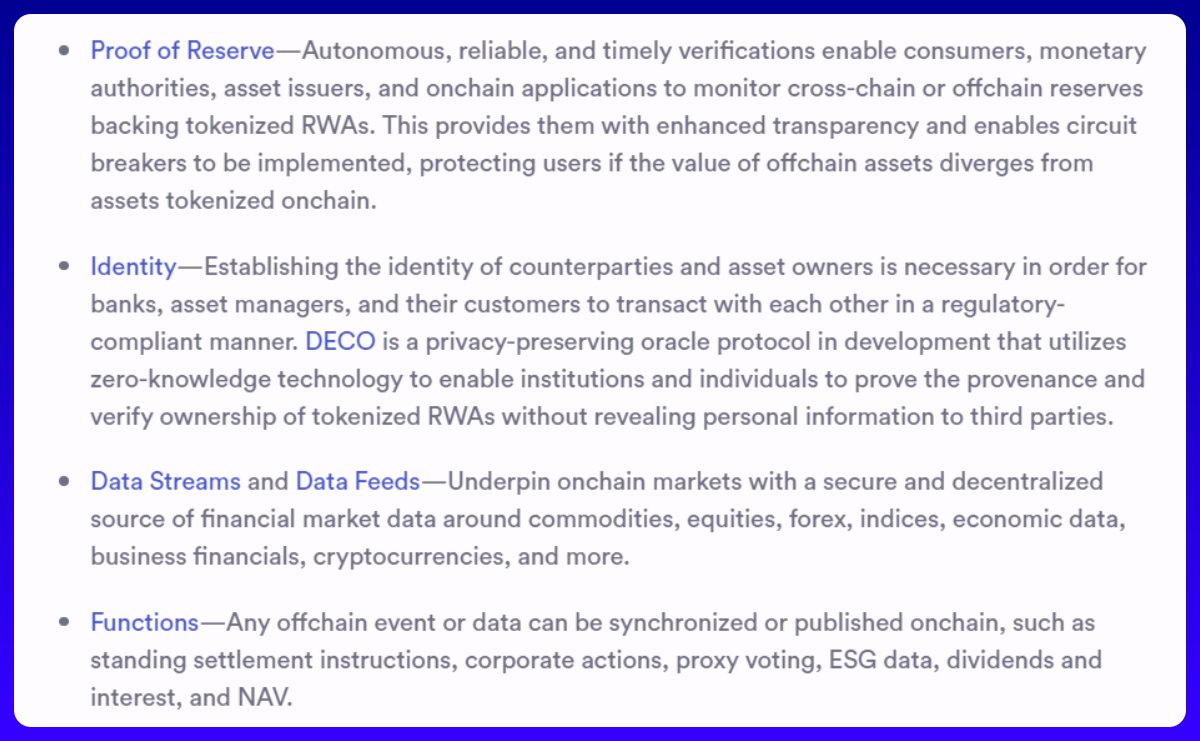
Chainlink is already the leading platform for tokenized RWAs, powering TrueUSD, Pax Gold and more.
Swift and DTCC are exploring how CCIP can connect to their systems, making it a universal blockchain interoperability standard for tokenized RWAs.
Swift and DTCC are exploring how CCIP can connect to their systems, making it a universal blockchain interoperability standard for tokenized RWAs.
◢ @avax - $AVAX
Avalanche deserves a special mention for its current focus on building a robust RWA ecosystem.
Recognizing the potential in this industry, AVAX has spent the past year forging partnerships and actively supporting developments.
Avalanche deserves a special mention for its current focus on building a robust RWA ecosystem.
Recognizing the potential in this industry, AVAX has spent the past year forging partnerships and actively supporting developments.
Avalanche Vista, a fund boasting $50 million. With Its primary mission To fuel tokenization on the blockchain.
This substantial fund will be strategically allocated towards investments in various tokenized sectors, such as equity, credit, real estate, and commodities.
This substantial fund will be strategically allocated towards investments in various tokenized sectors, such as equity, credit, real estate, and commodities.

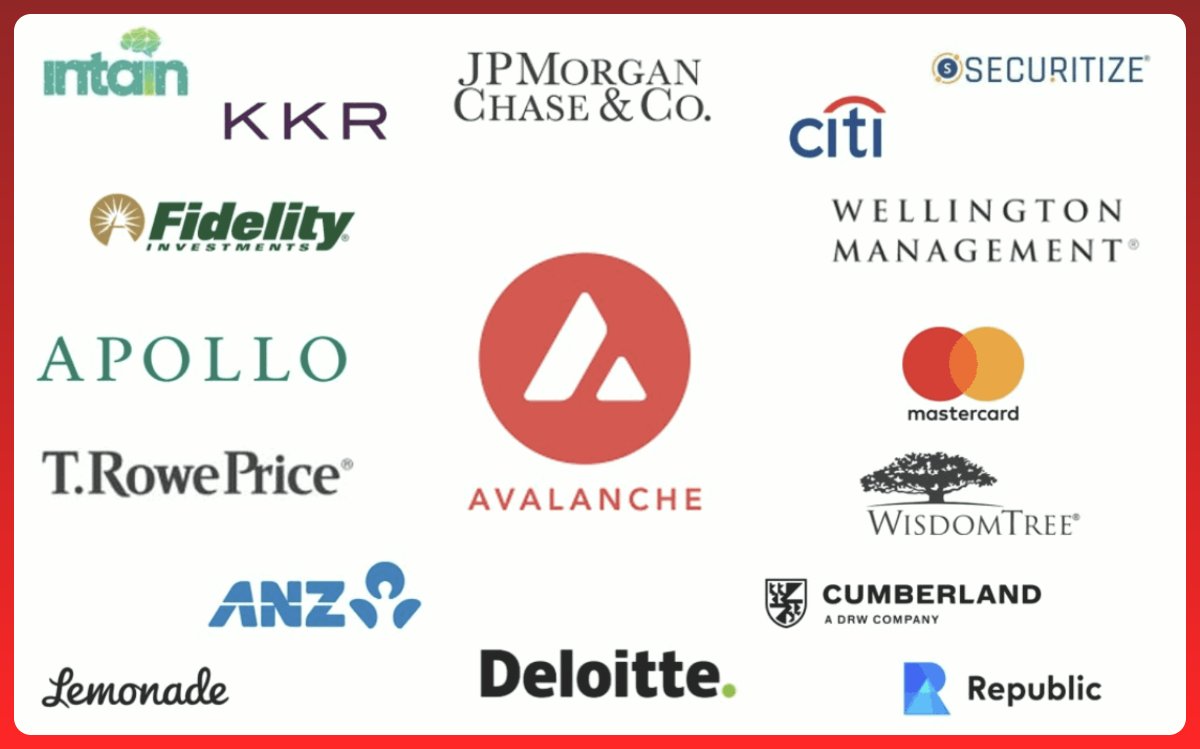
It's also worth noting the meaningful partnerships with @jpmorgan, @Citi, @joinrepublic and many others.
All of these efforts are aimed at creating an RWA infrastructure that will benefit both institutional investors and the general public.
And the developments don't stop there
All of these efforts are aimed at creating an RWA infrastructure that will benefit both institutional investors and the general public.
And the developments don't stop there
That's a wrap!
RWA ecosystem is incredibly vast and to cover all the projects would, without hesitation, require an entire book. I have mentioned only a small portion of it.
So, feel free to talk about your favorite in replies. It will enable others to learn more about the eco.
RWA ecosystem is incredibly vast and to cover all the projects would, without hesitation, require an entire book. I have mentioned only a small portion of it.
So, feel free to talk about your favorite in replies. It will enable others to learn more about the eco.
I hope you found this deep dive useful.
Follow me @wacy_time1 for more. The ecosystem review series is just getting started!
Like/Repost the quote below if you can, I would be very grateful!
Follow me @wacy_time1 for more. The ecosystem review series is just getting started!
Like/Repost the quote below if you can, I would be very grateful!
جاري تحميل الاقتراحات...