

Referendum, Did happen four times in India
1947 Sylhet referendum
The 1947 Sylhet referendum was held in the Sylhet District of the Assam Province of British India to decide whether the
1947 Sylhet referendum
The 1947 Sylhet referendum was held in the Sylhet District of the Assam Province of British India to decide whether the
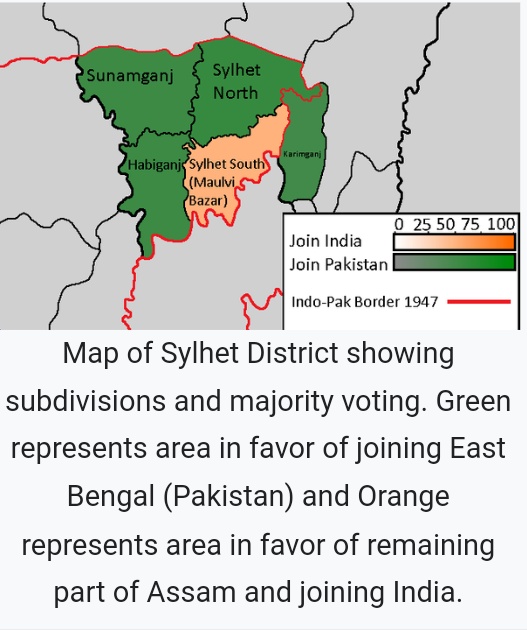
district would remain in Undivided Assam and therefore within the post-independence Dominion of India, or leave Assam for East Bengal and consequently join the newly-created Dominion of Pakistan. The referendum's turnout was in favour of joining the Pakistani union; however,
the district's Karimganj subdivision remained within the Indian state of Assam.
1947 The North-West Frontier Province referendum
was held in July 1947 to decide whether the North-West Frontier Province (NWFP) of British India would join the Dominion of India or Pakistan upon the Partition of India. The polling began on 6 July and the results
was held in July 1947 to decide whether the North-West Frontier Province (NWFP) of British India would join the Dominion of India or Pakistan upon the Partition of India. The polling began on 6 July and the results
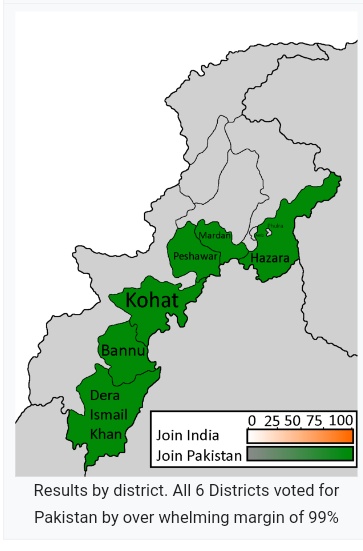
were made public on 20 July. Out of the total population of 4 million in the NWFP, only 572,798 were eligible to vote, of whom only 51.00% voted in the referendum. 289,244 (99.02%) of the votes were cast in favor of Pakistan and only 2,874
(0.98%) in favor of India
The NWFP Chief Minister Khan Abdul Jabbar Khan (Dr. Khan Sahib), his brother Abdul Ghaffar Khan, and the Khudai Khidmatgars boycotted the referendum, citing that it did not have the options of the NWFP becoming independent or joining Afghanistan.
The NWFP Chief Minister Khan Abdul Jabbar Khan (Dr. Khan Sahib), his brother Abdul Ghaffar Khan, and the Khudai Khidmatgars boycotted the referendum, citing that it did not have the options of the NWFP becoming independent or joining Afghanistan.
Their appeal for boycott had an effect, as according to an estimate, the total turnout for the referendum was 15% lower than the total turnout in the 1946 elections.
1967 Goa status referendum
The 1967 Goa status referendum popularly known as the Goa Opinion Poll was a referendum held in newly annexed union territory of Goa and Damaon in India, on 16 January 1967, to deal with the Konkani language agitation and to decide the future of Goa.
The 1967 Goa status referendum popularly known as the Goa Opinion Poll was a referendum held in newly annexed union territory of Goa and Damaon in India, on 16 January 1967, to deal with the Konkani language agitation and to decide the future of Goa.
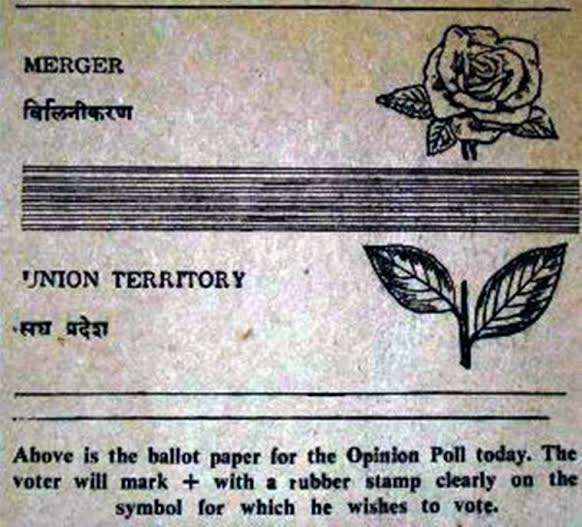
The referendum, backed by United Goans Party, offered the people of Goa a choice between continuing as a separate territory of India, or merging with the large Marathi speaking state of Maharashtra, the latter being the agenda of the Maharashtrawadi Gomantak Party.
It is the only referendum to have been held in independent India.The people of Goa voted against the merger and Goa continued to be a union territory. Subsequently, in 1987, Goa became a full-fledged state within the Indian Union.
1975 Sikkimese monarchy referendum
On April 14, 1975, a referendum was held, in which Sikkim voted to merge with the union of India. Sikkim became the 22nd Indian State on April 26, 1975. On May 16, 1975, Sikkim officially became a state of the Indian Union and
On April 14, 1975, a referendum was held, in which Sikkim voted to merge with the union of India. Sikkim became the 22nd Indian State on April 26, 1975. On May 16, 1975, Sikkim officially became a state of the Indian Union and
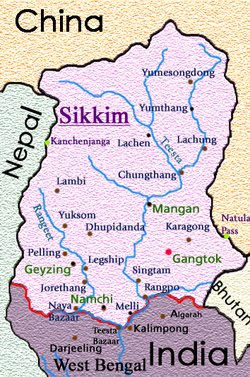
Lhendup Dorji became head of State (chief minister).
جاري تحميل الاقتراحات...