
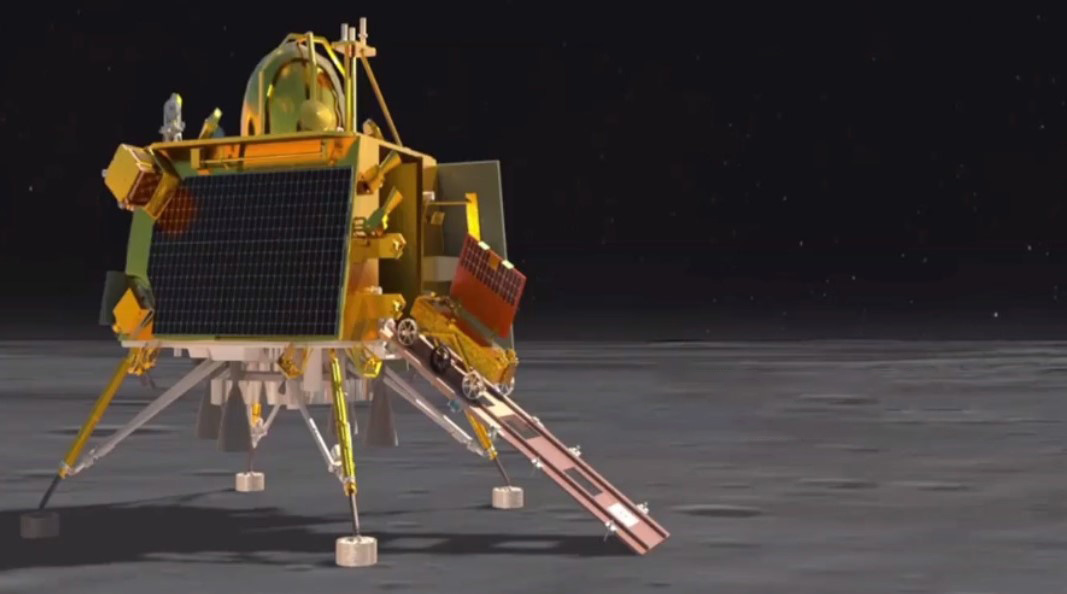
M Srikanth, #Chandrayaan3 mission operations director, in an exclusive interaction said that the performance of #Vikram and #Pragyan so far has been good and the overall health of all systems are normal. 2/n
“Our priority is to ensure that the project objective of getting scientific data for one lunar day is achieved. We’re focusing on rover mobility and payload operations. This will continue for another seven days after which they (systems) will go to sleep when the Sun sets… 3/n
…So far, all margins are looking good and we are confident of the lander and rover coming back to life when night ends. If that happens, that will be a bonus and in case that cannot be achieved, the mission is still complete,” Srikanth said. 4/n
“They should turn on once the sun returns provided they have survived the cold. This is especially true with all the electronic components in the lander and rover. Our ground tests show that this is possible,” Isro chairman Somanath had said earlier. 6/n
Srikanth explained: “One night is 14 Earth days. Batteries with such high capacity can't be included. Capacity of lander battery is 62.5 Ampere-hour while rover's is 10 Ampere-hour, which is enough to meet the mission’s primary objective of doing science for one lunar day.” 7/n
He said batteries have capacity to tackle small eclipses. “Sometimes, there are short periods of eclipse, our batteries can typically handle those. However, they are not powerful enough to keep the systems warm throughout a lunar night,” Srikanth said. 8/n
Assuming that the electronics and other systems on Vikram and Pragyan survive the lunar night, the procedure to spring them back to life is autonomous. 9/n
“When sunlight comes back, there’s an autonomous logic pre-loaded on both the lander and rover. Once there is sufficient solar regeneration, they are expected to come back to life provided that they have survived the night,” Srikanth said. 10/n
While the lander, which has large solar panels on three sides, can do it more easily, Isro will need to carry out a manoeuvre before the night begins to give the rover a chance of coming back. 11/n
“The rover only has a deployable solar panel. Therefore, we will have to do calculations to see where the Sun is likely to rise after 14 days… 12/n
...Once we have this, we will have to position the rover in a place where it can get the best sunlight at dawn to give it the best chance to restart. This positioning has to be done before the current lunar day ends,” Srikanth said. n/n
جاري تحميل الاقتراحات...