

The @WHO reports that the number of persons with diabetes rose from 108 million in 1980 to 422 million in 2014, with the greatest increases in low- and middle-income countries.
Read the Franklin H. Epstein Lecture: nej.md 1/15
#endocrinology #obesity
Read the Franklin H. Epstein Lecture: nej.md 1/15
#endocrinology #obesity

@WHO In spite of substantial therapeutic advances, between 2000 and 2019, diabetes-related mortality increased. Diabetes is still a major cause of blindness, kidney failure, heart attacks, stroke, and amputation below the knee worldwide. 2/15
@WHO New molecular and cellular pathways underlying diabetes need to be identified to enable new therapeutic approaches. For type 2 diabetes, which is characterized by resistance to the actions of insulin, new approaches to enhancing insulin sensitivity are needed. 3/15
@WHO The common forms of type 2 diabetes are caused by a constellation of genetic and epigenetic factors and molecular changes related to diet; lifestyle, including lack of exercise and sleep; environmental influences; circadian rhythms; and gut microbiota. 4/15
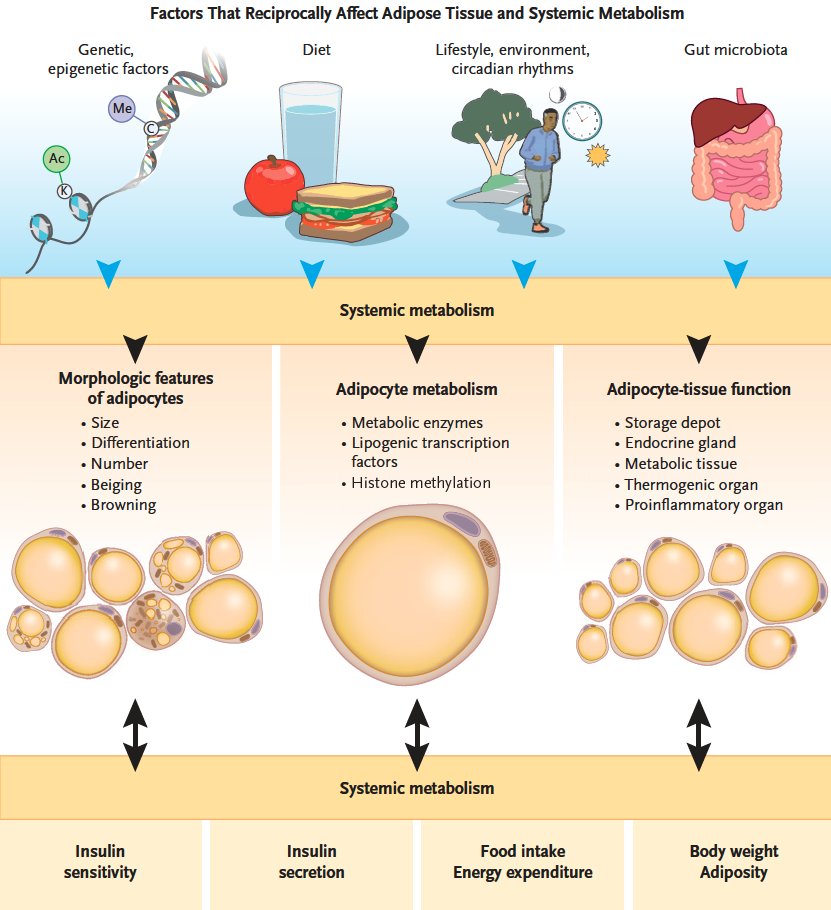
@WHO These factors affect systemic metabolism, which alters the morphologic features, metabolism, and functions of adipose tissue. 5/15
@WHO Changes in adipocyte function affect systemic metabolism, including insulin sensitivity in liver & muscle, insulin secretion from pancreatic beta cells, and food intake & energy expenditure regulated by the brain & sympathetic nervous system, ultimately affect body weight. 6/15
@WHO Studies of GLUT4 [glucose transporter type 4], the major insulin-regulated glucose transporter, provided seminal insights into the role of adipocytes in metabolic health. GLUT4 is expressed primarily in adipocytes, skeletal muscle, and cardiac muscle. 7/15
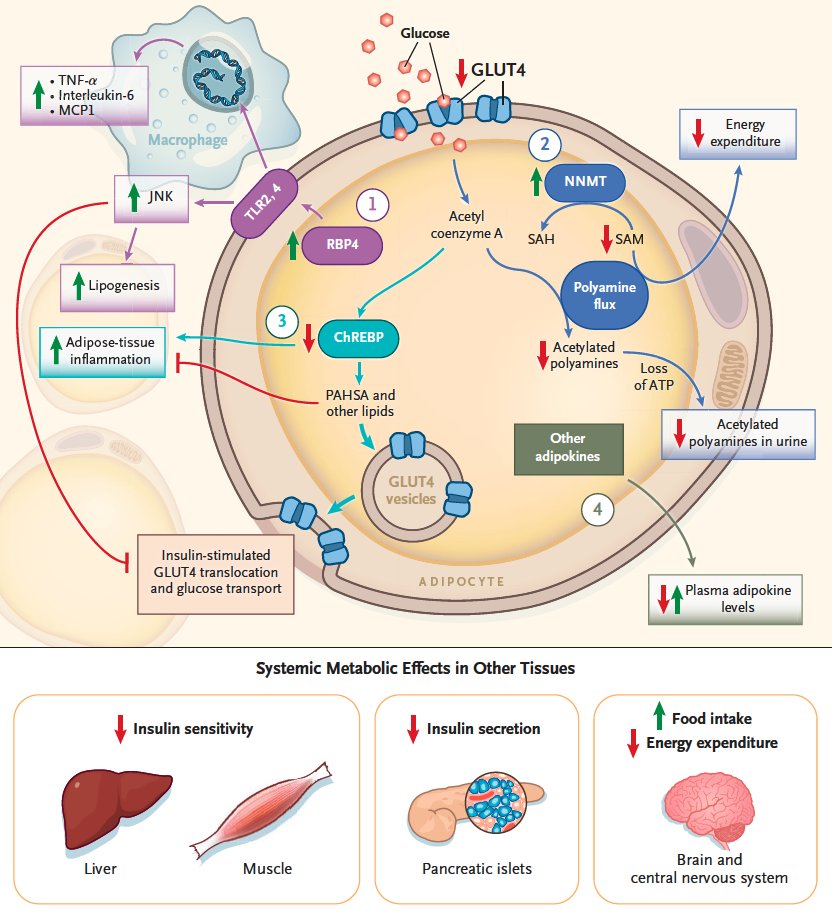
@WHO In humans and rodents with obesity and type 2 diabetes, GLUT4 levels are down-regulated in adipose tissue but are normal in muscle. This observation was a surprise because very little glucose is taken up by adipose tissue. 8/15
@WHO Rising insulin levels after a meal stimulate glucose uptake primarily into muscle. However, GLUT4 down-regulation in adipocytes in insulin-resistant states raised the possibility that decreased glucose uptake in adipocytes could contribute to the development of diabetes. 9/15
@WHO The fact that increased glucose transport into adipocytes results in increased de novo lipogenesis suggested that increased de novo lipogenesis in adipose tissue may result in the synthesis of metabolically beneficial lipids. 10/15
@WHO An untargeted lipidomic analysis led to the discovery of a new class of bioactive lipids, branched fatty acid hydroxy fatty acids (FAHFAs), which are made in humans, animals, and plants and have antidiabetic and antiinflammatory properties. 11/15
@WHO Levels of one FAHFA subfamily, the palmitic acid esters of hydroxystearic acids (PAHSAs), in serum and subcutaneous white adipose tissue, correlate strongly with insulin sensitivity in humans. 12/15
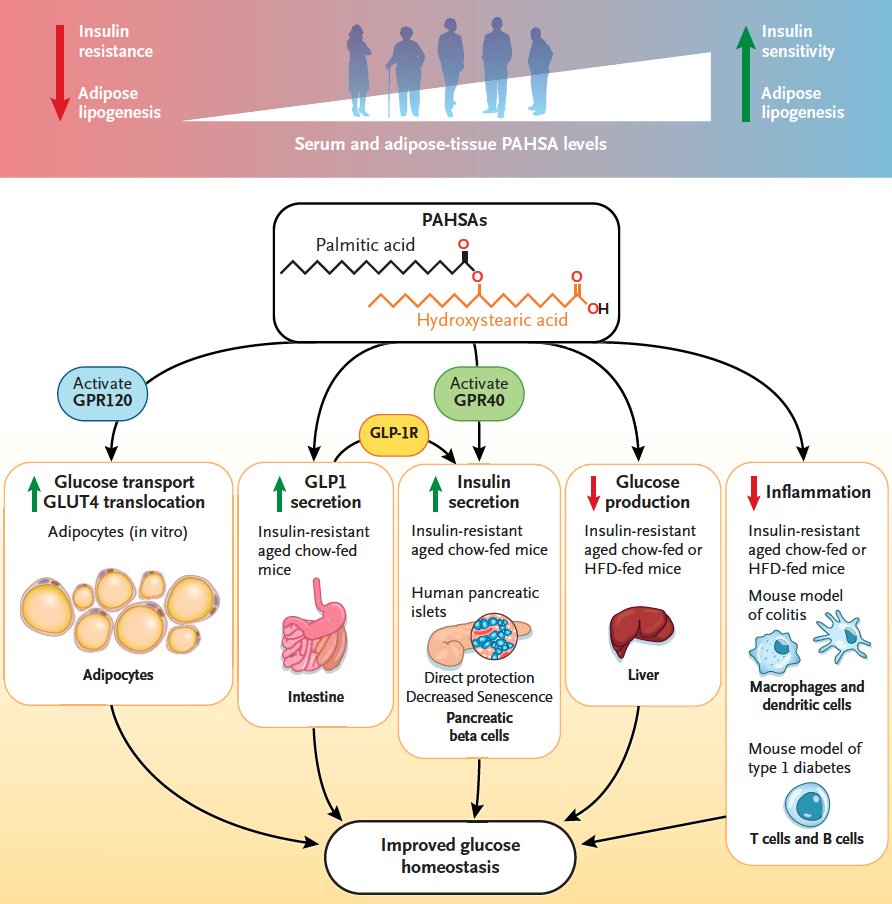
@WHO Very recently, a mammalian biosynthetic enzyme for FAHFAs was discovered: adipose triglyceride lipase. Present in nearly all tissues, it regulates the first step in lipolysis. 13/15
@WHO Adipose triglyceride lipase catalyzes a previously unknown transacylation reaction that esterifies a hydroxy fatty acid with a fatty acyl chain from a triglyceride or diglyceride, producing FAHFAs. 14/15

جاري تحميل الاقتراحات...