

بهذا الثريد بتكلم عن
🛑Hernia
📍types
📍Symptoms
📍Risk factors
📍complication
📍diagnosis
📍treatment
🛑Hernia
📍types
📍Symptoms
📍Risk factors
📍complication
📍diagnosis
📍treatment
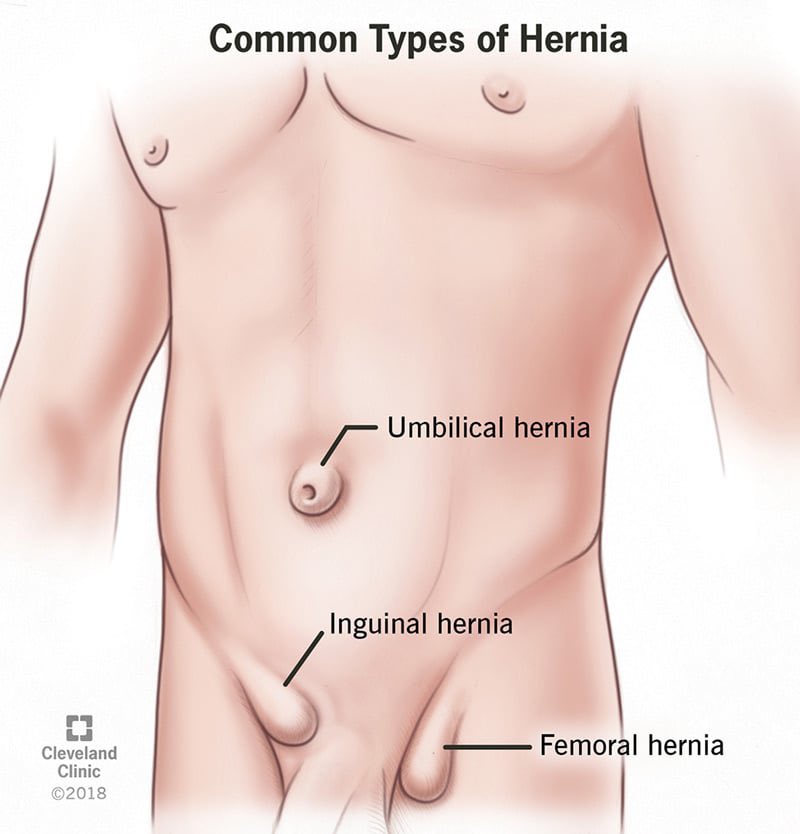
Hernia is a medical condition that occurs when an organ or fatty tissue protrudes through a weak spot in the surrounding muscle or connective tissue.
It most commonly affects the abdominal wall, but can also occur in the groin, thigh, and upper torso.
It most commonly affects the abdominal wall, but can also occur in the groin, thigh, and upper torso.
Types of Hernia:
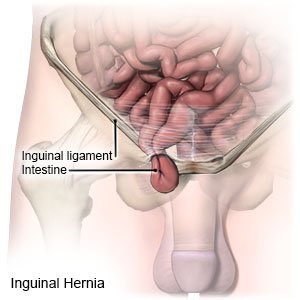
📌 1 Inguinal hernia: This is the most common type of hernia, occurring in the groin area. It happens when part of the intestine or fatty tissue protrudes through a weakened spot in the abdominal muscles. Inguinal hernias are more common in men than women.
📌 1 Inguinal hernia: This is the most common type of hernia, occurring in the groin area. It happens when part of the intestine or fatty tissue protrudes through a weakened spot in the abdominal muscles. Inguinal hernias are more common in men than women.
📌Hiatal hernia:
This type occurs when part of the stomach protrudes through the diaphragm into the chest cavity.
two types of HH:
✔️sliding and paraesophageal. Sliding hernias are more common and occur when the stomach and esophagus slide up and down through the diaphragm
This type occurs when part of the stomach protrudes through the diaphragm into the chest cavity.
two types of HH:
✔️sliding and paraesophageal. Sliding hernias are more common and occur when the stomach and esophagus slide up and down through the diaphragm
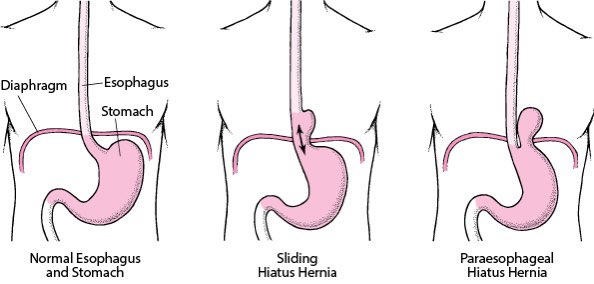
✔️Paraesophageal hernias are less common but more dangerous, as the stomach can twist and cause a blockage in the blood supply.

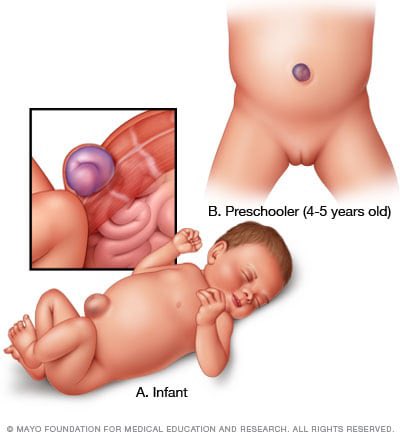
📌Umbilical hernia:
This type of hernia occurs when the intestines protrude through the abdominal muscles near the belly button. It is most common in infants but can occur in adults as well.
This type of hernia occurs when the intestines protrude through the abdominal muscles near the belly button. It is most common in infants but can occur in adults as well.
📌Incisional hernia:
This type of hernia occurs at the site of a previous surgical incision. It happens when the tissue or intestines push through the weakened abdominal muscles at the site of the incision.
This type of hernia occurs at the site of a previous surgical incision. It happens when the tissue or intestines push through the weakened abdominal muscles at the site of the incision.

📌Femoral hernia:
This type of hernia occurs in the upper thigh, just below the groin. It happens when the intestines or other abdominal organs push through the femoral canal.
This type of hernia occurs in the upper thigh, just below the groin. It happens when the intestines or other abdominal organs push through the femoral canal.

Symptoms:
• Bulge or lump that may or may not be painful.
• Pain or discomfort in the affected area, especially when coughing or lifting heavy objects.
• Nausea, vomiting, or constipation in case of a strangulated hernia.
• Bulge or lump that may or may not be painful.
• Pain or discomfort in the affected area, especially when coughing or lifting heavy objects.
• Nausea, vomiting, or constipation in case of a strangulated hernia.
Risk Factors:
• Being overweight or obese.
• Chronic coughing or sneezing.
• Pregnancy or childbirth.
• Previous abdominal surgery.
• Family history of hernias.
• Chronic constipation or straining during bowel movements.
• Being overweight or obese.
• Chronic coughing or sneezing.
• Pregnancy or childbirth.
• Previous abdominal surgery.
• Family history of hernias.
• Chronic constipation or straining during bowel movements.
🛑Complications:
If left untreated, hernias can cause serious complications, including:
✔️1• Incarceration:
When the hernia becomes trapped and cannot be pushed back into the abdomen, it is called an incarcerated hernia. This can lead to bowel obstruction or strangulation.
If left untreated, hernias can cause serious complications, including:
✔️1• Incarceration:
When the hernia becomes trapped and cannot be pushed back into the abdomen, it is called an incarcerated hernia. This can lead to bowel obstruction or strangulation.
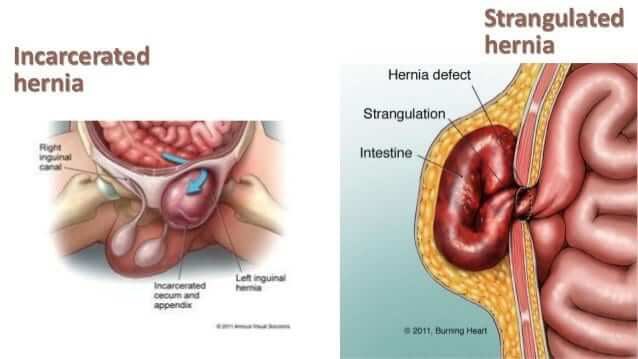
✔️2. Strangulation:
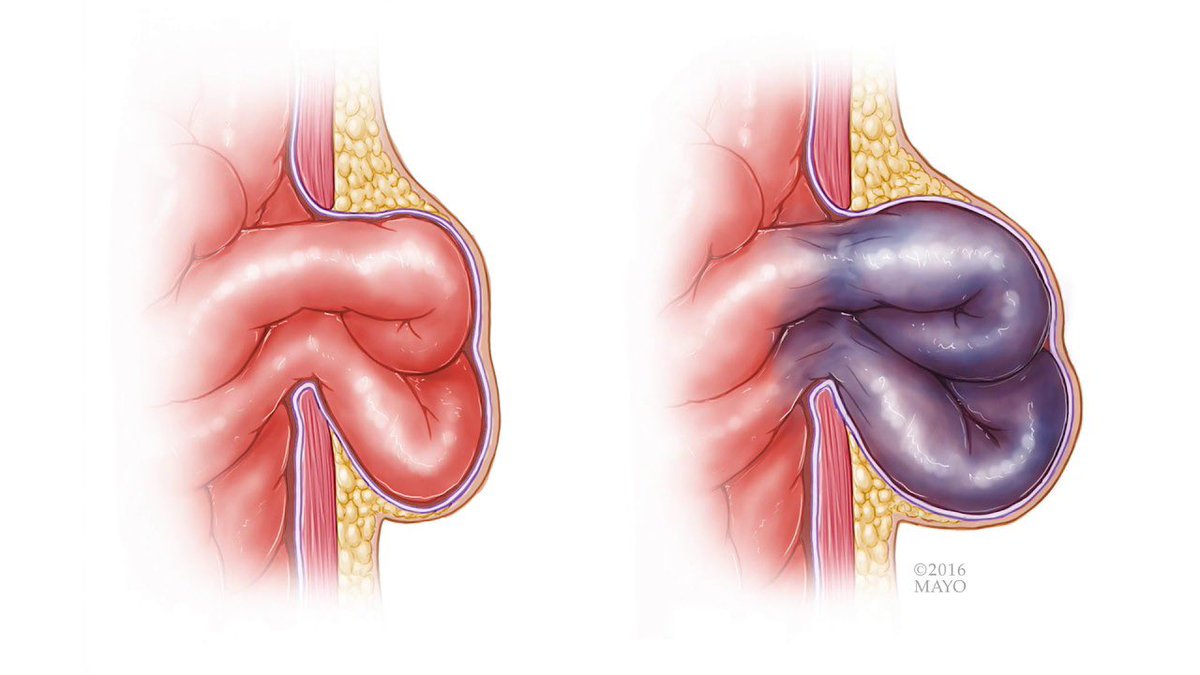
When the blood supply to the herniated organ is cut off, it can lead to tissue damage and even death of the affected tissue. This is a medical emergency and requires immediate surgery.
When the blood supply to the herniated organ is cut off, it can lead to tissue damage and even death of the affected tissue. This is a medical emergency and requires immediate surgery.
Diagnosis:
Your doctor can diagnose a hernia through a physical examination.
They may be able to feel the hernia by pressing on the affected area.
In some cases, imaging tests such as ultrasound or CT scan may be used to confirm the diagnosis.
Your doctor can diagnose a hernia through a physical examination.
They may be able to feel the hernia by pressing on the affected area.
In some cases, imaging tests such as ultrasound or CT scan may be used to confirm the diagnosis.
Treatment:
The most common treatment for a hernia is surgery.
Surgery involves repairing the weakened muscle or tissue and repositioning the protruding organ.
The most common treatment for a hernia is surgery.
Surgery involves repairing the weakened muscle or tissue and repositioning the protruding organ.
جاري تحميل الاقتراحات...