

Exactly 40 years before the U.S. blew up the #Nordstream pipelines, the CIA blew up another pipeline carrying natural gas from #Russia to #Europe.
This thread is about the Trans-Siberian pipeline sabotage of 1982 -- the largest non-nuclear explosion ever on Planet Earth.
This thread is about the Trans-Siberian pipeline sabotage of 1982 -- the largest non-nuclear explosion ever on Planet Earth.
Thomas Reed, senior US national security official, claims in his book “At The Abyss” that the U.S. allowed the USSR to steal pipeline control software from a Canadian company. This software included a Trojan Horse that caused a major explosion of the Trans-Siberian gas pipeline.
The Trojan ran during a pressure test on the pipeline but doubled the usual pressure, causing a tremendous explosion.
“In order to disrupt the Soviet gas supply, its hard currency earnings from the West, and the internal Russian economy, the pipeline software that was to run the pumps, turbines, and valves was programmed to go haywire..."
"...after a decent interval, to reset pump speeds and valve settings to produce pressures far beyond those acceptable to pipeline joints and welds,” Reed writes.
The scheme to plant bugs in Soviet software was masterminded by Gus Weiss, who at the time was on the National Security Council of President Ronald Reagan.
Soviet agents had been so keen to acquire US technology, they didn’t question its provenance.
Soviet agents had been so keen to acquire US technology, they didn’t question its provenance.
Russian newspaper sources deny the report, saying an explosion did take place, but it was caused by poor construction, not by planted software.
“What the Americans have written is rubbish,” said Vasily Pchelintsev, who in 1982 headed the KGB office in the region.
“What the Americans have written is rubbish,” said Vasily Pchelintsev, who in 1982 headed the KGB office in the region.
The software sabotage had two effects, explains Reed.
The first was economic. By creating an explosion with the power of a three kiloton nuclear weapon, the US disrupted supplies of gas and consequential foreign currency earnings.
The first was economic. By creating an explosion with the power of a three kiloton nuclear weapon, the US disrupted supplies of gas and consequential foreign currency earnings.
But the project also had important psychological advantages in the battle between the two superpowers.
“By implication, every cell of the Soviet leviathan might be infected,” Reed writes.
“They had no way of knowing which equipment was sound, which was bogus. All was suspect, which was the intended endgame for the entire operation.”
“They had no way of knowing which equipment was sound, which was bogus. All was suspect, which was the intended endgame for the entire operation.”
Source: "At the Abyss" by Thomas Reed, an Insider's History of the Cold War.
penguinrandomhouse.com
penguinrandomhouse.com

I’ll be doing a special report about the Trans-Siberian pipeline disaster of Halloween 1982 and the obvious similarities to #Nordstream Sunday night at 8pm Central.
Hope you’ll tune in & watch!
youtu.be
Hope you’ll tune in & watch!
youtu.be
Thomas Reed is interviewed in this 2014 documentary about the Trans-Siberian pipeline explosion and pretty much brags about it!
youtu.be
youtu.be
We will be live tonight at 7pm with a special report on the 1982 sabotage of #Russia’s Trans-Siberian natural gas pipeline by the CIA.
Tune in here! ⬇️
Tune in here! ⬇️
One final point to remember about the Trans-Siberian pipeline sabotage ☝️:
#Russia had tried to purchase computing technology from us in the early 1970’s, but as Gus Weiss explains in The Farewell Dossier the Soviets resorted to espionage only AFTER all trade efforts had failed
#Russia had tried to purchase computing technology from us in the early 1970’s, but as Gus Weiss explains in The Farewell Dossier the Soviets resorted to espionage only AFTER all trade efforts had failed

Later, President Jimmy Carter responded to the Soviet invasion of Afghanistan by instituting sanctions, canceling several computer sales to the #USSR.
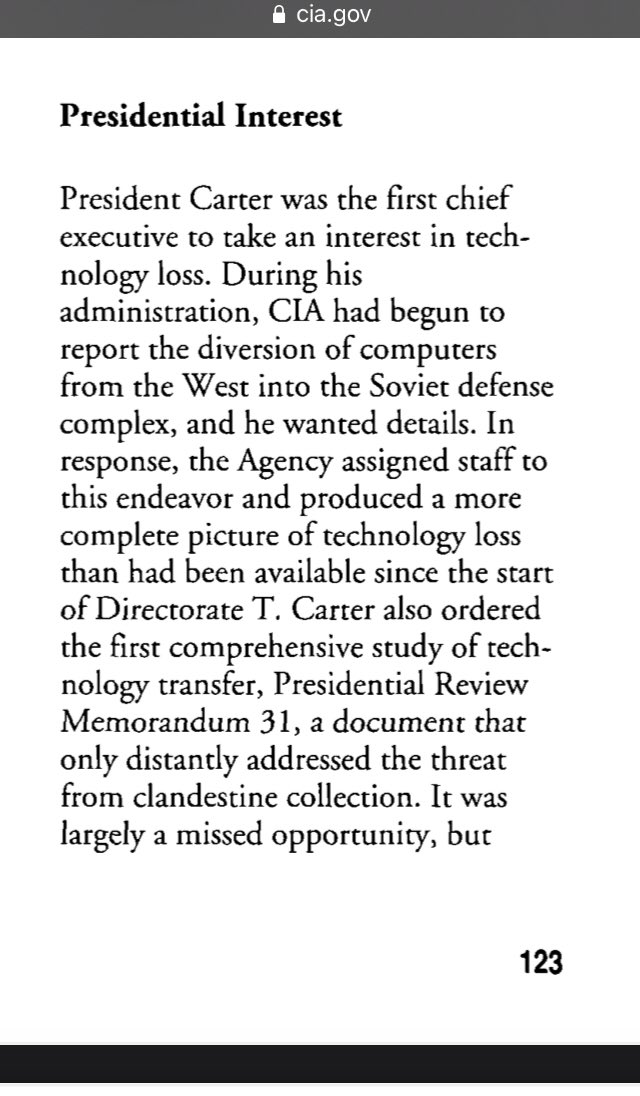
It’s also interesting to note that the Trans-Siberian pipeline Trojan Horse sabotage project was one of former CIA Director and Reagan’s Vice President George H.W. Bush’s pet projects …

A curious reference on page 5 of the Farewell Dossier to “flawed turbines were installed on a gas pipeline” — designed to fail.
Remember the kerfuffle that erupted last year when the #Nordstream pipeline turbines were being “repaired” in #Ottawa? (Scene of the 1982 crime?) 🧐
Remember the kerfuffle that erupted last year when the #Nordstream pipeline turbines were being “repaired” in #Ottawa? (Scene of the 1982 crime?) 🧐

Two months after the Nordstream pipeline turbine was “repaired” in #Canada, it exploded on September 26th.
To refresh your memory:
reuters.com
To refresh your memory:
reuters.com

Perhaps the Russians were suspicious…
However Russian gas supplier Gazprom refused to accept the turbine from #Canada in August, blaming technical issues and missing documents.
Ottawa returned 5 other “repaired” turbines, 30 days before the explosions
politico.eu
However Russian gas supplier Gazprom refused to accept the turbine from #Canada in August, blaming technical issues and missing documents.
Ottawa returned 5 other “repaired” turbines, 30 days before the explosions
politico.eu

As Gus Weiss famously bragged in the Farewell Dossier about US sabotage of critical infrastructure
like the Trans-Siberian pipeline, it delivered a fatal blow to the Soviet economy:
“The program had great success, and it was never detected.”
like the Trans-Siberian pipeline, it delivered a fatal blow to the Soviet economy:
“The program had great success, and it was never detected.”
If you’re curious whatever happened to Vetrov (code name: Farewell) — the story gets even more fascinating:
A year after the Trans-Siberian pipeline sabotage incident, this happened…
A year after the Trans-Siberian pipeline sabotage incident, this happened…
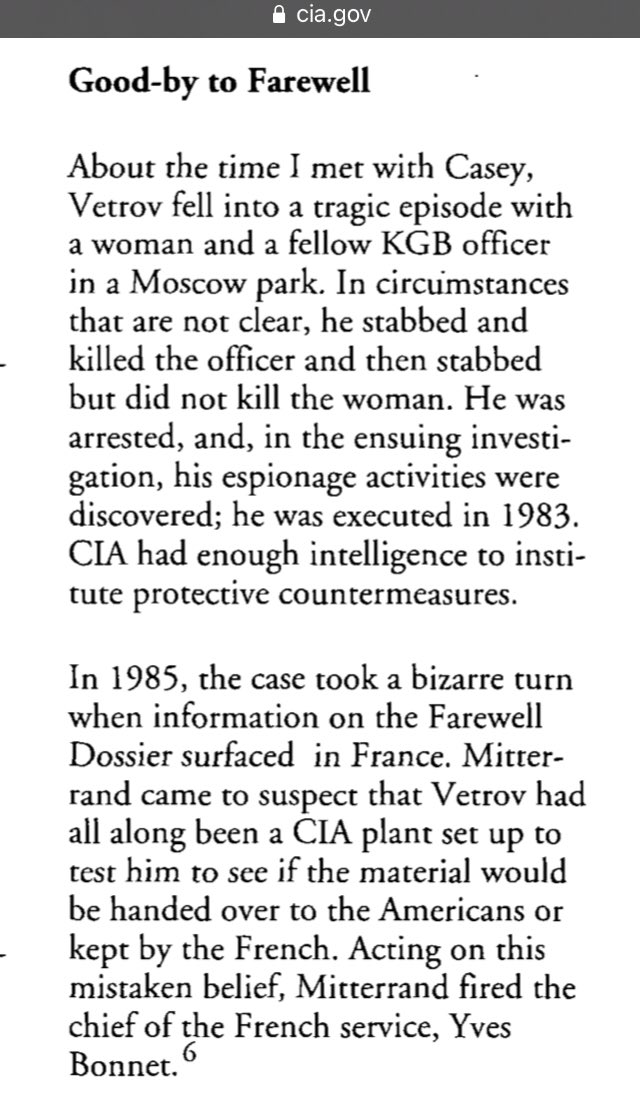
Even if Agent Farewell was a CIA plant (and he probably was), his contribution led to the collapse of the Soviet Union and resulted in a forceful and effective
NATO effort to protect its technology.
Read the Farewell Dossier here: cia.gov
NATO effort to protect its technology.
Read the Farewell Dossier here: cia.gov
But couldn’t the Russians have purchased the technology they needed from other governments, you ask? No.
None of the USSR’s fellow governments were willing to sell the sophisticated control software—largely due to the US’s efforts to block the sale of Russian gas in Europe.
None of the USSR’s fellow governments were willing to sell the sophisticated control software—largely due to the US’s efforts to block the sale of Russian gas in Europe.
Here’s another pretty good article summarizing the Farewell Dossier:
damninteresting.com
damninteresting.com


And why did the Soviet government deny the pipeline was sabotaged, even when they knew whodunnit? Here’s why:
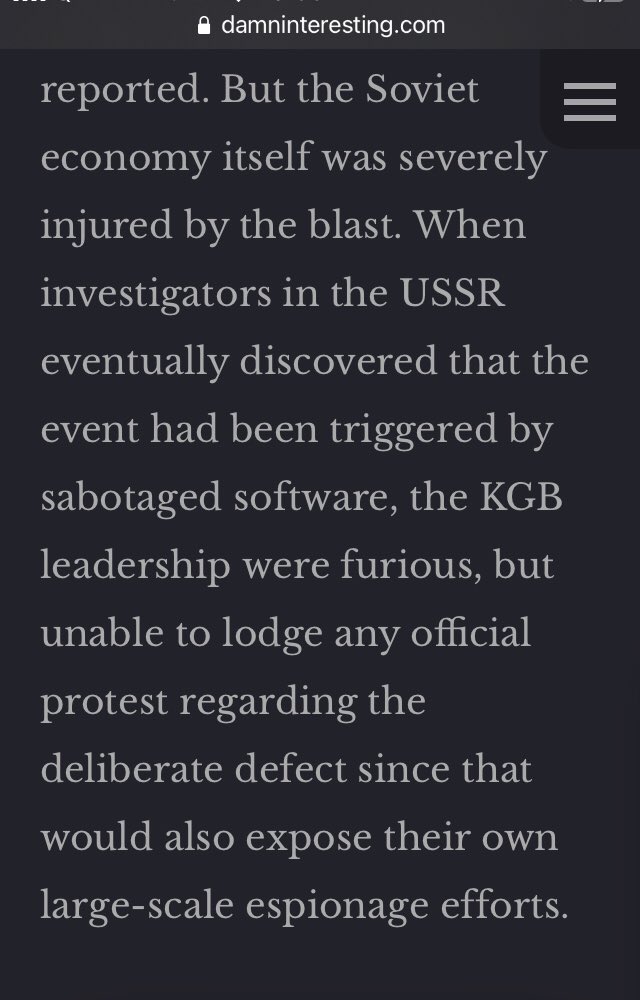
Given the stickiness of the situation, the fact that the pipeline exploded in remote Siberia, and no one was seriously injured or killed by the blast, #Russia perhaps wisely decided to keep mum about it at the time. 🤐
As a fascinating footnote, our current Secretary of State wrote a book about the Trans-Siberian Pipeline in 1987 — back when nobody knew who Antony Blinken was. 📕
Crazy coincidence eh? 🤨
Crazy coincidence eh? 🤨

Blinken’s book is now rare and long out of print, but you can fetch collectible versions online. Found this one at Amazon.
amazon.com
amazon.com

I NEED a copy of this book!
Will report my findings to you as part of my ongoing investigation into what happened to the #Nordstream pipeline explosion.
Help a sister out! 📕💰
Will report my findings to you as part of my ongoing investigation into what happened to the #Nordstream pipeline explosion.
Help a sister out! 📕💰
This long-lost book was actually Secretary Blinken’s college thesis when he was still a student at Columbia Law in 1987.
The “Siberian pipeline crisis” that formed the subject of Ally Versus Ally has been forgotten (at least, Secretary Blinken hopes it is!).
The “Siberian pipeline crisis” that formed the subject of Ally Versus Ally has been forgotten (at least, Secretary Blinken hopes it is!).
During the 1970’s and 80’s, though, it was a source of angry debate in U.S.-European relations.
Foreign Policy magazine noted his college thesis on the Trans-Siberian pipeline when Antony Blinken was chosen as #Biden’s new Secretary of State in December, 2020:
Foreign Policy magazine noted his college thesis on the Trans-Siberian pipeline when Antony Blinken was chosen as #Biden’s new Secretary of State in December, 2020:
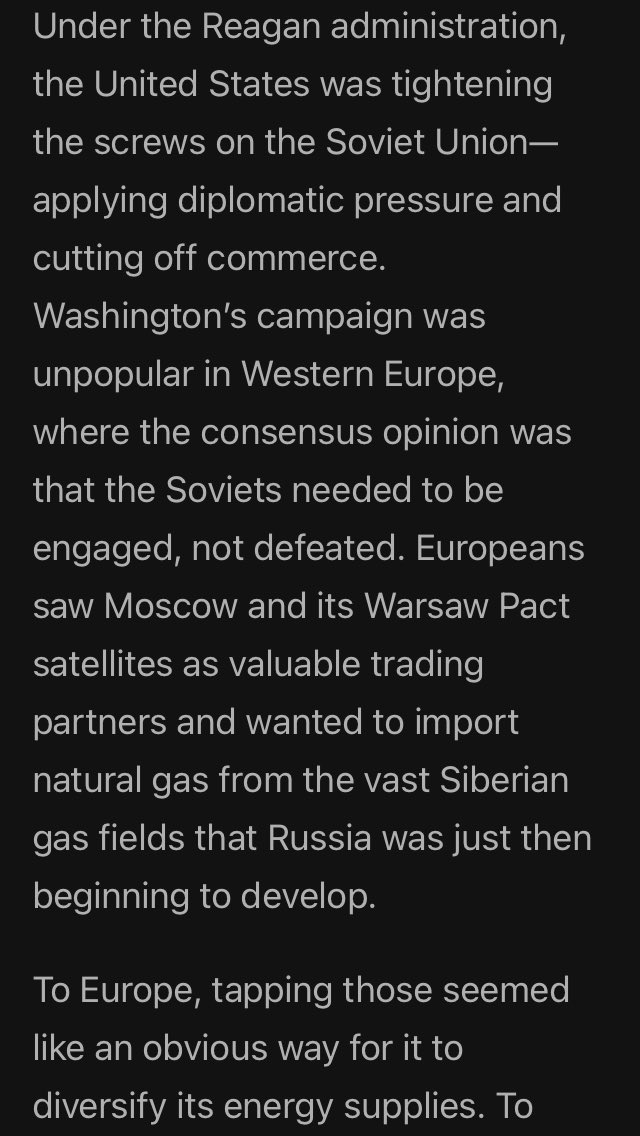
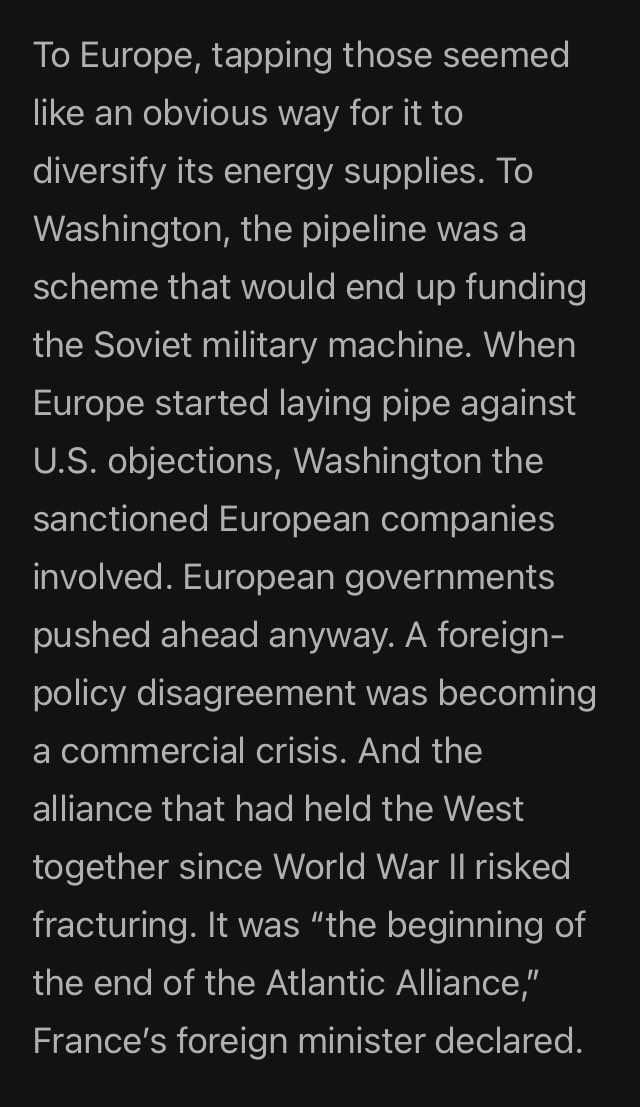
Foreign Policy magazine pointed this out before #Blinken was confirmed as Secretary of State, as the new #Nordstream2 pipeline was still being built:

The magazine picked up on the inconsistency between Blinken’s 1987 argument that Reagan’s “maximum pressure campaign” on #Russia had been a mistake, and his position now, applying maximum pressure to Russia — a campaign which just might include blowing up their pipeline.
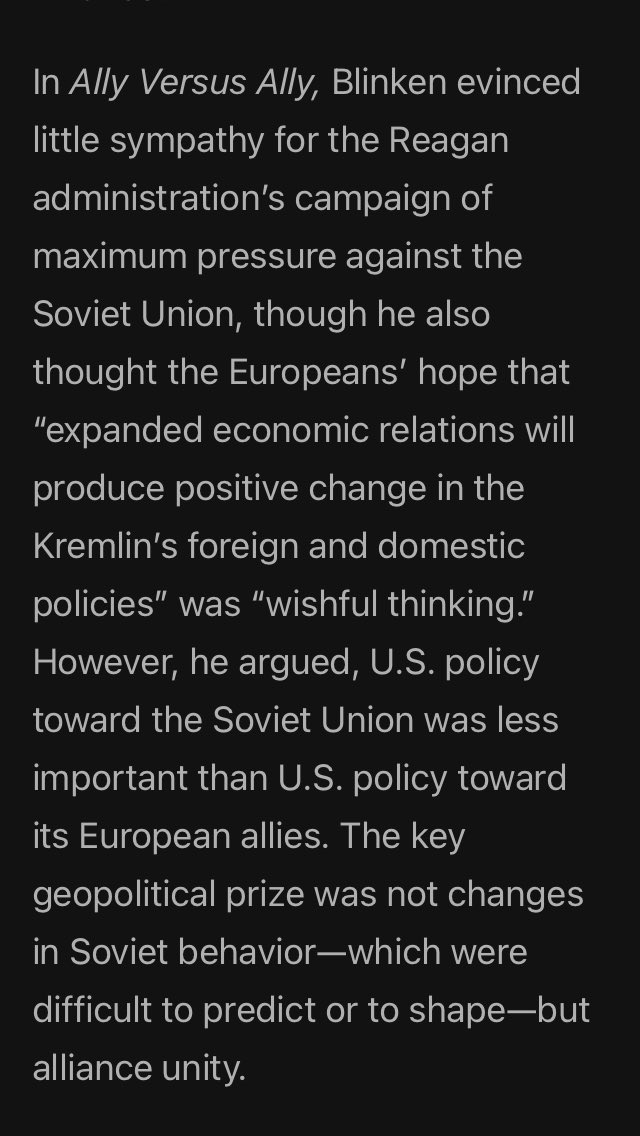

Perhaps Secretary #Blinken should go back and re-read his college thesis on the Trans Siberian pipeline sabotage, and take his own advice!
By sabotaging Russia’s natural gas pipeline we are only hurting ourselves, and our allies.
By sabotaging Russia’s natural gas pipeline we are only hurting ourselves, and our allies.

If you'd like to read young Antony Blinken's college thesis about this precursor to #Nordstream, and don't want to spend $70 for a hard copy, here's a free PDF at the Internet Archive.
Ally versus ally : America, Europe, and the Siberian pipeline crisis : archive.org
Ally versus ally : America, Europe, and the Siberian pipeline crisis : archive.org

Or, if you haven't got time to read Blinken's 200 page book, here's a 26 page summary in the Yale Journal of International Law. (PDF)
openyls.law.yale.edu
openyls.law.yale.edu
UPDATE: I’ve just produced a 90-minute special report on how and why the U.S. CIA and Secretary of State #Blinken conspired with #NATO to blow up #Russia’s #Nordstream pipeline— just as the 🇺🇸 did before with the Trans-Siberian pipeline 40 years ago.
rumble.com
rumble.com

جاري تحميل الاقتراحات...