
The replies gave a couple of different answers that are all part of the bigger picture. Mini-thread on what's going on.
First it should be said that the Uthmanic rasm has الظنونا, and that is well-attested in early manuscripts.
First it should be said that the Uthmanic rasm has الظنونا, and that is well-attested in early manuscripts.

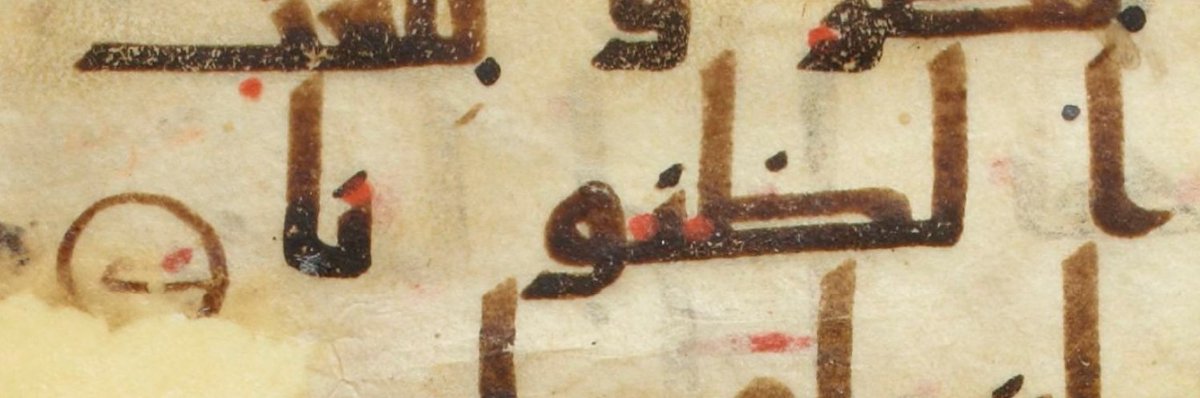
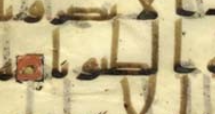

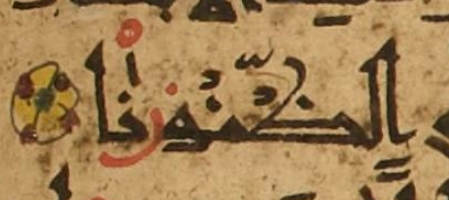
The fact that the Uthmanic rasm clearly has الظنونا and this is attested well in our early manuscripts is our first clue as to what is going on here:
The Ibn al-Bawwāb does NOT follow the Uthmanic rasm! Instead it uses purely Classical Arabic orthography.
The Ibn al-Bawwāb does NOT follow the Uthmanic rasm! Instead it uses purely Classical Arabic orthography.
But that's not the whole story. If Ibn al-Bawwāb had been written in the reading of Ḥafṣ, one would probably still expect the spelling الظنونا, since Ḥafṣ pronounces this word as aẓ-ẓunūnā with an ʾalif in pause... But that's not true for all readings!
Among the seven we find:
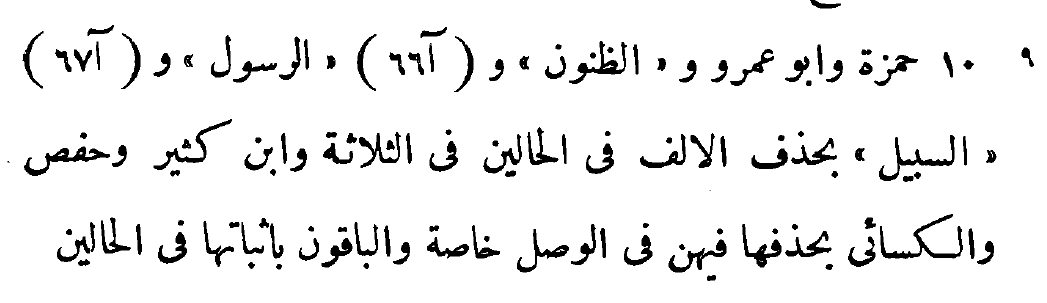
1. ʾAbū ʿAmr & Ḥamzah: aẓ-ẓunūna, pausal: aẓ-ẓunūn#
2. Ibn Kaṯīr & Ḥafṣ: aẓ-ẓunūna, pausal: aẓ-ẓunūnā
3. The rest: aẓ-ẓunūnā both in connected speech and in pause.
1. ʾAbū ʿAmr & Ḥamzah: aẓ-ẓunūna, pausal: aẓ-ẓunūn#
2. Ibn Kaṯīr & Ḥafṣ: aẓ-ẓunūna, pausal: aẓ-ẓunūnā
3. The rest: aẓ-ẓunūnā both in connected speech and in pause.
The Ibn al-Bawwāb Quran marks both the waṣl pronunciation aẓ-ẓunūna in black AND the pausal pronunciation aẓ-ẓunūn# with a sukūn in red!
So the Ibn al-Bawwāb is written in either ʾAbū ʿAmr or Ḥamzah's reading. Further investigation shows that it's indeed ʾAbū ʿAmr.
So the Ibn al-Bawwāb is written in either ʾAbū ʿAmr or Ḥamzah's reading. Further investigation shows that it's indeed ʾAbū ʿAmr.
So the word is spelled the way it is for two reasons:
1. It follows Classical Orthography, and not Uthmanic rasm.
2. It follows the reading of ʾAbū ʿAmr.
Note that 1. is not a necessary result of 2. Compare this manuscript which has a solution that follows the Uthmanic rasm.
1. It follows Classical Orthography, and not Uthmanic rasm.
2. It follows the reading of ʾAbū ʿAmr.
Note that 1. is not a necessary result of 2. Compare this manuscript which has a solution that follows the Uthmanic rasm.
جاري تحميل الاقتراحات...