
July 1991. German Chancellor Helmut Kohl and Foreign Minister Hans-Dietrich Genscher receive Croatian President Franjo Tudjman. The visit attracted a great deal of attention abroad at the time, causing irritation in some members states of the EC, particularly in Paris and London.
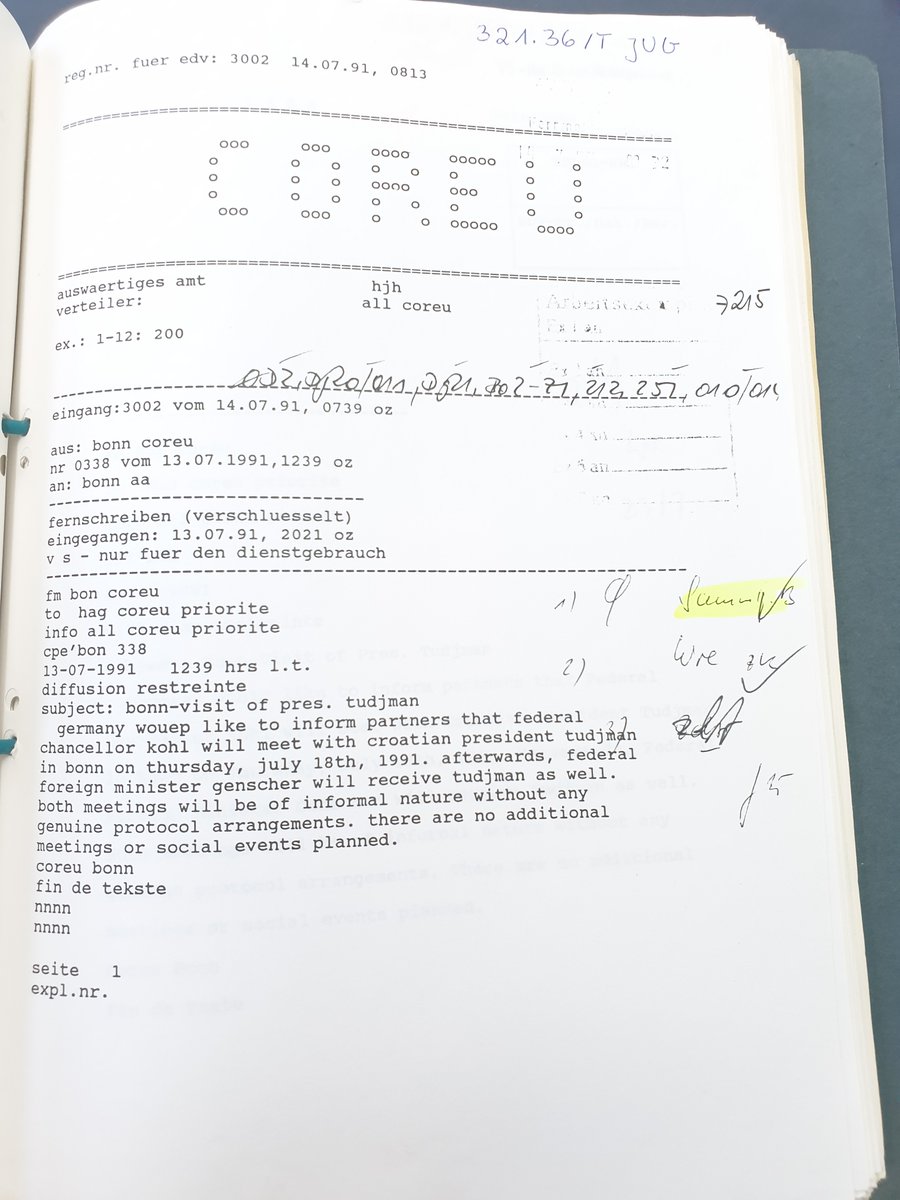
Tudjman had for months and via various channels tried to be received by Kohl and Genscher in Germany. Among others, his people kept asking the German general consul in Zagreb, who was very pro-Tudjman, to forward the request.

Tudjmans visit was preceded by weeks of internal debates at the German Foreign Office. Should he be received at all? Or would that speed up the disintegration of Yugoslavia, which Bonn did not (yet) want?
Other political leaders from Yugoslavia, like Ibrahim Rugova from Kosovo for example, tried all year to be received by Kohl and Genscher but were continuously rejected. (Rugova did later manage to be received at a lower level though).
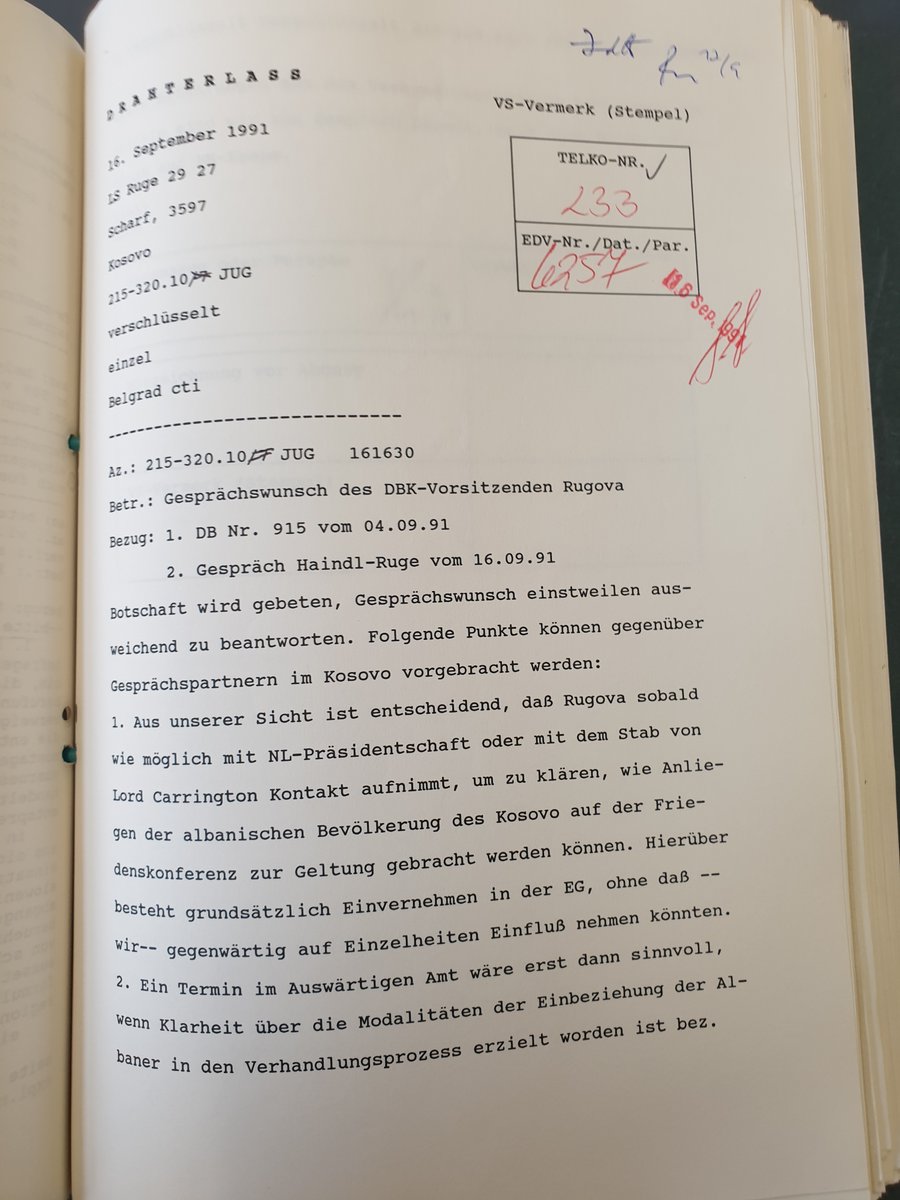
In the case of Tudjman, finally the decision was taken to accept his request. One argument for this was that the Republics had obviously become more and more important, while the federal state of Yugoslavia had less and less to decide.
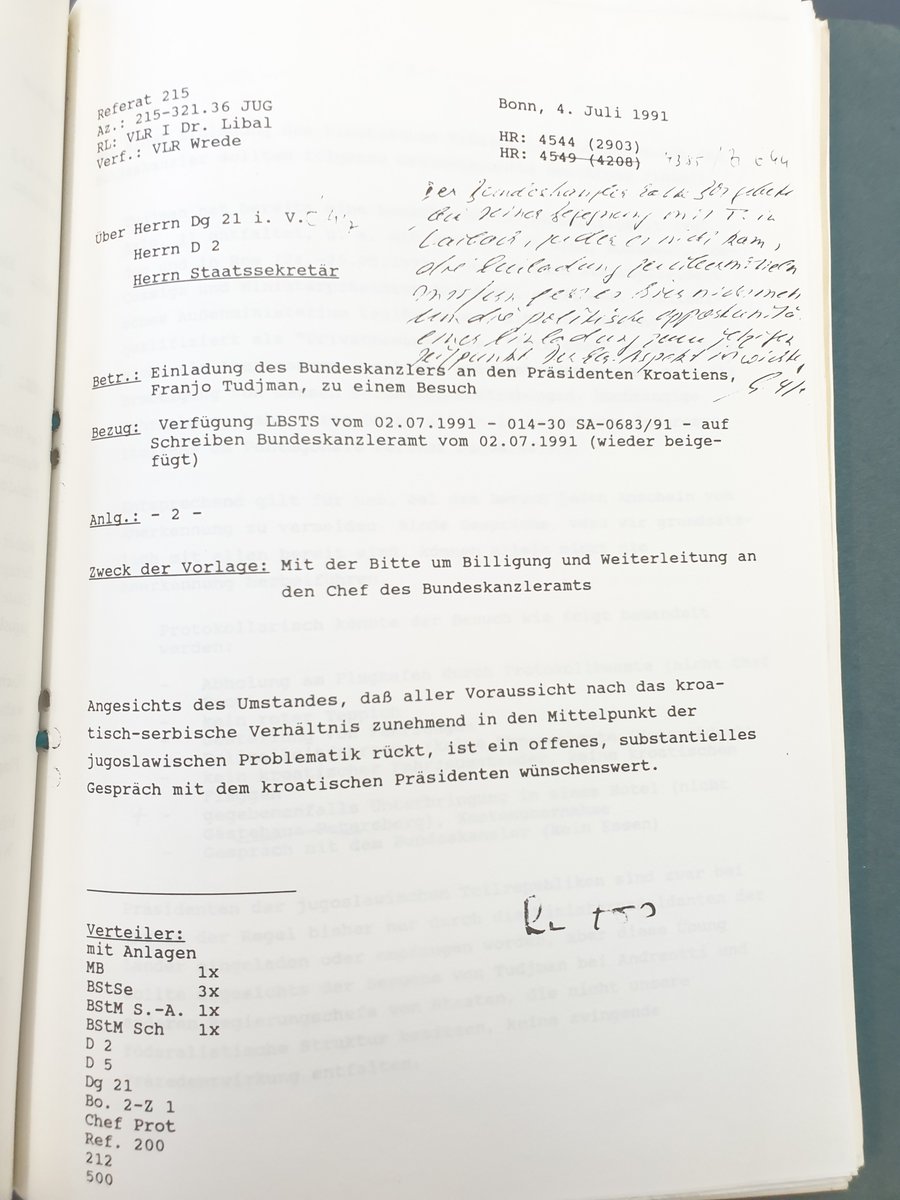
Another argument was that Tudjman had already been received in Italy by President Cossiga and PM Andreotti in May, so it was not a precedent. However, it was stipulated Tudjman should be received at the lowest possible level of protocol, just slightly above the level an insult.
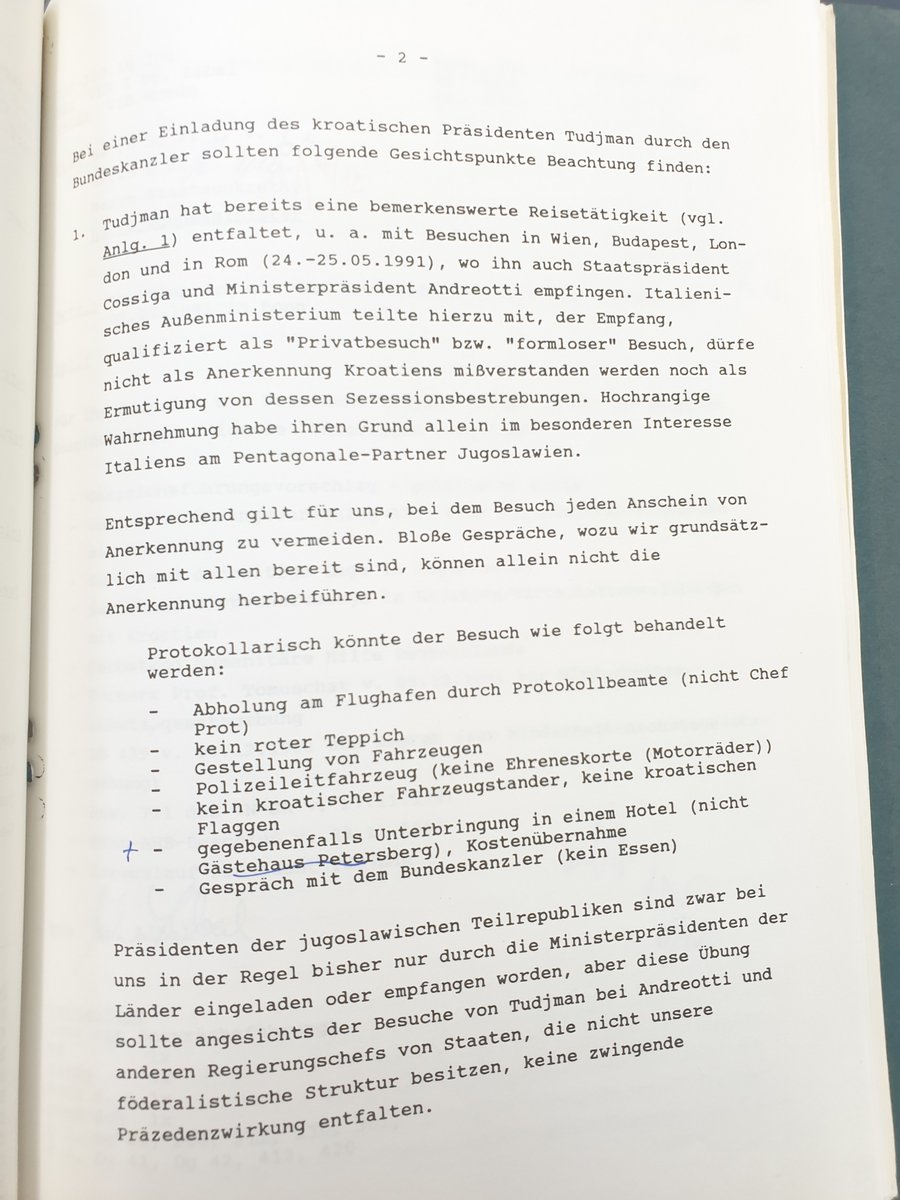
In internal deliberations, the Auswärtiges Amt insisted it was important “to avoid any semblance of recognition (of Croatia) during the visit”. Genscher's people had several ideas regarding this. For example, Tudjman should not be awaited by the head of protocol at the airport.
Also, no red carpet for Tudjman. No honorary escort, no Croatian flags. Accommodation in a hotel, not in the guest house of the government. Tudjman was to get to meet Kohl, but the latter should not host an official lunch or dinner for him. Kein Saumagen.
Germany prepared the visit extensively. The German embassy in Belgrade was asked to prepare detailed reports: on the situation in Yugoslavia. on Tudjman's biography and (presumed) psychology. Those reports then were submitted to Genscher.
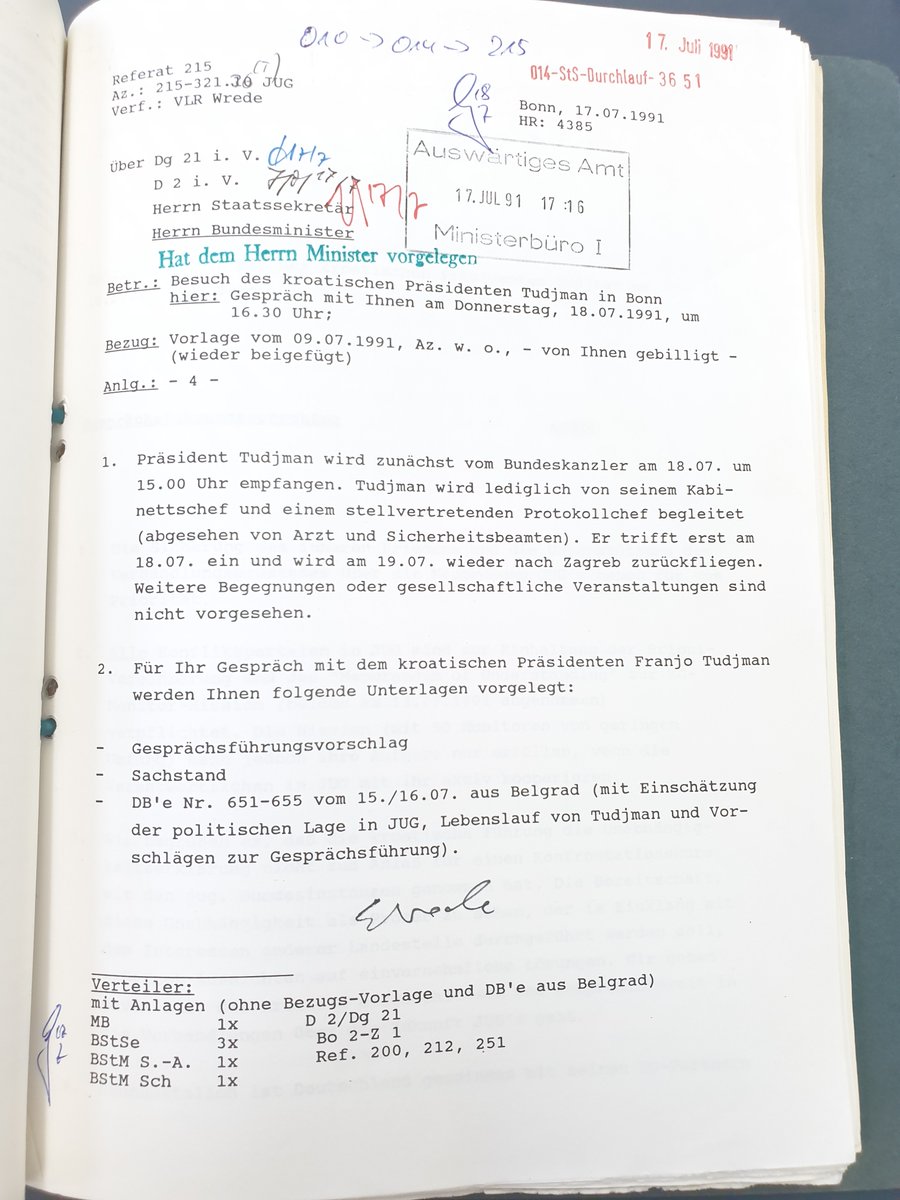
The psychological portrait of Tudjman prepared by the embassy in Belgrad and the General consulate in Zagreb is remarkable in many ways, but I will leave that for another occasion. Now I´d like to concentrate on other internal documents Genschers officials prepared.
The so-called “Gesprächsführungsvorschlag” (suggestion on how to lead the conversation) shows that, contrary to the legend that Germany was wildly keen on recognizing Croatia from the start of 1991, in Bonn the idea of keeping Yugoslavia intact still prevailed at this time.

The ministry suggested Genscher to open his part of the conversation by asking Tudjman: “How does the Croatian leadership plan to reliably guarantee minority proztection for the Serbs within Croatia?"
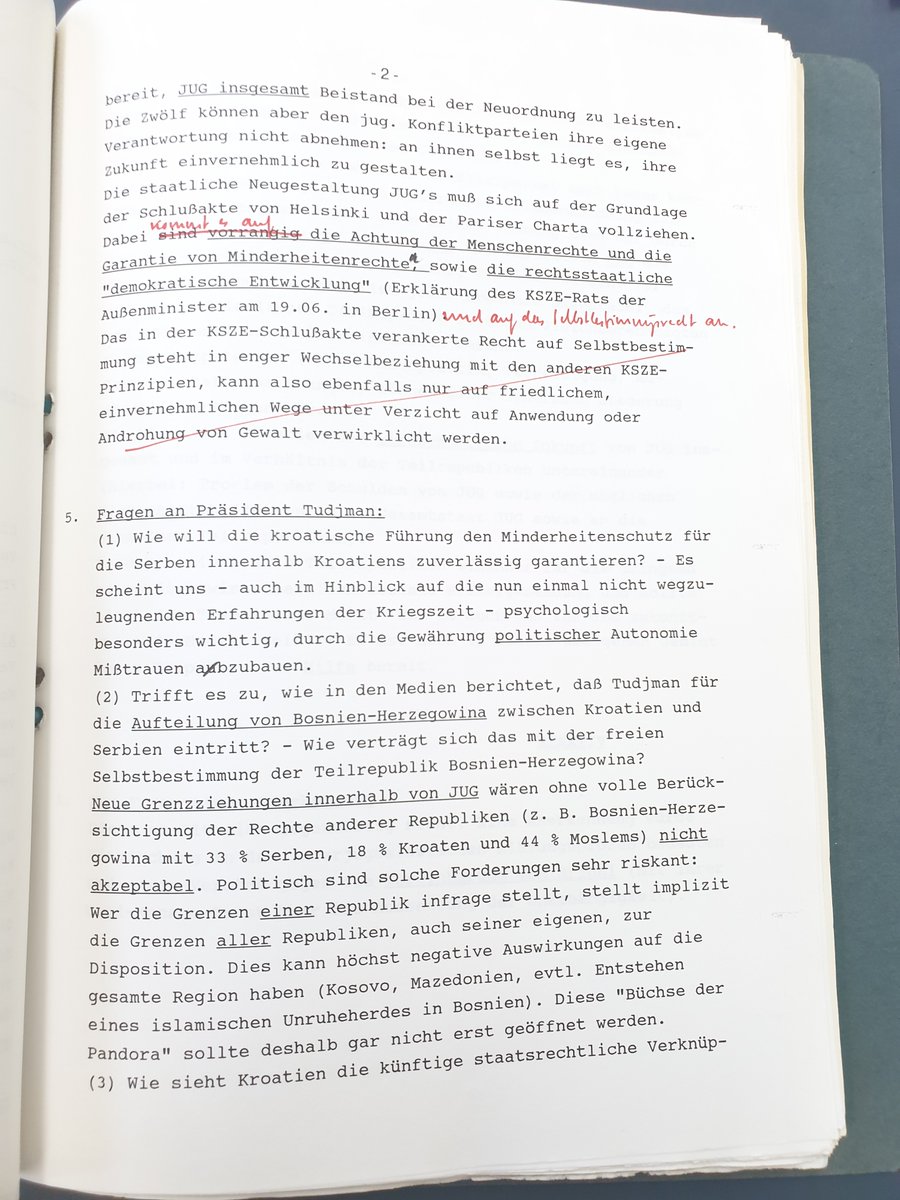
The Germans also wanted to know from Tudjman whether press reports according to which he advocated the partition of Bosnia-Herzegovina between Croatia and Serbia, as among others German daily “Frankfurter Allgemeine Zeitung” had reported, were true.
Should Tudjman confirm his appetite for chopping up Bosnia-Hercegovina, he was to be warned: Anyone who questions the borders of others automatically questions his own.
It was also suggested Genscher should refer to Croatia´s fascist past: "It seems to us – also in view of the experiences of the war that cannot be denied – that it is psychologically particularly important to reduce mistrust by granting political autonomy." (to Serbs in Croatia)
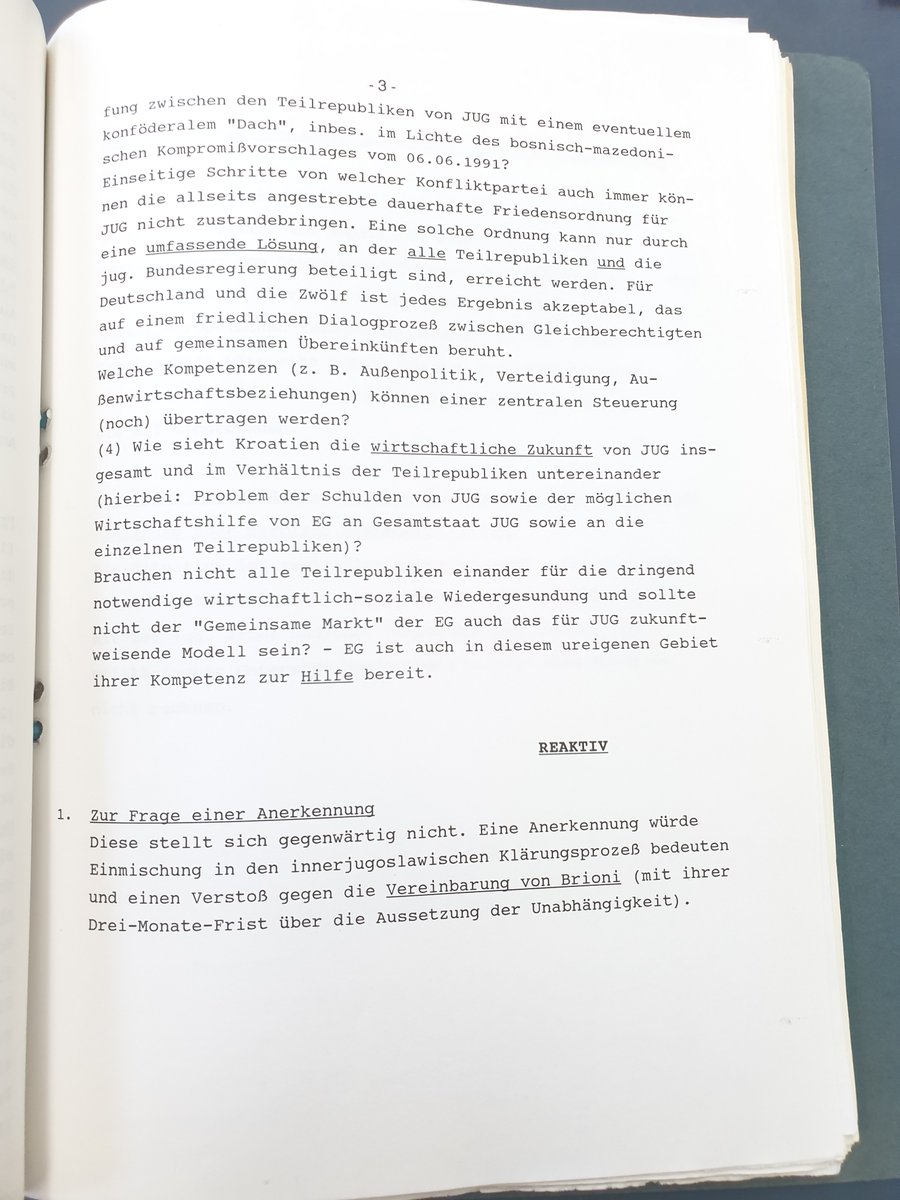
Should Tudjman ask Germany recognize Croatia as an independent state, Genscher was recommended to answer: “This question does not arise at present. Recognition would mean interfering in the inner-Yugoslav clarification process …."
However, according to another internal document, in which the actual conversation was summarized, Tudjman “avoided” to raise the question of recognition.
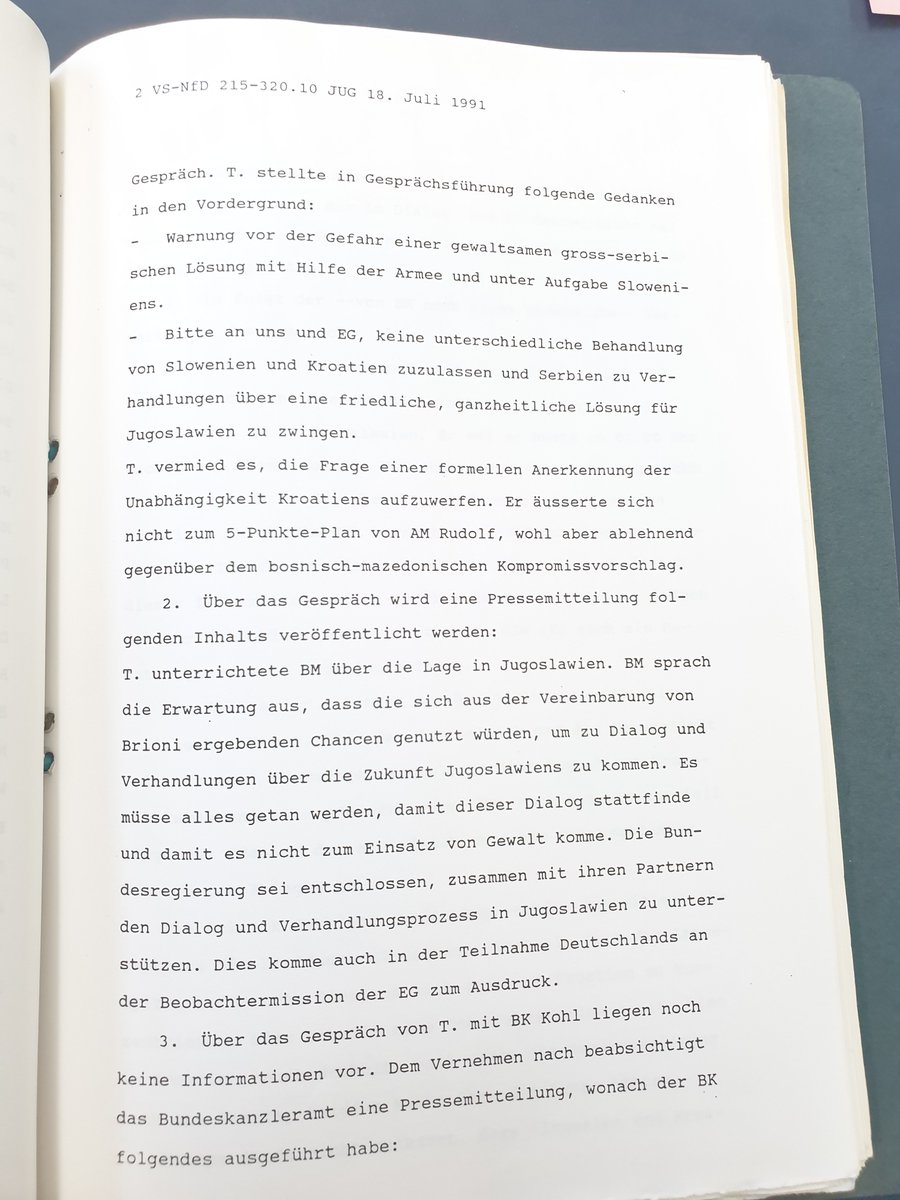
Tudjman did talk about Bosnia though. According to the German memo, the Croatian president tried to persuade Genscher that Bosnia had not future and thus had to be broken up. According to the minute-taker at the Foreign Office, Tudjman said:
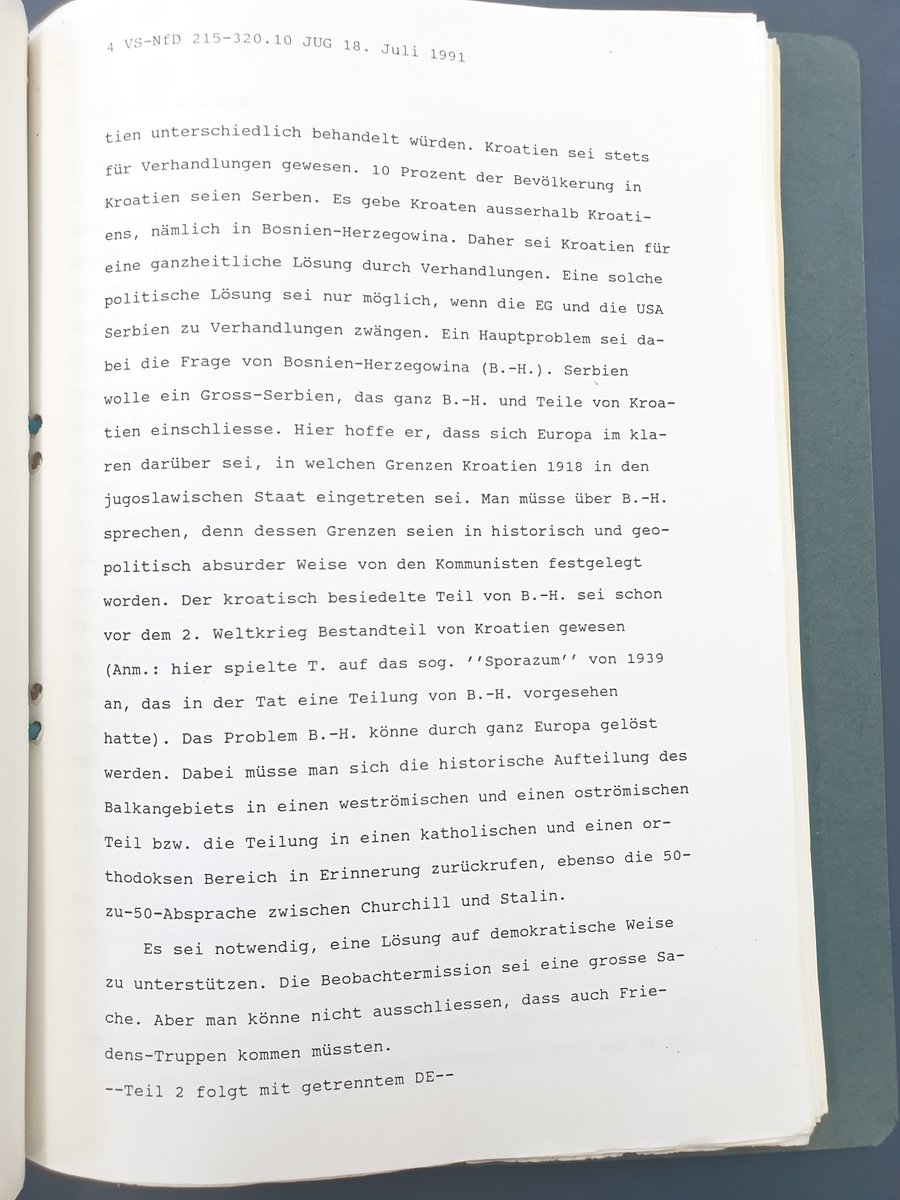
“One has to talk about Bosnia-Hercegovina, because its borders were defined by the communists in a historically and geopolitically absurd way. The Croatian populated part of B.-H. has been part of Croatia before World War II.”
"The problem of BiH could (only) be solved by Europe. In doing so, one must recall the historical division of the Balkans into a Western and Eastern Roman part or the division into a Catholic and an Orthodox sphere, as well as the 50-50 agreement between Churchill and Stalin.”
It is not recorded in the minutes whether (or what) Genscher replied to such remarks. However, other documents show that Bonn strictly rejected the division of Bosnia between Serbia and Croatia.
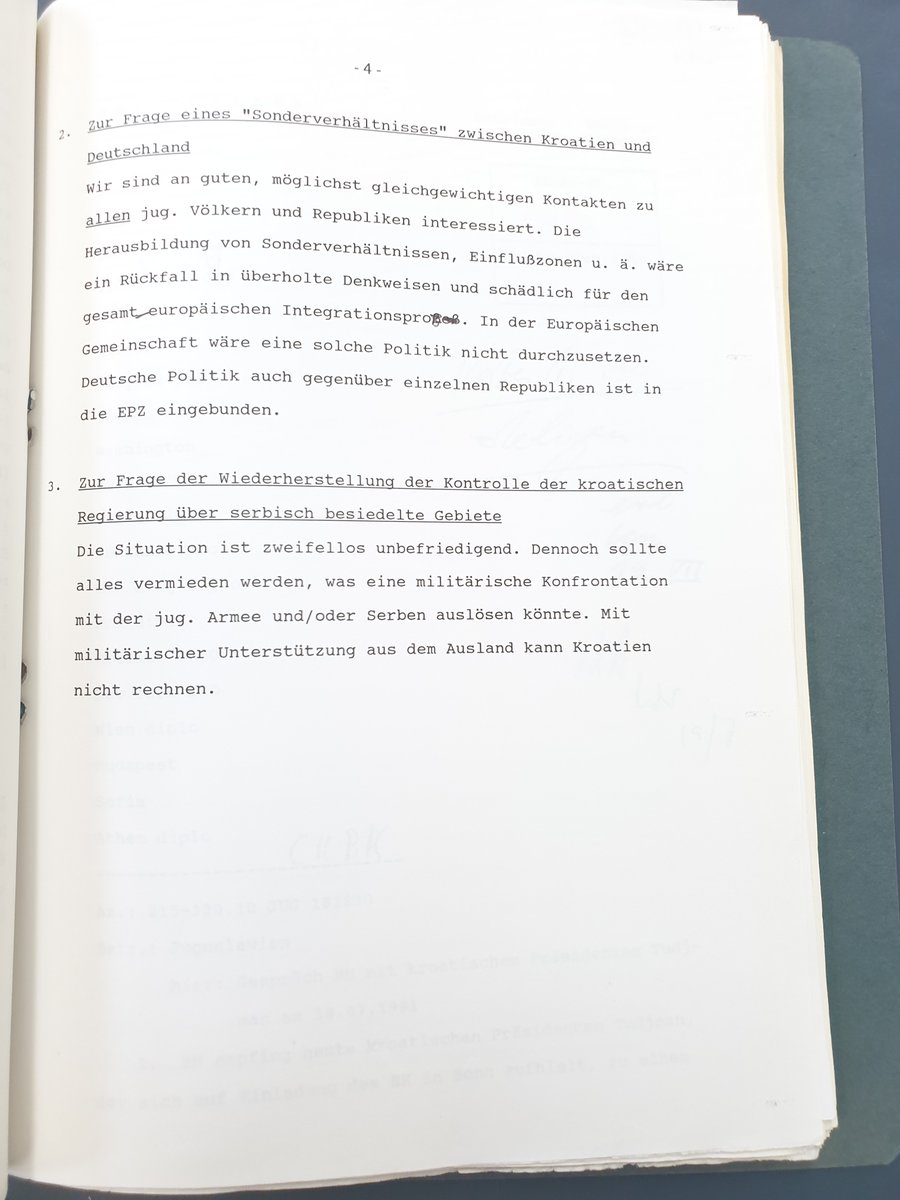
In one of the preparational documents for the visit, it is stated: "For us, the division of the territory of third parties cannot be a serious topic of discussion". It is argued Tudjman should be warned this could turn out to be boomerang for Croatia.
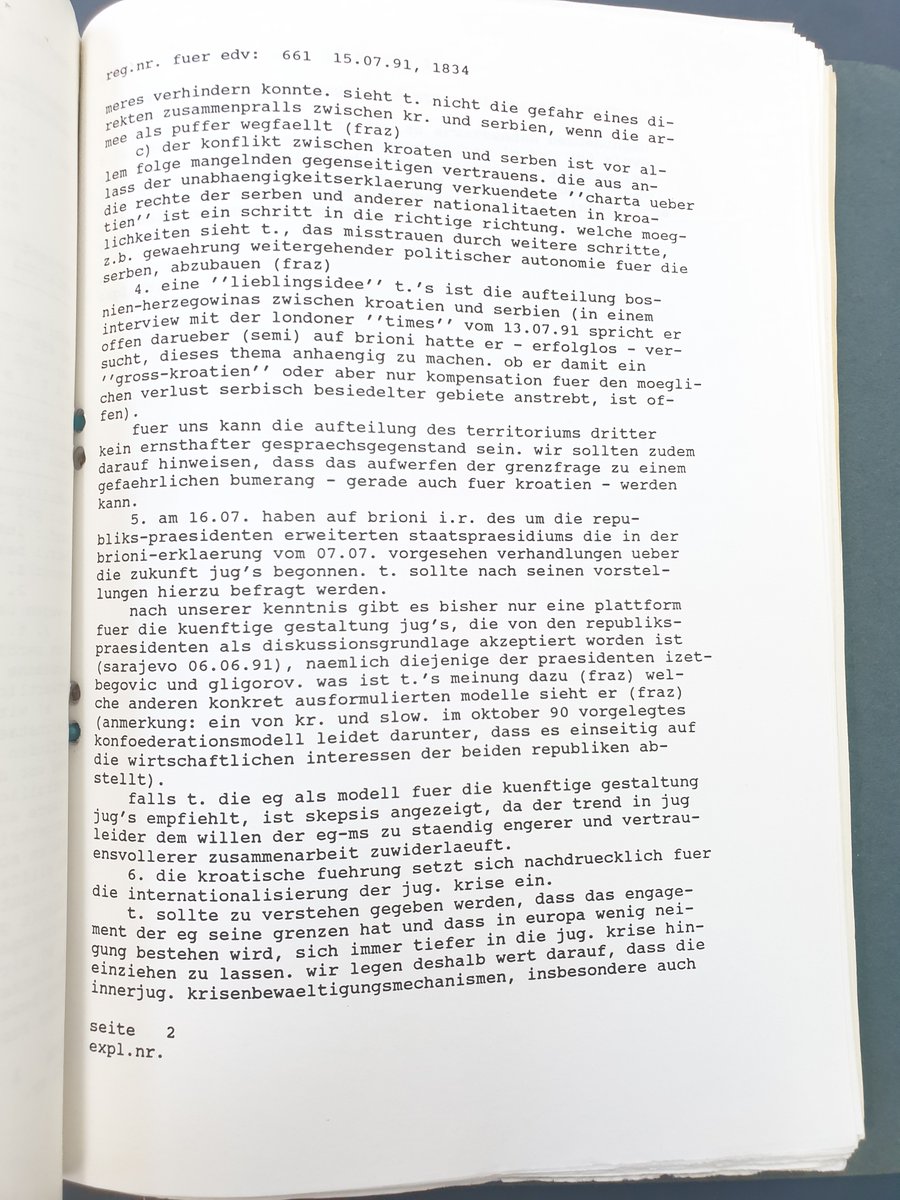
A summary of the conversation also states that Tudjman was told Bonn was not interested in a German “special relationship” with Croatia, as this would be “a relapse into outdated ways of thinking.”
More on the role of Germany at the collapse of Yugoslavia at another time.
More on the role of Germany at the collapse of Yugoslavia at another time.
جاري تحميل الاقتراحات...