
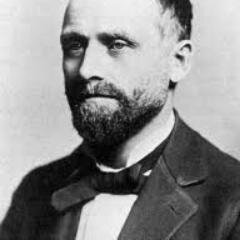
Friday, July 13th, 1991. The German ambassador to Yugoslavia, Hansjörg Eiff (1933-2019) meets Serbia's opposition leader Vuk Drašković to discuss the political situation.
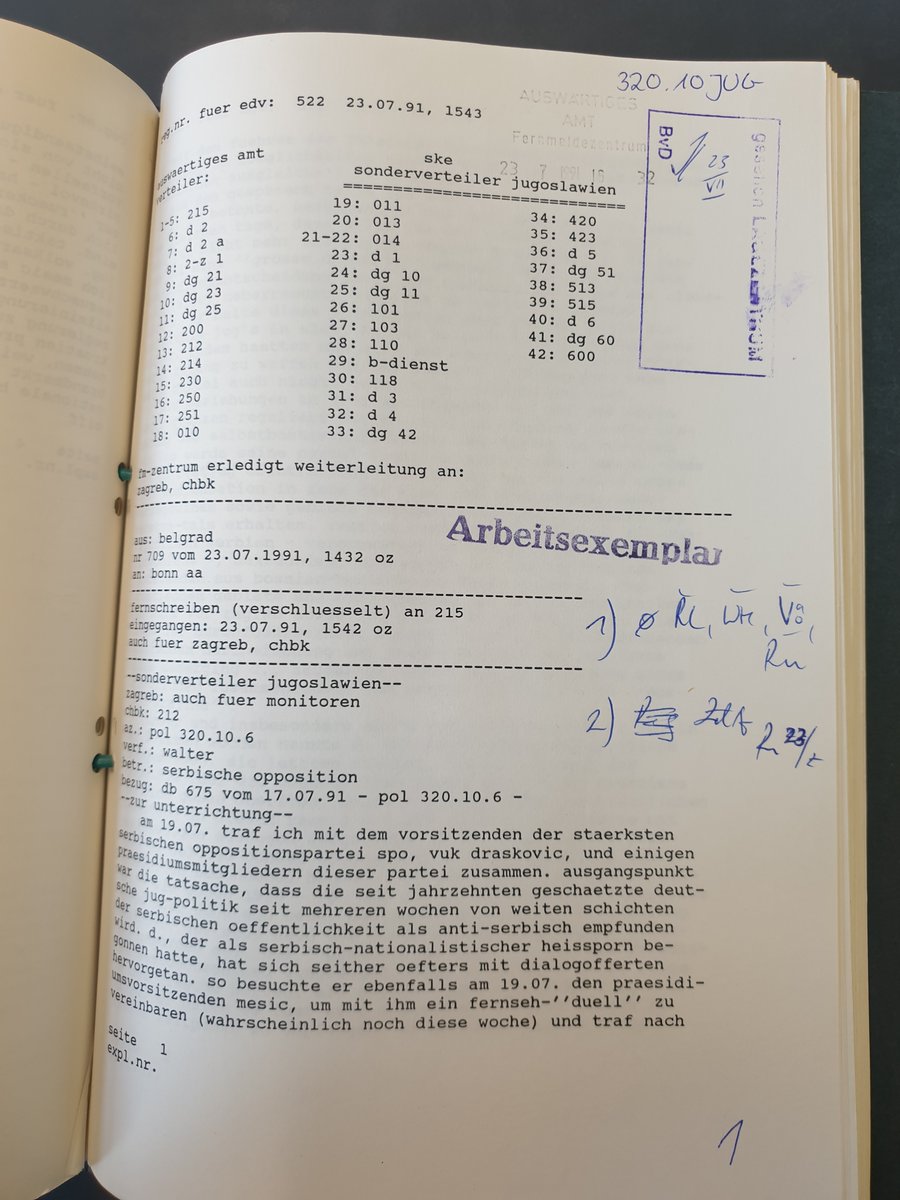
One of the reasons for the meeting is that German policy towards Yugoslavia “has been perceived as anti-Serbian by large sections of the Serbian public for several weeks", the ambassador writes. He seems to consider Drašković as a partner for a possible rapprochement.
A few days after the meeting, the ambassador forwards a summary of his conversation with Drašković to the German foreign ministry in Bonn.
Apparently, Drašković had spoken to Croatian politician Stipe Mesić just before meeting Eiff that day. Drašković said he agreed with Mesic “that Yugoslavia no longer existed.” The founding of the state seven decades ago was a “great stupidity”, Eiff quotes Drašković as saying.
Drašković then presents his ideas for the future of what was no more. Those were: New borders for Serbia and Croatia at the expense of Bosnia-Hercegovina. No surprise, of course. But still interesting how open these ideas were discussed behind closed doors at the time.
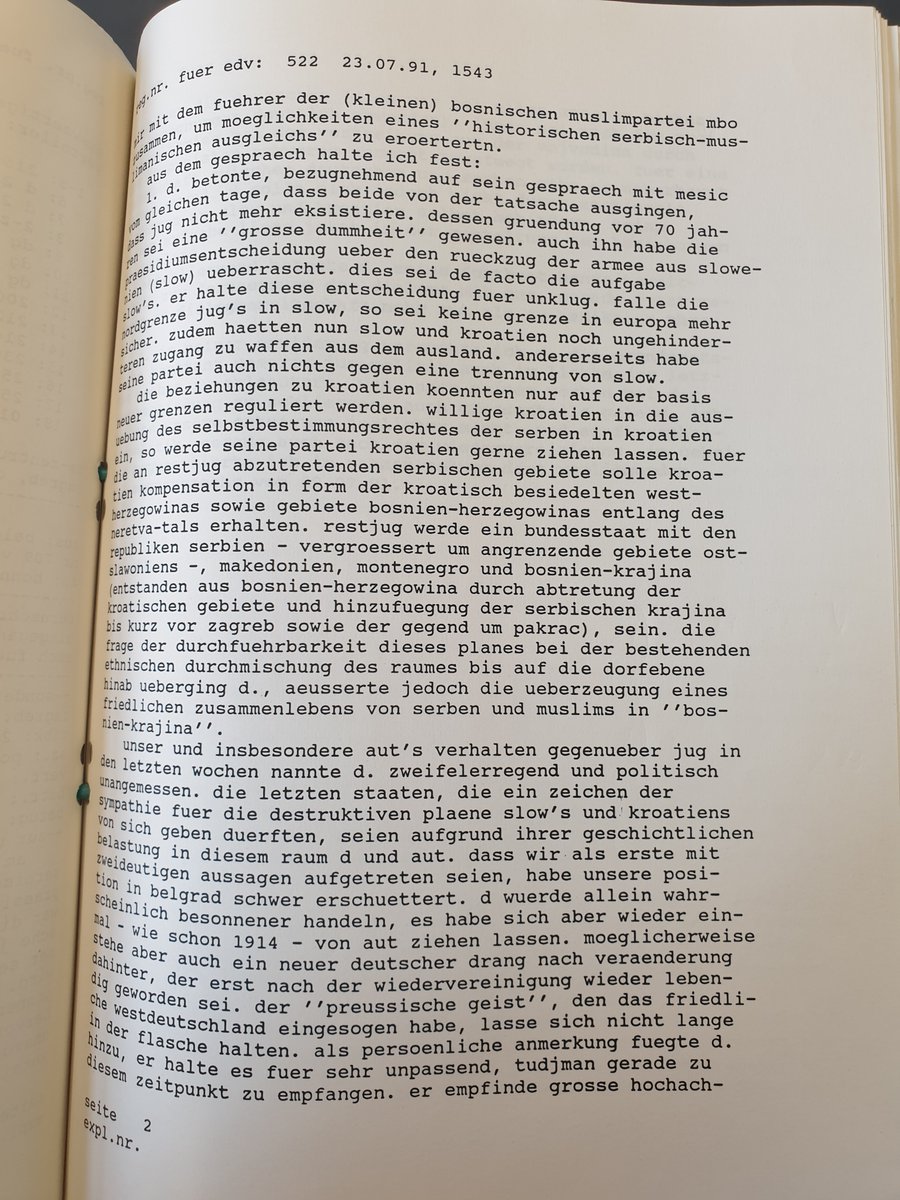
“If Croatia is willing to grant the right of self-determination for Serbs in Croatia, his party will be happy to let Croatia go” Drašković said according to the German ambassador. Drašković goes on to suggest:
“For those Serbian territories that Croatia will have to cede to rump Yugoslavia, it should receive compensations in the form of Croatian-populated Western Herzegovina and areas of Bosnia-Herzegovina along the Neretva Valley.”
Drašković says the new Yugoslavia should consist of Serbia (including parts of Eastern Slavonia), Macedonia, Montenegro and “Bosnia-Krajina”, the latter meaning Bosnia minus Western Hercegovina & parts of the Neretva valley pkus a "Serbian Krajina" reaching almost up to Zagreb.
The ambassador goes on reporting that Drašković seems to be angry with Germany and especially Austria: "Germany would probably act more prudently on its own, but once again - like in 1914 - it allows itself to get pulled (into a conflict) by Austria."
Ambassador Eiff summarizes Drašković as saying he had “great respect for the Germans”, with Eiff adding as his own observation that this was true: “This had become clear in all our encounters so far”.
“After WWII, when they (the Germans) were expelled from Vojvodina by the communists, they suffered serious injustice”, Drašković apparently told the ambassador, adding: “There is absolutely no reason for hostility between Germans and Serbs”.
This was one of several meetings between the German ambassador and Drašković in 1991 according to the transcripts in the archives of the German foreign ministry. At those meetings, Mr. Drašković usually outlined a view of politics in the spirit of the 19th century.
He talked about spheres of influence, seemingly monolithic ethnic groups with a single “political will”, moving territories & people back and forth on maps. It resembles Russia´s policy today or the "land swap" idea between Kosovo and Serbia that came up in 2018.
For the record: I did not find any napkins with future borders drawn onto them in the archive of the German foreign ministry. Maybe I missed the napkin folder though. For the record II: As far as I can see, the German ambassador never endorsed such ideas.
جاري تحميل الاقتراحات...