
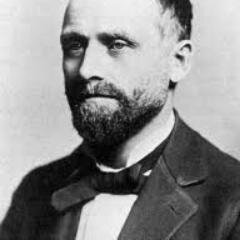
Albin Kurti, Prime Minister of Kosovo, in a comprehensive interview with Frankfurter Allgemeine Zeitung (FAZ): The aim of the recent compromise in the "license plate crisis" was for Serbia and Kosovo to quickly start negotiations "on a complete normalization of relations.”
Those negotiations, according to Mr. Kurti, "must be completed before spring 2023." The veteran politician did not say what he intends to do if this will not turn out to be the case.
EU foreign policy chief Josep Borrell had previously criticized Mr. Kurti in a way that was unusually explicit for diplomatic standards, accusing him of being responsible for the failure to find a compromise solution:
balkaninsight.com
balkaninsight.com
Talking to FAZ, Kurti dismissed Borrell's allegations: "I'm not stubborn, I'm principled. There are principles and values that I adhere to and that I do not negotiate in Brussels.”
He does not go to Brussels, Mr. Kurti inisisted, "to negotiate about police officers, prosecutors, customs officials and the directors of land registry offices." He would not have gone to Brussels if it had only been about license plates, he added.
“We don't need dialogue for the sake of dialogue or to show that Brussels is active”. I understood Mr. Kurti insinuated that Mr. Borrell did not negotiate in good faith. Ad notam & to be very clear: He did NOT say it in those words. This is just my interpretation of him saying;
"I'm going to Brussels to conclude a comprehensive agreement (...) But Mr. Borrell insisted that we only sign a declaration on license plates and sell that as a great success." On this he disagreed, Mr. Kurti stated.
Some background for those who do not follow the Balkans or started following it only a short while ago: Mr. Kurti was a political prisoner in Serbia at a time when the current Serbian President Aleksandar Vučić was Minister of Propaganda (“information”) of the Milošević regime.
So in a way, when Mr. Kurti and Mr. Vučić meet, this is also a rencontre of a former detainee with his ex-jailer. When asked whether this past played a psychological role in the negotiations, Mr. Kurti replied:
"I never try to shut out my emotions. Emotions are an important part of who we are and what we do. But I'm also experienced enough to let rationality decide what I say or don't say." (Opinion: Some more rationality might help here. Mr. Kurti sometimes resembles the early Tsipras)
Mr. Kurti, who was released from Serbian prison in 2001, went on to explain: "The problem for me is not primarily what Mr. Vučić was, but that even today he shows no regrets for what he was."
"Instead of regretting that he was Milošević's information minister, he regrets that I was released from prison more than a year after the latter´s fall. He said that several times – and that irritates me.”
A short digression: There were times when Mr. Vučić did publicly concede regrets and mistakes. When I interviewed him in 2014 and asked him what he thought about his past as a radical Serbian nationalist, he answered:
“I was mistaken. I was wrong. I was at fault. Even though it's not easy, I admit my mistakes. (…)When the Berlin Wall fell in 1989 and the world changed, we Serbs didn't understand what that meant. We no longer understood the world.”
faz.net
faz.net
Not sure how Mr. Vucic would answer this question today, but my guess is: Very different.
So back to 2022: "It's not about what I went through in prison, but about the fact that so little has changed in Serbia", Mr. Kurti said about his relations with Mr. Vucic.
So back to 2022: "It's not about what I went through in prison, but about the fact that so little has changed in Serbia", Mr. Kurti said about his relations with Mr. Vucic.
Another question we touched was why Mr. Vučić should invest in a compromise with Kosovo when the reward he once could have hoped for – Serbia's EU membership – is no longer realistic. (Greetings from Santa Claus to those who still believe in it)
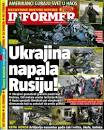
Another short digression for those who speak Serbian: The question on Mr. Vučićs motivation was apparently considered important enough to make the headlines in “Informer” Serbia´s most notorious tabloid. (Slow news day, maybe).
informer.rs
informer.rs
Digression III: Whenever you see “Informer" claiming this or that, keep in mind that this is the paper which on the day after the newest Russian invasion of 🇺🇦, ran the headline: “Ukraine attacked Russia”.
When asked about Mr. Vucic's motivation for a compromise, Kurti replied, among other things, "not only does Brussels not want Belgrade, but Serbia also prefers Moscow." (Ad notam: I believe the second part of the sentence to be wrong. Just quoting.)
However, an agreement with Kosovo is not only lacking because of Belgrade. Some say Mr. Kurti stubbornly (or as a matter of principle, as he might put it) blocks the foundation of an association of municipalities of Serb enclaves and communities. Why does he do that?
“Serbia keeps saying that it will never recognize Kosovo. They say Kosovo is an artificial state. But in this allegedly artificial state, they want a very real association of municipalities," Kurti explained, adding:
"The Serbian slogan is: 'You don't exist - but we want something from you.' It's not going to work that way." But wat way will it work then?
A question we touched was whether the principle of reciprocity advocated by Kurti could be a model for minorities in Serbia and Kosovo (the same rights for the Albanian minority in south-western Serbia as for the Serbs in the enclaves in Kosovo).
Kurti replied that he was in favor of the reciprocity of the rights for all minorities throughout the Balkans. “That is the formula for peace. Minority rights are important to fight nationalist hegemonies.” He added a big “but” though.
“Belgrade´s insistence is not about rights for the Serbs. Serbia wants the territorialization of these rights – and that is something completely different.”
However, whatever Mr. Kurti says, for the time being it is a fact that both the EU and the US insist that the association of Serb municipalities in Kosovo is a must. As the head of government of a small country, does he want to ignore his most important allies? Risky game.
Answering this, among other things, Mr. Kurti said: "Once we talk about the normalization of our relations, I am ready to talk about communities and the rights of the Serbian minority – but not as a prerequisite for talks, but as part of them."
Mr. Kurti also announced that after Ukraine, Moldova and Georgia, Kosovo will submit an EU membership application as well. This will happen in December. He described the EU membership application as a question of principle:
“Of course we know that membership is not coming anytime soon. But it is important that we officially, formally and publicly express our desire to join the EU.” (Opinion: Western Balkans states might aspire for EU membership or for overcoming gravity. Prospects are similar.)
Other topics of the interview concerned the Franco-German proposal to resolve the conflict between Belgrade and Prishtina & the role of Jens Plötner and Emmanuel Bonne, foreign policy advisors to Olaf Scholz and Emmanuel Macron, in this process.
We also discussed Kosovo's application for membership of the Council of Europe (Rumor has it that the German ambassador in Strasbourg is an enthusiastic fan of this idea and fights like a lioness for Kosovo's admission, but that was not the subject of our conversation).
For the whole interview with Mr. Kurti, please go this way:
faz.net
faz.net
Oh, and before I forget: This was a very long 🧵. Did I mention?
جاري تحميل الاقتراحات...