

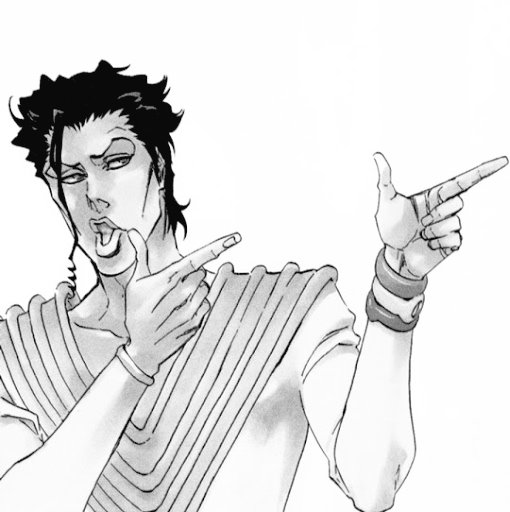
This thread will contain manga spoilers, so read ahead with that in mind.
A small preface:
It's a bit of a common theme with the Sternritter how they exhibit contradictions in varying capacities. What makes Askin special is how they manifest in his unique role within the story.
A small preface:
It's a bit of a common theme with the Sternritter how they exhibit contradictions in varying capacities. What makes Askin special is how they manifest in his unique role within the story.
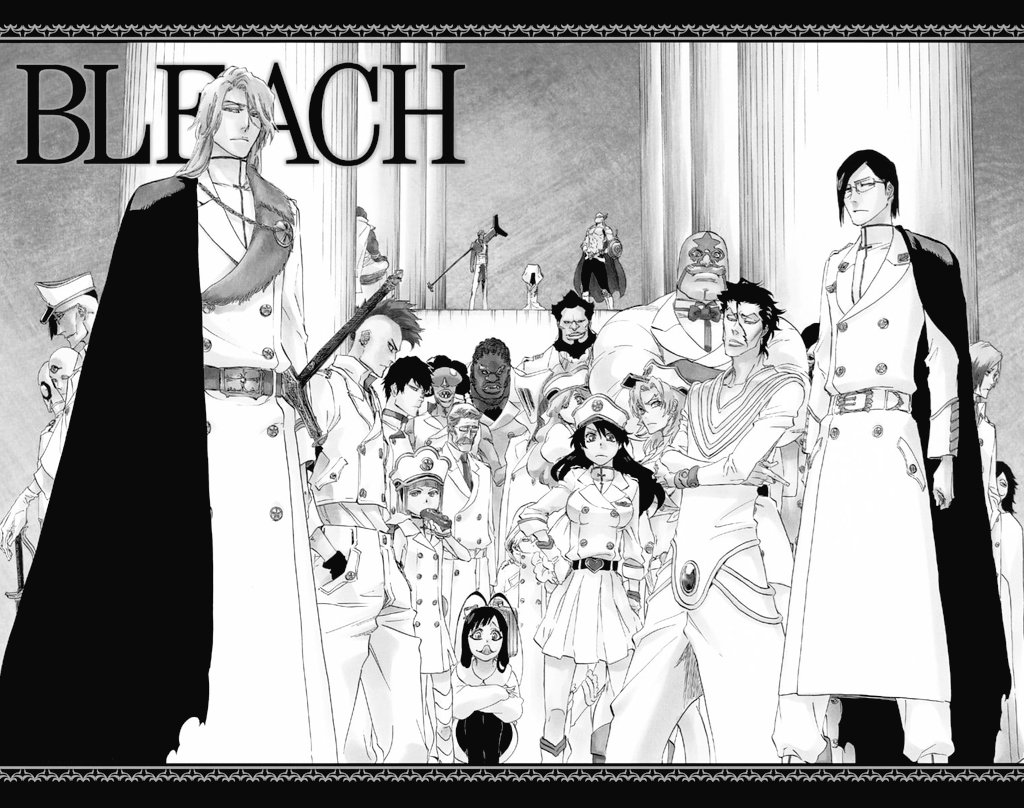
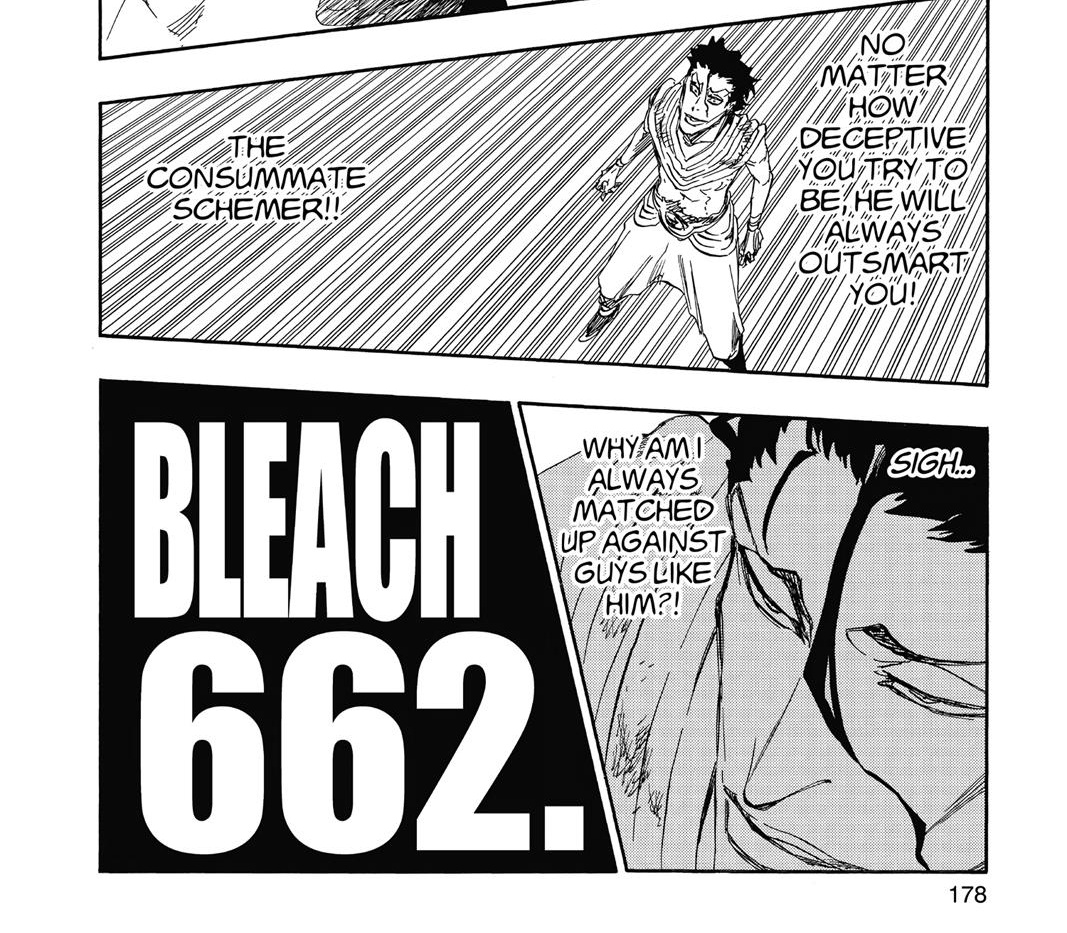
Askin assumes the role of the narrator a few times in the arc. He is the one who reveals the structure of the Schutzstaffel and the origins of Pernida and Gerard as parts of the Soul King. He exposes information of the war potentials and the reasoning behind their classification.
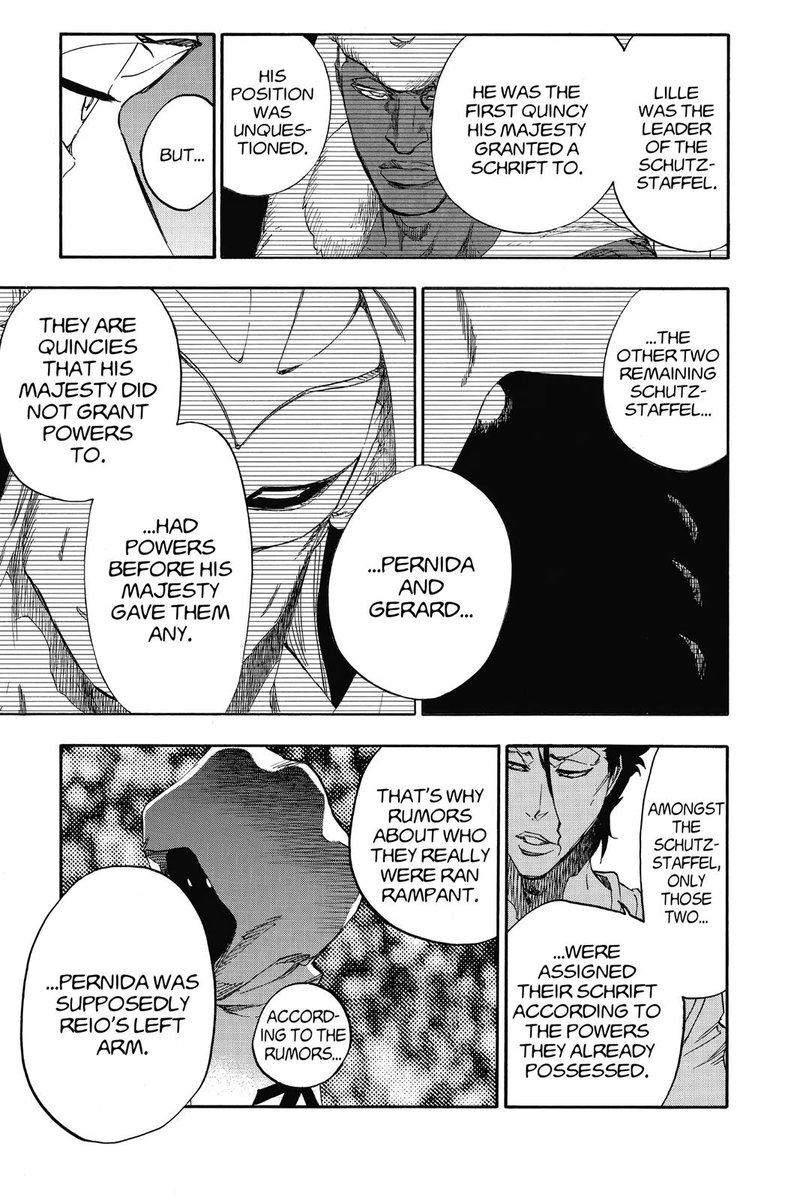
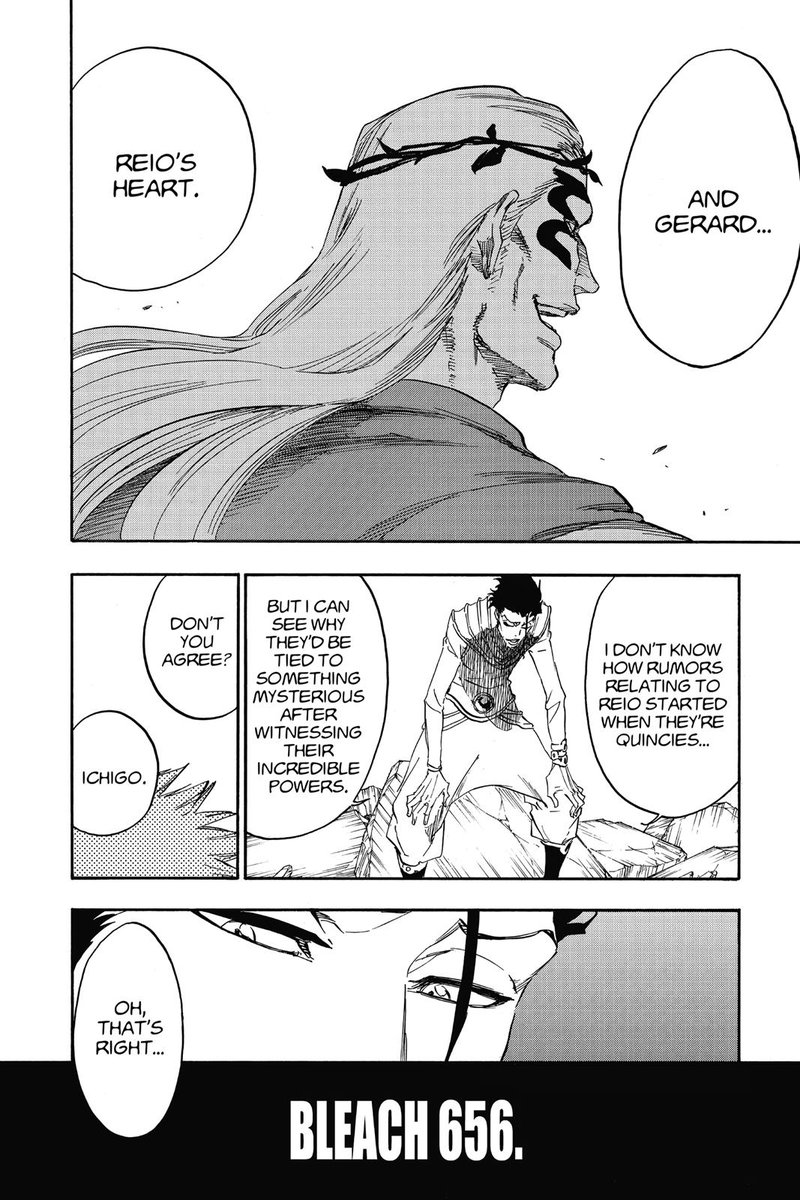
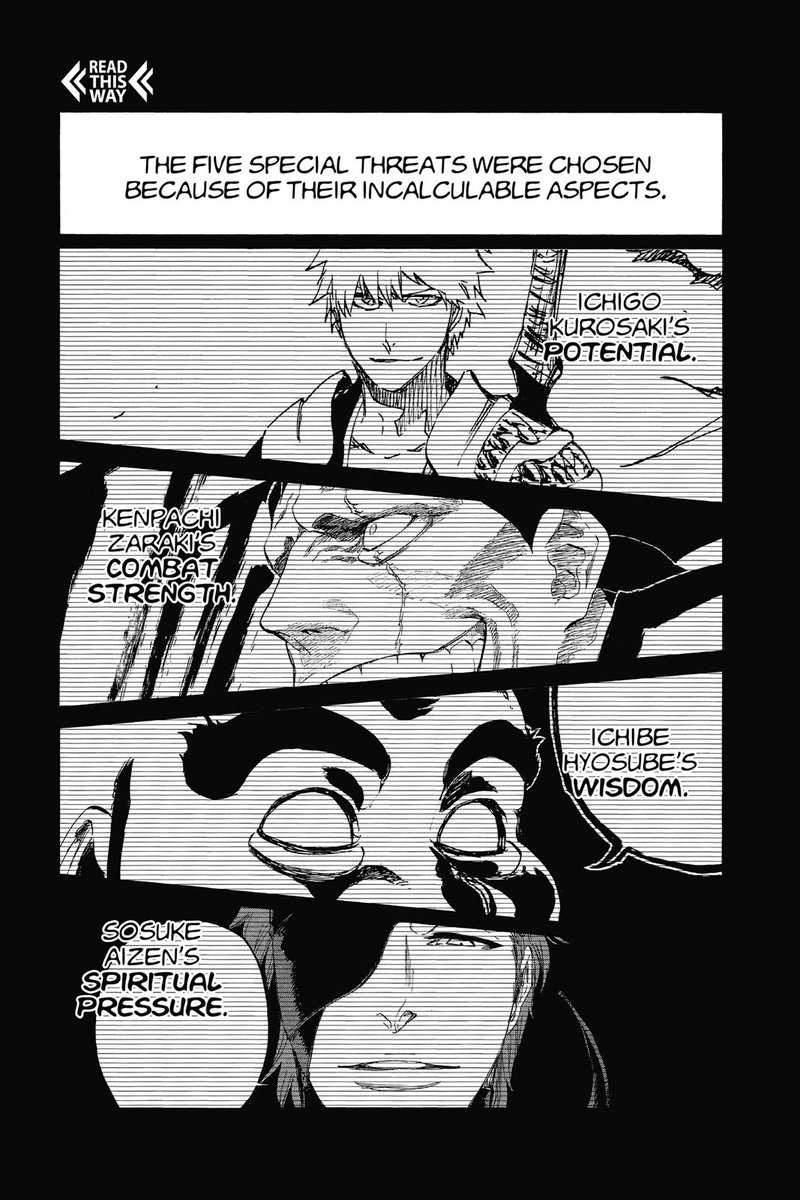
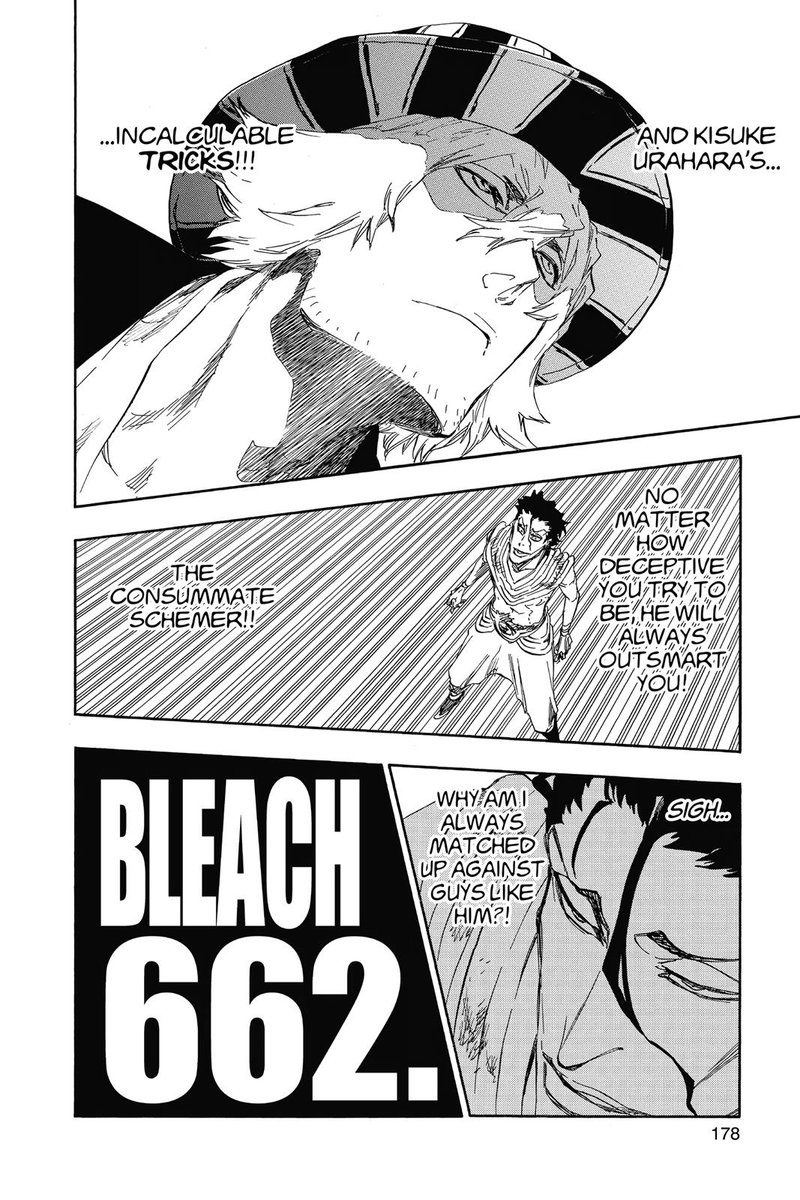
Commonly, narrators are beings that have intimate knowledge of the plot, but don't exert any influence on it. In other words, they don't have a stake in it. You could even say that they are *above* the plot.
Askin's mentality and mannerisms reflect this idea.
Askin's mentality and mannerisms reflect this idea.
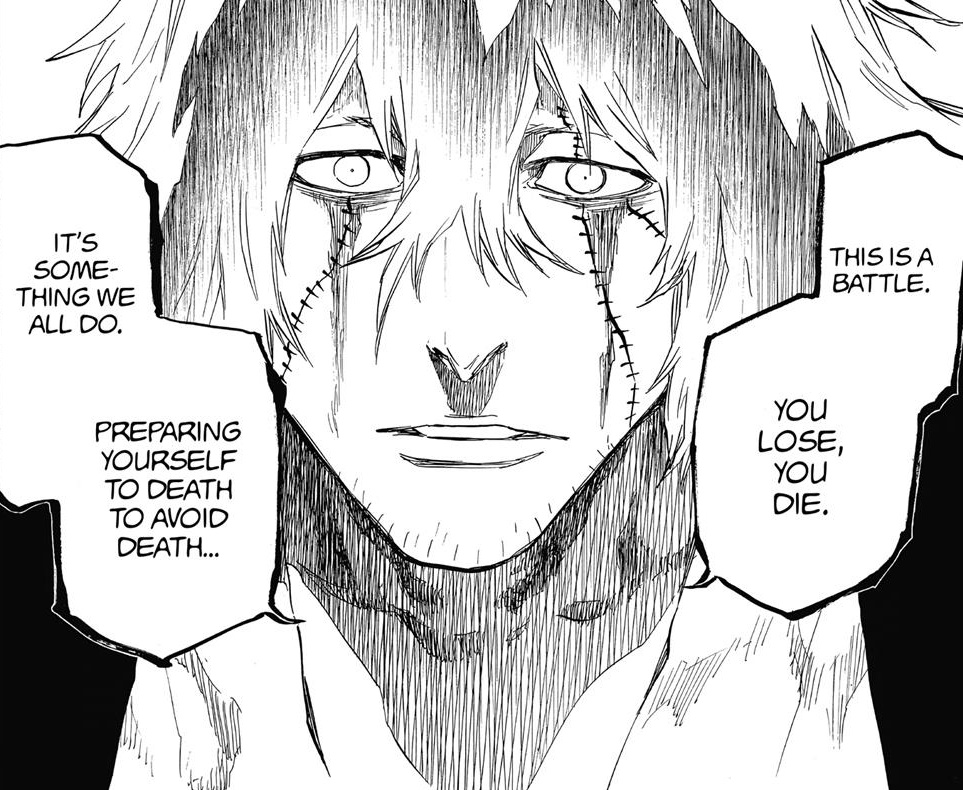
Throughout the final arc, we see him being whimsical and nonchalant, a far removal from the devotion that the Sternritter displayed when it came to the mission at hand. Askin never seriously invests in a fight either (until Yoruichi and Kisuke, but that's a different matter).
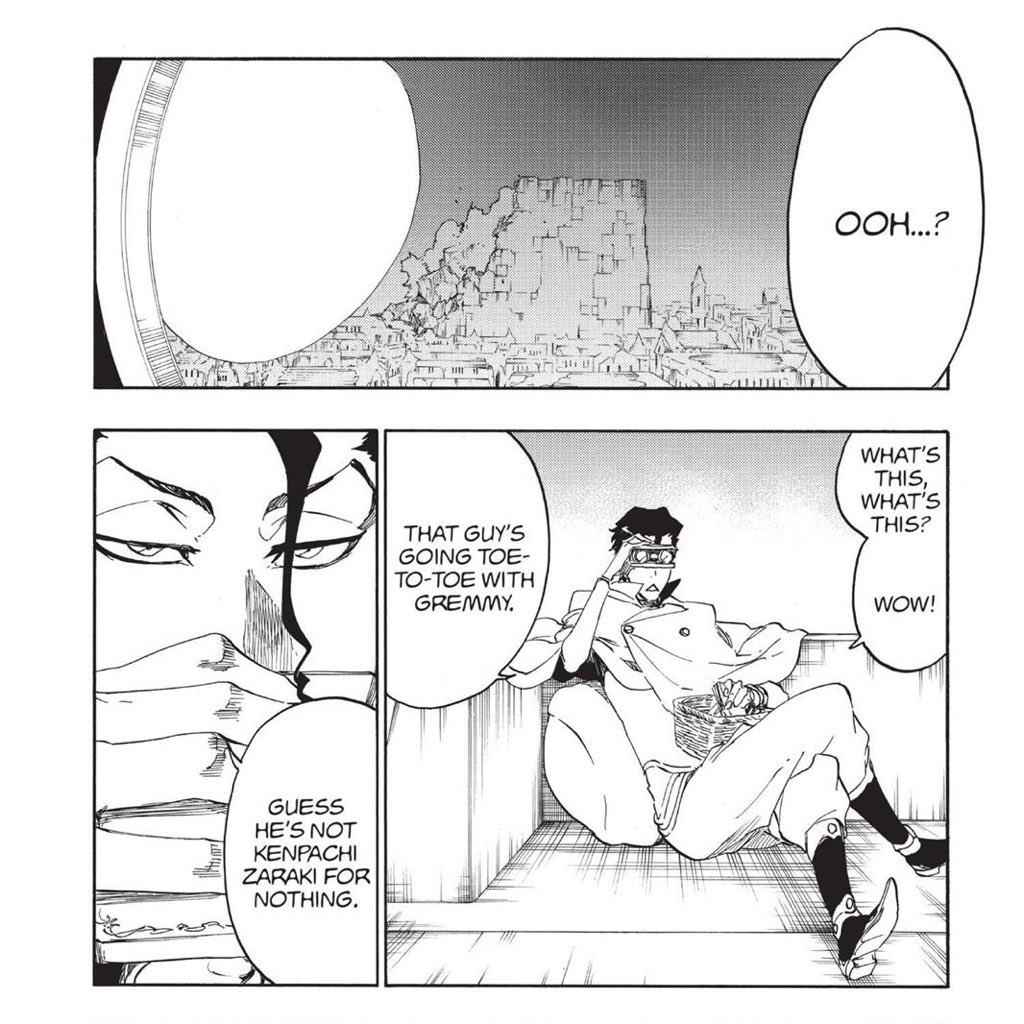
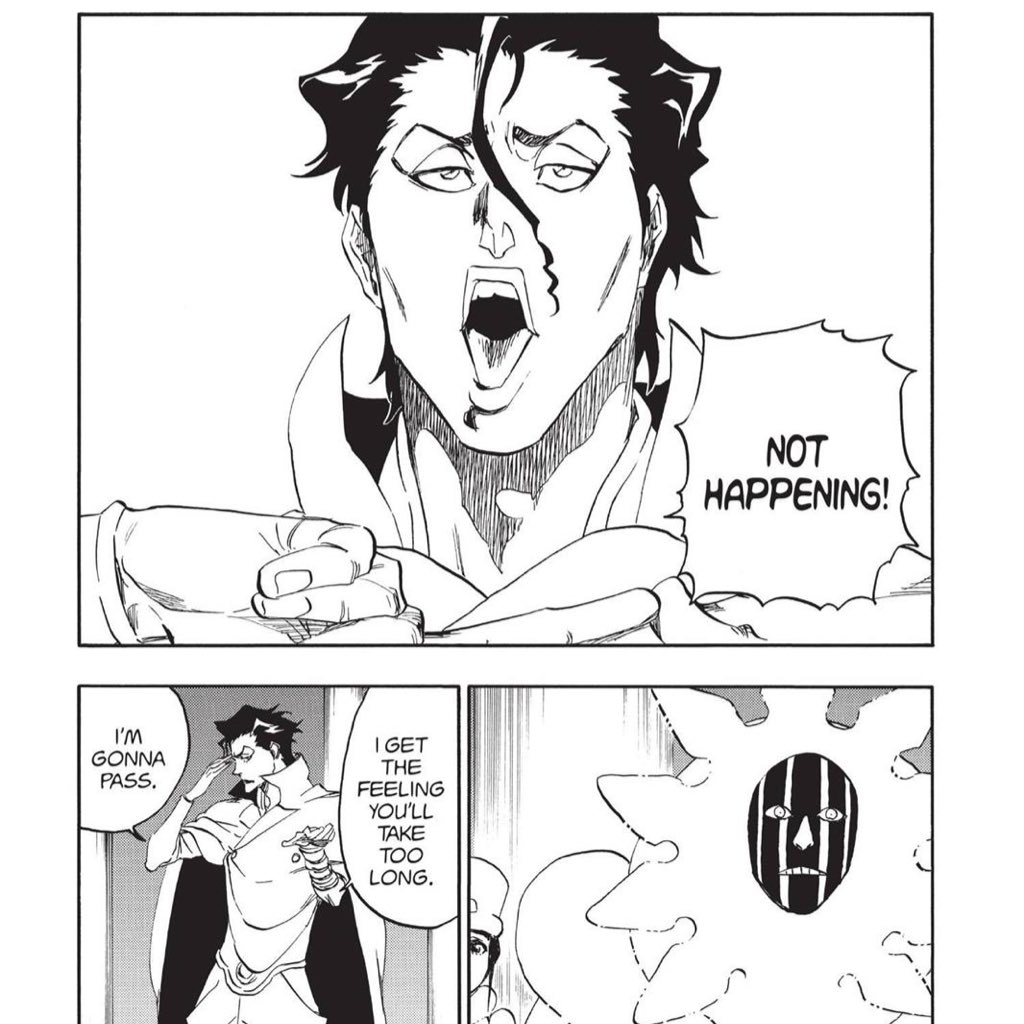
He laments having to exert himself when he does have to fight. He acts like he's a non-factor in the war.
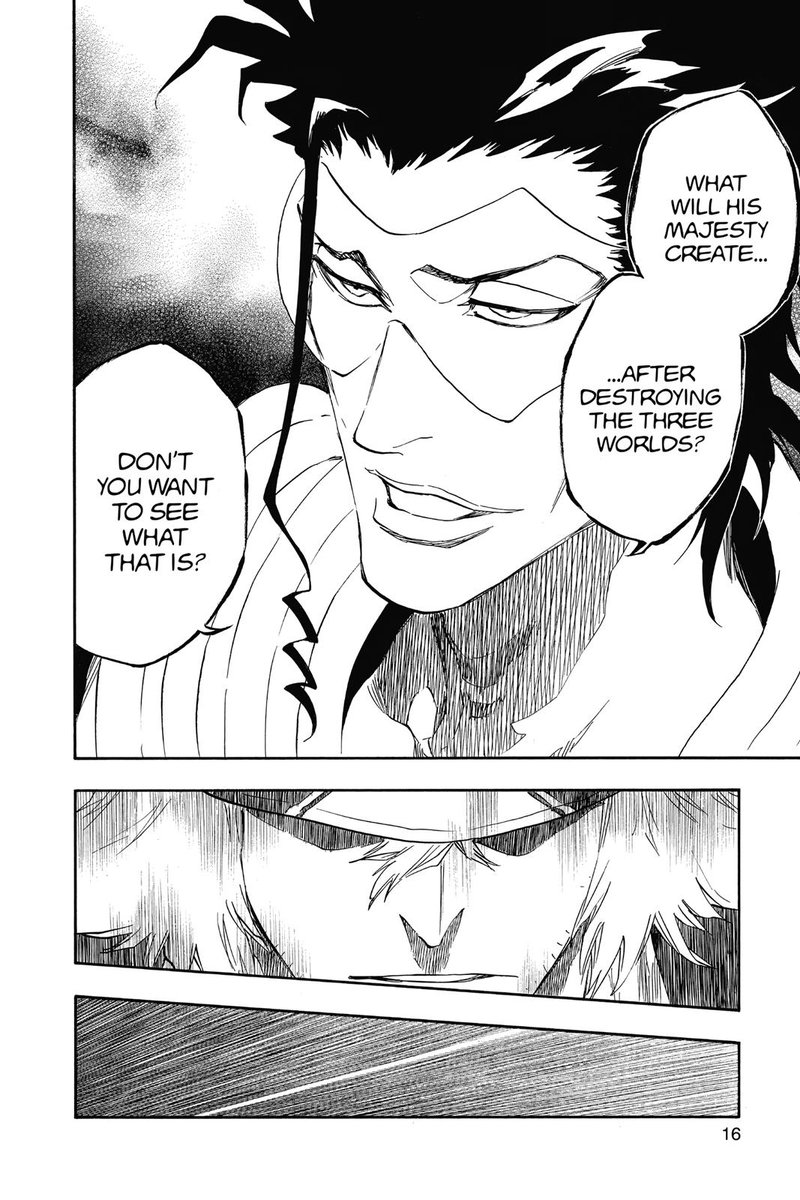
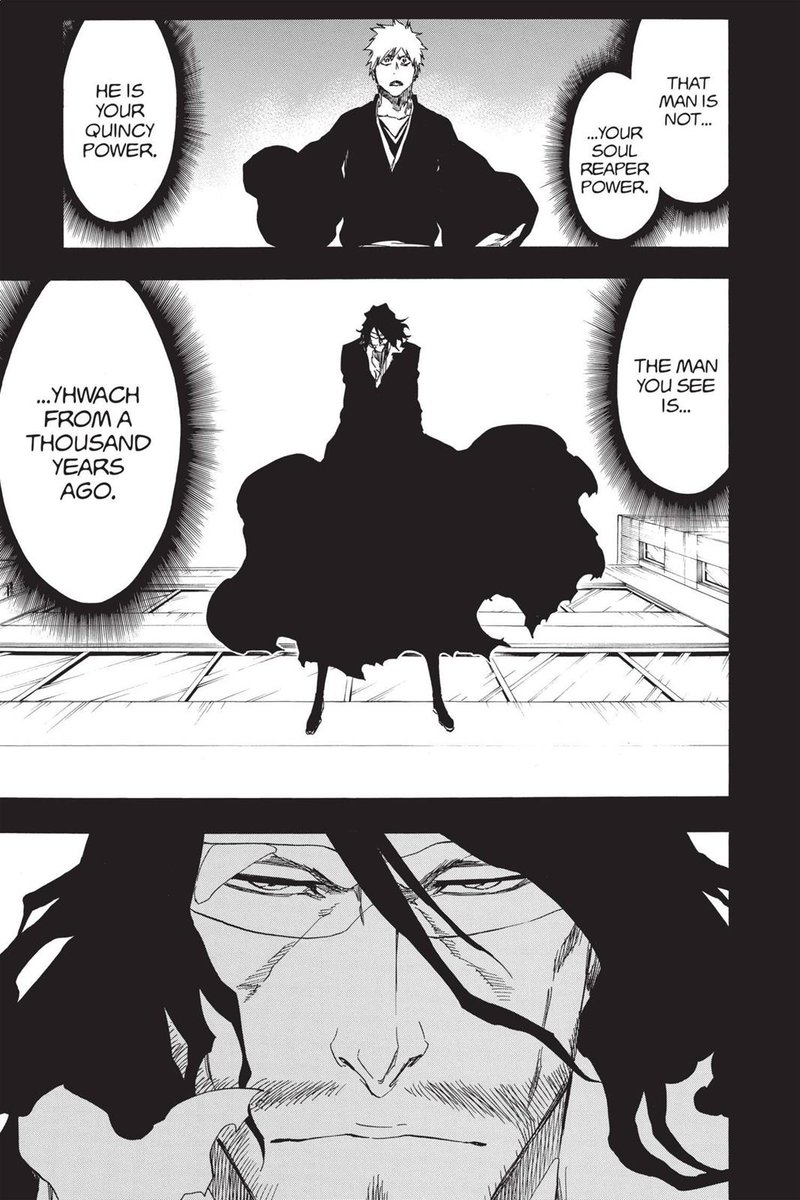
More importantly, circling back to his function as the narrator, the first time he assumes that role is when he's standing over Ichigo, the centrepiece of the plot.
More importantly, circling back to his function as the narrator, the first time he assumes that role is when he's standing over Ichigo, the centrepiece of the plot.
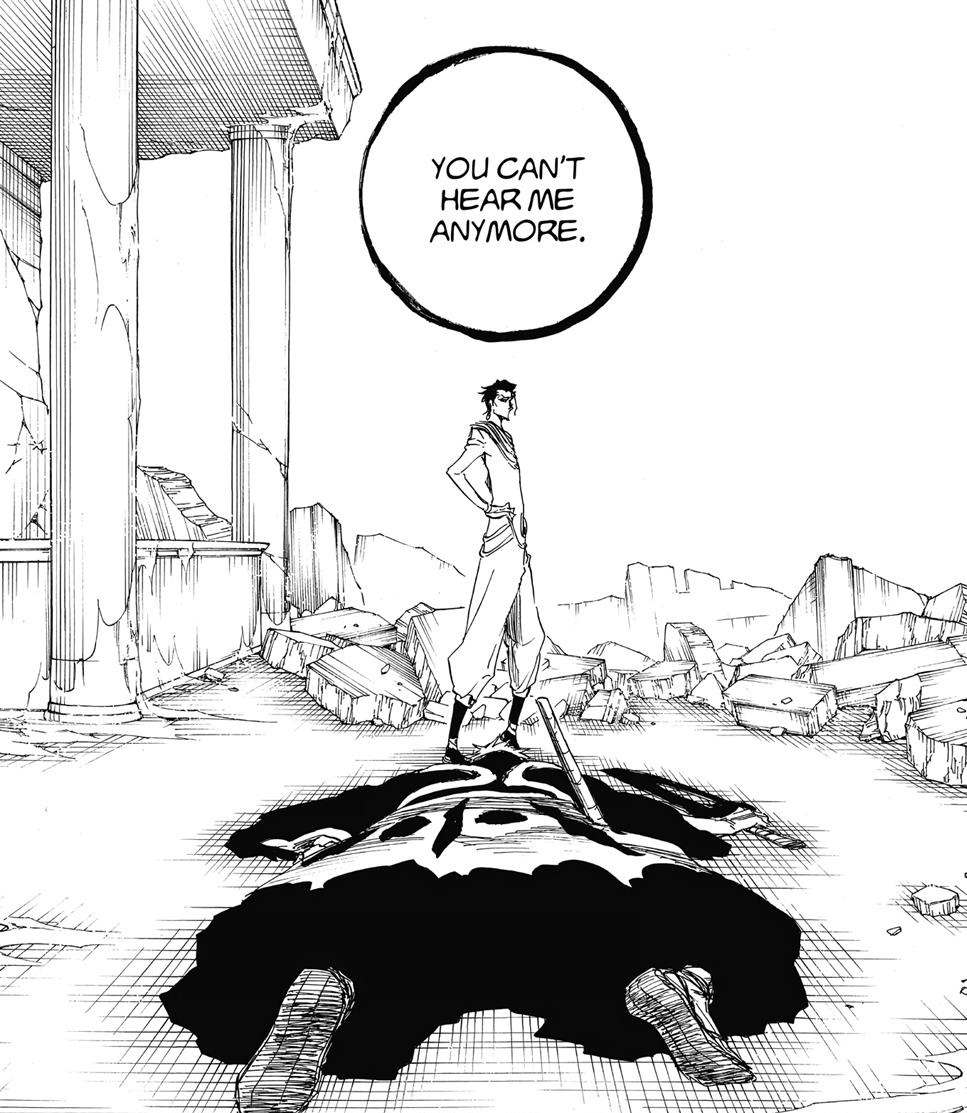
As if to signify he's above the plot itself.
Through subtle details like this, as well as design choices, it's conveyed that Askin is different from his comrades.
Then again, there are a lot more things that convey the fact that Askin is different than just his dressing sense.
Through subtle details like this, as well as design choices, it's conveyed that Askin is different from his comrades.
Then again, there are a lot more things that convey the fact that Askin is different than just his dressing sense.
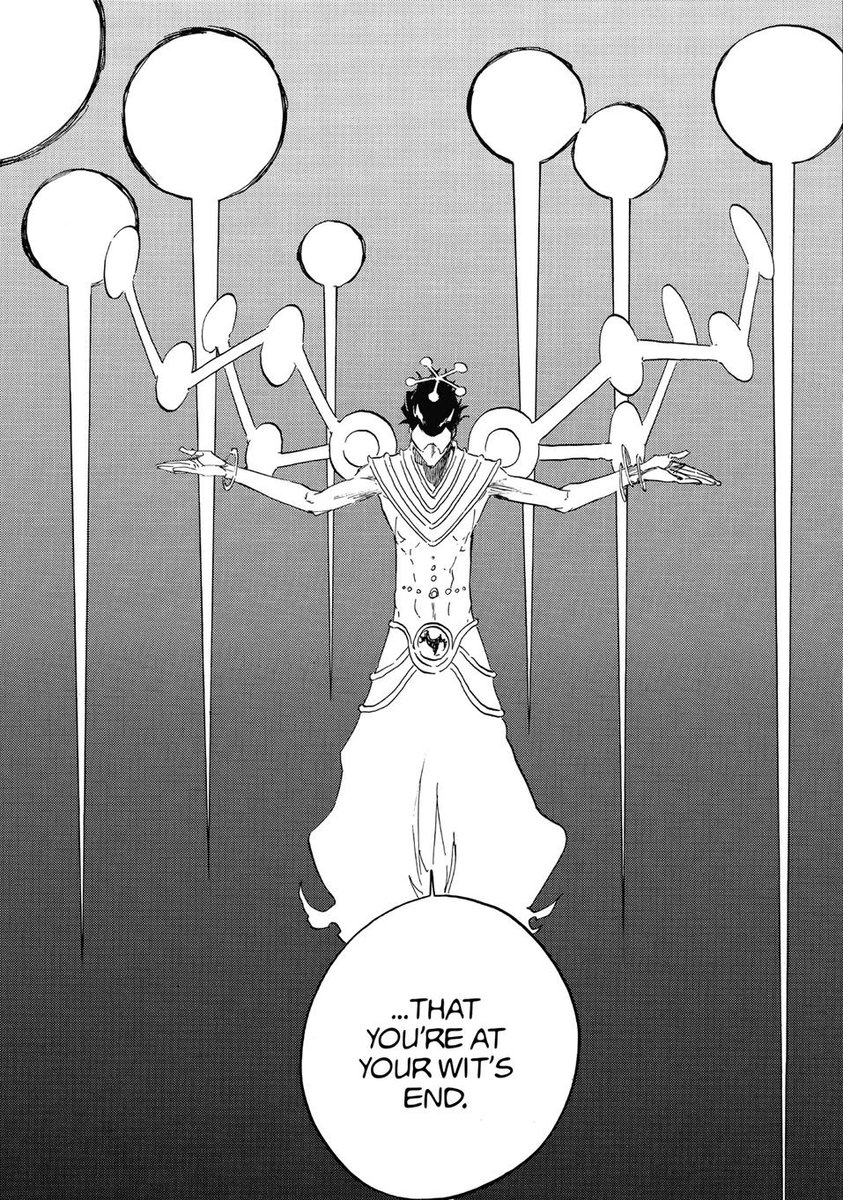
His Vollstandig doesn't have wings like others. His name is more modern and has roots in French culture as opposed to most others, whose names are more archaic and have roots in German culture.
The strongest point comes straight from Kubo's mouth though.
The strongest point comes straight from Kubo's mouth though.
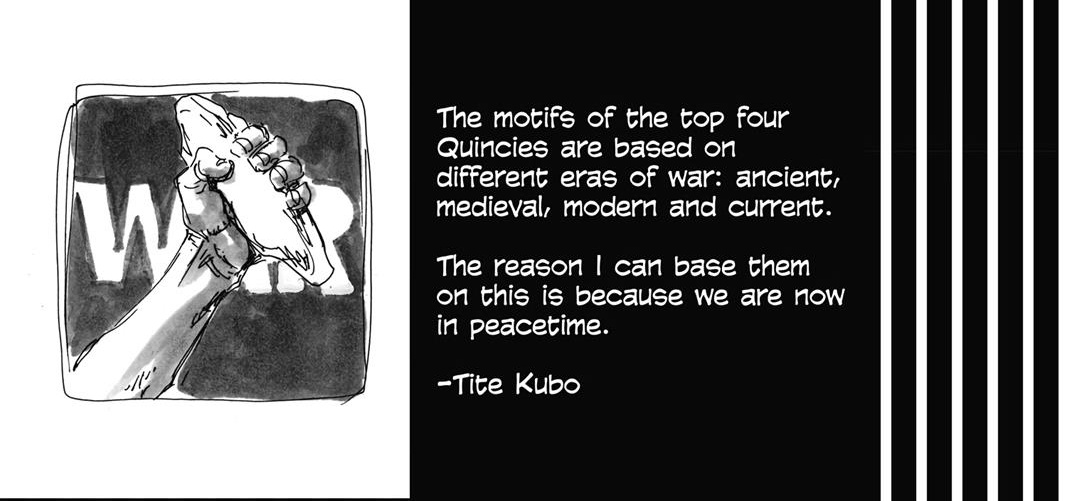
In Vol 73's author note section, Kubo says he's based the Schutzstaffel on four eras of war. Considering the characteristics of the eras mentioned as well as that Askin's ability is literally chemical warfare, it's safe to assume he embodies the modern era of war.
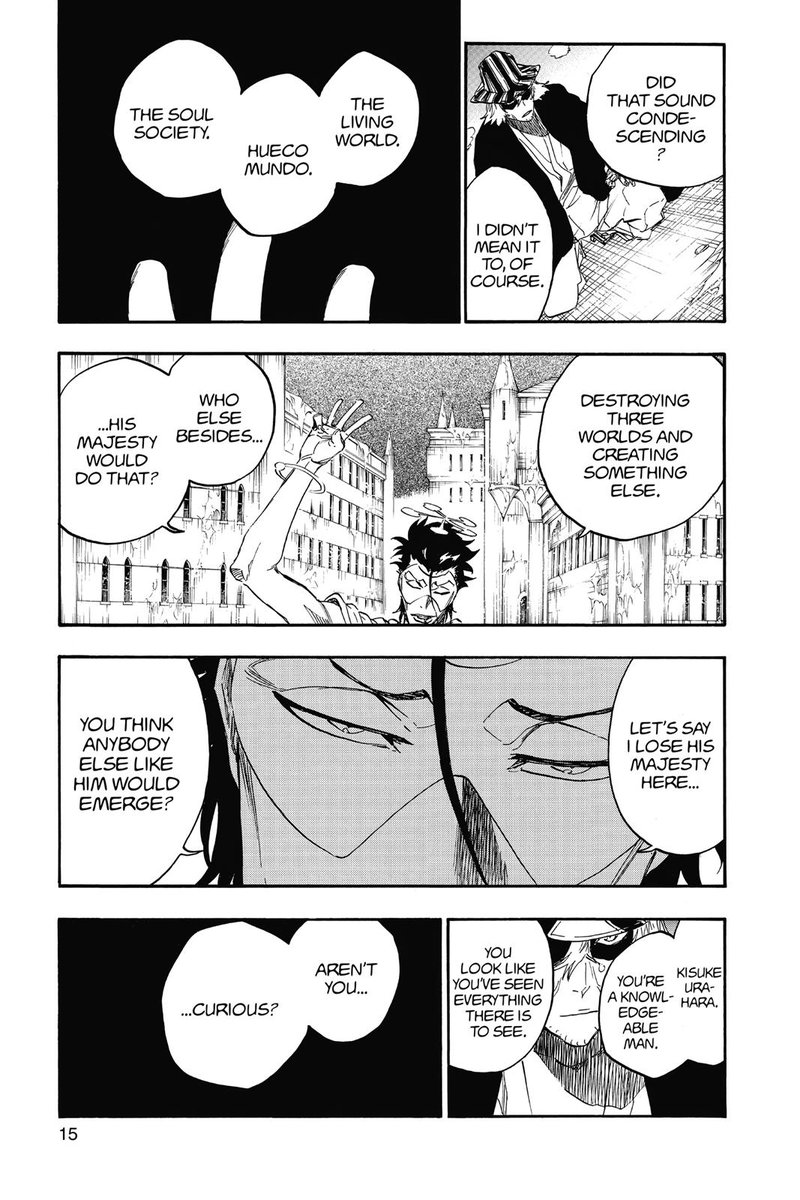
Another significant way in which he distinguishes himself from other Sternritter is his reasons for following Yhwach. While most follow him out of either devotion or fear, he does so out of curiosity. He wants to see the world Yhwach will create upon his victory.
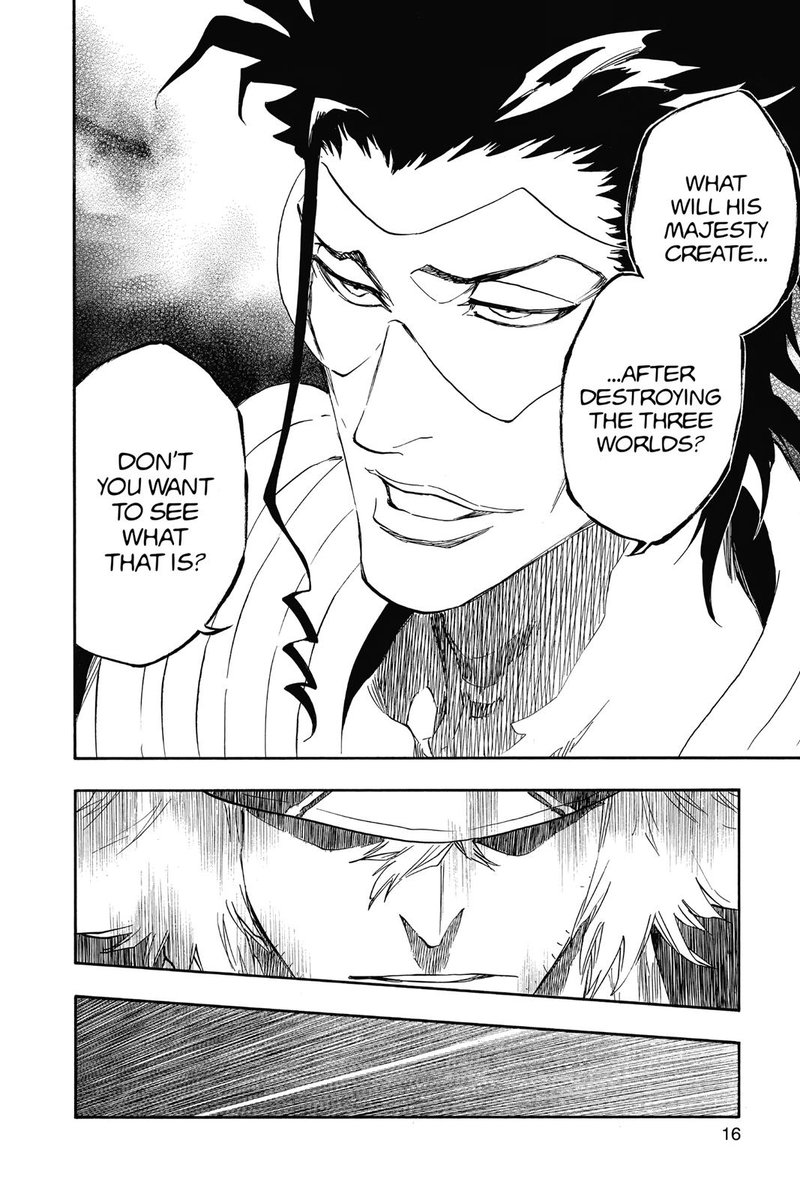
The breakdown of the construction of Askin I've done so far has been fairly basic. However, when we look deep enough, the contradictions start to show themselves.
First of all, the most obvious contradiction is in his mannerisms itself.
First of all, the most obvious contradiction is in his mannerisms itself.
Despite his role differentiating him from his comrades and essentially putting him on a different playing field altogether, he constantly downplays himself to the point where it goes beyond simple humility. The reason I say this is substantiated by the next point.
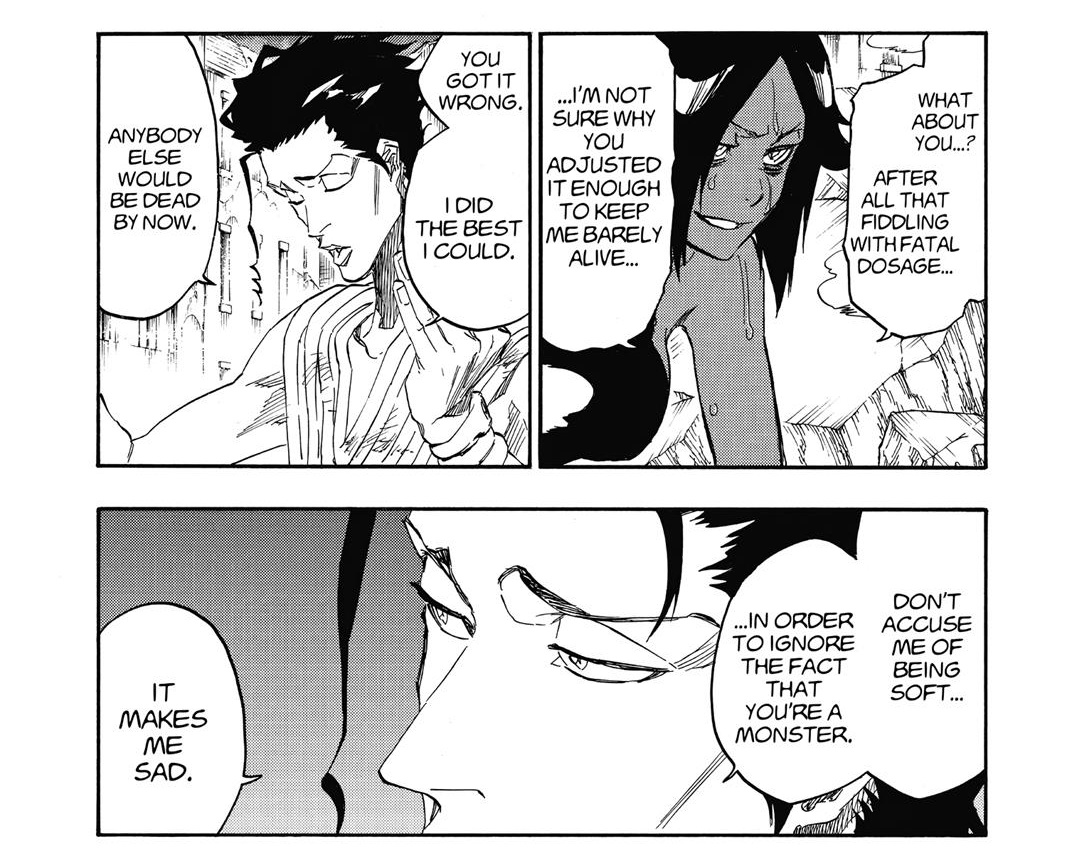
Agency. A central pillar of Bleach.
Askin has a fairly complex relationship with agency. At first glance, it seems like everything he does is by his own design, including the enforcement of the differences between his comrades and himself in a stylistic sense and otherwise.
Askin has a fairly complex relationship with agency. At first glance, it seems like everything he does is by his own design, including the enforcement of the differences between his comrades and himself in a stylistic sense and otherwise.
For instance, he wears clothes that look Egyptian of his own volition. He markedly behaves differently by not committing to fights where he can afford not to. He has a different reason for following Yhwach. He seems to distinguish himself from others actively.

On the flip side, he also actively downplays himself, talks up his comrades and opponents alike. Almost as if to pull himself down from the higher playing field his function as a narrator puts him on.
These are seemingly contradictory actions.
These are seemingly contradictory actions.
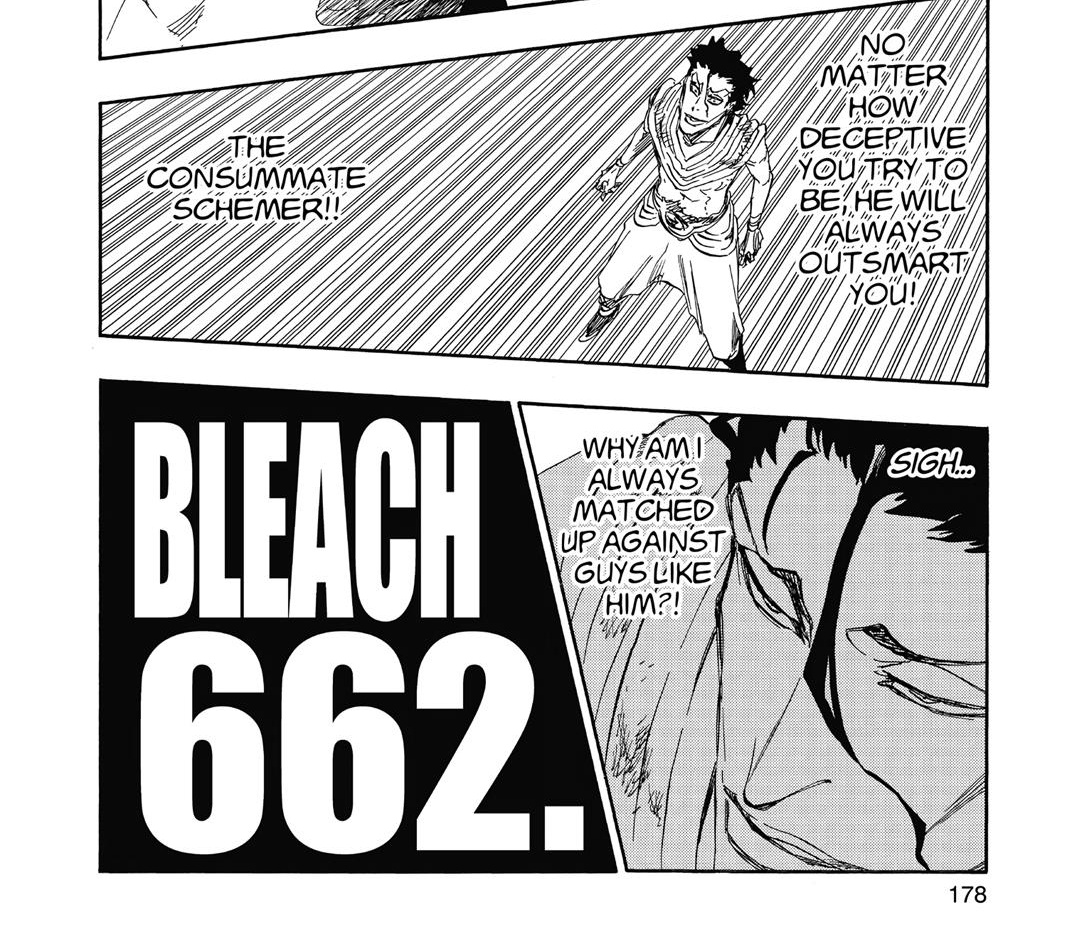
The key to understanding why he does so ties into the contradiction in his characterization that runs the deepest: the subversion of his role as the narrator.
In fact, the breakdown of Askin's construction I've given shows 2 important instances where this function is undermined.
In fact, the breakdown of Askin's construction I've given shows 2 important instances where this function is undermined.
1. Askin is curious to see what kind of world Yhwach will create. The narrator, a person with intimate knowledge of the plot, should already be aware of this.
Of course, this is due to the fact that Askin is not a complete narrator like, say, Matahachi from Vagabond.
Of course, this is due to the fact that Askin is not a complete narrator like, say, Matahachi from Vagabond.
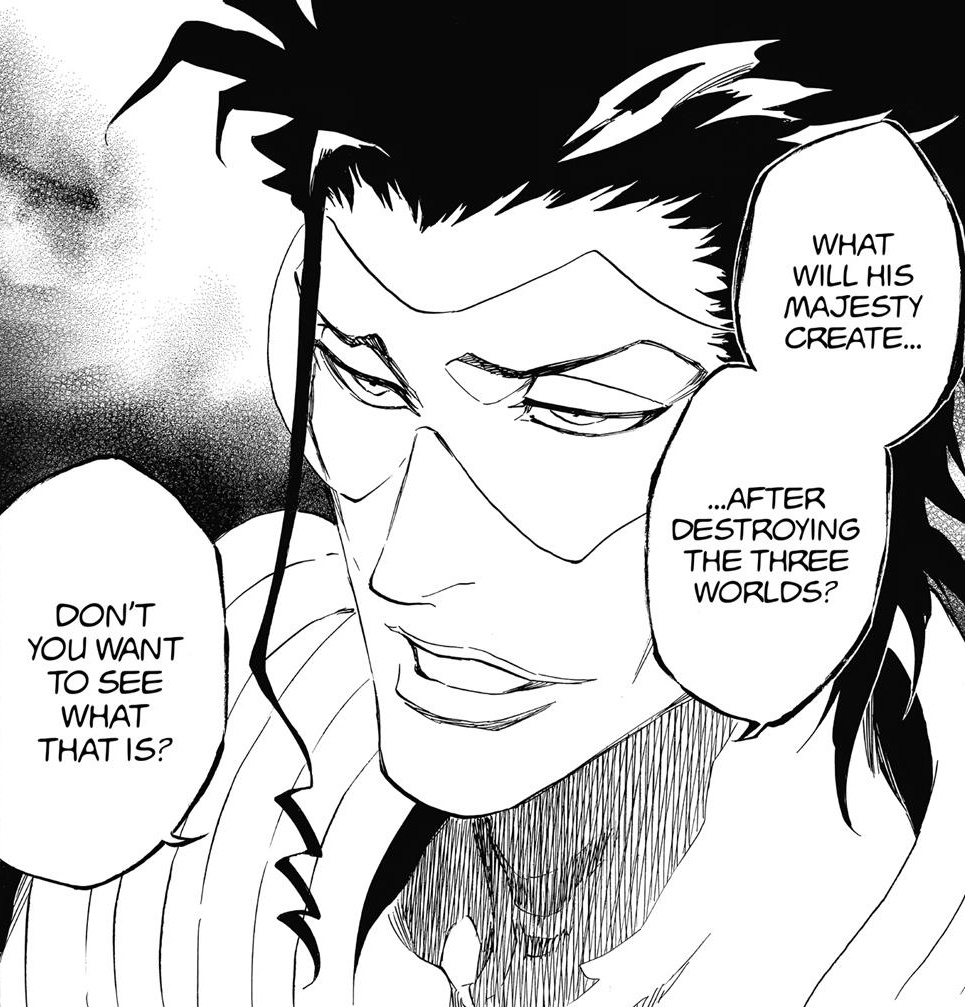
I say that's an intentional design. For one, attributing to a character a role as important as the narrator's, stressing on the implications of the same, just for it to lead nowhere is not an oversight Kubo would make.
Moreover, Askin not being a complete narrator -
Moreover, Askin not being a complete narrator -
- plays into his relationship with agency really well, as we'll see, and also characterizes Yhwach (an important criterion to fulfill for any Sternritter considering their ties to him) perfectly.
This leads me to conclude that the subversion of Askin's function is intentional.
This leads me to conclude that the subversion of Askin's function is intentional.
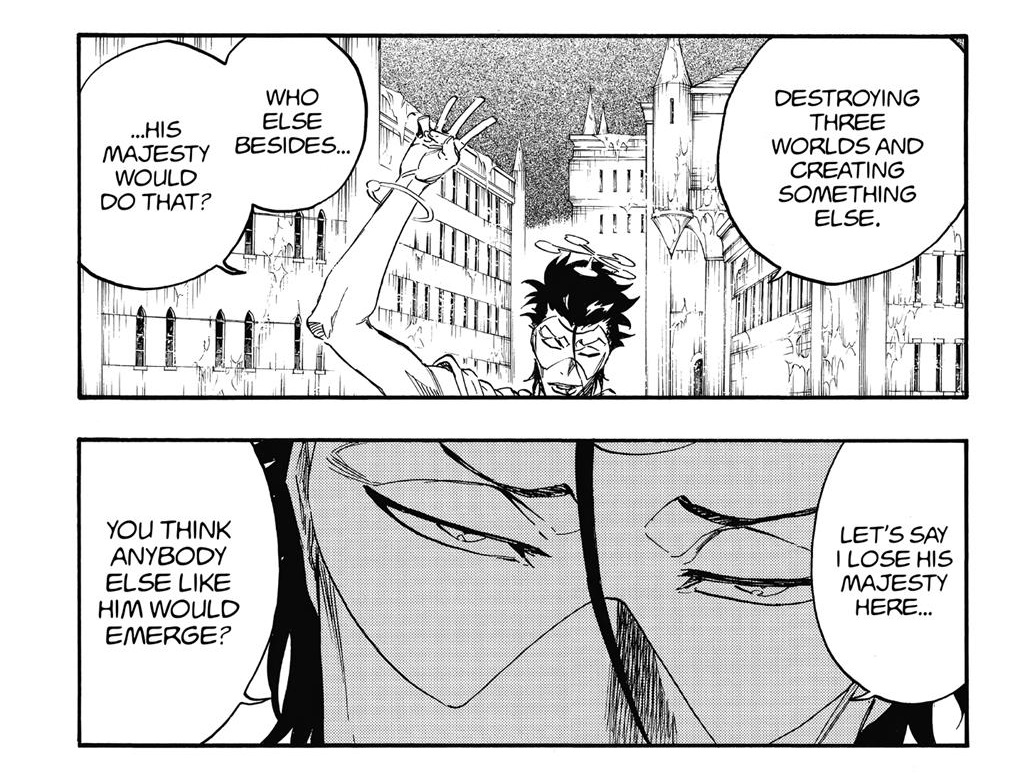
2. Kubo himself directly undermines Askin's narrator function. Think back on the Volume 73 author note, where Kubo attributes to Askin the motif of an era of warfare. This runs completely contrary to how he's been characterised to be above the war itself through his function.
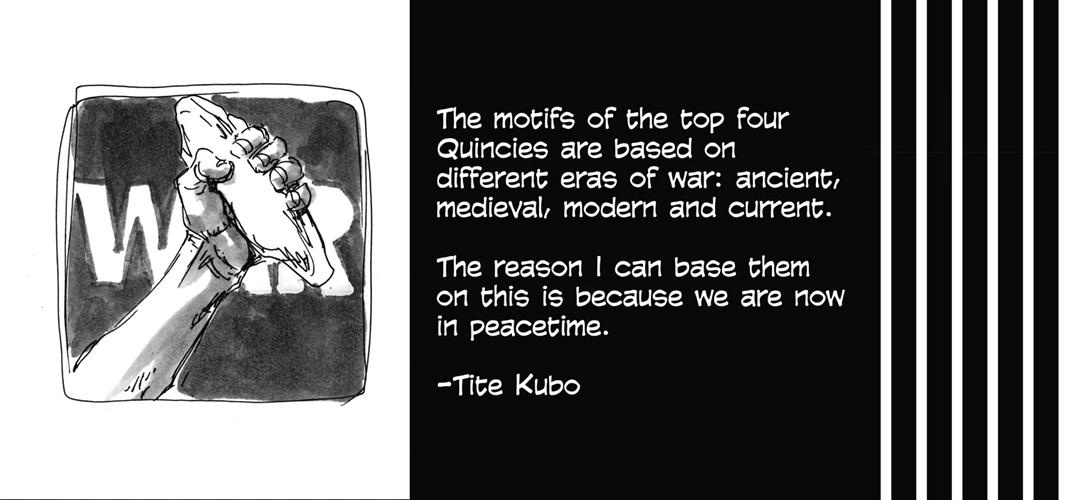
Since this comes from Kubo's mouth directly, it takes precedence over what we can infer from Askin's mannerisms.
What these points of subversion tell us of is the falsity of Askin's agency in a sense.
And what we can conclude from this leads us to the crux of his character.
What these points of subversion tell us of is the falsity of Askin's agency in a sense.
And what we can conclude from this leads us to the crux of his character.
Askin is MADE to be different, in ways he has no control over. This is decidedly not the same as how he portrays himself to be different in terms of style, motives, actions etc, because these are things he can exert control over.
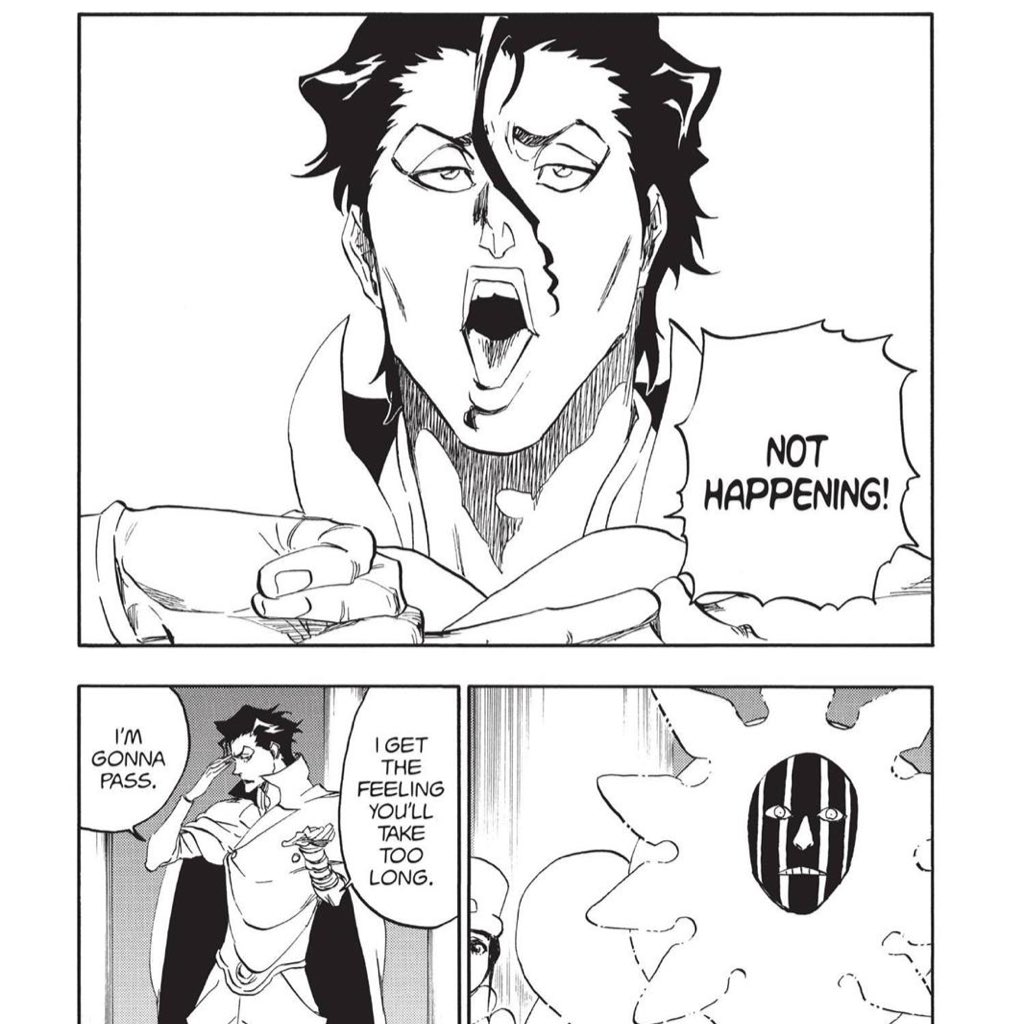
If you notice, Askin downplays himself with respect to only those aspects of himself that he never had any control over. His powers, right from the functions to the name, the fact that he was chosen to be a Schutzstaffel (paralleling how he was chosen to be a pseudo-narrator), -
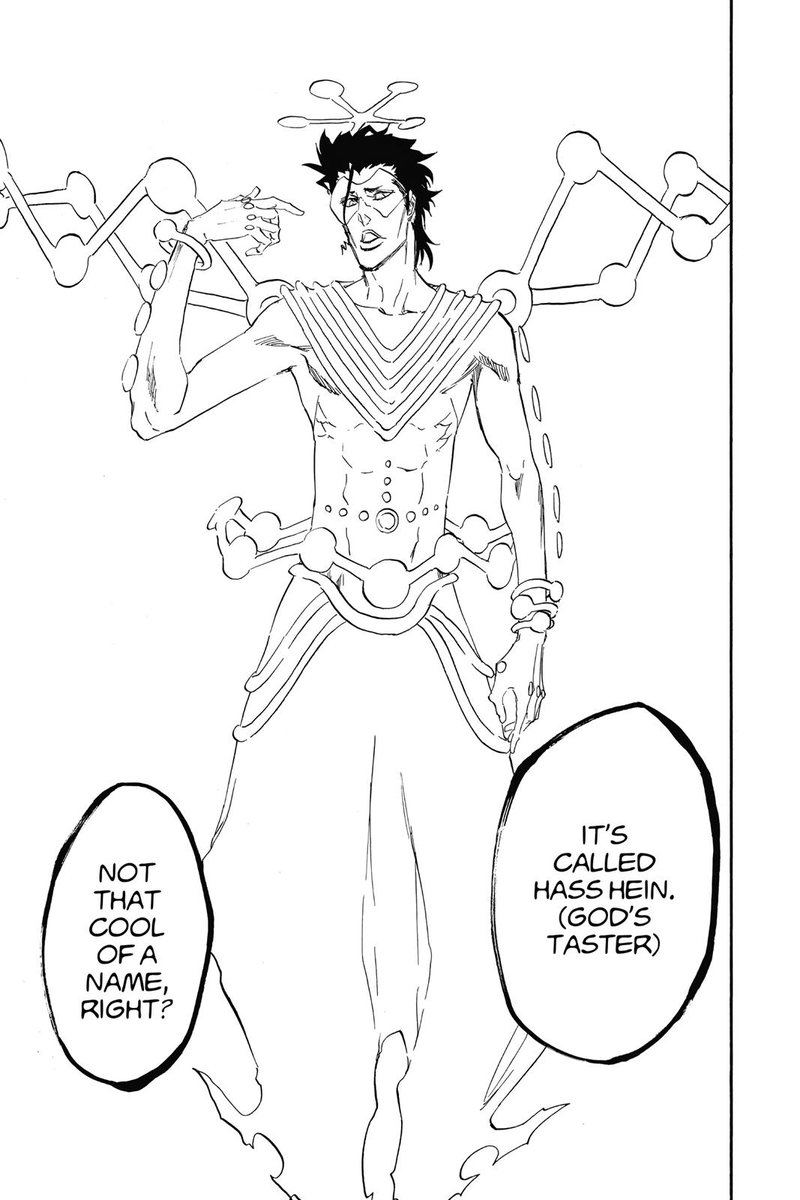
- his strength which is a product of Yhwach's Auswahlen and not him, all these are things Askin had no say in.
Whether his interests align with the decisions made for him is of no consequence. The important thing here is that HE didn't choose any of this.
Whether his interests align with the decisions made for him is of no consequence. The important thing here is that HE didn't choose any of this.
This explains the contradiction in downplaying himself and establishing himself as different in the same breath. In a bid to reclaim agency, he downplays aspects of himself he had no control over and distinguishes himself from others in a way that is entirely under his control.
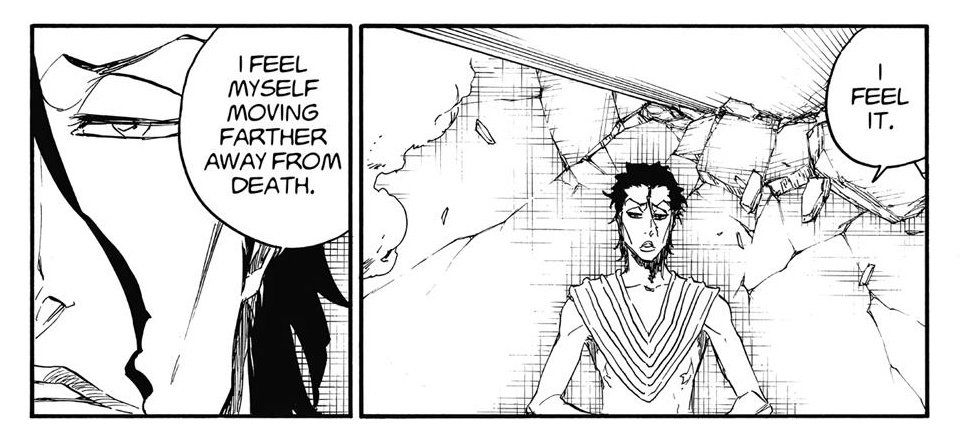
This is the core of Askin's character: self-affirmation. He tries to find worth in himself outside of what has been assigned to him.
Let's take a minute to explore how Askin's need to affirm himself manifests, right from his interactions to his own powers.
Let's take a minute to explore how Askin's need to affirm himself manifests, right from his interactions to his own powers.
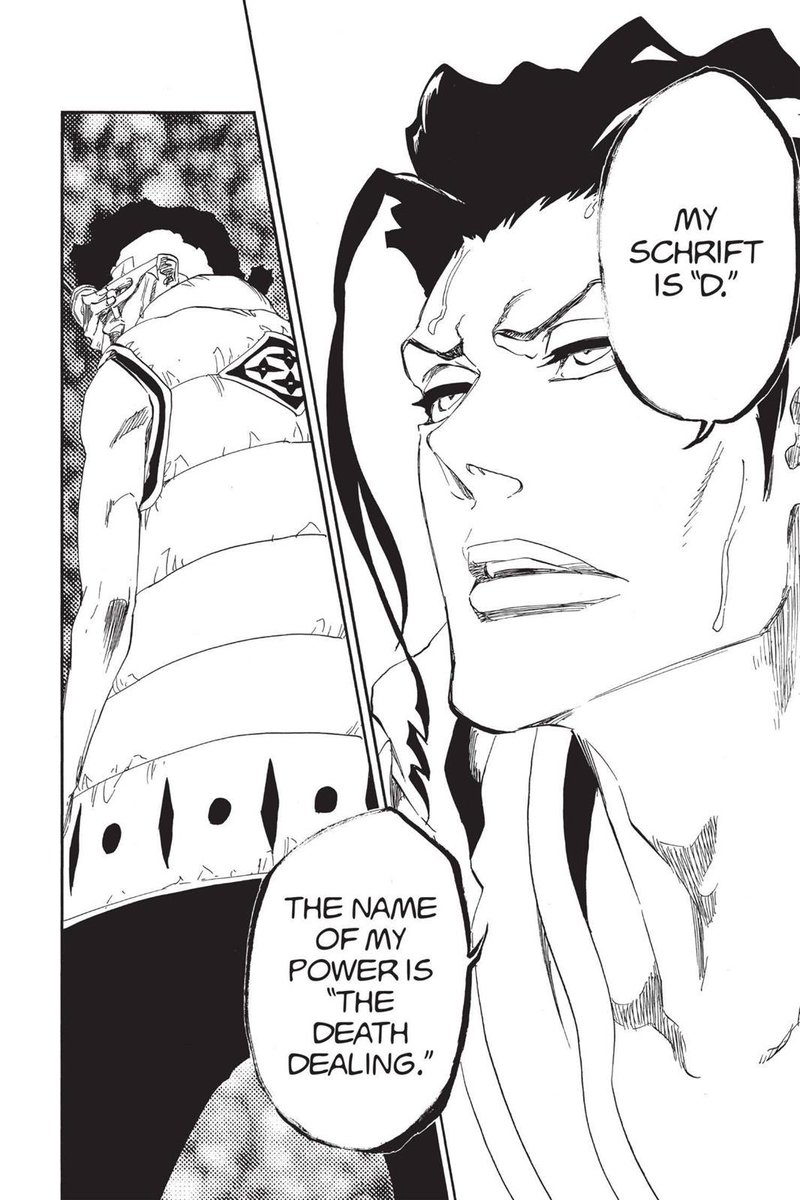
One thing to note before moving forward is that I'll no longer make distinctions between characteristics assigned to Askin vs those he enforces of his own volition, unless the distinction is relevant to the point I'm making.
This is because, despite his disdain of having those characteristics assigned to him without his say in it, they are still his. This actually has tremendous significance for him too, as we'll soon see, which is all the more reason to conflate the two types of characteristics.
Anyway, the Death Dealing is an ability that can turn anything that's natural to your body poisonous. It can also make him immune to attacks from others. Seems like a "fatal" ability, as he likes to quip.
But think about how many times you've seen Askin actually kill someone.
But think about how many times you've seen Askin actually kill someone.
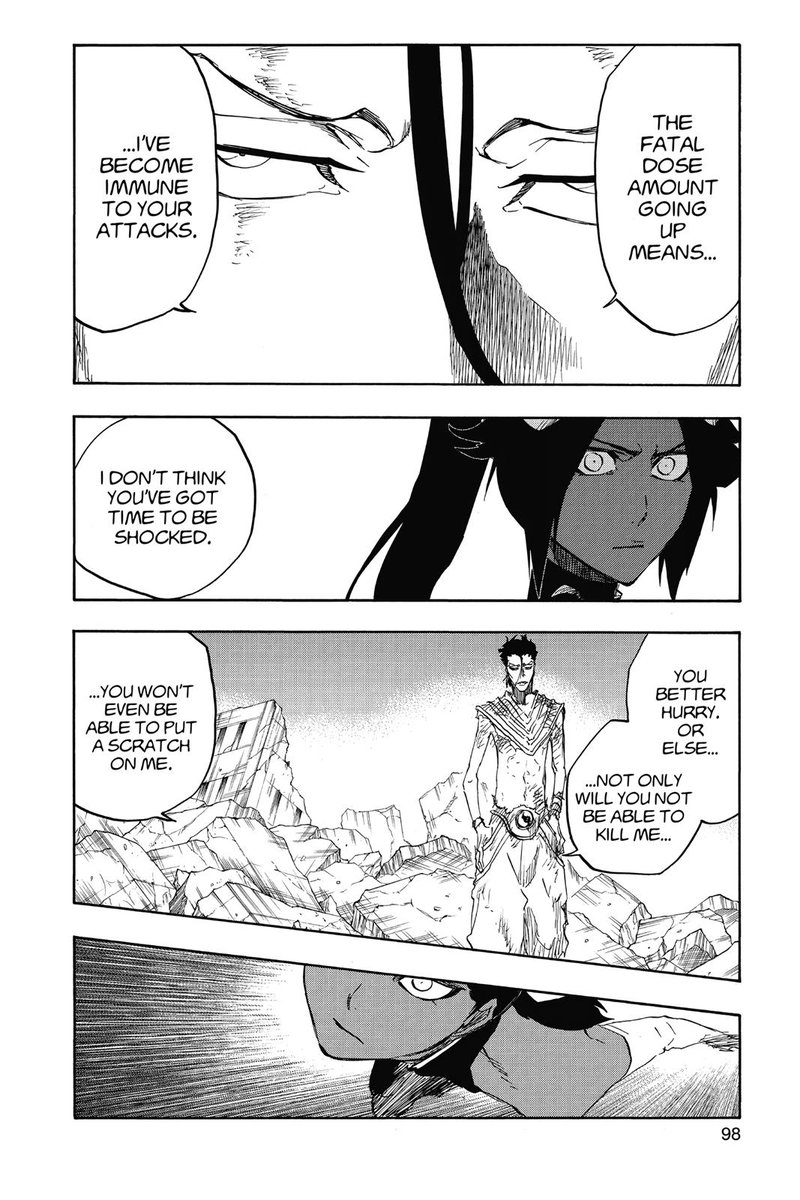
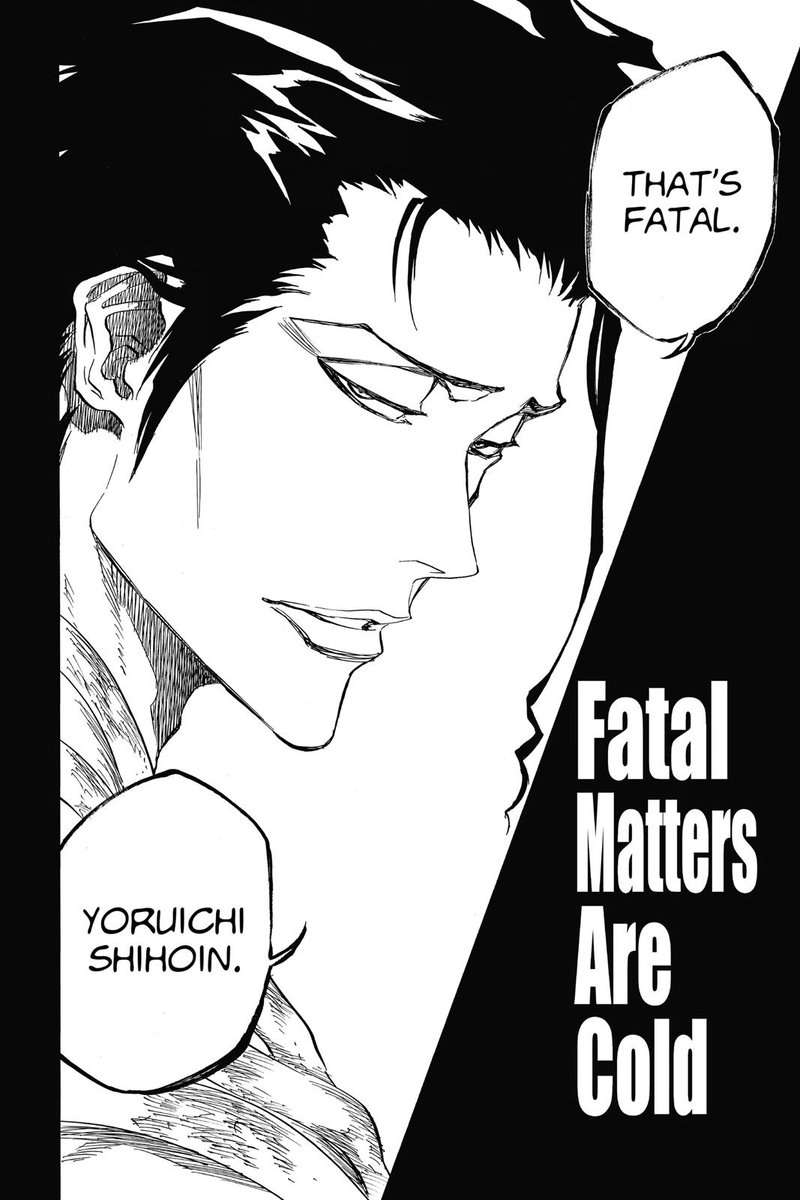
His kill count is precisely 0, if you don't count the no-name scrubs he killed during the two invasions, if any.
This is exactly because of a lack of trying. A kill count of 0 is a rejection of the fundamental principle of the Death Dealing, which is to deal death upon people.
This is exactly because of a lack of trying. A kill count of 0 is a rejection of the fundamental principle of the Death Dealing, which is to deal death upon people.
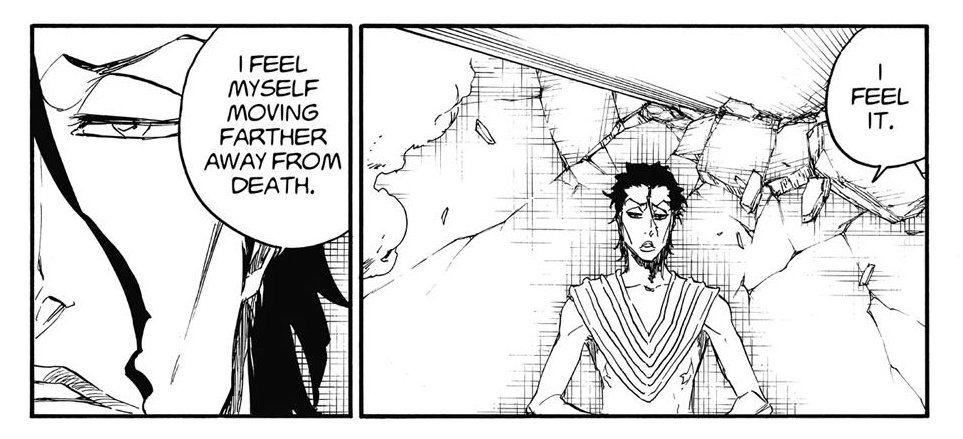
Askin can thus be said to have a chaotic relationship with his powers. When you consider Askin's motives to follow Yhwach, the one who gave him his powers, this gets much clearer.
Askin doesn't follow Yhwach out of loyalty, but rather, out of curiosity.
Askin doesn't follow Yhwach out of loyalty, but rather, out of curiosity.
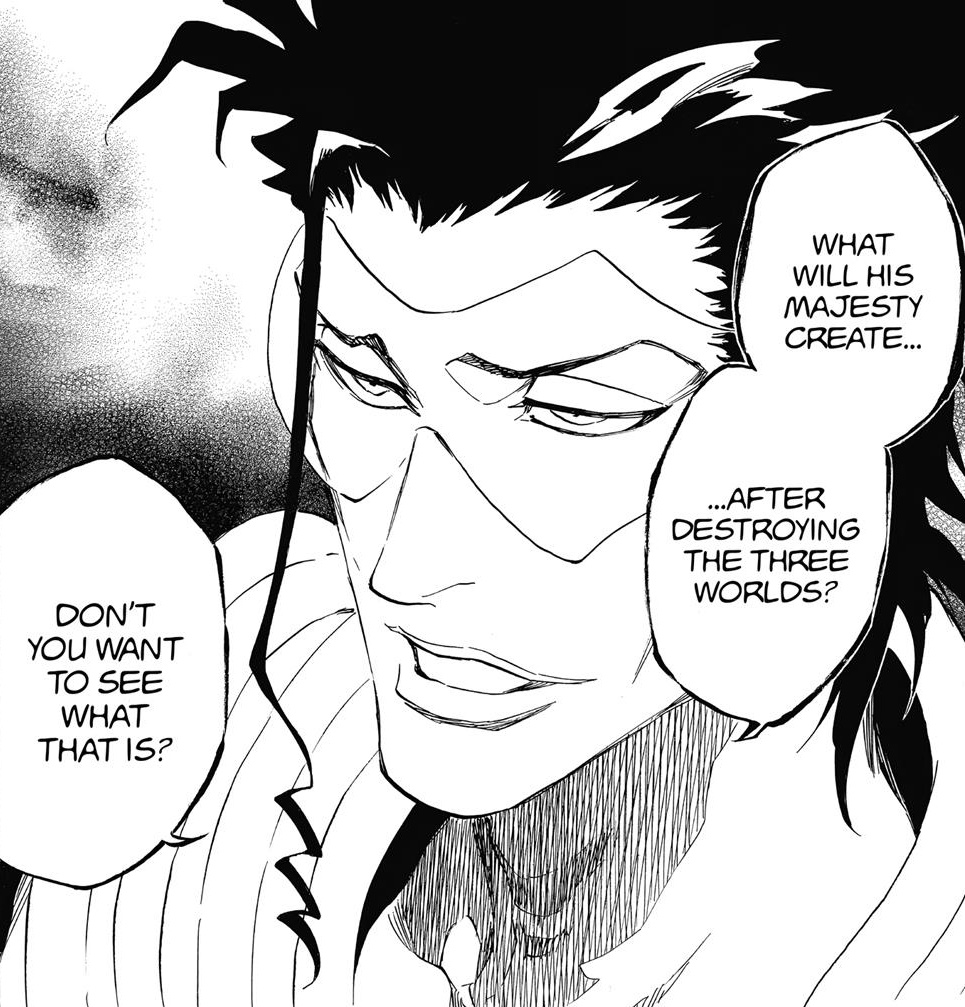
This bleeds into his relationship with his ability, which is literally a part of Yhwach's soul. It can best be described as a disconnection with the ability.
This disconnect makes itself known in how the function of the ability clashes with his personality.
This disconnect makes itself known in how the function of the ability clashes with his personality.
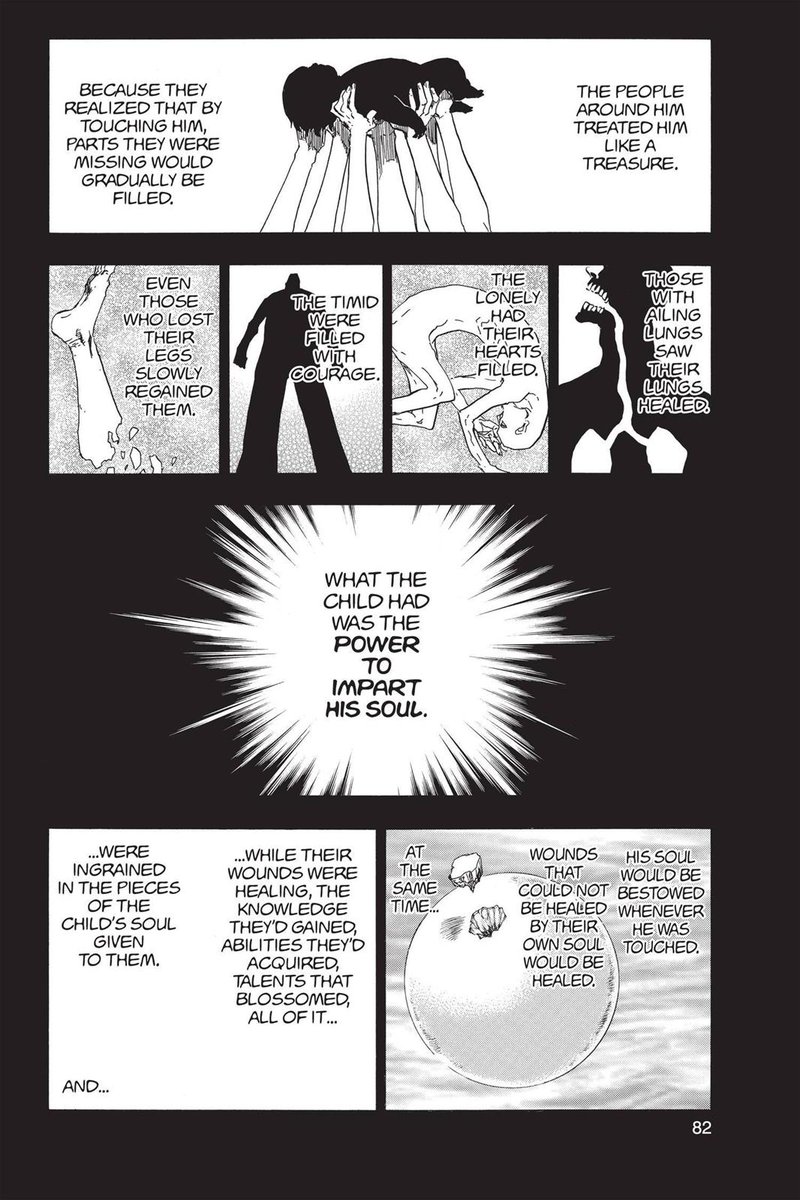
Askin's personality is such that he scorns conflict. He tries to end fights as fast as possible, either by escaping or debilitating his opponent via the Death Dealing.
However, to end fights as quickly as possible with his ability, he ironically needs to tank massive damage.
However, to end fights as quickly as possible with his ability, he ironically needs to tank massive damage.
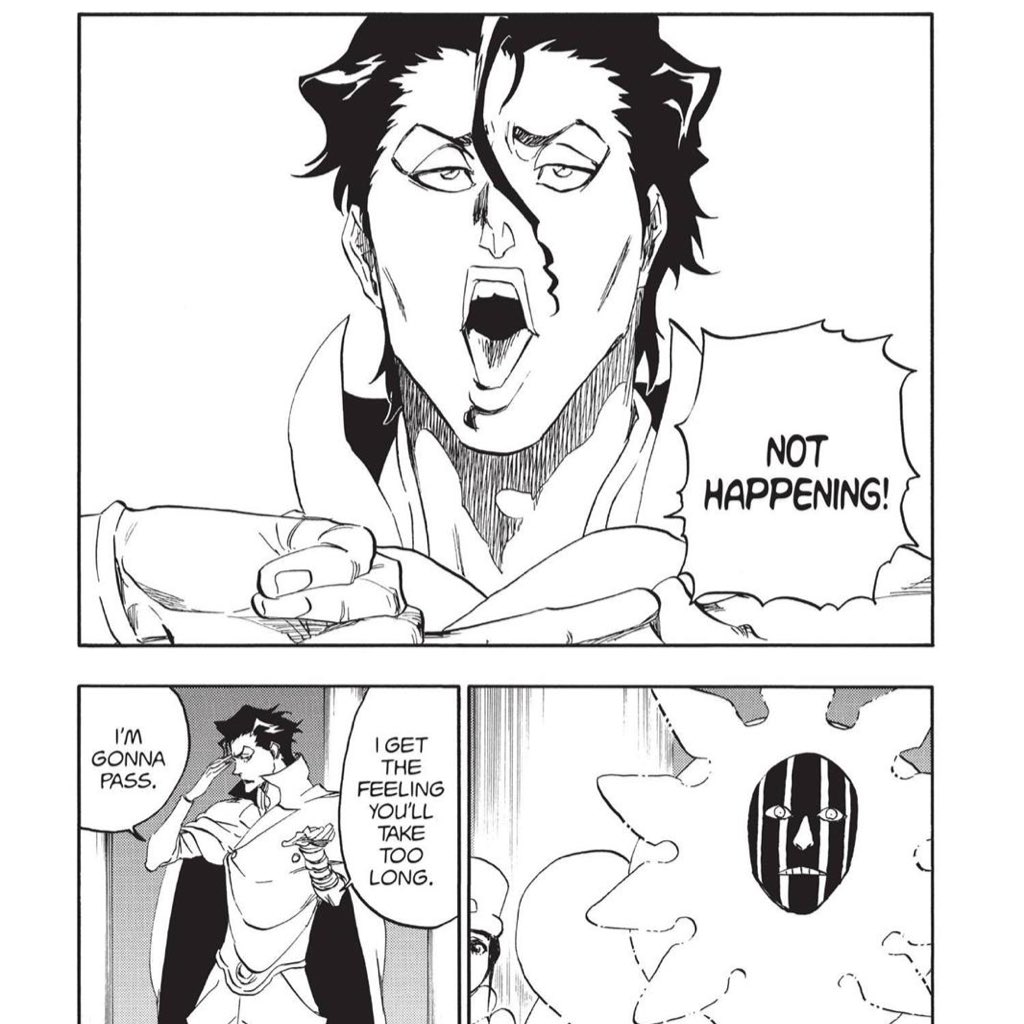
And that's what he does. He almost dies tanking Yushiro and Yoruichi's attacks, and consequently, ends his fights with them quickly.
Askin's drive to reclaim agency is so great that he ignores the instinct to avoid getting hurt entirely to win a battle as fast as possible.
Askin's drive to reclaim agency is so great that he ignores the instinct to avoid getting hurt entirely to win a battle as fast as possible.
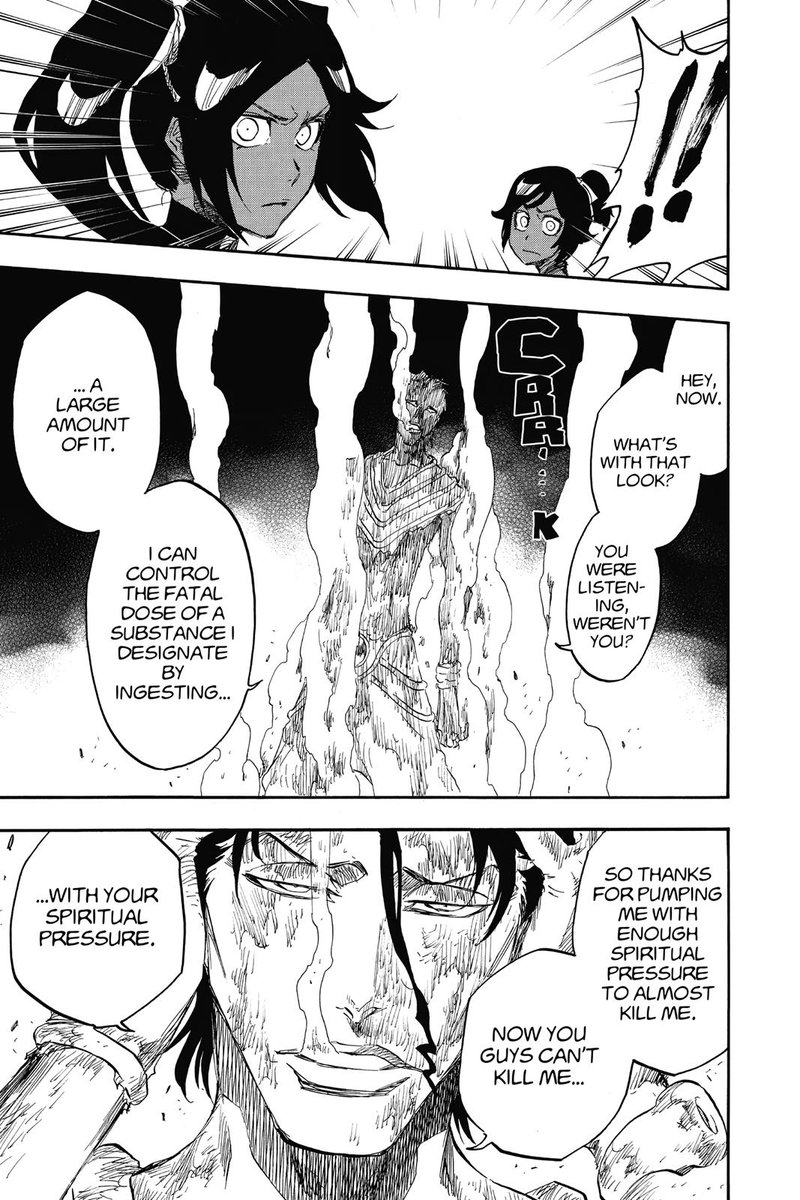
The Death Dealing is a reflection of how extreme Askin's mindset is in his desire to do things his own way. Affirming his control over himself and nobody else is the foremost thing on his mind.
His need for self-affirmation culminates in his fight with Kisuke Urahara.
His need for self-affirmation culminates in his fight with Kisuke Urahara.
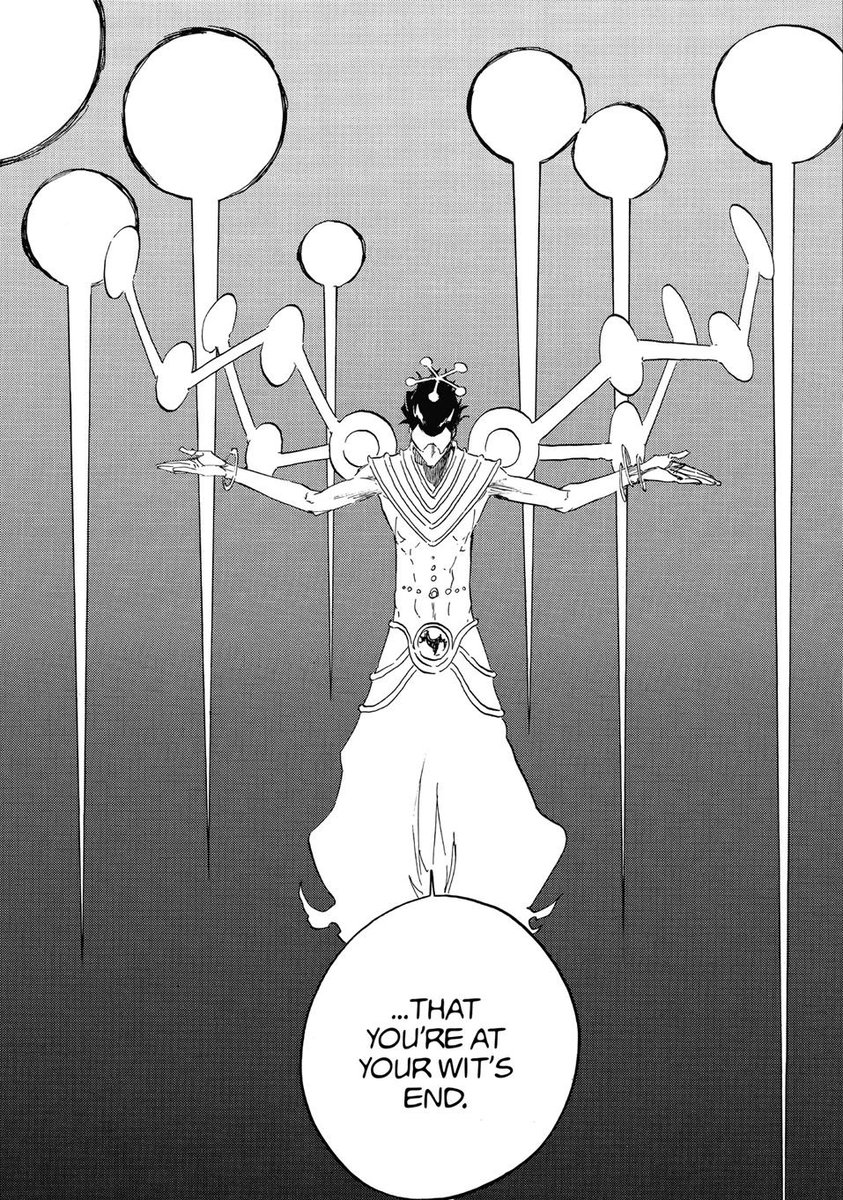
Kisuke is obviously very similar to Askin. Their temperaments are similar, the *restructuring* functions of their powers are similar, they're similar in their role as people "in the know" as well.
The beauty lies in the differences, as always.
The beauty lies in the differences, as always.

Kisuke is self-assured. He knows his strengths and weaknesses, plays to the former and makes contingencies for the latter. He exercises freedom and accepts his shortcomings, despite being every bit as flamboyant and characteristically *different* from his group as Askin.
In terms of mindset, Kisuke is everything Askin wants to be, and this contrast is highlighted thoroughly in their battle.
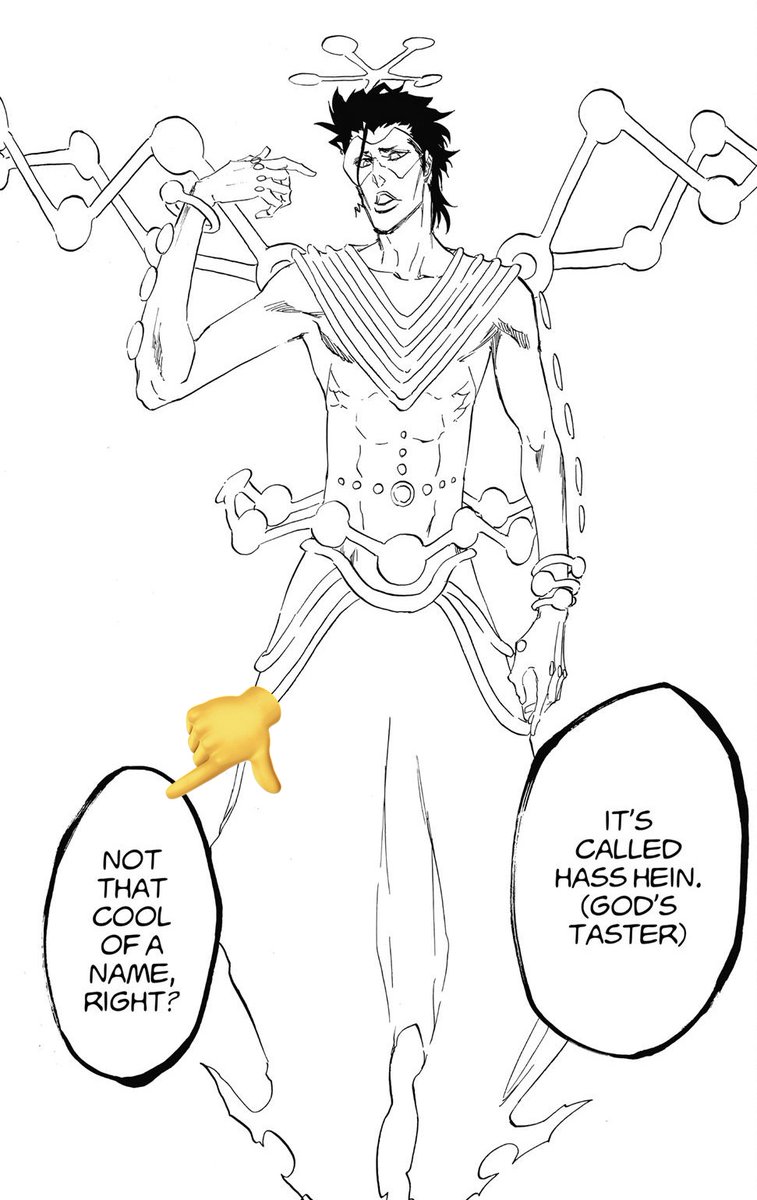
Askin's powers serve to destroy and poison things around him, whereas Kisuke heals. His Bankai makes an explicit reference to the Bodhisattva Guanyin, -
Askin's powers serve to destroy and poison things around him, whereas Kisuke heals. His Bankai makes an explicit reference to the Bodhisattva Guanyin, -
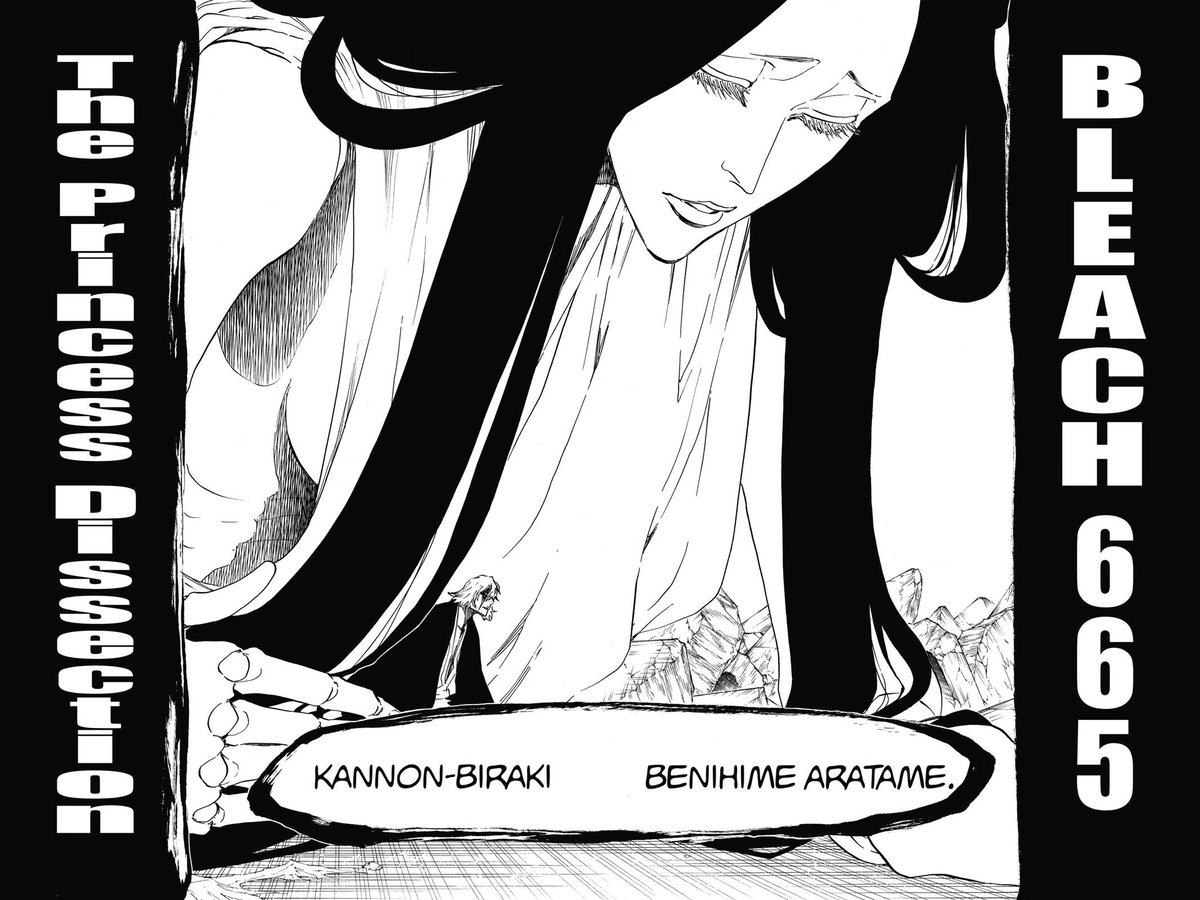
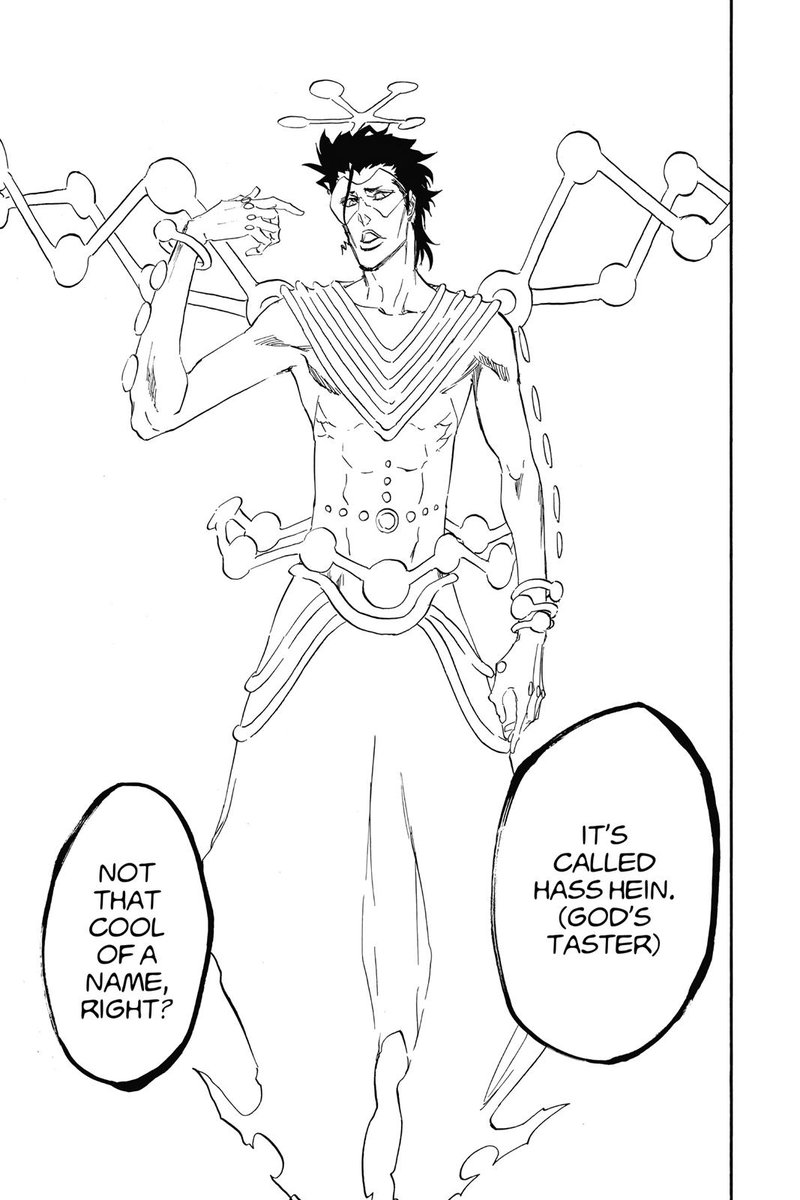
- who is a healer. On the other hand, Askin's Vollstandig Hasshein makes a reference to Hashish, a drug you can overdose from (OD from Hashish still doesn't cause death, which is a neat reference to Askin's poor relationship with his powers).

A more important contrast lies in their respective responses to their positions of being in the know. Kisuke acts upon the knowledge, actively advocating for progress and whatnot. On the other hand, Askin leaves the actual action to Yhwach.
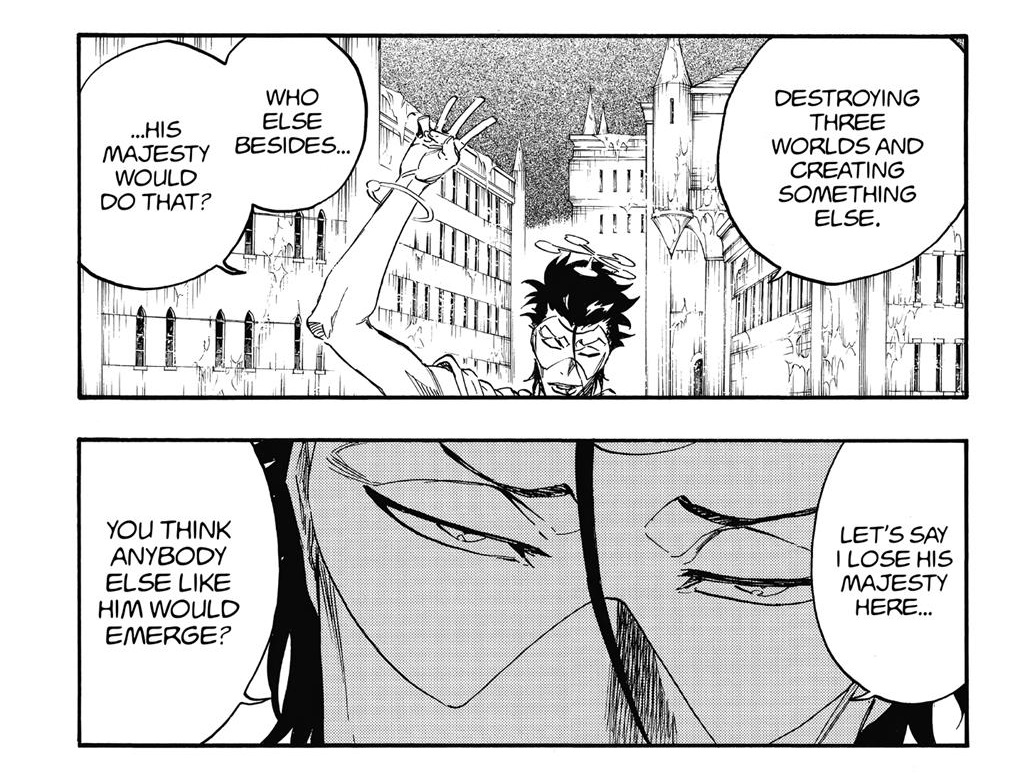
He relegates himself to the position of a bystander as he wants to see what kind of world Yhwach will create. Ironically, despite all his efforts to distinguish himself from his comrades, Askin falls in line with the overarching Quincy ideology of stagnation through his inaction.
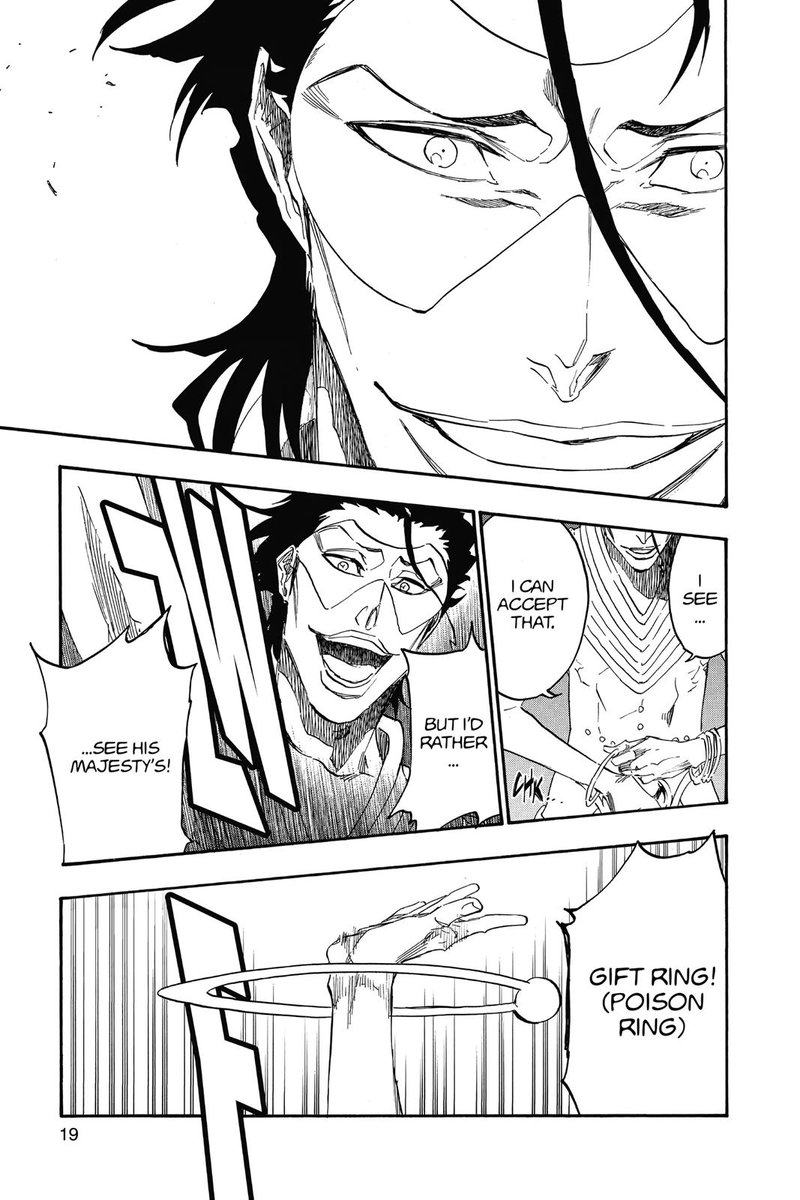
Something noteworthy is how Askin didn't want to fight Mayuri and retreated, but fought Kisuke, who is not only similar to Mayuri in how they approach battles but is also a War Potential to boot.
This is evidence for Askin seeking self-affirmation by trying to beat Kisuke, -
This is evidence for Askin seeking self-affirmation by trying to beat Kisuke, -
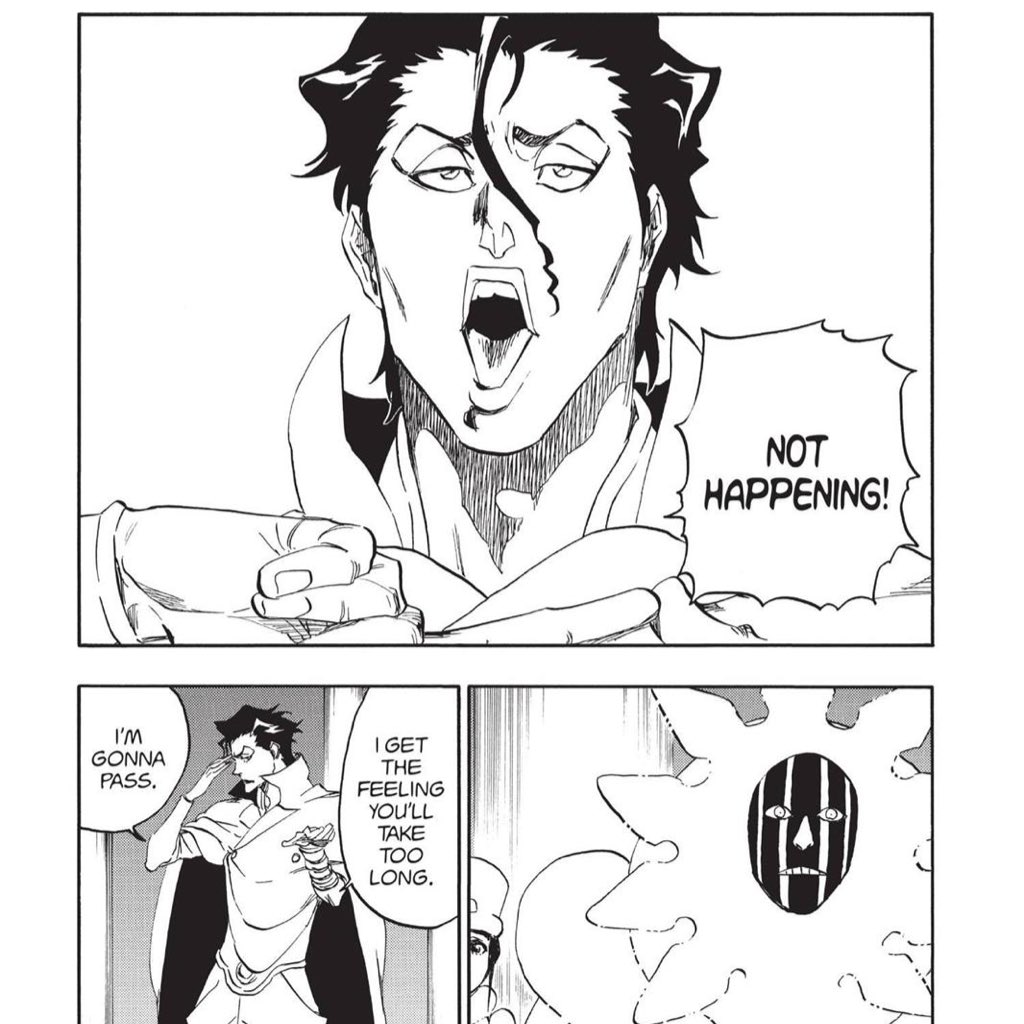
- who represents everything he wants to attain for himself.
Now that I've covered most of Askin's character, there is just one thing left to address: his relationship with Yhwach.
The crux of Yhwach's relationship with the Sternritter as a whole is that they are his extensions.
Now that I've covered most of Askin's character, there is just one thing left to address: his relationship with Yhwach.
The crux of Yhwach's relationship with the Sternritter as a whole is that they are his extensions.
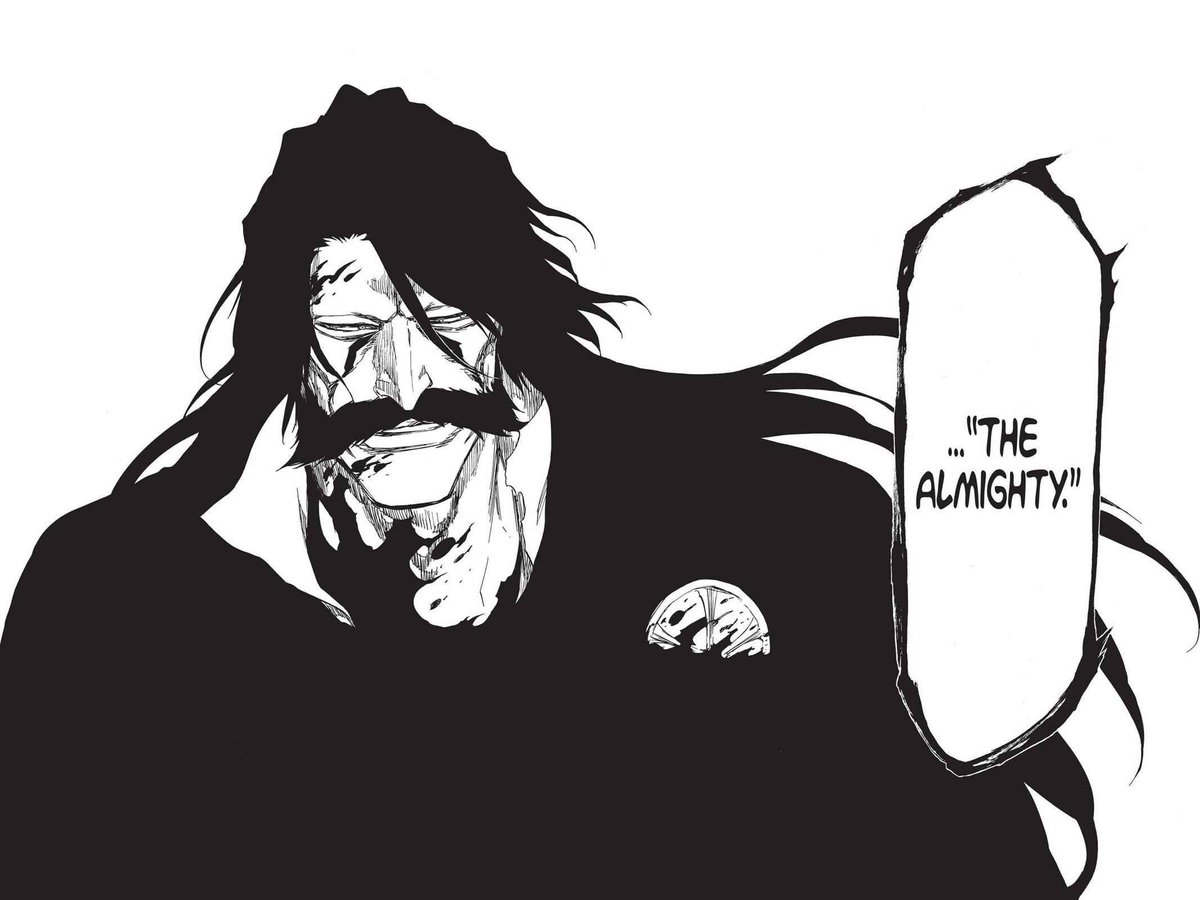
Everything they do, everything they are, it all ties back to him. Such is their dynamic with Yhwach. This applies to Askin as well.
Yhwach is a walking contradiction, and the Schutzstaffel all parallel him in that regard. But there is something that distinguishes Askin.
Yhwach is a walking contradiction, and the Schutzstaffel all parallel him in that regard. But there is something that distinguishes Askin.
The other 3 Schutzstaffel are all deeply connected to the Soul King, and they all share an immense devotion for Yhwach. They tie into the "God" aspect of his character.
Askin doesn't have devotion for Yhwach, nor does he have any ties to the SK. He represents Yhwach's humanity.
Askin doesn't have devotion for Yhwach, nor does he have any ties to the SK. He represents Yhwach's humanity.
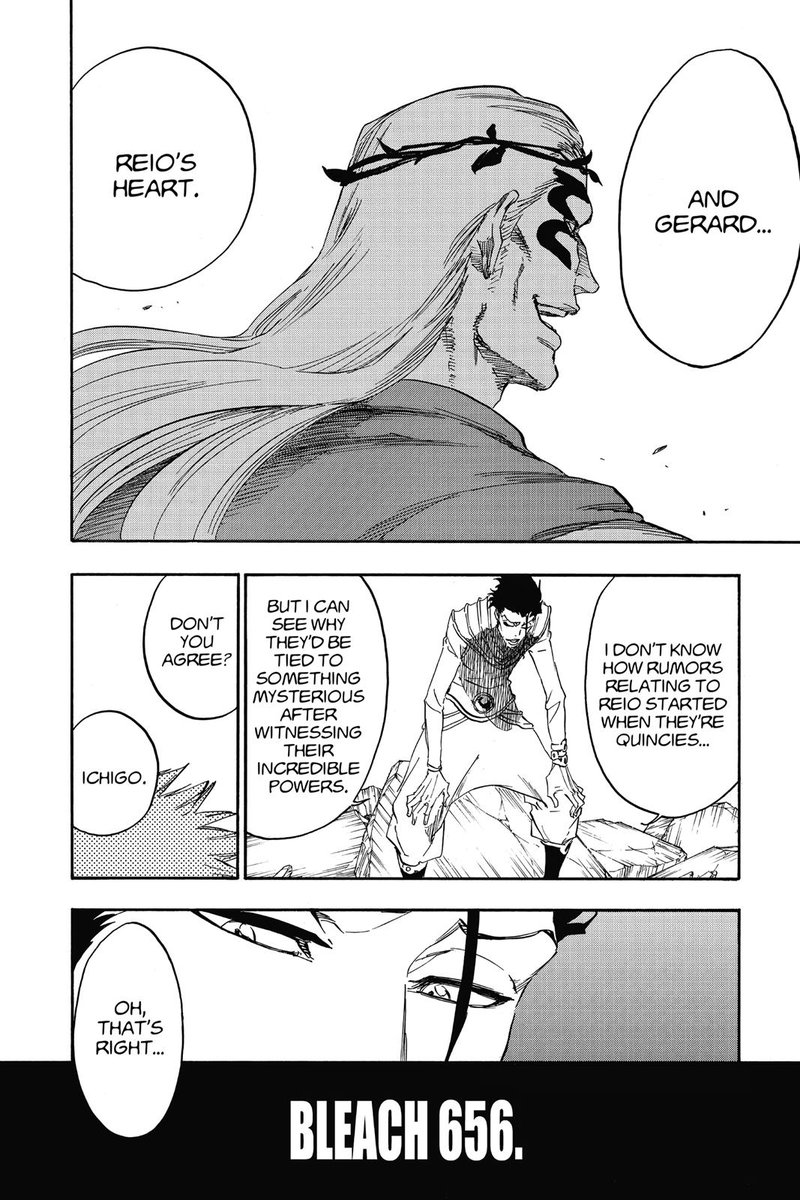
To support this, let's consider a few of their similarities.
• Lack of agency: Yhwach is entrapped by fate, as is Askin
• Perpetuation of cycle: Yhwach is characterized by the cycle of birth and death through the mechanism of sharing his powers, -
• Lack of agency: Yhwach is entrapped by fate, as is Askin
• Perpetuation of cycle: Yhwach is characterized by the cycle of birth and death through the mechanism of sharing his powers, -
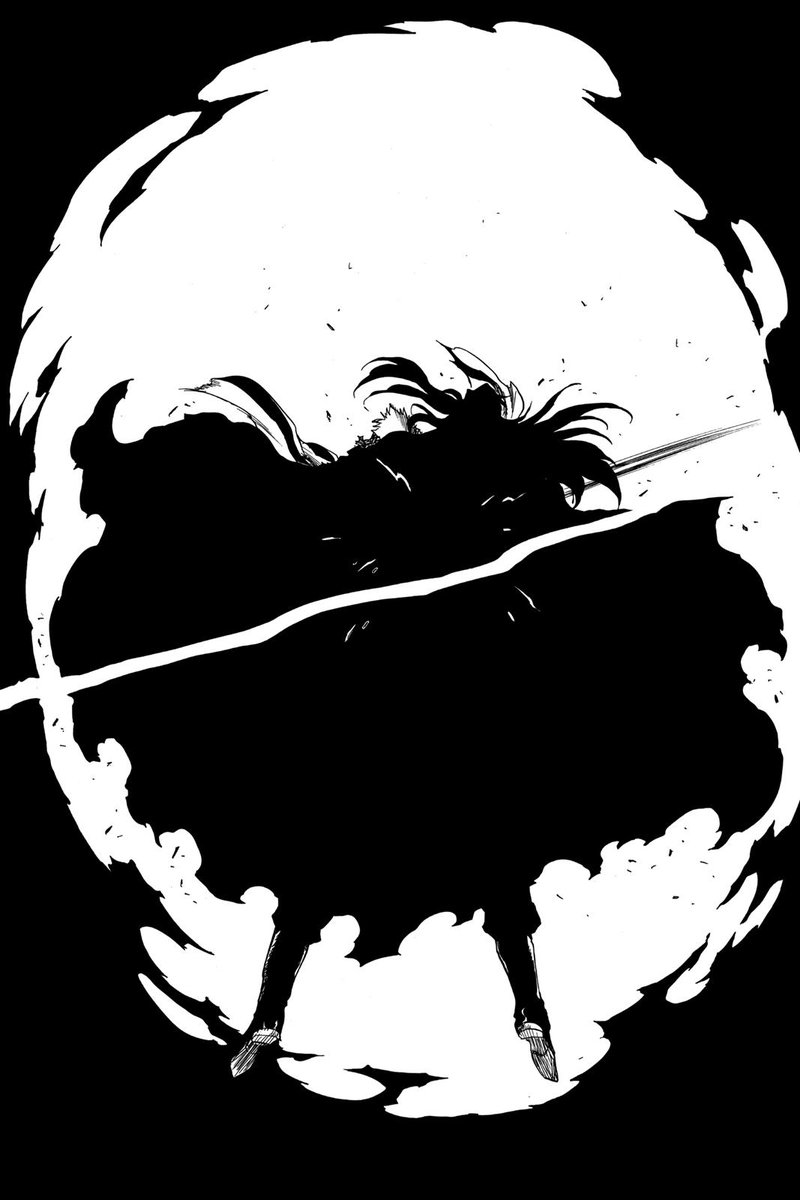
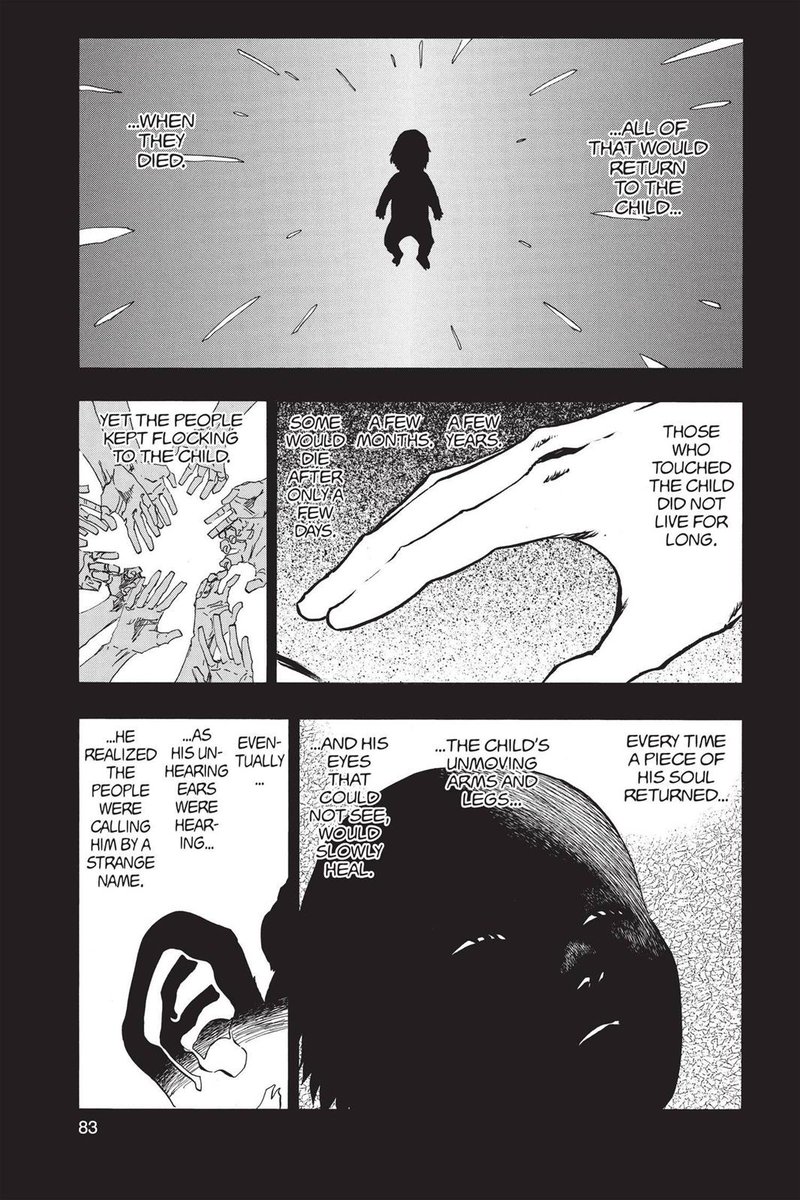
- Askin perpetuates the cycle of loss of agency through his ability, since robbing bodily agency is what his ability does
• Conflict with one's own ability: Yhwach cannot use the Almighty 24/7, he has to share it with Jugram. Moreover, he doesn't know how to use it right, -
• Conflict with one's own ability: Yhwach cannot use the Almighty 24/7, he has to share it with Jugram. Moreover, he doesn't know how to use it right, -
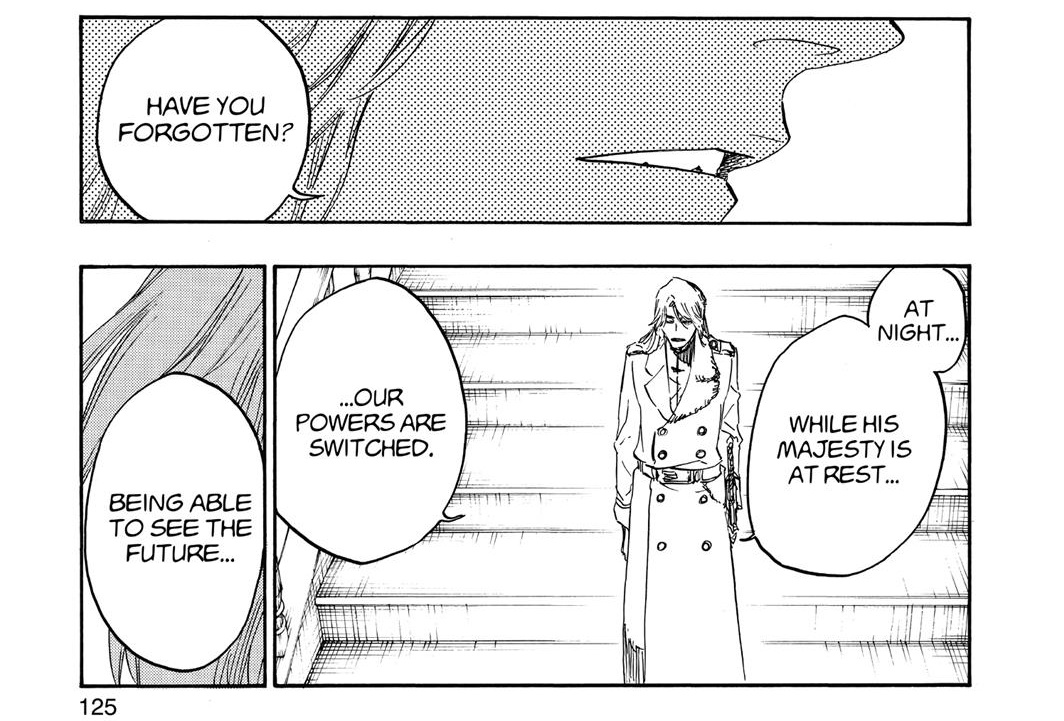
- as evidenced by how he ignored a warning Jugram gave him via the Almighty. I've already gone over Askin's conflict with his ability.
There are definitely more parallels to be drawn, but the point is, these ones specifically expose the falsity of Yhwach's Godhood.
There are definitely more parallels to be drawn, but the point is, these ones specifically expose the falsity of Yhwach's Godhood.
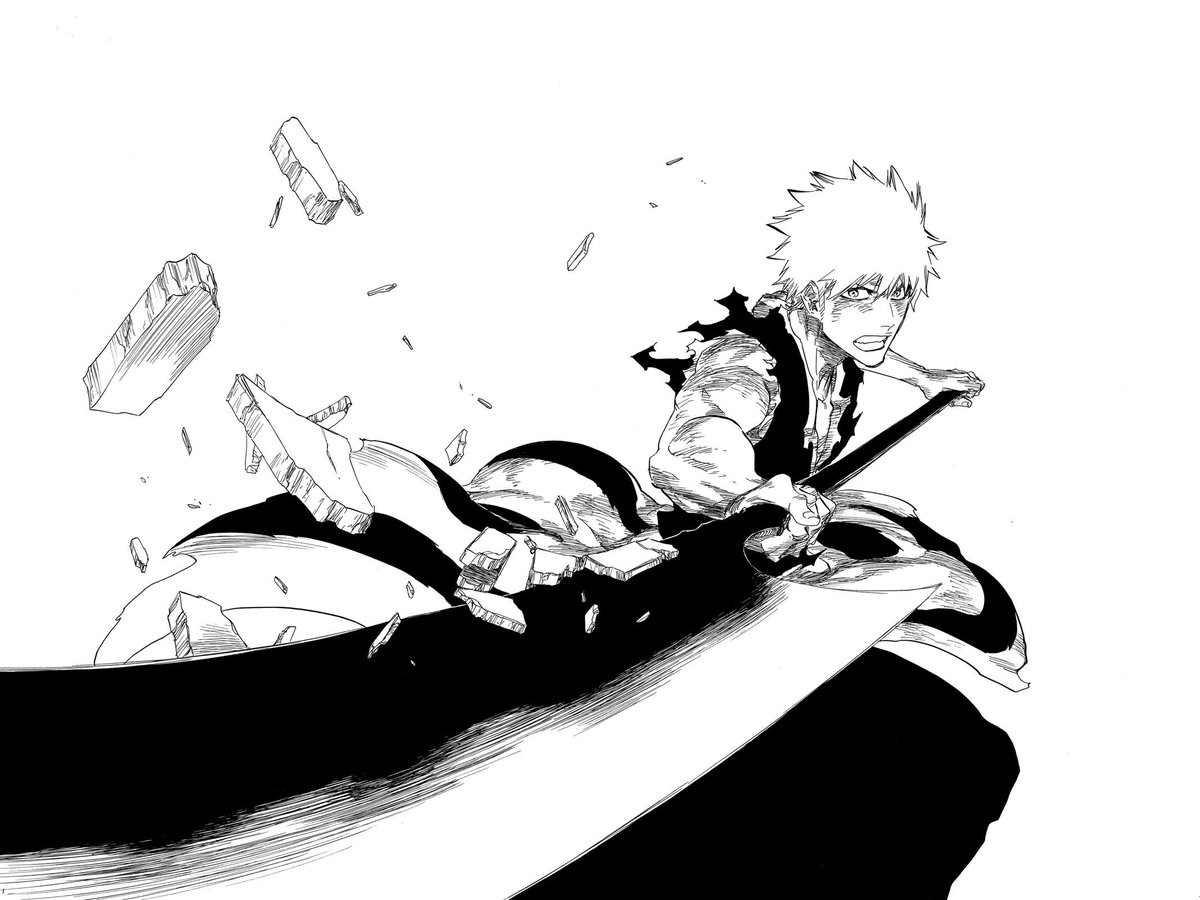
Hence my statement that Askin represents Yhwach's humanity.
Now, apart from this, there is obviously the general idea of the Schutzstaffel being walking contradictions that Askin is also part of.
The agency section of the thread seems to explain away the contradictions, -
Now, apart from this, there is obviously the general idea of the Schutzstaffel being walking contradictions that Askin is also part of.
The agency section of the thread seems to explain away the contradictions, -
- but in reality, Kubo has taken great pains to juxtapose almost every aspect of Askin with something else, be it another aspect of Askin's character itself or that of a foil like Kisuke.
I think this brings with it a nuance you don't see with the other Schutzstaffel.
I think this brings with it a nuance you don't see with the other Schutzstaffel.
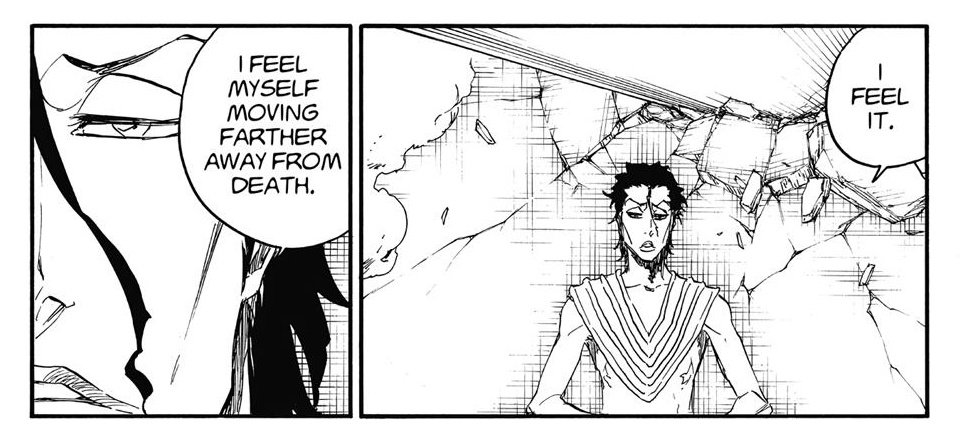
Sure, the contradictions in their character serve a purpose for the thematic framework, but Askin's contradictory writing is much more personally impactful. It goes a long way in humanizing the antagonist force. Striving to find worth in oneself is very human, after all.
In the grand scheme of things, however, Askin still is characterized by contradictions, and heavily so. For instance, considering the broader idea of him being portrayed as "special" through his role which gets immediately subverted, many details contribute to both sides.
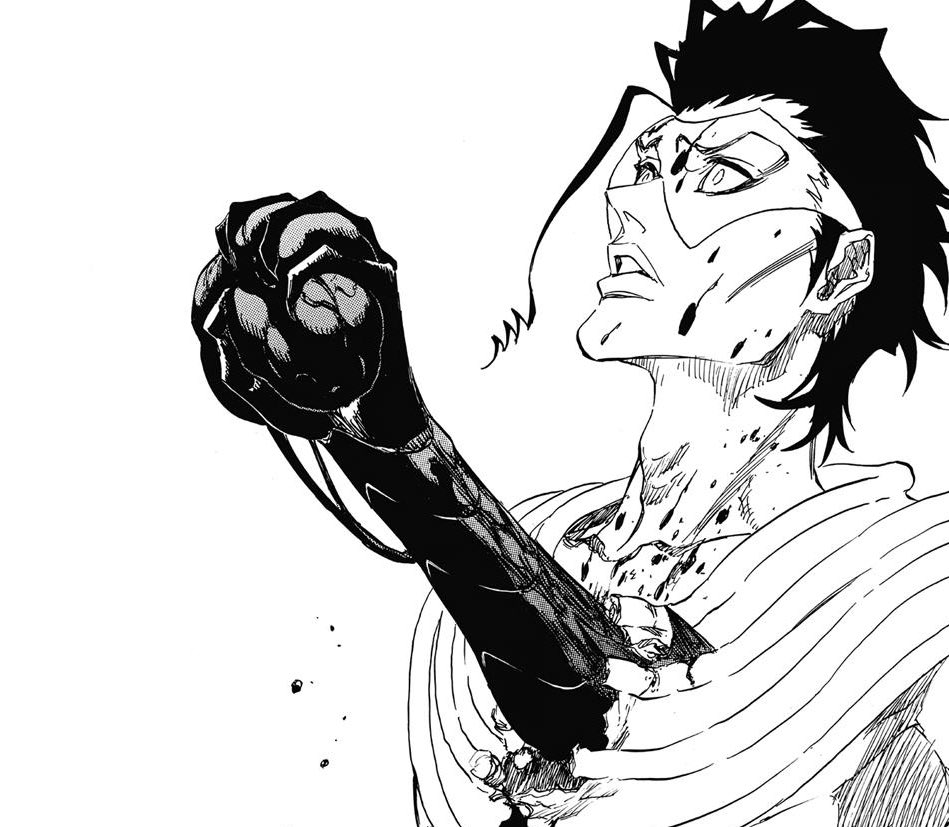
I mentioned Askin's name having roots in French, but so does Gremmy Thoumeaux's. His Vollstandig doesn't have wings, but neither does As Nodt's. His ability is unique in its design, but functionally, all it does is affect bodily agency.
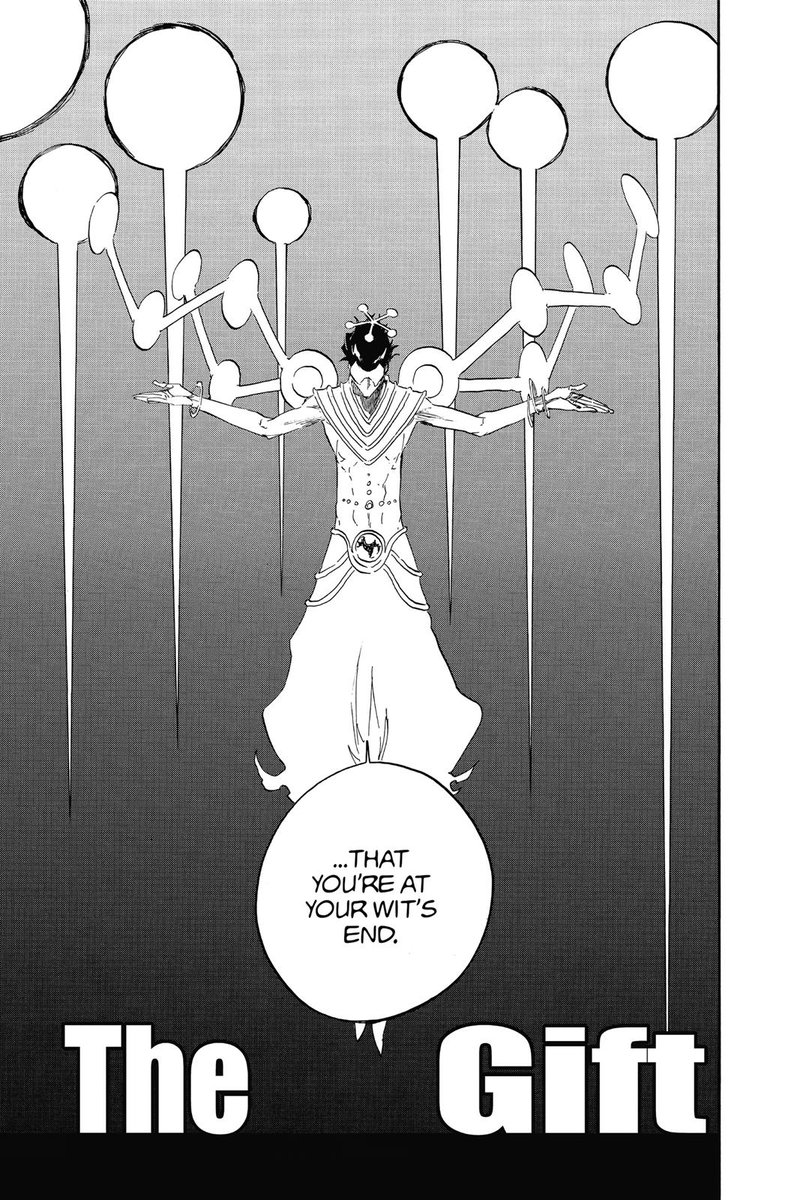
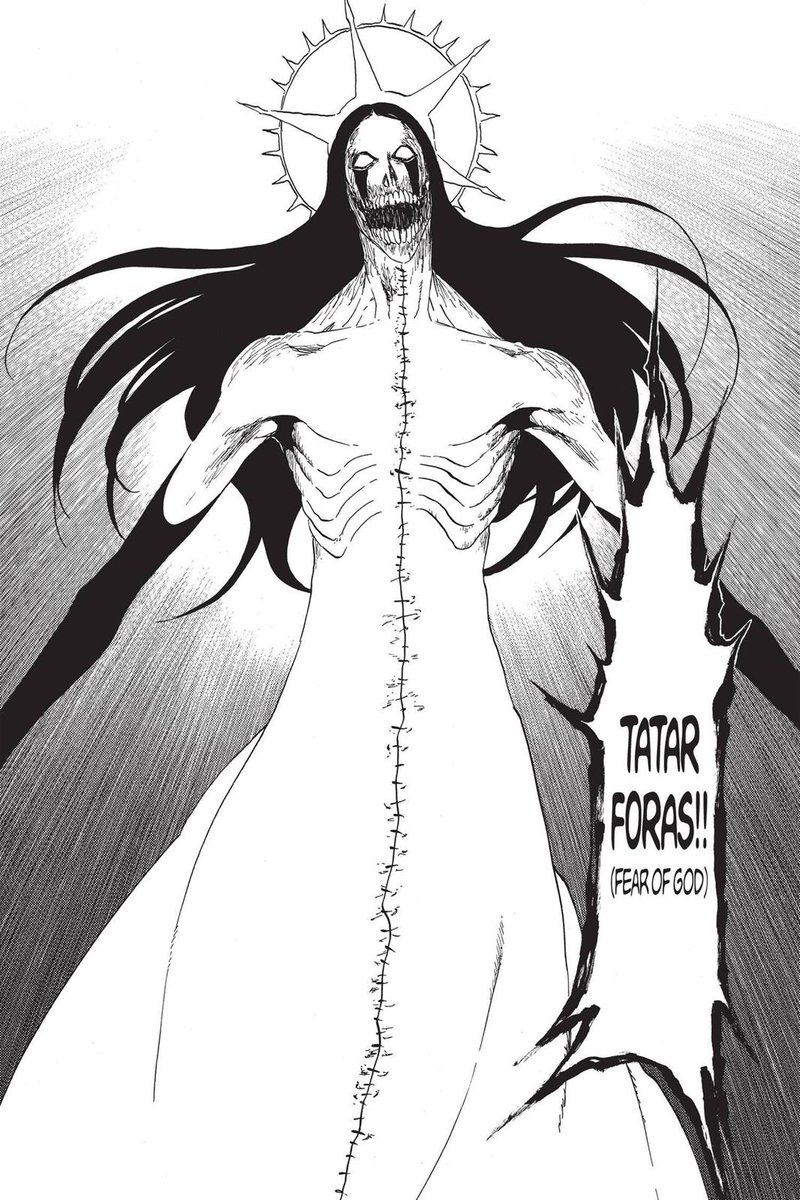
Yhwach, Pernida, Mayuri, Kisuke, As Nodt, Gremmy, Giselle, Aizen, etc. You could swing around a dead rat in Bleach and hit 21 people whose ability affects your bodily agency. Askin isn't special in that regard as well.
Askin is shown to be above the conflict itself, but then his Vollstandig puts a Quincy cross right over his head. Pretty explicit imagery.
I mentioned Askin being one of the only ones to represent Yhwach's humanity, but Uryu does the same via the Antithesis.
I mentioned Askin being one of the only ones to represent Yhwach's humanity, but Uryu does the same via the Antithesis.
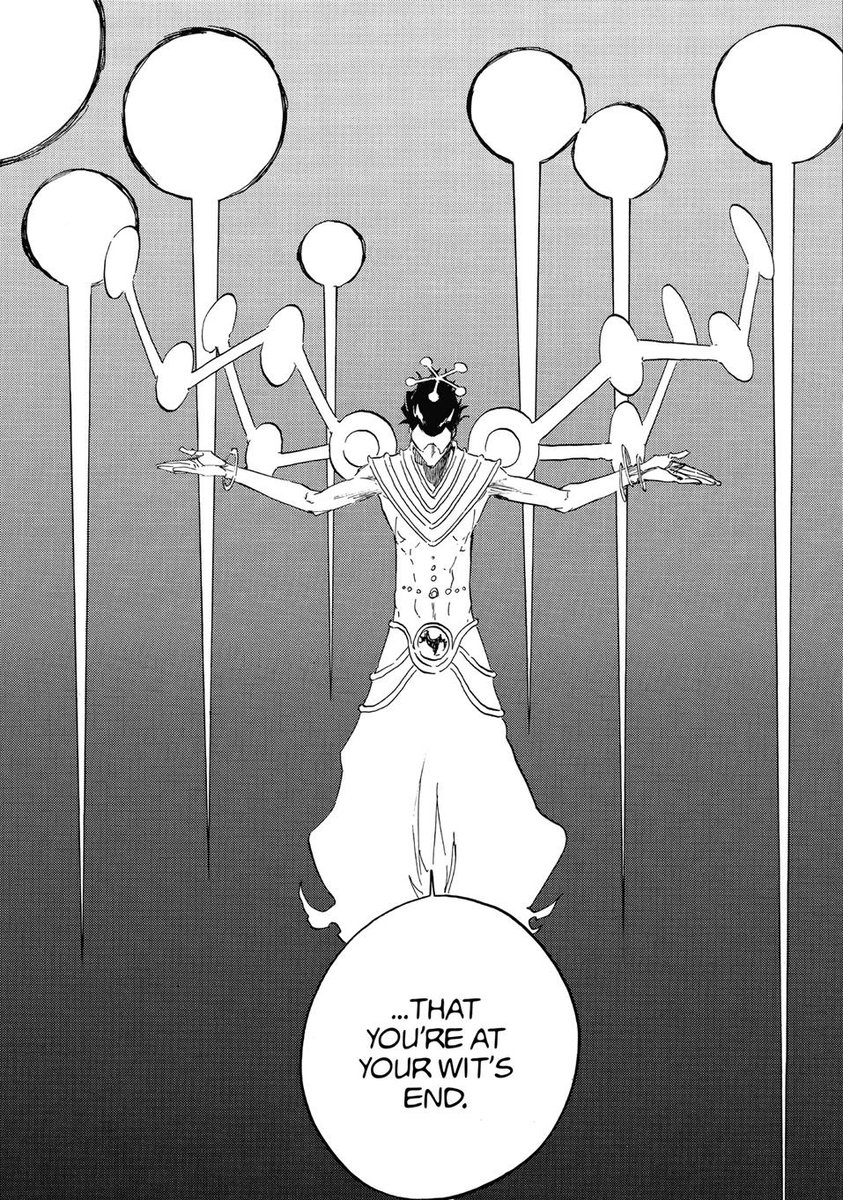
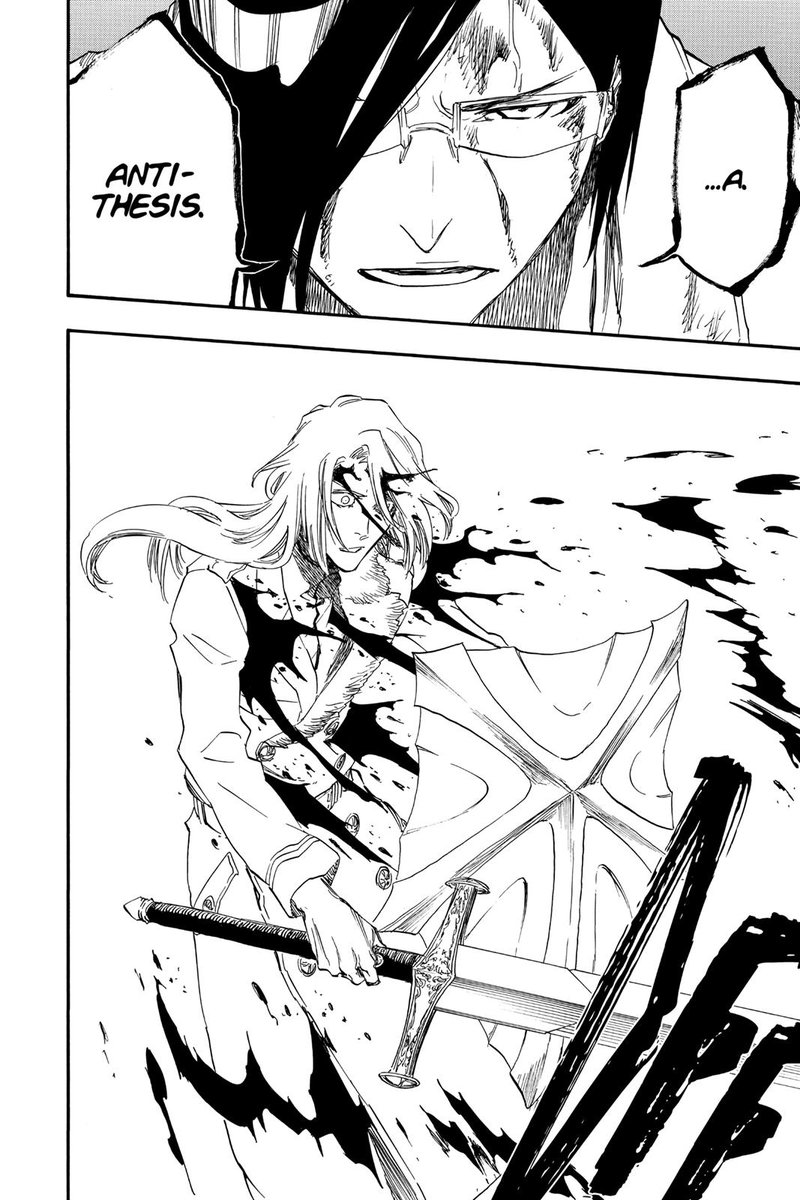
It's pretty evident how much pains Kubo took to constantly show how contradictory Askin's portrayal of "speciality" is. This, in fact, is the root of Askin pursuing self-affirmation. And, obviously, this inherent contradiction bleeds back to Yhwach.
Yhwach's sole overwhelming advantage over the protagonists in the final battle was the Almighty. But that's not unique to Yhwach at all. For one, the Soul King had it, and he had an even more powerful version of it to boot.
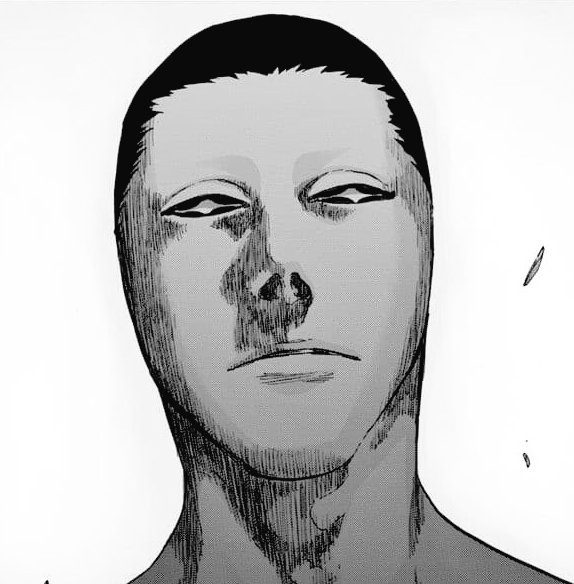
More importantly, since Ichigo has the function of altering the fate of the people he battles, it's been theorized that his Quincy ability is a passive form of the Almighty.
Moreover, the representation of his Quincy powers was young Yhwach himself, which further lends credibility to this theory.
In any case, Askin characterizes Yhwach through his inherent contradictions perfectly well.
In any case, Askin characterizes Yhwach through his inherent contradictions perfectly well.
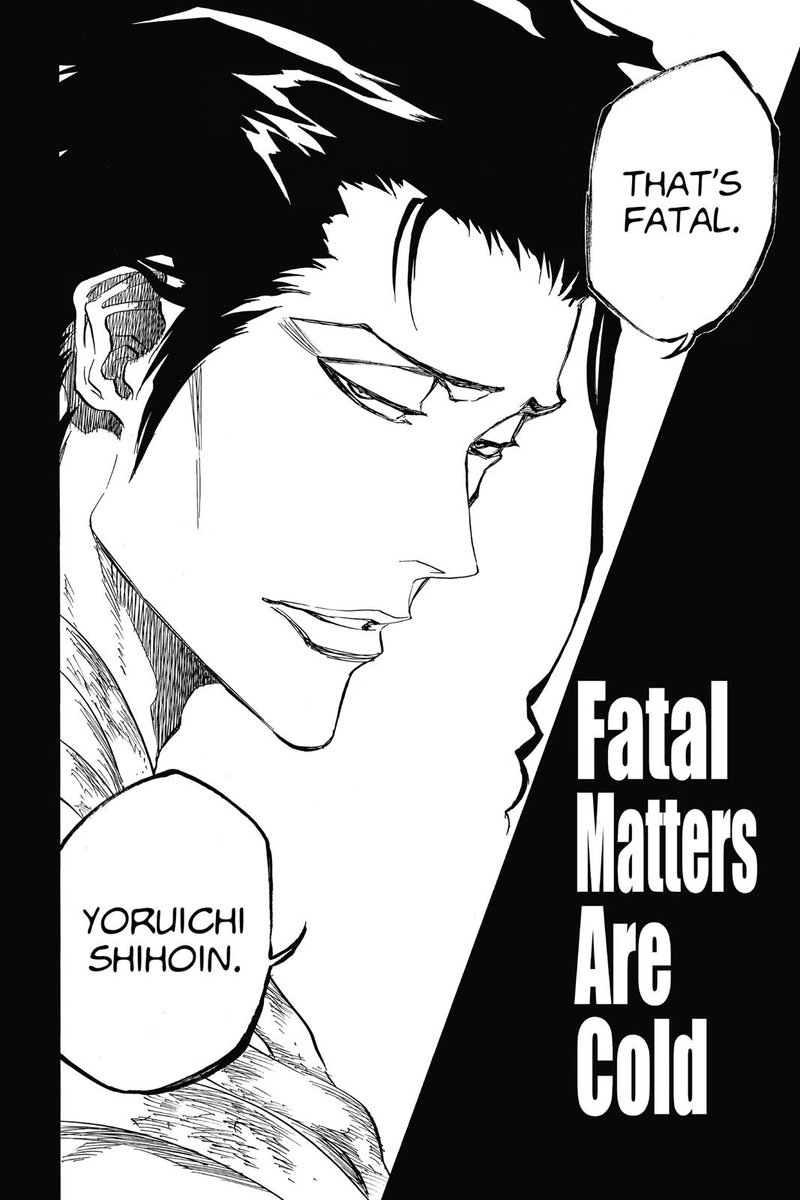
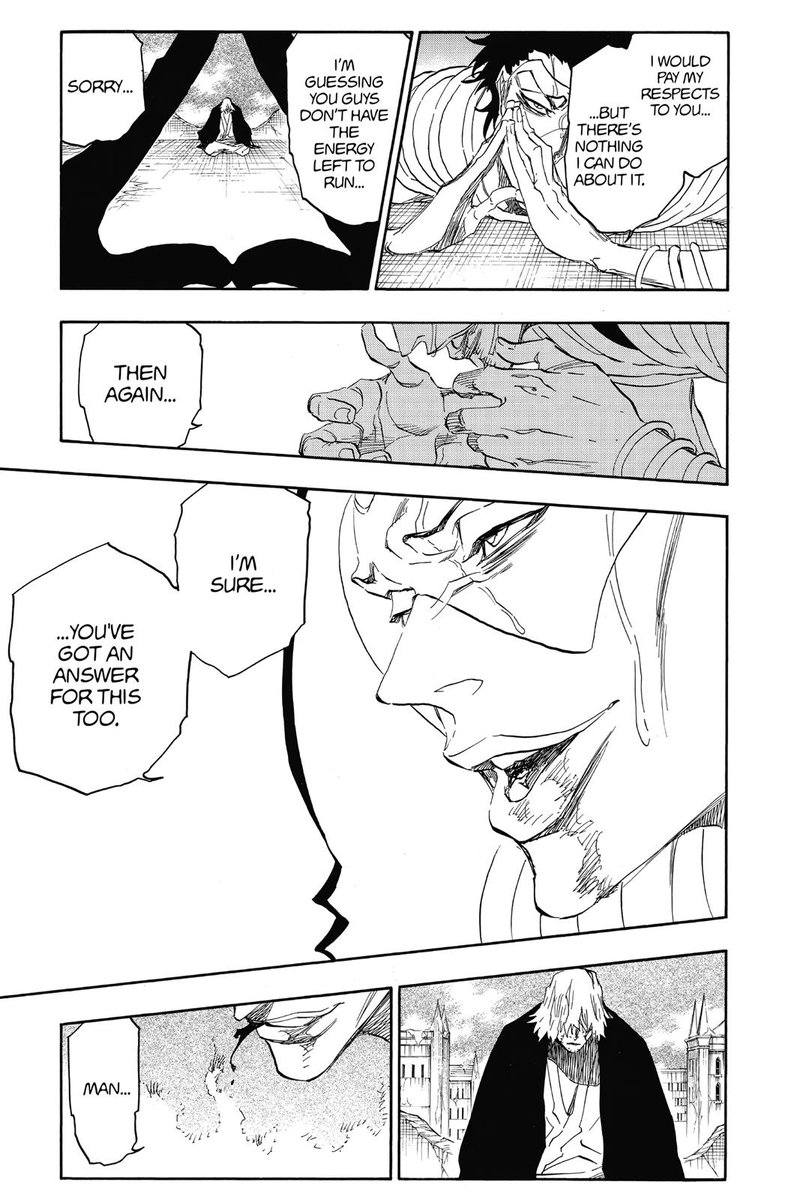
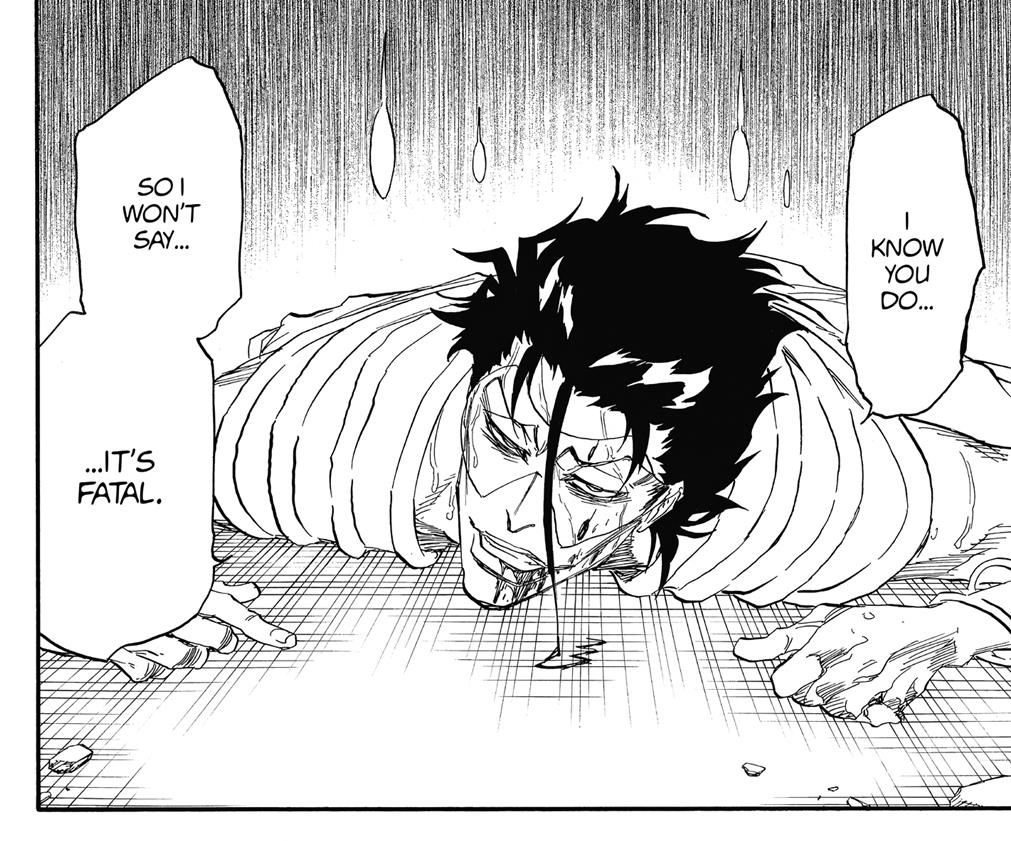
Askin is a tragic character to me. By the end of his life, when he sees how thoroughly Kisuke has him beat, not just physically but also in terms of their pursuit of self worth, he realizes that he'd been holding himself back unconsciously.
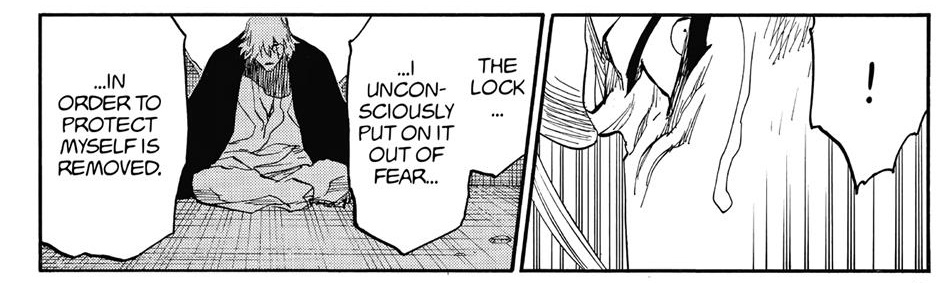
He abandons his catch phrase, "that's fatal" right before his death because it's apparent by now that it's a poorly veiled coping mechanism.
On that incredibly sad note, I end the thread.
On that incredibly sad note, I end the thread.
If you made it all the way here, you're actually genuinely a GOAT. This could NOT have been easy. Thank you for reading.
Thanks to @ReioRemms and @zerocolors10 for their help with this thread.
@Moslley @VsFeral gas this, my parents
Thanks to @ReioRemms and @zerocolors10 for their help with this thread.
@Moslley @VsFeral gas this, my parents
جاري تحميل الاقتراحات...