
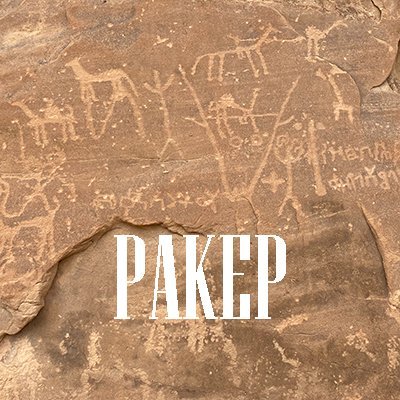
Our new paper is out!!!
‘Kites of AlUla County and the Harrat Uwayrid, Saudi Arabia’ is #OpenAccess in Arabian Archaeology and Epigraphy (AAE) and can be downloaded here: doi.org This paper was spearheaded by @BeccBanks. Here is a thread about the paper. 🧵1/13
‘Kites of AlUla County and the Harrat Uwayrid, Saudi Arabia’ is #OpenAccess in Arabian Archaeology and Epigraphy (AAE) and can be downloaded here: doi.org This paper was spearheaded by @BeccBanks. Here is a thread about the paper. 🧵1/13
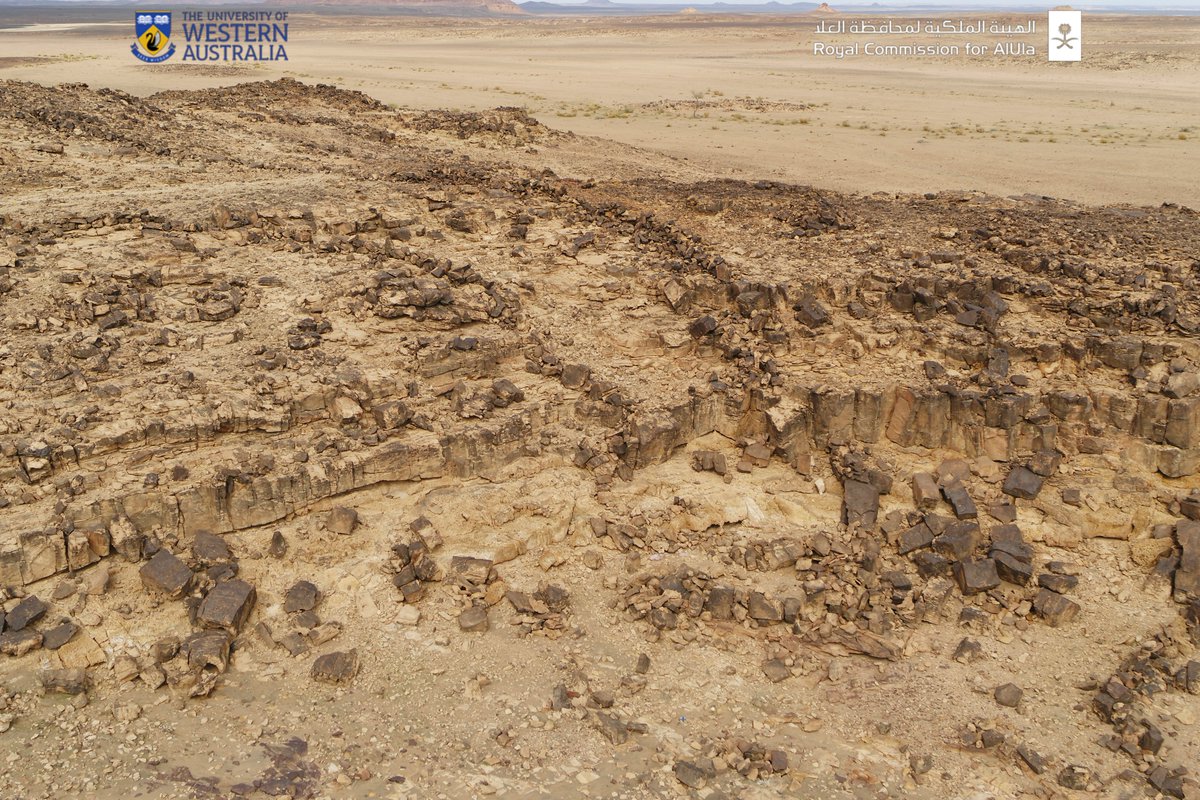
@BeccBanks Kites are massive stone-built structures used for hunting animals and are well documented in the desert steppe of Jordan and Syria, like this one photographed by @APAAME. However, the ones we located in northwest Saudi Arabia are quite different. 2/13
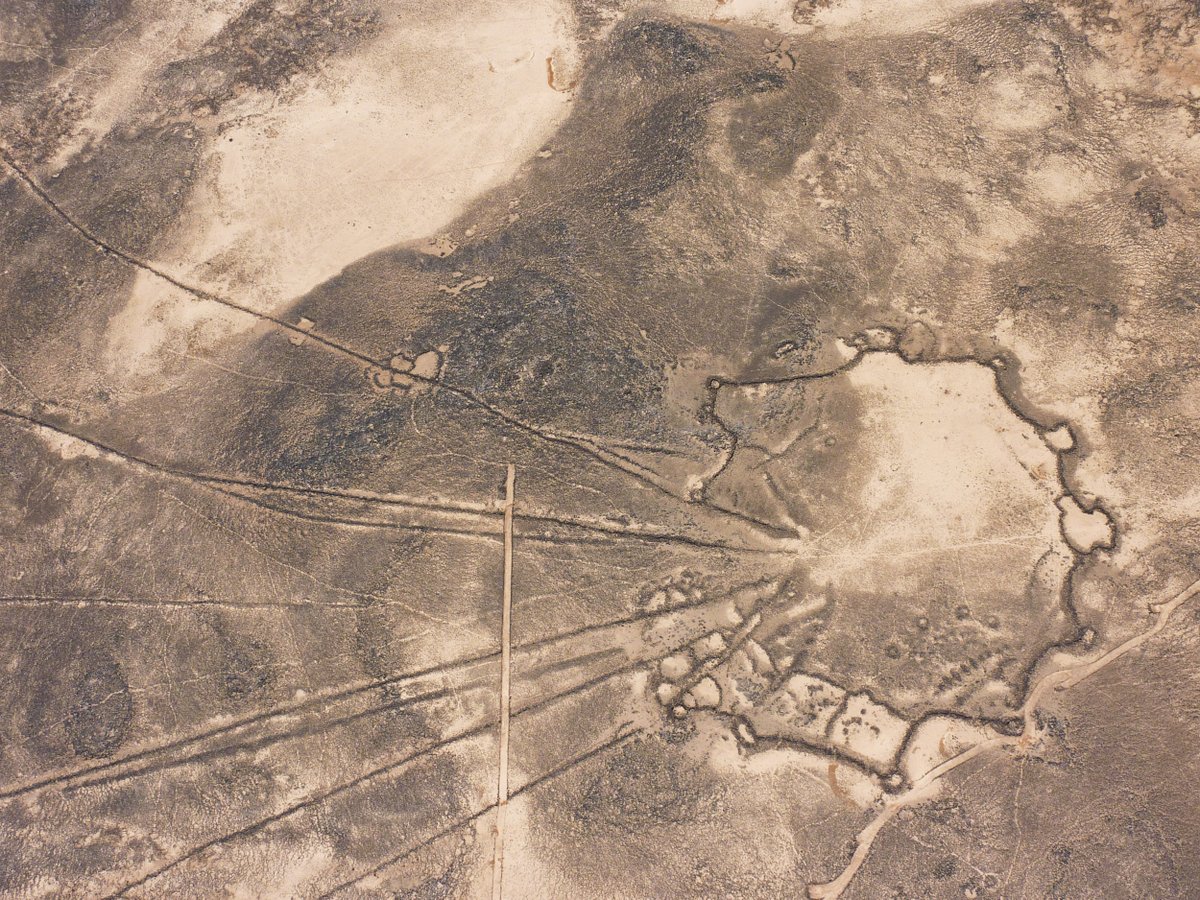
@BeccBanks @APAAME Most of the kites in our study area are very simple: just two guide walls to a ‘trap’. The trap is formed by a precipitous drop or a ‘pit-trap’: a small enclosure or pit with very high walls that animals would be driven to and fall into. 3/13
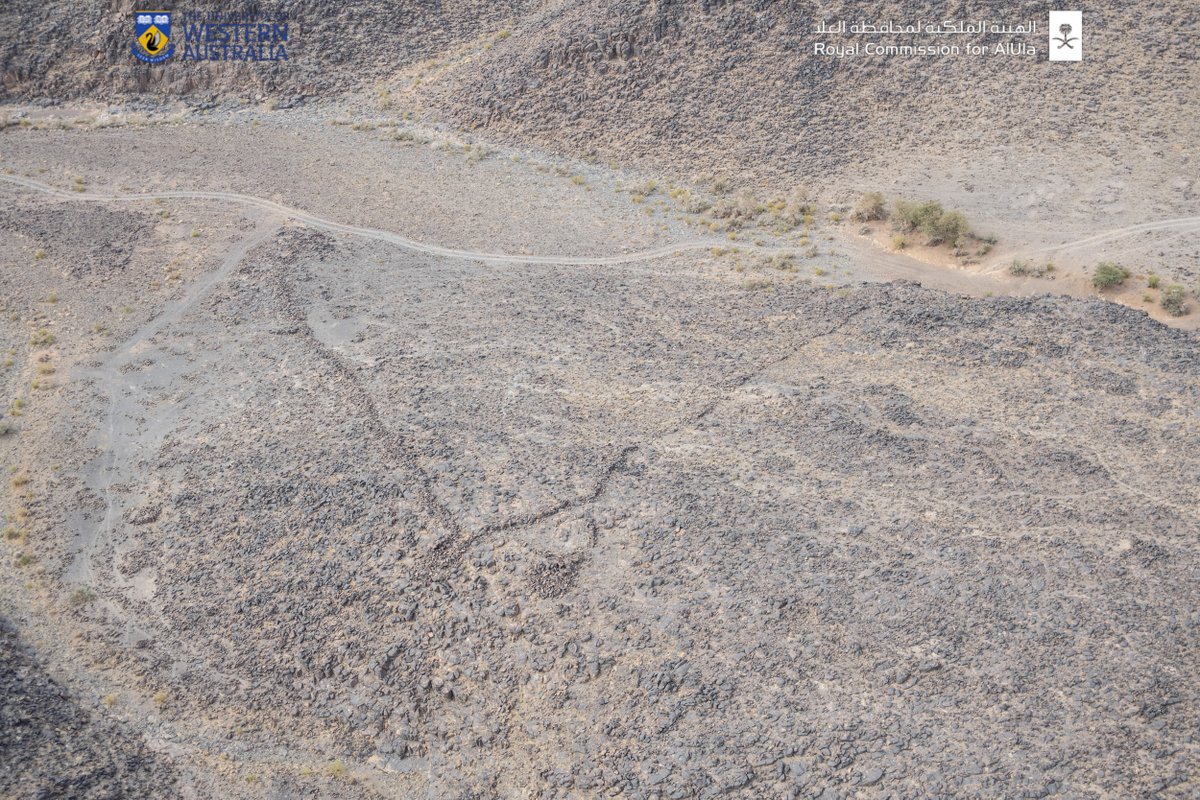
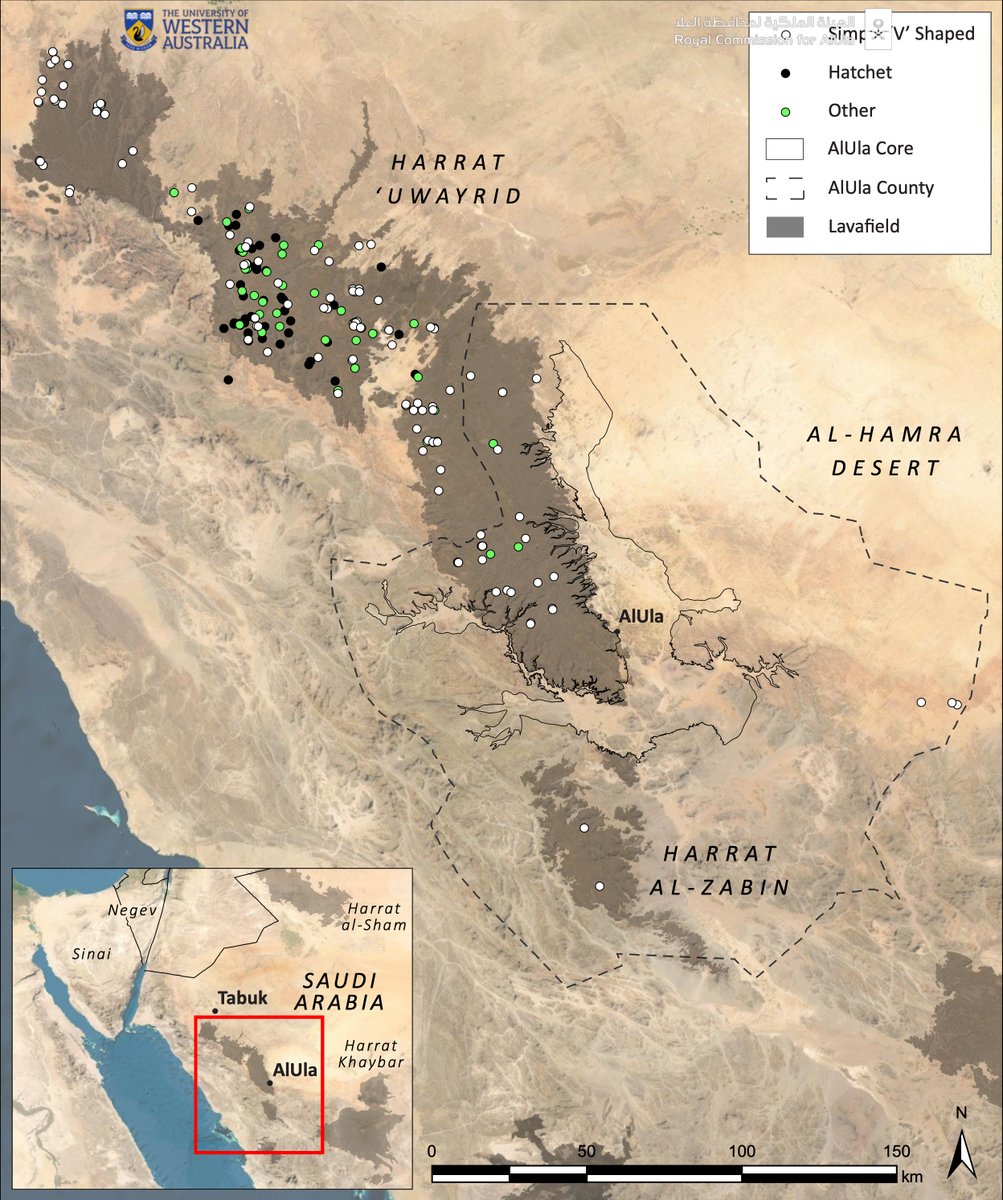
@BeccBanks @APAAME These are much simpler in form to kites found in nearby lavafields like Harrat Khaybar, which can be over a kilometre long and have complex head arrangements. There are over 1000 kites in #Khaybar, in some cases they form long chains and are orientated the same way. 4/13
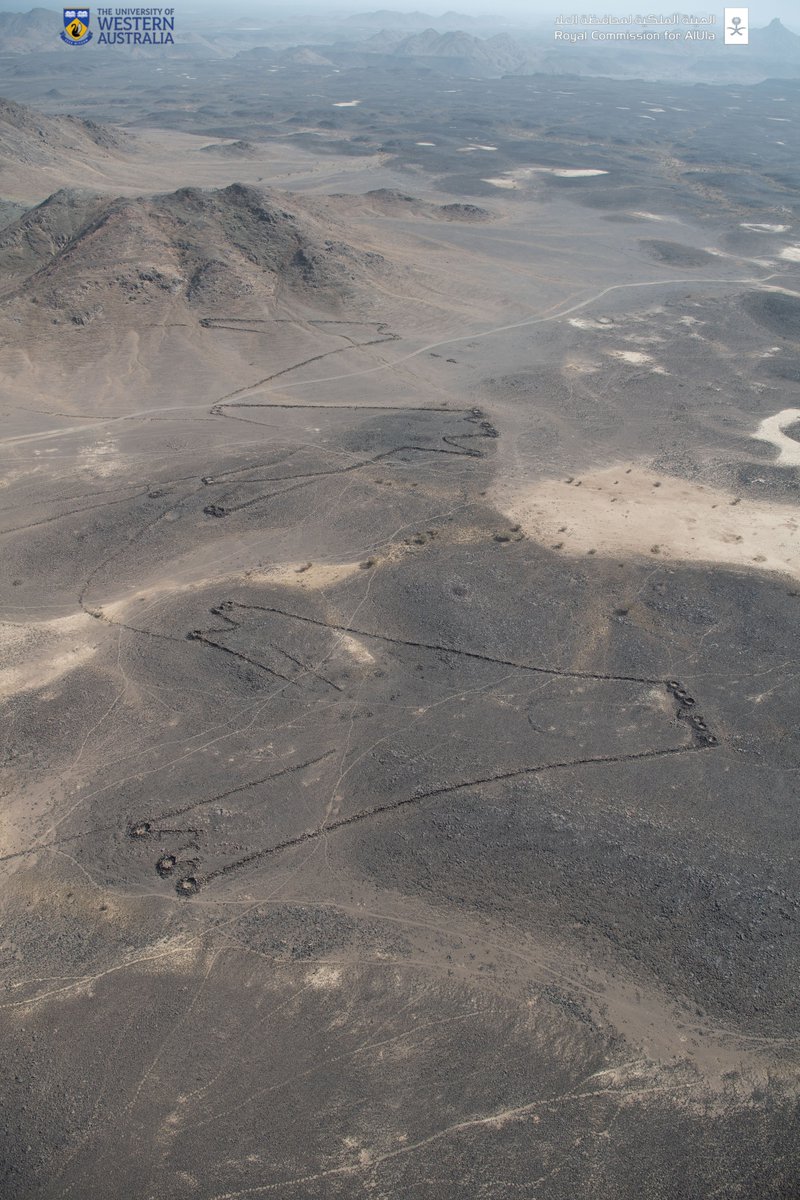
@BeccBanks @APAAME By comparison the kites of #AlUla and Harrat 'Uwayrid are very small, averaging just 155m long. They are scattered across the landscape, number just 175 on the lavafield, and have very varied orientation. 5/13
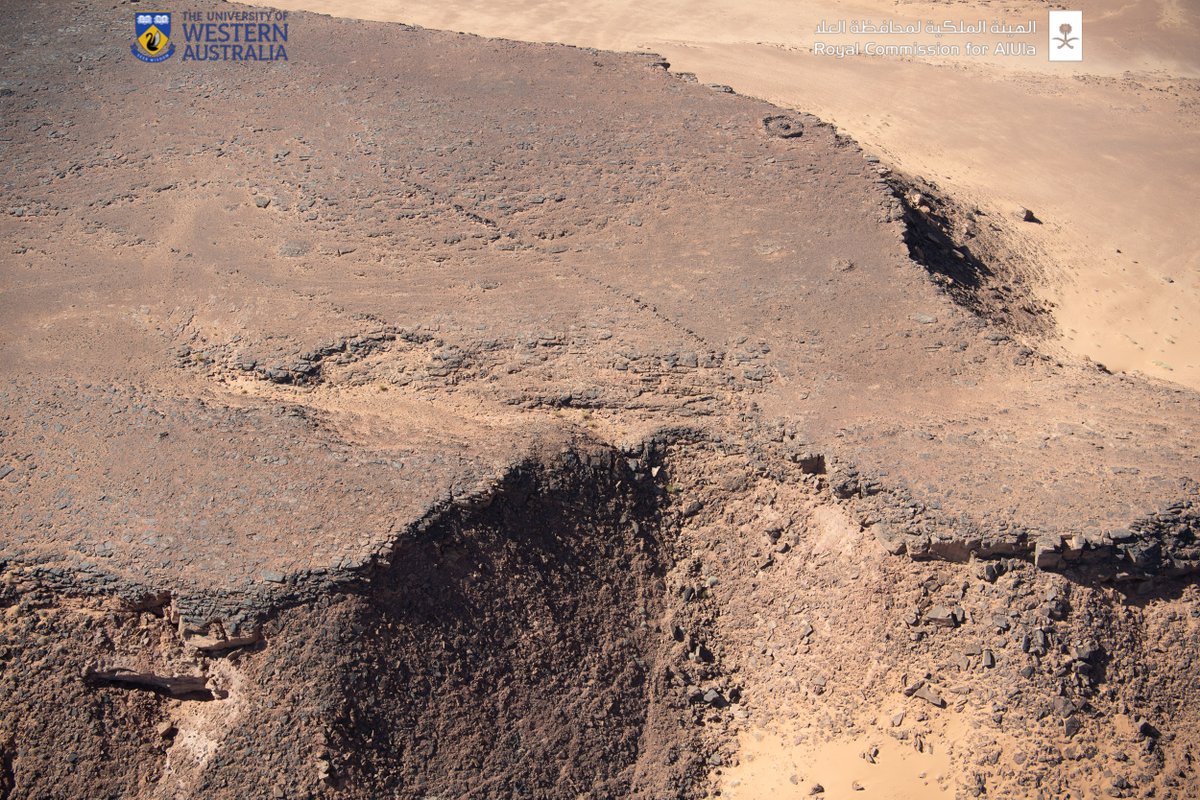
@BeccBanks @APAAME The kites also seemed to rarely have a constructed ‘trap’. Instead, we generally find a steep drop over a wadi, valley, or cutting the lavafield. The animals would be herded over the drop, where they’d die from the fall or would be killed by hunters. 6/13
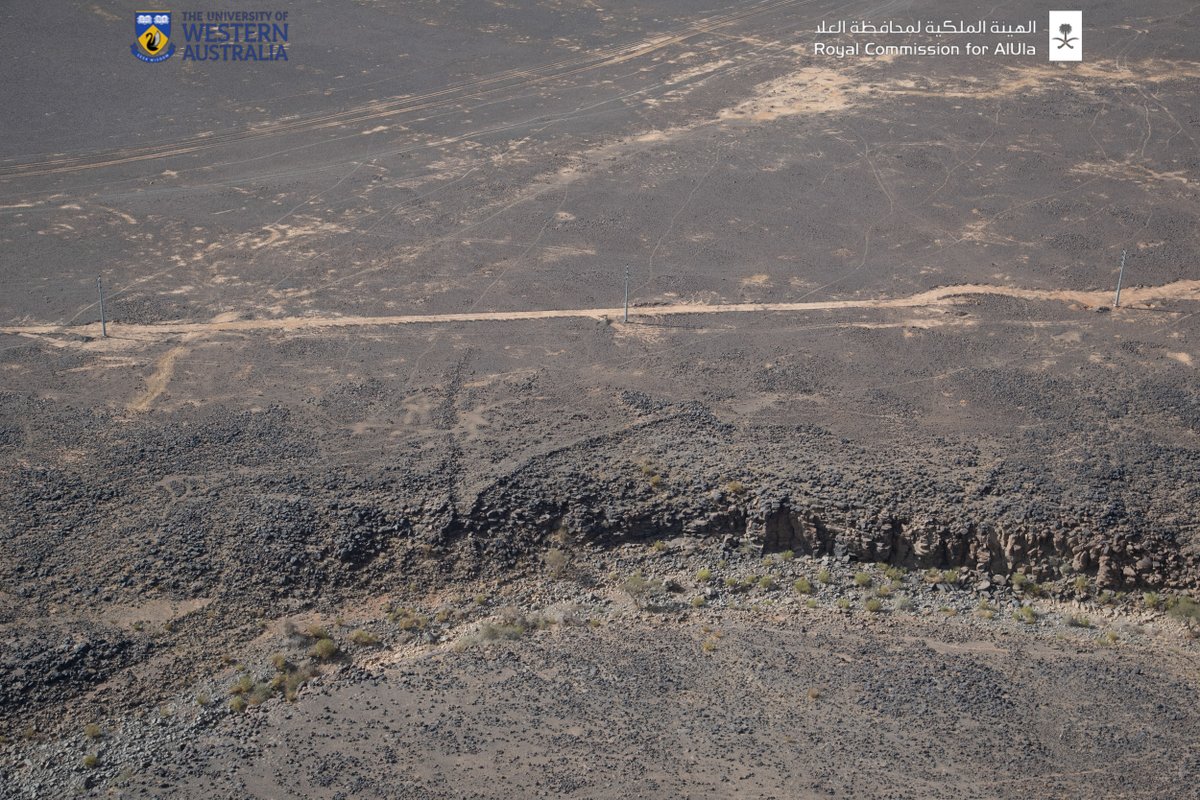
@BeccBanks @APAAME We consider that the ‘V-shaped’ kites of AlUla County and the Harrat Uwayrid were a conscious adaptation to target specific types of animals within the limitations and opportunities of this mountainous landscape. 7/13
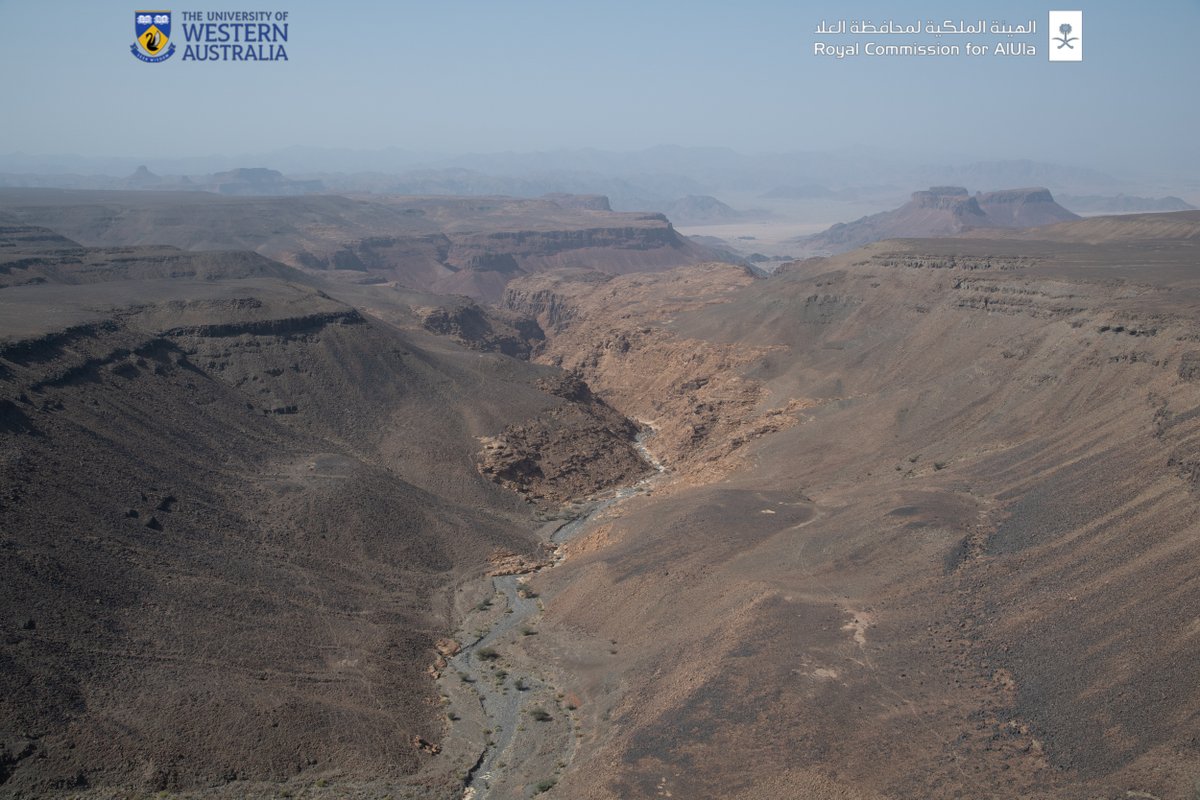
@BeccBanks @APAAME The Harrat Uwayrid is a highly eroded basalt plateau overlying sandstone, characterised by deeply incised wadis, perfect for using as a dead drop at the end of the kite. Here you can see 3 kites using the same valley. 8/13
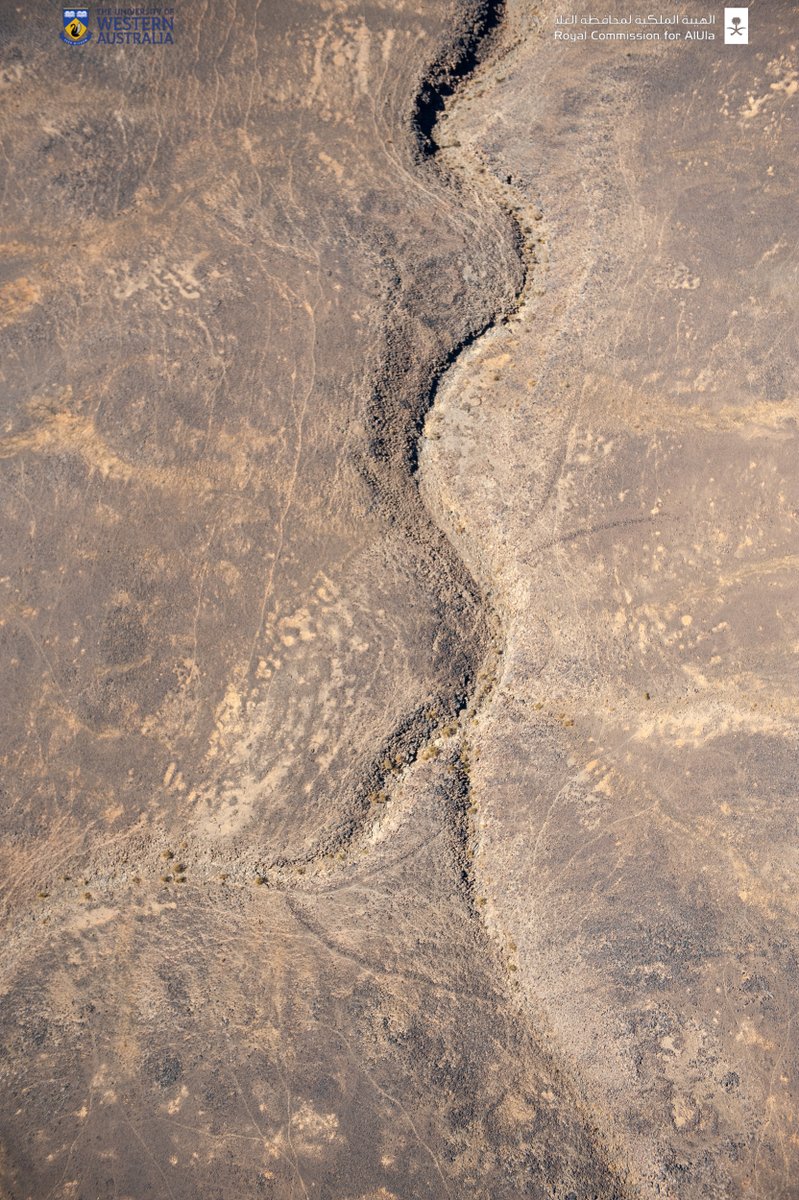
The animals once endemic to this mountainous area, such as this Mountain gazelle we photographed in 2018, have much smaller herds than the massive herds of Persian/Sand gazelle that once crossed the Harrat al-Sham and Harrat Khaybar. 9/13
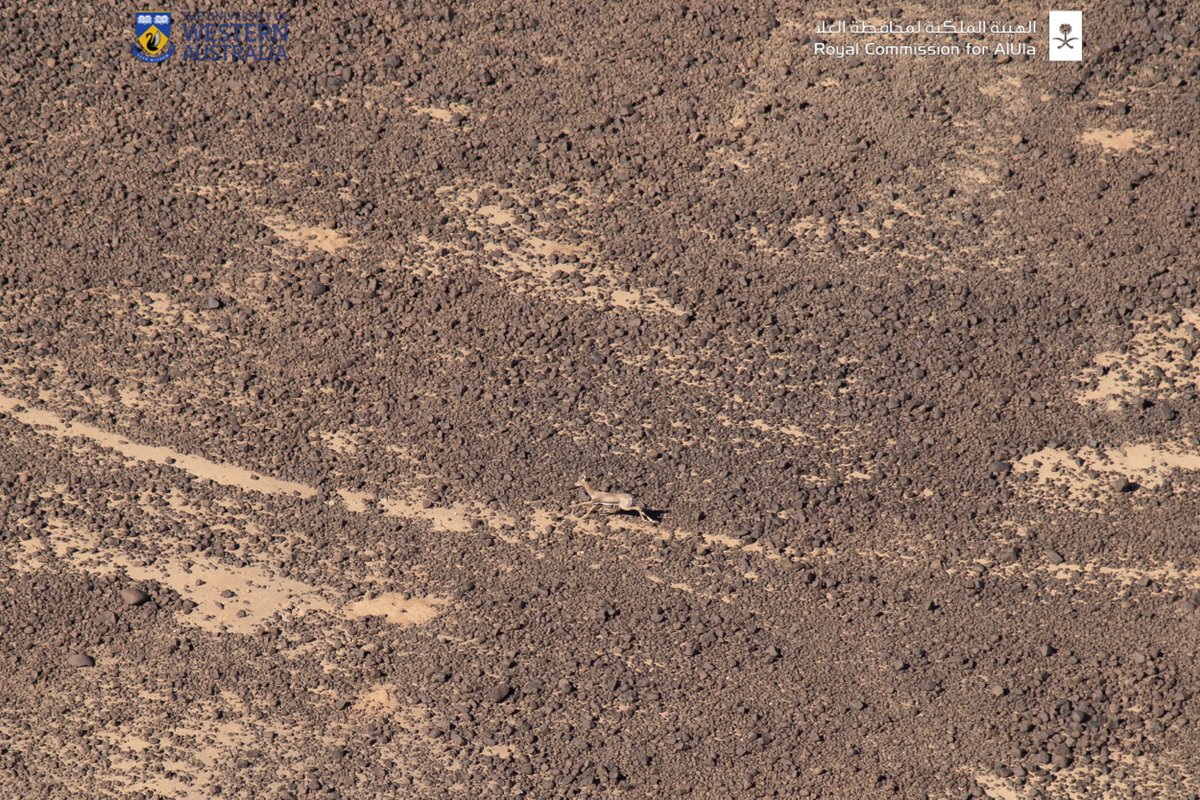
Their small form, sparse distribution and use of varying topography correlates with kites targeting animals of small herd size whose movement was limited by the restricted geology and forage across this landscape. 10/13
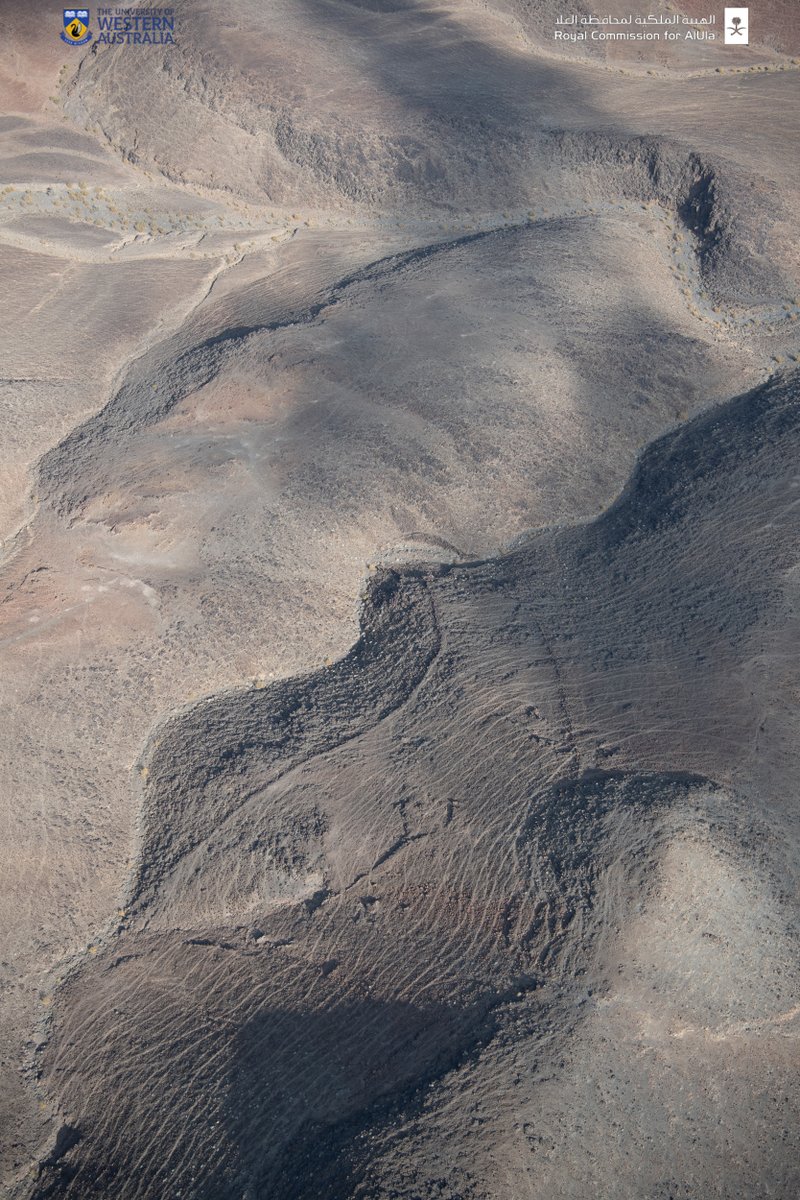
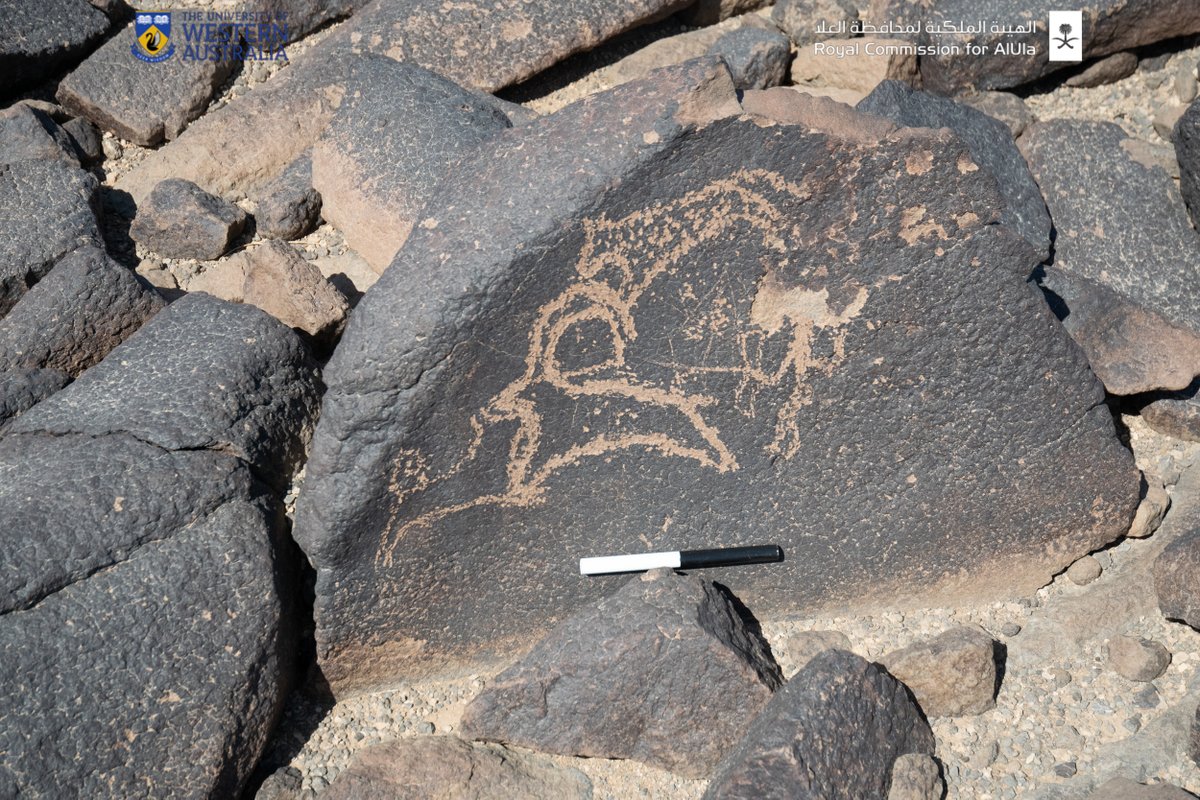
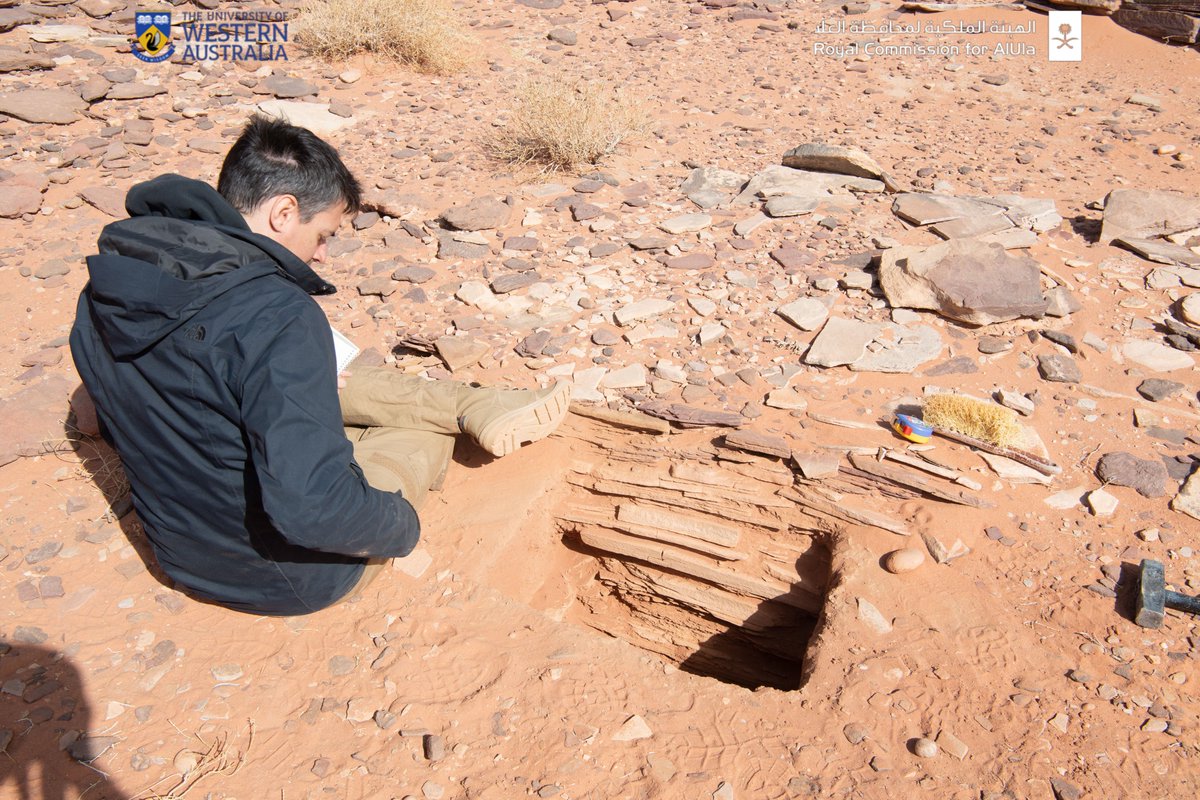
These kites are similar to the form and placement of ‘V-shaped’ kites identified in the Sinai/Negev region. Over the next few years we hope to gather evidence about what they were hunting through analysing rock-art, like this hunting scene, and excavation at domestic sites. 11/13
At present, we aren’t sure what date the kites are. However, @DrEricAndrieux has taken samples for Optically stimulated luminescence, a technique which can date sediments trapped during the construction of the structures. So stay tuned for updates! 12/13
Our paper is open access, which means anyone can download it here doi.org. Thank you as always to @RCU_SA for their support and to everyone in #AlUla and #Khaybar who have assisted us with our research, such as @albalawi @DiscoverAlUla. @UWAresearch 13/13
If you are interested in more research on kites, check out Barge et al., doi.org or Groucutt et al., doi.org
or @KitesinContext and globalkites.fr
or @KitesinContext and globalkites.fr
Also, we note that the paper seems to have two images swapped around. We have let the editors know and will upload a fresh copy when fixed.
جاري تحميل الاقتراحات...