

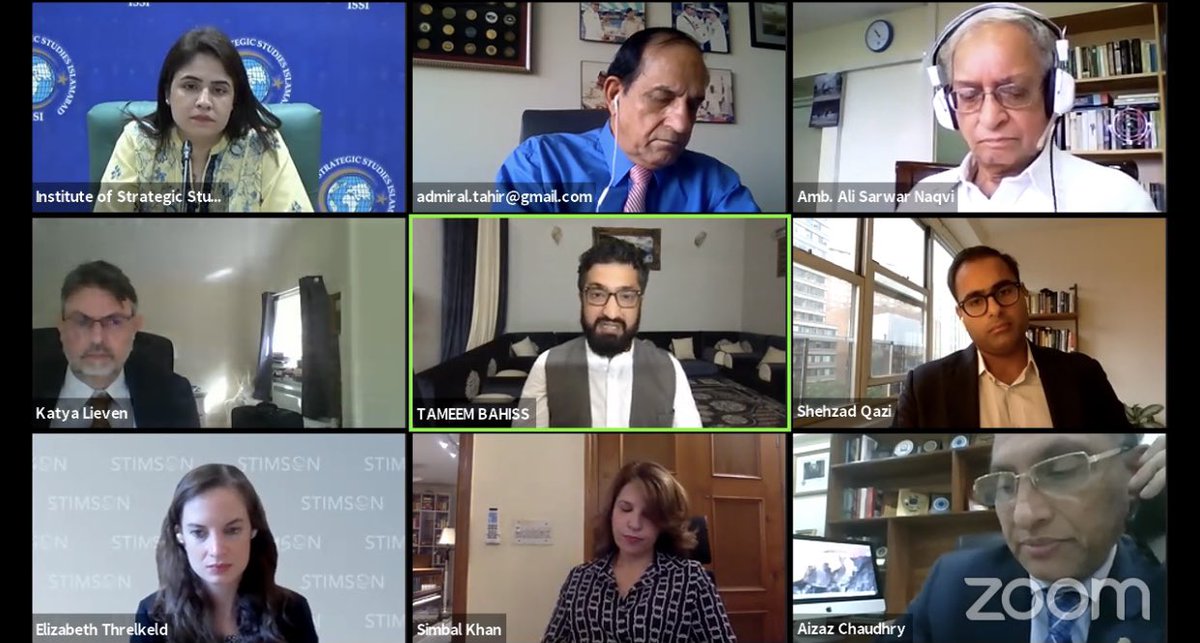
At the @CAMEA_ISSI webinar today, I would argue that the US can either go with boycotting the country, like it did in the 90’s or alternatively choose to have at least some level of diplomatic engagement.
[Thread] 1/n
[Thread] 1/n
Boycotting is not a good option because it has been tried in the 90’s & failed, resulting in persistent terrorist threats to American interests both at home and abroad.
By ignoring Afghanistan, the US risks giving away the few precious counter terrorism assurances it…
2/n
By ignoring Afghanistan, the US risks giving away the few precious counter terrorism assurances it…
2/n
… obtained through the Doha-agreement.
From a geo-strategic point of view, the US has few allies in Central Asia, with close proximity to China’s western border, and Russia & Iran’s underbelly.
3/n
From a geo-strategic point of view, the US has few allies in Central Asia, with close proximity to China’s western border, and Russia & Iran’s underbelly.
3/n
It makes sense for the US to retain some level of relationship with the new government of Afghanistan.
In terms of priorities, I would say the US should first & foremost focus on two issues:
4/n
In terms of priorities, I would say the US should first & foremost focus on two issues:
4/n
The first one will be counter terrorism issue-
Afghanistan is at risk of once again becoming a sanctuary to various militant groups. we have seen ISKP make a major comeback in the past few days.
5/n
Afghanistan is at risk of once again becoming a sanctuary to various militant groups. we have seen ISKP make a major comeback in the past few days.
5/n
If the security situation continues to deteriorate, we could see other groups finding a foothold in Afghanistan.
ISKP and other groups, in my opinion are not a major concern for the Taliban. They are currently focused on consolidating their power & governing the country.
6/n
ISKP and other groups, in my opinion are not a major concern for the Taliban. They are currently focused on consolidating their power & governing the country.
6/n
Right now, the Doha agreement is in a bit of a limbo state. Both parties invoke the Doha agreement when it comes to holding the other party accountable for their promises but don’t seem to rely on it when it comes to their own obligations.
7/n
7/n
Given this, I think there is a serious risk that in the near future both parties will declare the agreement void.
I think that will be a serious mistake. The agreement, as imperfect as it was, developed a form of framework for Taliban obligations regarding CTn.
8/n
I think that will be a serious mistake. The agreement, as imperfect as it was, developed a form of framework for Taliban obligations regarding CTn.
8/n
And it also established a line of communication between the US and Taliban in regards to counterterrorism activities.
By engaging with the Taliban & keeping the Doha agreement in place, the US will have a ready framework to share…
9/n
By engaging with the Taliban & keeping the Doha agreement in place, the US will have a ready framework to share…
9/n
…communication and information with the Taliban & hold them accountable for failure to live up to their counterterrorism obligations.
10/n
10/n
While the public portion of the Doha agreement does not refer to this frame work. In his latest interview Taliban leader Anas Haqqani did say that such a framework had been developed through the Doha agreement.
11/n
11/n
This could be a cost-effective way for the US to ensure its vital counterterrorism interests are met in Afghanistan.
If the US sees a threat emanating from AQ or ISKP, instead of going all guns blazing & provoking a diplomatic crisis,
12/n
If the US sees a threat emanating from AQ or ISKP, instead of going all guns blazing & provoking a diplomatic crisis,
12/n
it would be able to call on the Taliban to take action to neutralise the threat.
Even if the US is willing to expend a fraction of the investment it did with the previous administration, it might be able to retain a partner of sorts in the country.
13/n
Even if the US is willing to expend a fraction of the investment it did with the previous administration, it might be able to retain a partner of sorts in the country.
13/n
I just want to end by highlighting some of the levers the US still has & how best it might be able to utilise its leverage.
I think the US’s current approach of simply imposing sanctions and withholding all aid to the country is counterproductive.
14/n
I think the US’s current approach of simply imposing sanctions and withholding all aid to the country is counterproductive.
14/n
I think a more effective way for the US would be to set clearly communicated and realistic benchmarks, that the Taliban will need to achieve for each stage of the engagement.
15/n
15/n
The US’s options can be incremental, beginning with:
1- Unfreezing Afghanistan’s financial assets.
2- Removal of US & UN sanctions against the Taliban
3- Resumption of development aid, and lastly
4- A path to formal recognition of the government.
16/n
1- Unfreezing Afghanistan’s financial assets.
2- Removal of US & UN sanctions against the Taliban
3- Resumption of development aid, and lastly
4- A path to formal recognition of the government.
16/n
By working with the regional countries, as well as other major powers, the US should develop a joint position on the benchmarks the Taliban would need to meet. This will send a clear message to the Taliban on how they can adjust their positions for each level of engagement.
17/n
17/n
I would end by cautioning that these steps need to be clear and realistic.
I emphasis realistic here because too often the US demands are unrealistic.
Even while the US was developing an understanding of the Taliban’s mentality during the Doha talks,…
18/n
I emphasis realistic here because too often the US demands are unrealistic.
Even while the US was developing an understanding of the Taliban’s mentality during the Doha talks,…
18/n
…their expectations of what the Taliban would & could do was far too unrealistic.
The Taliban has clear ideological redlines and it seems the US has consistently failed to understand these.
19/n
The Taliban has clear ideological redlines and it seems the US has consistently failed to understand these.
19/n
The US cannot & should not expect the Taliban to abandon 20 years of its propaganda & ideological positioning in a matter of weeks.
20/n
20/n
Instead, it needs to consult widely with the regional partners and experts to build a better understanding of what can be realistically expected of the Taliban and how that might be achieved.
[END]
[END]
جاري تحميل الاقتراحات...