

الإنترفيرون 📝تنتجها خلايا الجسم كرد فعل دفاعي ضد الفيروسات و سمي الانترفيرون بقدرته على التدخل في انتشار الفيروس.
*Definition of INTERFERONS
*Types of Interferons
*General characteristics of INTERFERONS
*Uses of INTERFERONS
*Producing (IFN)TYPE 1+ (IFN)TYBE 2. *INTERFERONS (IFN)TYPE 1 Mechanism
*Types of Interferons
*General characteristics of INTERFERONS
*Uses of INTERFERONS
*Producing (IFN)TYPE 1+ (IFN)TYBE 2. *INTERFERONS (IFN)TYPE 1 Mechanism

• Interferons(INF) are set of proteins which are released by virus infected cells in vivo and which reacts with uninfected cells so as to render them resistant to infection to virus(given protection against viruses) mediates innate immunity.
o Large family of secretory proteins (cytokines)
o Prevent virus replication inside the cells
o Prevent virus replication inside the cells
*Types of Interferons 🔎📝
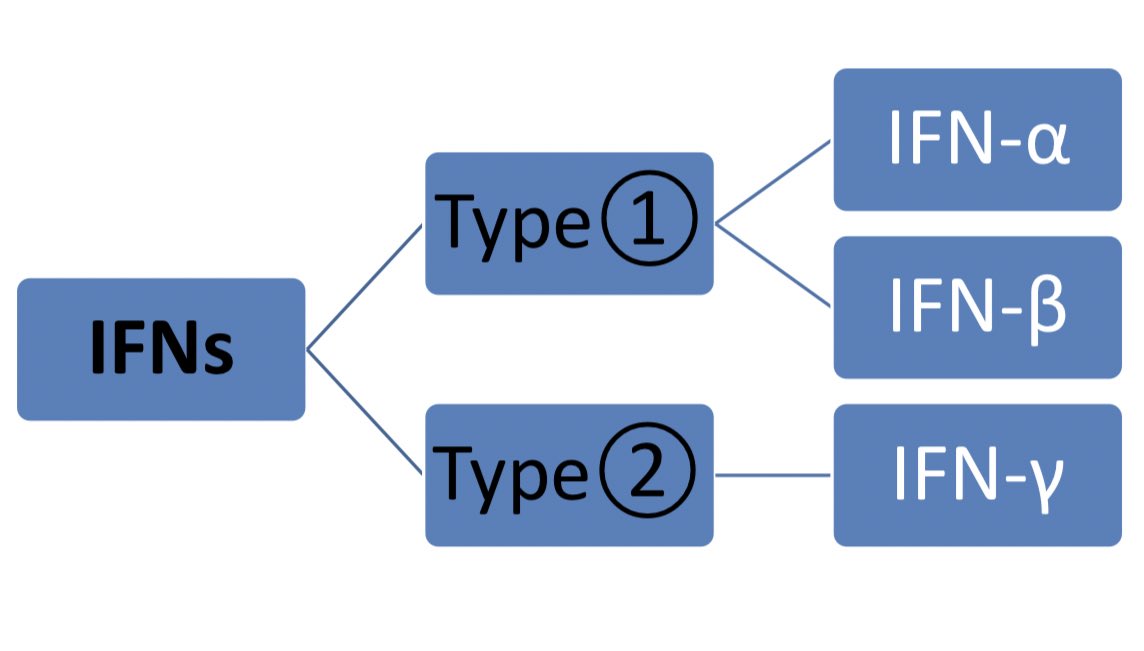
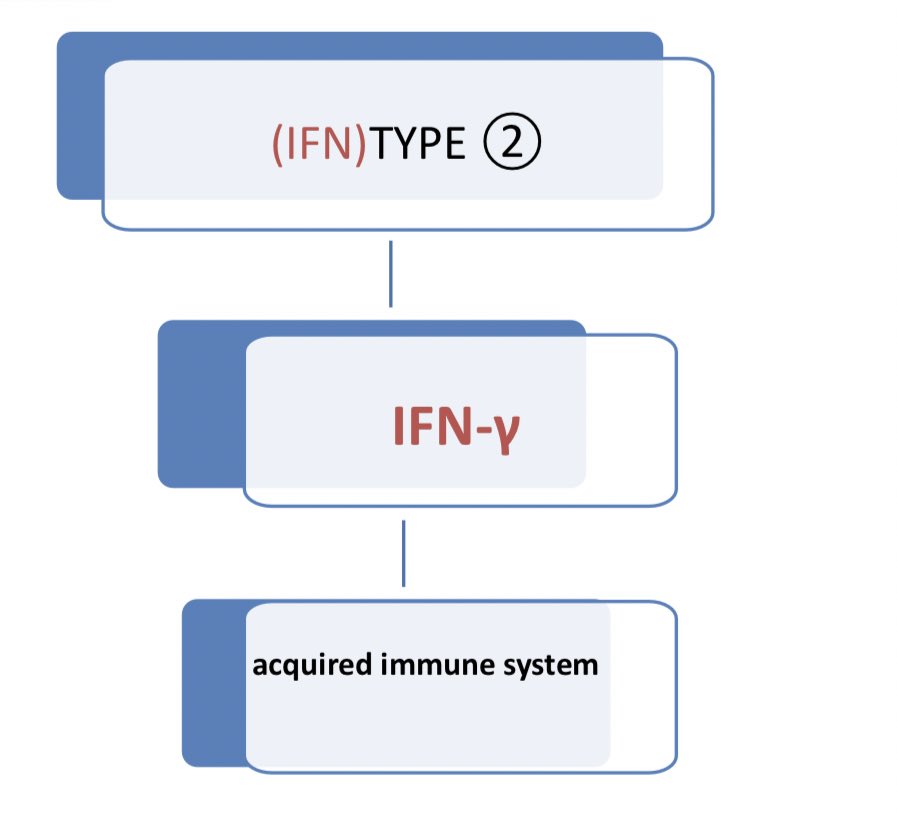
•Both α and β interferons identical in funcation and structure, produced in response to virus, where as Υ interferon produced from antigen activated T lymphocytes.
• Chemically interferons are glycoprotein in nature having molecular weight 20,000 to 40,000
• Chemically interferons are glycoprotein in nature having molecular weight 20,000 to 40,000
*General characteristics of interferons are:📝🔍
•They are stable over a wide range of pH ( 2 to 10).
•They do not have any direct action on viruses.
•Their activities are not virus specific. Interferons induced by one virus is effective against many other viruses
•They are stable over a wide range of pH ( 2 to 10).
•They do not have any direct action on viruses.
•Their activities are not virus specific. Interferons induced by one virus is effective against many other viruses
•Synthesis of interferons begins within one hour of induction and takes about 12 hours to reach its maximum activity.
•t is nontoxic, nonantigenic, diffuses freely in the body and has a wide spectrum of antiviral activity.
•t is nontoxic, nonantigenic, diffuses freely in the body and has a wide spectrum of antiviral activity.
*Uses of Interferons
•α interferon is being used in several hematological disorders such as hairy cell leukemia and chronic leukemia
•It is used as adjuvant therapy in patients with breast carcinoma
•It provides resistance to intracellular infections such as malaria,chlamydia
•α interferon is being used in several hematological disorders such as hairy cell leukemia and chronic leukemia
•It is used as adjuvant therapy in patients with breast carcinoma
•It provides resistance to intracellular infections such as malaria,chlamydia

*Producing (IFN)TYPE 1📝🔬
•IFN-α are secrated by viraaly infected leukocytes
•IFN-α are secrated by viraaly infected leukocytes
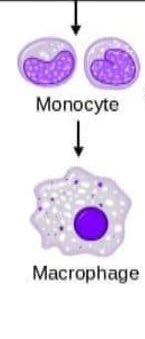
e.x: Monocytes : are a type of leukocyte, or white blood cell. They are the largest type of leukocyte and can differentiate into macrophages
Macrophages:
Arise from the myeloid stem cells in the bone marrow
• The stem cells first form monocytes and are released into the blood at this stage.
• Most monocytes move from the blood into various tissues, where they complete the maturation process into macrophages.
Arise from the myeloid stem cells in the bone marrow
• The stem cells first form monocytes and are released into the blood at this stage.
• Most monocytes move from the blood into various tissues, where they complete the maturation process into macrophages.
play more than one role in protecting against invasion and tissue injury.
•Stimulate the immune responses associated with antibody-mediated immunity (AMI) (Macropha interact with T-helper cells and activate them ),then T-helper cells activate B-cell to produce antibody
•Stimulate the immune responses associated with antibody-mediated immunity (AMI) (Macropha interact with T-helper cells and activate them ),then T-helper cells activate B-cell to produce antibody
acrophages stimulate cell-mediated immunity (CMI) through antigen presentation
o -Specific macrophage functions include phagocytosis, repair of injured tissues, antigen presenting/processing, and secretion of cytokines that control the immune
system.
o -Specific macrophage functions include phagocytosis, repair of injured tissues, antigen presenting/processing, and secretion of cytokines that control the immune
system.
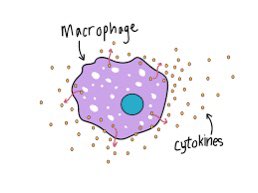
• IFN-β are secrated by fibroblasts
•Fibroblasts also function as accessory cells in many immune and inflammatory responses. Fibroblasts can produce or respond to a wide variety of cytokines,
•Fibroblasts also function as accessory cells in many immune and inflammatory responses. Fibroblasts can produce or respond to a wide variety of cytokines,
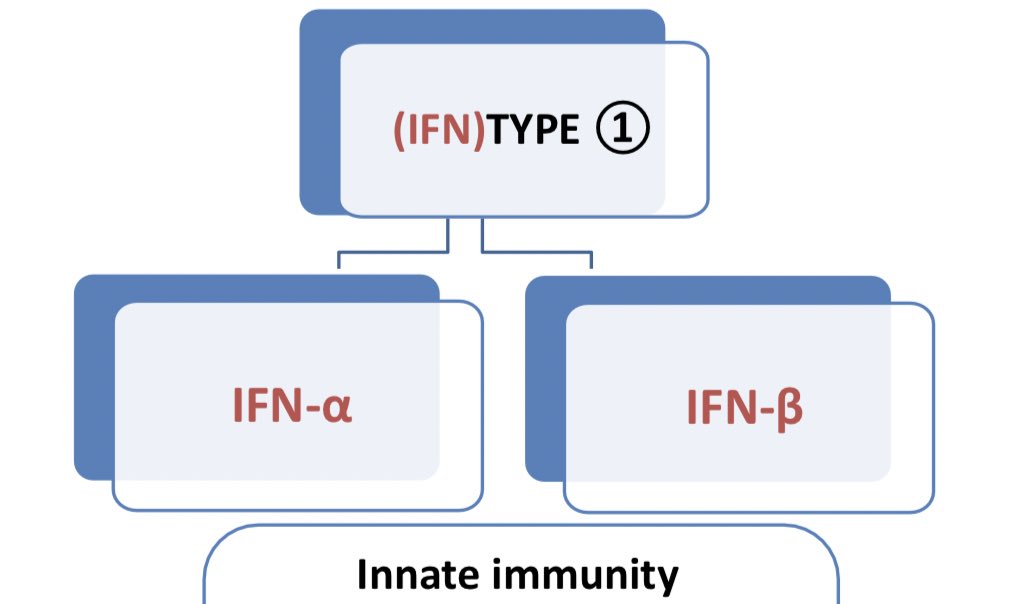
* Producing (IFN)TYPE 2:
•IFN-γ by activated T lymphocytes and NK cell.
•Stimulate the activity of macrophages
• ALSO KNOW as Macrophage Activation Factor
•IFN-γ by activated T lymphocytes and NK cell.
•Stimulate the activity of macrophages
• ALSO KNOW as Macrophage Activation Factor
*INTERFERONS (IFN)TYPE 1 Mechanism:
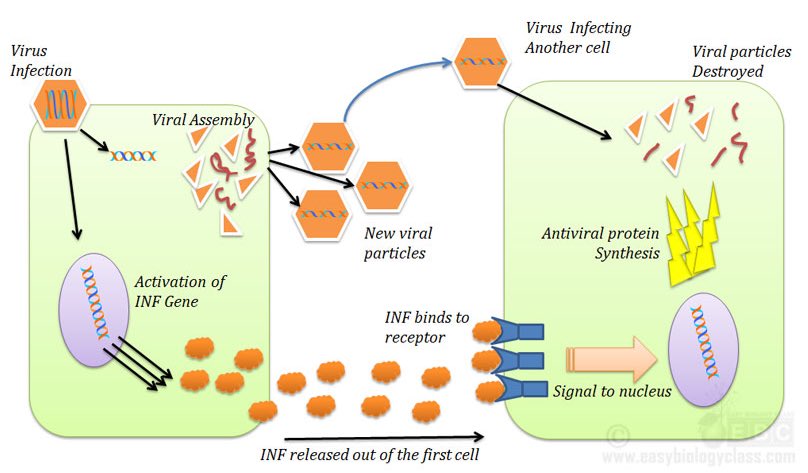
Interferon is secreted by cells in response to stimulation by a virus, but it does not directly inhibit the virus's multiplication. Rather, it stimulates the infected cells and those nearby to produce proteins that prevent the virus from replicating within them.
🧬📝😻

جاري تحميل الاقتراحات...