

The shutdown of football until at least end-April due to the coronavirus pandemic will have a severe financial impact on clubs, particularly those in the Football League, though even those in the top flight will not be immune. The following thread looks at the implications.
This is an unprecedented event, so it is impossible to be definitive about the financial impact, not least because many of the figures that we have are not current, but there is enough data available to prepare some “educated estimates”. Note: clubs are shown in 2018/19 divisions
Even before coronavirus, football did not look like a particularly healthy business, as few clubs actually made any money. Premier League clubs earn a lot of revenue (£5.2 bln), but make a net loss of £160m, averaging £8m a club. Half of the 20 clubs have reported losses.

It’s even worse in the Championship where clubs reported total losses of £358m (excluding £138m of accounting profits for inter-group stadium sales) and only 4 of the 24 clubs were profitable (3 of them with less than £3m). Owner support/funding is vital in this division.

Similarly, League One is largely loss-making with only 9 of the clubs posting profits – and 6 of these are less than half a million. In fact, the 2 largest reported profits would also have been losses without exceptional gains: Wimbledon – stadium sale; Southend – loan write-off.

The revenue mix is very different in the Premier League compared to other divisions with only 13% coming from match day. The lion’s share (60%) comes from broadcasting (as much as 88% at some clubs) and 27% from commercial.

In the Championship, match day is up to 19% of total revenue, though this figure is distorted by Premier League parachutes. For clubs that do not benefit from these payments, match day is 29% of total revenue, i.e. hugely important.
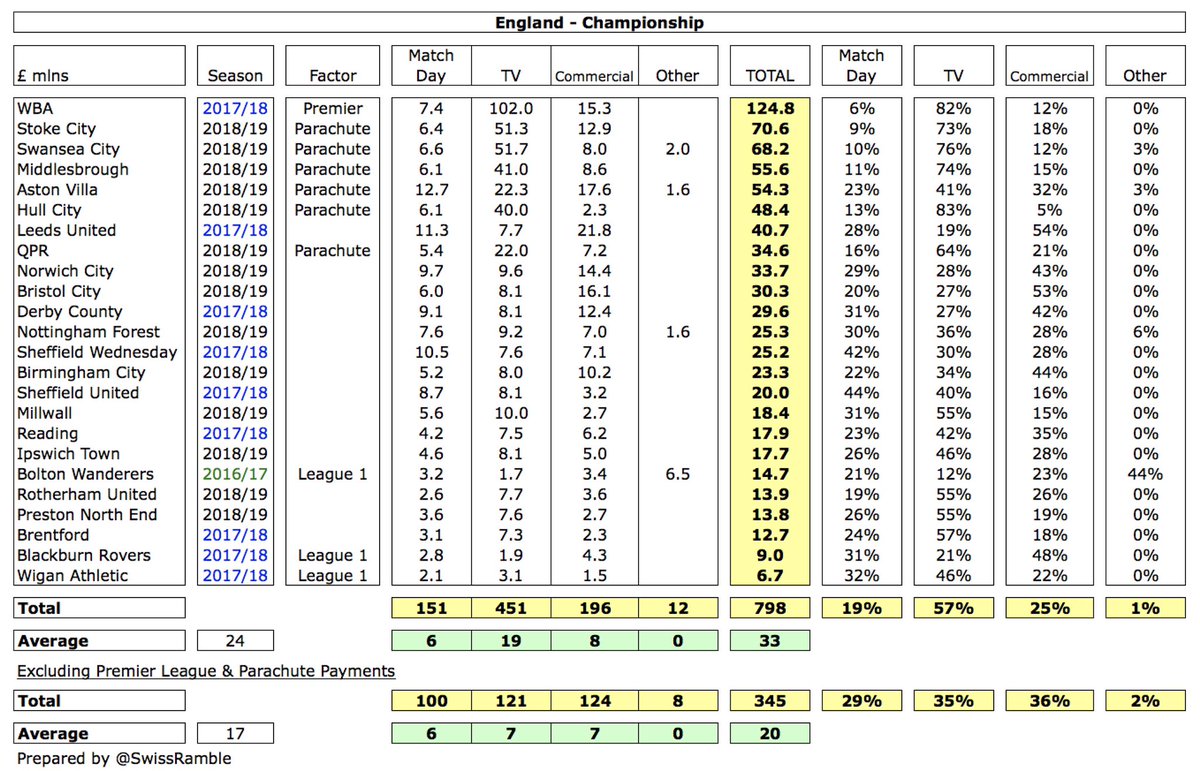
Detailed revenue analysis is not available in for many clubs in League One, but we have enough data to see that match day is around 35% of total revenue. In other words, gate receipts become more significant in the lower leagues.


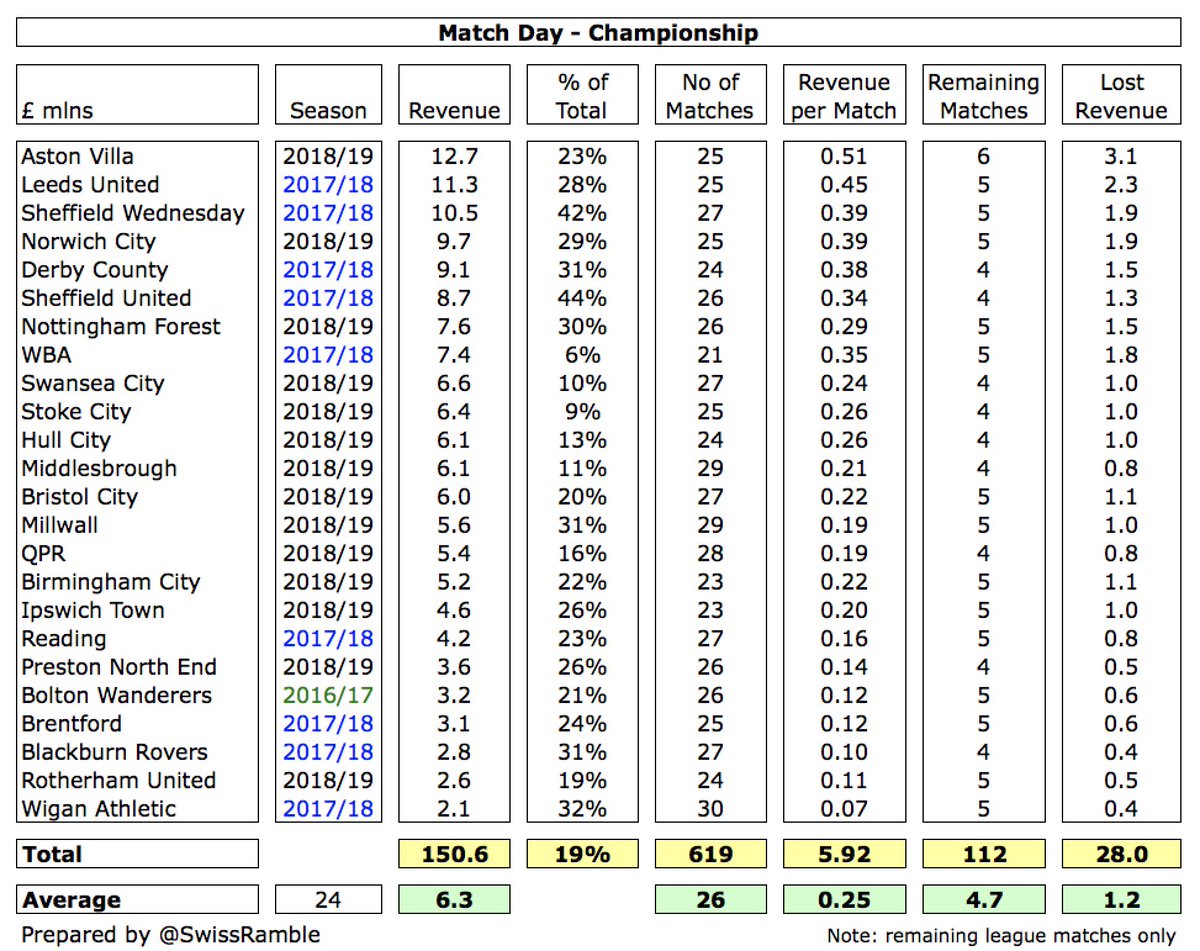
The estimated £28m match day decrease in the Championship is obviously smaller, but it has more impact, as this stream represents a larger share of total revenue, e.g. 42% at #SWFC where the loss would be around £2m.
The match day impact in League One is estimated at £10.5m, averaging £435k per club. Clearly, the effect on individual clubs would be different, but meaningful at many, e.g. Sunderland and Portsmouth would lose £0.9m and £0.8m respectively.

It is not clear whether clubs would give a rebate to season ticket holders, which might not be required per the terms & conditions, though might still be done as a goodwill gesture. Season ticket sales for next season also likely to be delayed, impacting clubs’ cash flow.
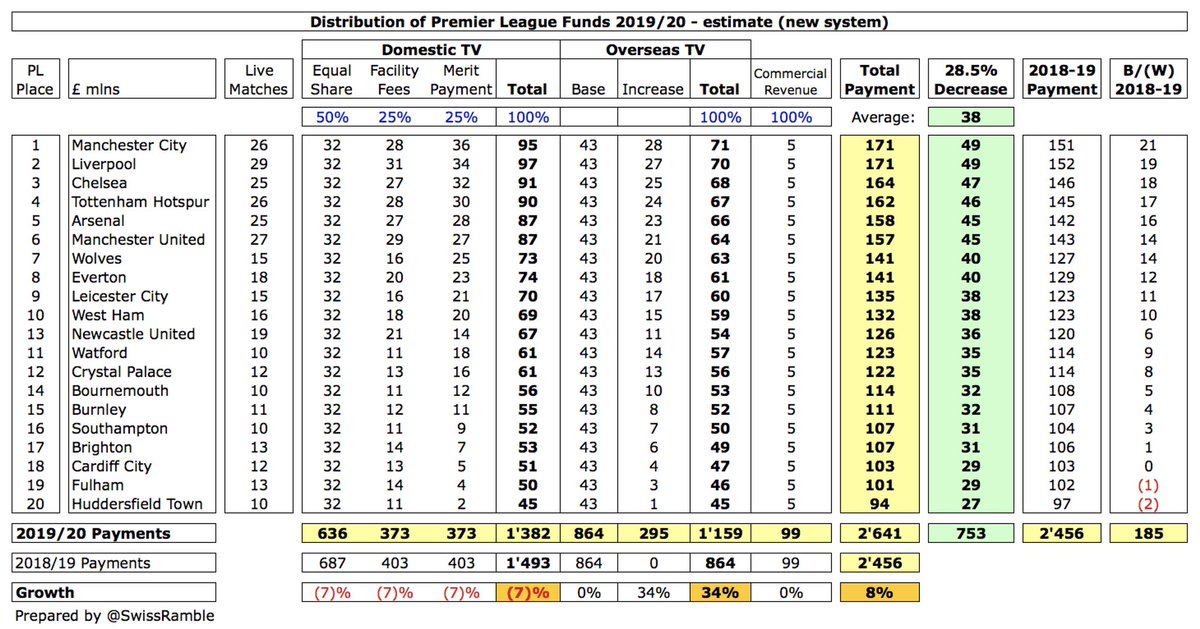
Rightly or wrongly, this provides an incentive for clubs to play games even if behind closed doors, though the TV companies may be flexible, given that at some stage they will be bidding for new rights. Note that any reduction would be partly offset by increase in 2019-22 deal.


It is difficult to assess the commercial impact without knowing details of the contracts, but there will clearly be a reduction in hospitality, merchandising and events, while there may be performance bonuses missed. Also money-spinning pre-season tours are in danger.
Profits from player sales is a key element of some clubs’ business models with half a billion generated in the Premier League, though around 70% of that came from just 6 clubs. This may be an issue if the transfer window is delayed and player prices reduce (which seems probable).

Without revenue coming in, it will be difficult for many clubs to pay their wages, even though these should reduce in the (assumed) absence of appearance fees, win bonuses, etc. Some clubs have already struggled here, e.g. late payments at Macclesfield, Southend and Oldham.

The Championship’s annual wage bill is around £800m, which means £15m a week. This gives an average of £650k per club, though there are wide differences, e.g. Stoke pay over a million, while the likes of Millwall and Brentford around £300k.
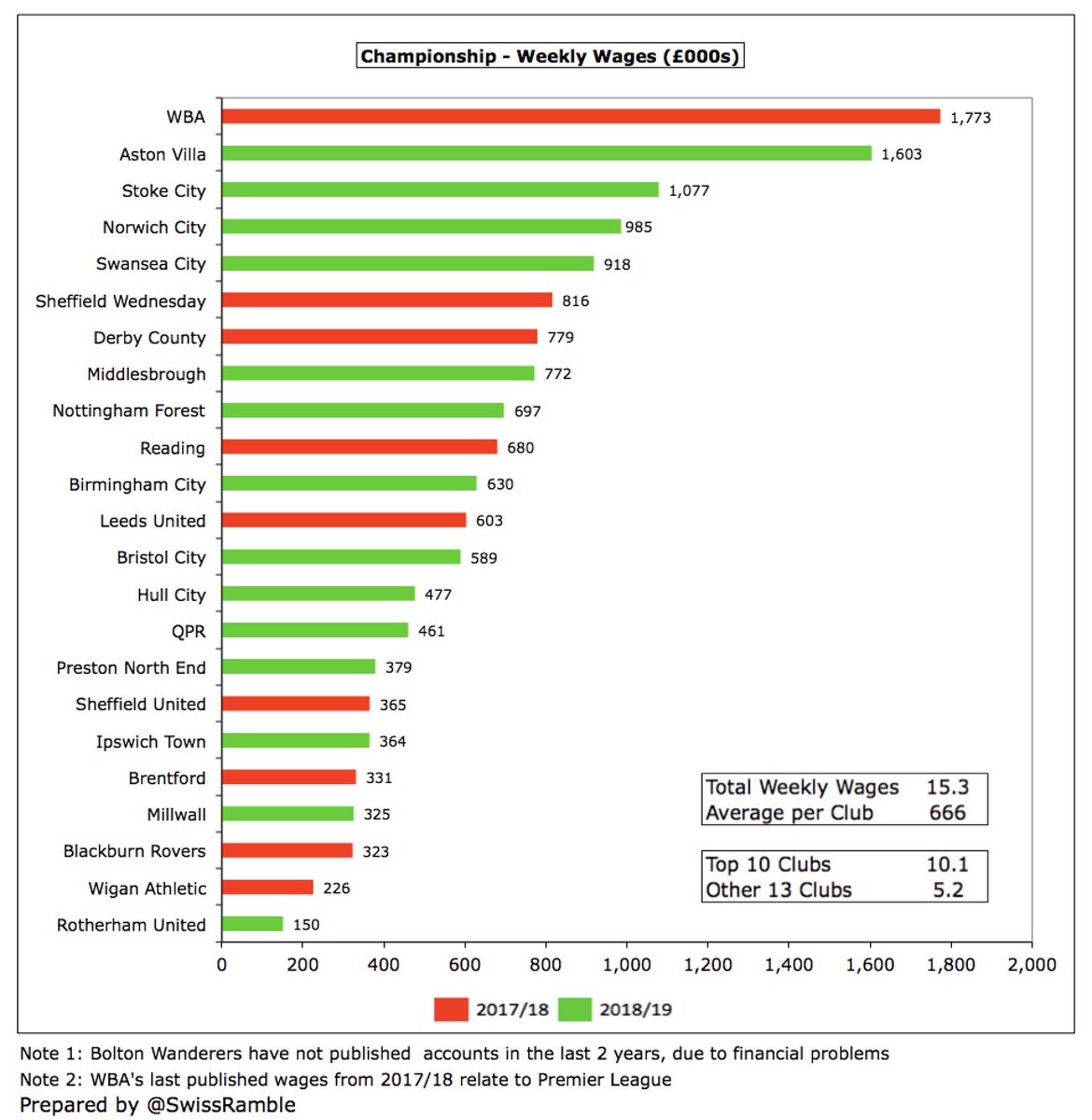
Wages are more difficult to assess in League One, given that many clubs do not disclose them in the accounts, but we can estimate around £100k a week for most, though Charlton and Burton were twice as much. Sunderland are an outlier here, as wages are from Championship 2017/18.

Notwithstanding government support for small businesses, it is likely that some clubs will ask for wage cuts (50% at Hearts) or lay off staff (Barnet). Also an issue with many players’ contracts expiring end-June, especially in lower leagues, which makes season extension tricky.
Debt/interest payments may be an issue when cash flow is tight, though it’s difficult to say, as there are many variables, especially whether it is owner or external debt (though owners may now be more focused on their own business). Repayment terms vary and may be rescheduled.

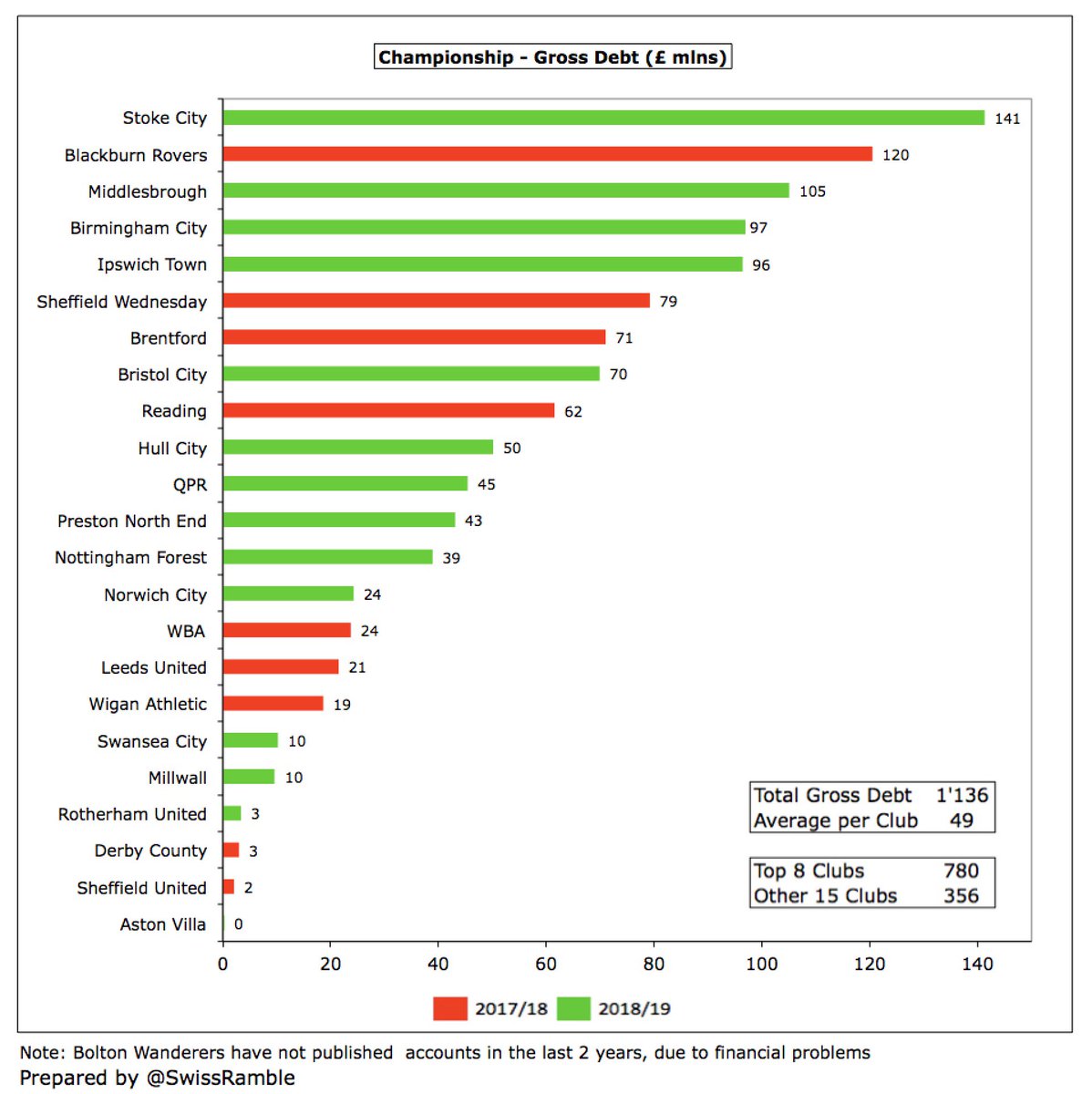
Similarly, there is £1.1 bln debt in the Championship, averaging £49m a club, though top 8 clubs account for £780m and the rest £356m. Most of the loans are provided interest-free by owners, e.g. £141m at Stoke, £105m at #Boro, so not an immediate issue on the face of it.
League One debt is £217m with two-thirds (£142m) from just 3 clubs, all with special circumstances: Charlton £70m likely to have reduced following January takeover (but fluid situation); Coventry £37m from hedge fund investors; Luton Town £35m linked to property development.

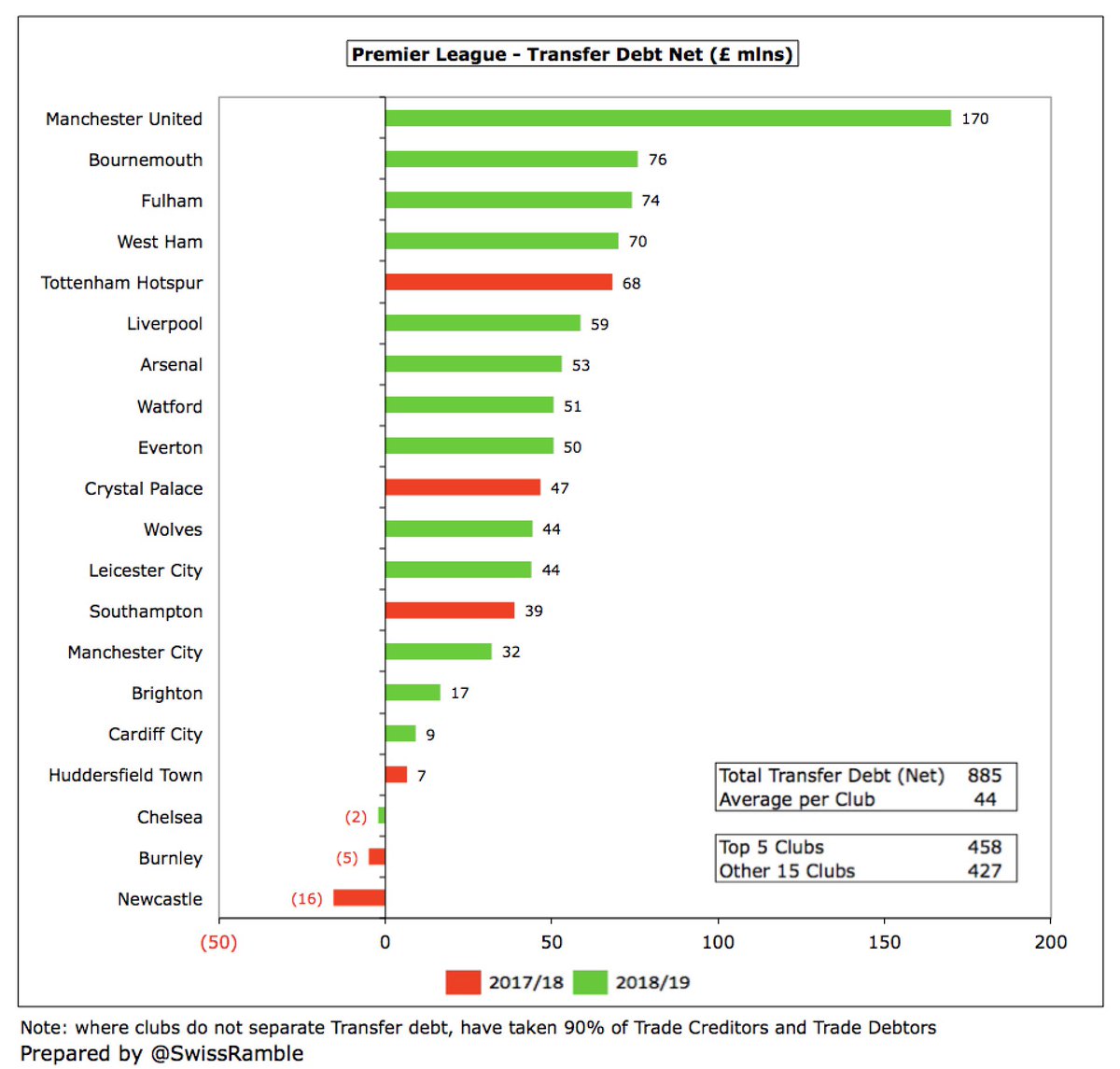
In addition, clubs have transfers debt for remaining stage payments. In the Premier League this is £1.6m gross (£885m net of receivables). Revised payment schedules might be put in place, but potentially an issue for smaller clubs, e.g. Bournemouth owe £76m net.

In the Championship, there is around £200m transfers debt (£155m at just 7 clubs) with £40m net. Largest net debt is Stoke £27m, though they are backed by Bet365. On the other hand, Bristol City are owed £22m by other clubs, which would be a big part of their cash flow forecast.


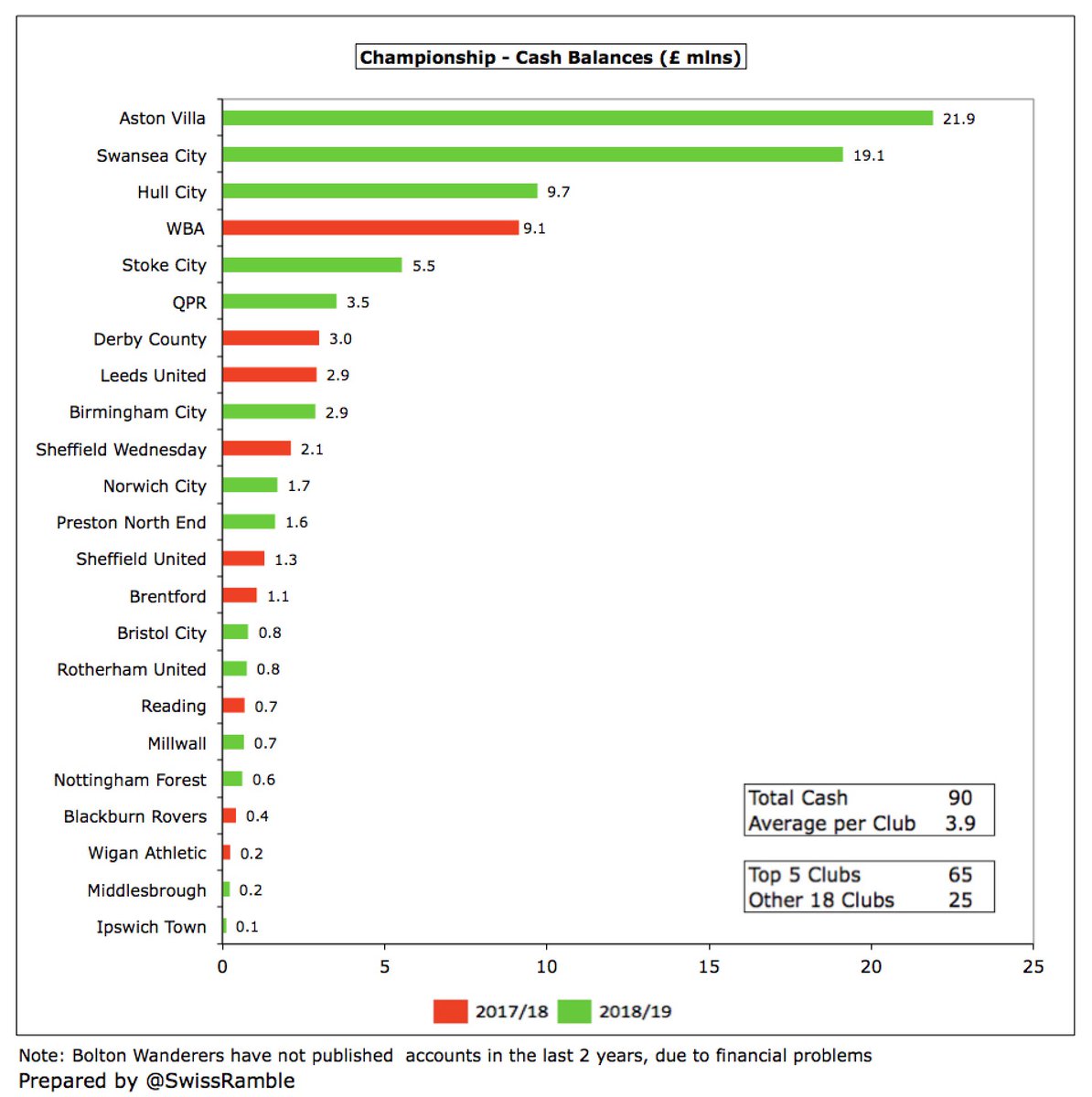
There is only £90m in the Championship with £65m at just 5 clubs, including #AVFC £22m (since promoted), Swansea £19m, Hull £10m, WBA £9m and Stoke £6m. The others only account for £25m in total with no club holding more than £3.5m, so likely they will have to take on more debt.
League One has £28m cash in total, but £11m (40%) is with Sunderland, based on 2017/18 figures from the Championship. In fact, £25m is held by the top 6 clubs, leaving just £3m at remaining 18 clubs, averaging around £200k.

EFL has announced £50m funding package, an advance of TV money and interest-free loans: each Championship club – £800k advance + £584k loan; League One – £250k advance + £183k loan; League Two – £164k advance + £120k loan. In last accounts, the Football League only had £83m cash.
Other potential sources of funding from football include Premier League clubs, though some do not have much available cash, and the Premier League itself, though its reported £1.6 bln of cash largely represents two remaining TV stage payments, one of which was paid in February.
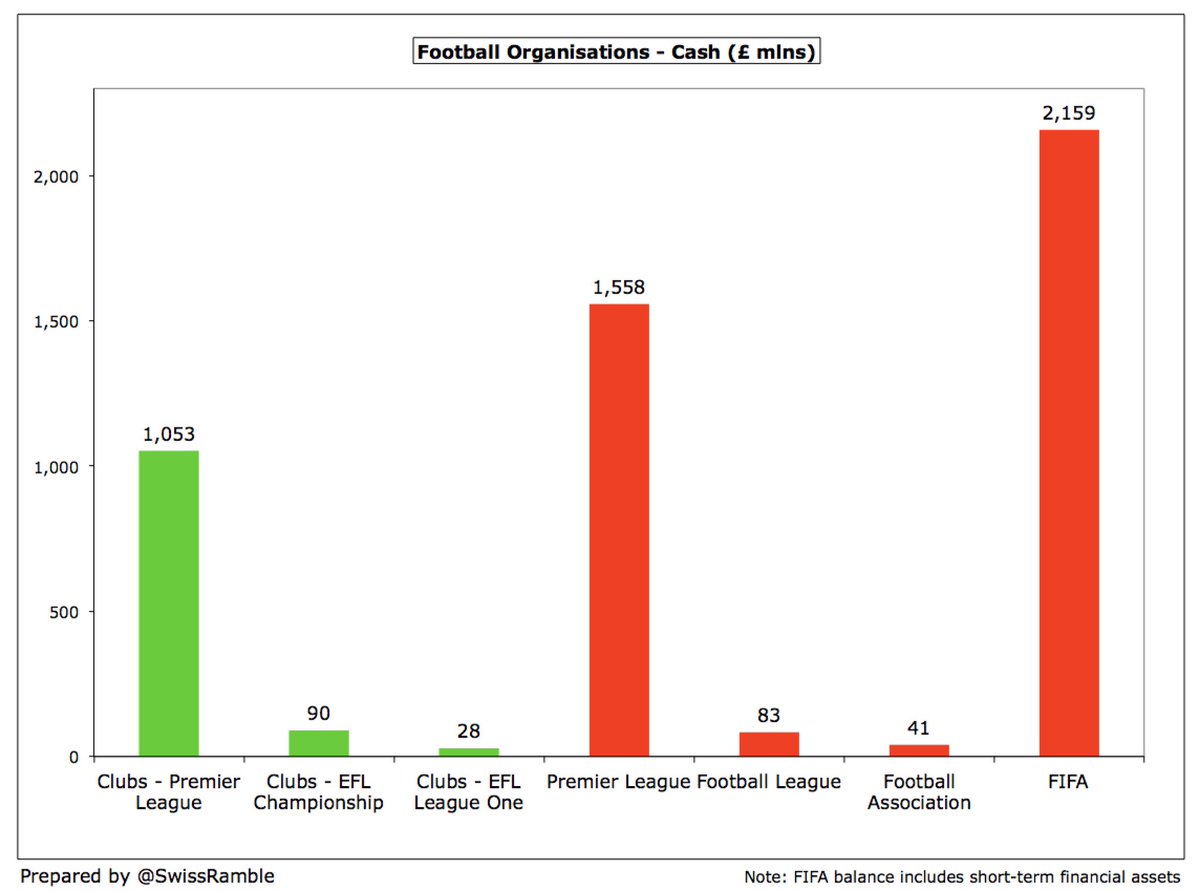
The Football Association only has £41m and will face challenges of its own following the postponement of Euro 2020. FIFA had £2.2 bln in 2018, so seem best placed to provide support (if willing). Finally, clubs might be able to access the government’s emergency business loans.

Most of the financial pain will be felt in the lower leagues, so one possibility would be for Premier League clubs to provide them funding: £500k for each of the 48 clubs in Leagues One and Two would cost around £24m – or less than 1% of the annual PL TV deal.
Some clubs will have insurance in place for gate receipts, though there is a big question mark over whether this would cover the current situation (which might be considered “force majeure”). In any case, such policies are only likely to be taken out by top clubs.
UEFA will relax their FFP regulations by extending the deadline for proving no overdue payables from March 31 to April 30. There is also a good chance that they will be flexible about more owner support and higher losses, though previous cases will continue (albeit delayed).
Obviously, the ideal solution would be for clubs to resume playing games as normal, but that does not seem too likely at the moment. Playing behind closed doors would not deliver gate receipts, but could protect broadcasting income (with some associated costs of staging games).
If the season is voided, that could potentially open the way to a legal minefield, due to contentious promotion, relegation & European qualification issues. Would positions be based on current state? What about different number of games played? Integrity of the competition? Etc.
In conclusion, it is difficult to argue with Stoke chairman Peter Coates, who said, “This will have serious financial implications, with some clubs possibly running out of money.” Put bluntly, without some form of financial support, it is likely that some clubs will go bust.
جاري تحميل الاقتراحات...