

Traumatic brain injury ?

signs or symptoms may appear immediately after the traumatic event, while others may appear days or weeks later.
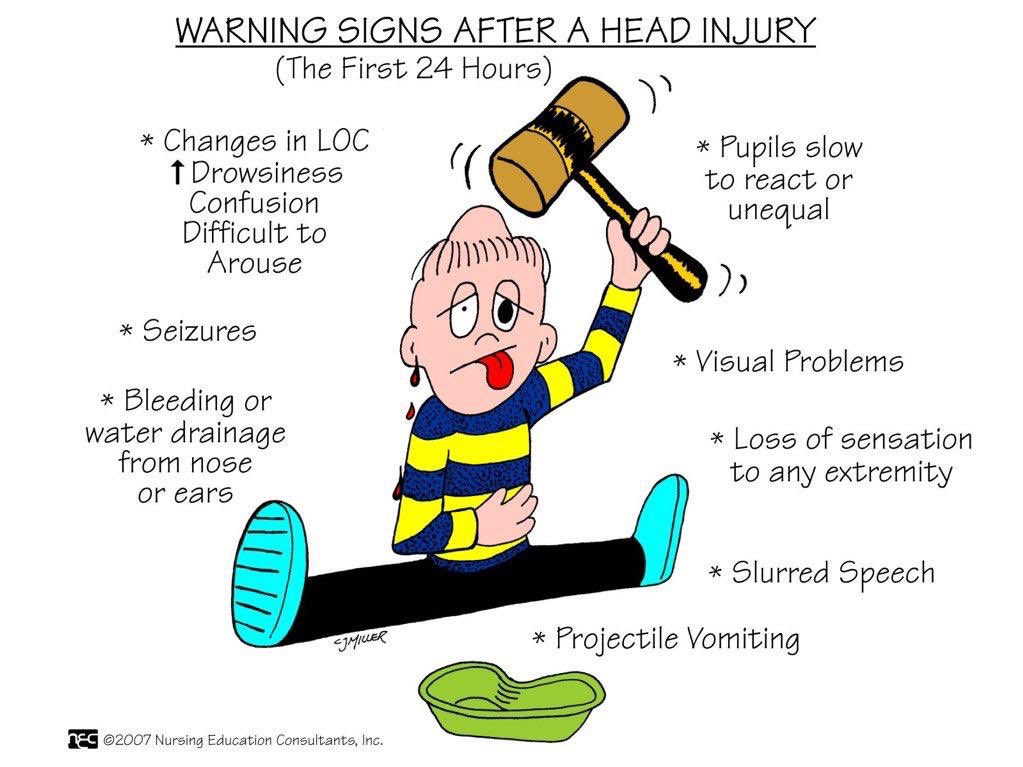
Mild traumatic brain injury
Physical symptoms
Loss of consciousness for a few seconds to a few minutes
No loss of consciousness, but a state of being dazed, confused or disoriented
Headache
Nausea or vomiting
Fatigue or drowsiness
Problems with speech
Difficulty sleeping
Sleep
Physical symptoms
Loss of consciousness for a few seconds to a few minutes
No loss of consciousness, but a state of being dazed, confused or disoriented
Headache
Nausea or vomiting
Fatigue or drowsiness
Problems with speech
Difficulty sleeping
Sleep
Dizziness Mild traumatic brain injury
Sensory symptoms
Sensory problems, such as blurred vision, ringing in the ears, a bad taste in the mouth or changes in the ability to smell
Sensitivity to light or sound
Sensory symptoms
Sensory problems, such as blurred vision, ringing in the ears, a bad taste in the mouth or changes in the ability to smell
Sensitivity to light or sound
Cognitive or mental symptoms
Memory or concentration problems
Mood changes or mood swings
Feeling depressed or anxious
Memory or concentration problems
Mood changes or mood swings
Feeling depressed or anxious
Moderate to severe traumatic brain injuries
within the first hours to days after a head injury:
Cognitive or mental symptoms
Profound confusion
Agitation, combativeness or other unusual behavior
Slurred speech
Coma and other disorders of consciousness
within the first hours to days after a head injury:
Cognitive or mental symptoms
Profound confusion
Agitation, combativeness or other unusual behavior
Slurred speech
Coma and other disorders of consciousness
Physical symptoms
Loss of consciousness from several minutes to hours
Persistent headache or headache
Repeated vomiting or nausea
Convulsions or seizures
Dilation of pupils of the eyes
Clear fluids draining from the nose or ears
Inability to awaken from sleep
Weakness
Loss of consciousness from several minutes to hours
Persistent headache or headache
Repeated vomiting or nausea
Convulsions or seizures
Dilation of pupils of the eyes
Clear fluids draining from the nose or ears
Inability to awaken from sleep
Weakness
numbness in fingers and toes
Loss of coordination
Children's symptoms
Infants and young children with brain injuries might not be able to communicate headaches, sensory problems, confusion and similar symptoms. In a child with traumatic brain injury, you may observe:
Loss of coordination
Children's symptoms
Infants and young children with brain injuries might not be able to communicate headaches, sensory problems, confusion and similar symptoms. In a child with traumatic brain injury, you may observe:
Change in eating or nursing habits
Unusual or easy irritability
Persistent crying and inability to be consoled
Change in ability to pay attention
Change in sleep habits
Seizures
Sad or depressed mood
Drowsiness
Loss of interest in favorite toys or activities
Unusual or easy irritability
Persistent crying and inability to be consoled
Change in ability to pay attention
Change in sleep habits
Seizures
Sad or depressed mood
Drowsiness
Loss of interest in favorite toys or activities
Complications:
Altered consciousness
-Coma
- Vegetative state
- Minimally conscious state
- Brain death
Physical complications
Seizures
Fluid buildup in the brain (hydrocephalus).
Infections
Blood vessel damage
Headaches
Vertigo
Altered consciousness
-Coma
- Vegetative state
- Minimally conscious state
- Brain death
Physical complications
Seizures
Fluid buildup in the brain (hydrocephalus).
Infections
Blood vessel damage
Headaches
Vertigo
Cranial nerve damage may result in:
Paralysis of facial muscles or losing sensation in the face
Loss of or altered sense of smell
Loss of or altered sense of taste
Loss of vision or double vision
Swallowing problems
Dizziness
Ringing in the ear
Hearing loss
Paralysis of facial muscles or losing sensation in the face
Loss of or altered sense of smell
Loss of or altered sense of taste
Loss of vision or double vision
Swallowing problems
Dizziness
Ringing in the ear
Hearing loss

Intellectual problems:
Cognitive problems
Memory
Learning
Reasoning
Judgment
Attention or concentration
Executive functioning problems
Problem-solving
Multitasking
Organization
Planning
Decision-making
Beginning or completing tasks
Cognitive problems
Memory
Learning
Reasoning
Judgment
Attention or concentration
Executive functioning problems
Problem-solving
Multitasking
Organization
Planning
Decision-making
Beginning or completing tasks
Communication problems
Cognitive problems
Difficulty understanding speech or writing
Difficulty speaking or writing
Inability to organize thoughts and ideas
Trouble following and participating in conversations
Cognitive problems
Difficulty understanding speech or writing
Difficulty speaking or writing
Inability to organize thoughts and ideas
Trouble following and participating in conversations
Social problems
Trouble with turn taking or topic selection in conversations
Problems with changes in tone, pitch or emphasis to express emotions, attitudes or subtle differences in meaning
Difficulty understanding nonverbal signals
Trouble reading cues from listeners
Trouble with turn taking or topic selection in conversations
Problems with changes in tone, pitch or emphasis to express emotions, attitudes or subtle differences in meaning
Difficulty understanding nonverbal signals
Trouble reading cues from listeners
Trouble starting or stopping conversations
Inability to use the muscles needed to form words (dysarthria)
Behavioral changes
Difficulty with self-control
Lack of awareness of abilities
Risky behavior
Difficulty in social situations
Verbal or physical outbursts
Inability to use the muscles needed to form words (dysarthria)
Behavioral changes
Difficulty with self-control
Lack of awareness of abilities
Risky behavior
Difficulty in social situations
Verbal or physical outbursts
Emotional changes
Depression
Anxiety
Mood swings
Irritability
Lack of empathy for others
Anger
Insomnia
Sensory problems
Persistent ringing in the ears
Difficulty recognizing objects
Impaired hand-eye coordination
Blind spots or double vision
A bitter taste, a bad smell
Depression
Anxiety
Mood swings
Irritability
Lack of empathy for others
Anger
Insomnia
Sensory problems
Persistent ringing in the ears
Difficulty recognizing objects
Impaired hand-eye coordination
Blind spots or double vision
A bitter taste, a bad smell
difficulty smelling
Skin tingling, pain or itching
Trouble with balance or dizziness
Degenerative brain diseases
disorder can cause gradual loss of brain functions, including:
(Alzheimer's disease -Parkinson's disease- Dementia pugilistica)
Skin tingling, pain or itching
Trouble with balance or dizziness
Degenerative brain diseases
disorder can cause gradual loss of brain functions, including:
(Alzheimer's disease -Parkinson's disease- Dementia pugilistica)
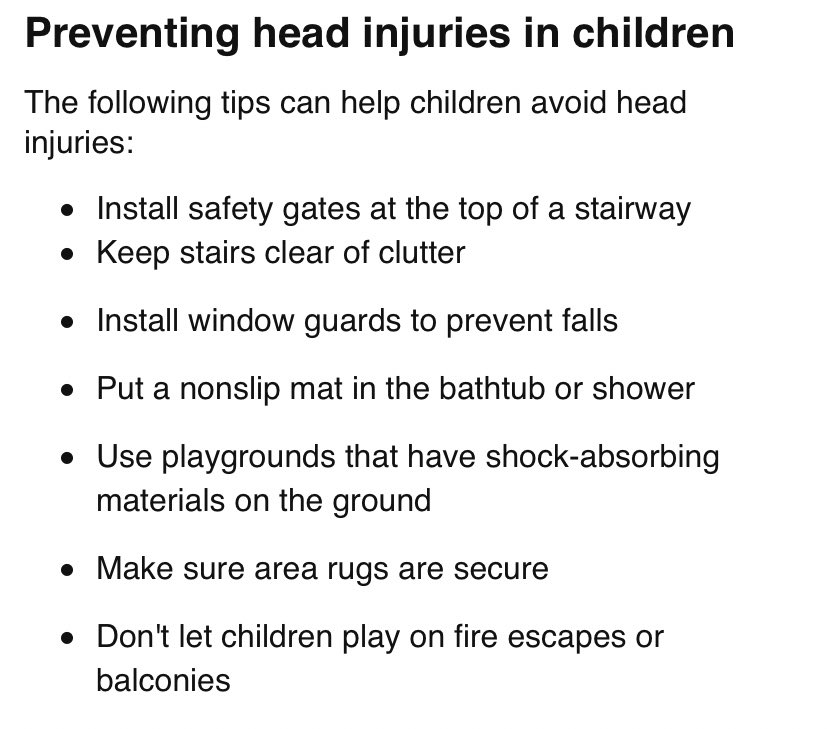
Prevention
risk of brain injury:
Seat belts and airbags
Alcohol and drug use
Helmets
risk of brain injury:
Seat belts and airbags
Alcohol and drug use
Helmets

Preventing falls:
older adults
Install handrails in bathrooms
Put a nonslip mat in the bathtub or shower
Remove area rugs
Install handrails on both sides of staircases
Improve lighting in the home
Keep stairs and floors clear of clutter
regular vision checkups
regular exercise
older adults
Install handrails in bathrooms
Put a nonslip mat in the bathtub or shower
Remove area rugs
Install handrails on both sides of staircases
Improve lighting in the home
Keep stairs and floors clear of clutter
regular vision checkups
regular exercise

Done by:@amjadalameel
دمتمُ بخير ♥️
دمتمُ بخير ♥️
جاري تحميل الاقتراحات...